
Looking after it
Care and cleaning.
A handmade wool rug asks for very little, and almost everything that ruins one is done with good intentions during cleaning. This is the whole method, in the order you will need it.
The weekly half of it
Vacuuming is not tidying, it is preservation. Grit and dust fall through the pile and sit at its base, and every step afterwards grinds those particles against the fibre where it is anchored. That abrasion, invisible from above, is what actually ages a rug.
Vacuum once or twice a week in a room you live in, and more often in a hallway. Turn the beater bar off, or lift it, on any handmade rug: on a hand-tufted pile it pulls fibre out faster than it would ever come away naturally, and on a high-low or carved rug it damages the transition between the pile heights.
Vacuum along the pile rather than against it, and go over the fringes with the nozzle rather than the head, or better, leave the fringes alone and comb them by hand.
Spills, in the ten minutes that matter
Wool has a natural waxy coat, so a spill sits on the surface for a short while before it soaks in. Everything below depends on using that pause.
1. Lift the solids
A spoon or a blunt knife, working from the outside of the spill inwards so you do not spread it. Do not press down yet.
2. Blot, never rub
A clean white cloth, pressed firmly, lifted, moved to a dry part of the cloth, repeated. White so you can see what is coming out and so no dye moves from cloth into rug. Rubbing drives the spill into the foundation and can felt the wool permanently.
3. Cool water, sparingly
Dampen, blot, repeat. Hot water sets protein stains, which covers most household accidents: milk, blood, egg, and anything an animal contributes.
4. Dry it properly
Blot out all the moisture you can, prop the area so air can move underneath, and put a fan on it. A patch left damp against the floor is how a mark and a smell appear that the spill itself never caused.
What never to do
No steam cleaner and no hot water extraction. Heat plus saturation shrinks wool and distorts the foundation, and neither is reversible.
No bleach and no oxygen bleach, which strip colour out of wool. No ammonia, which smells like urine to an animal and invites a repeat in the same place. No general-purpose spray carpet cleaner, most of which leave a sticky residue that then attracts soil to exactly the spot you cleaned.
Never iron a pile, never fold a rug for storage, and never let a damp rug sit rolled up. Roll it with the pile facing outward and only when it is completely dry.
Twice a year
Rotate the rug end for end. Rooms wear and fade unevenly, hardest along the route people walk and wherever the sun crosses, and rotating spreads both over the whole piece instead of one strip of it.
Move the furniture a few centimetres, or use wide coasters under heavy legs. Pile that is crushed for years does not come back. Pile that is crushed for months does.
Lift the rug and vacuum the floor and the underside. On a rug with a pad, check the pad has not started to break down and mark the floor.
When to call someone
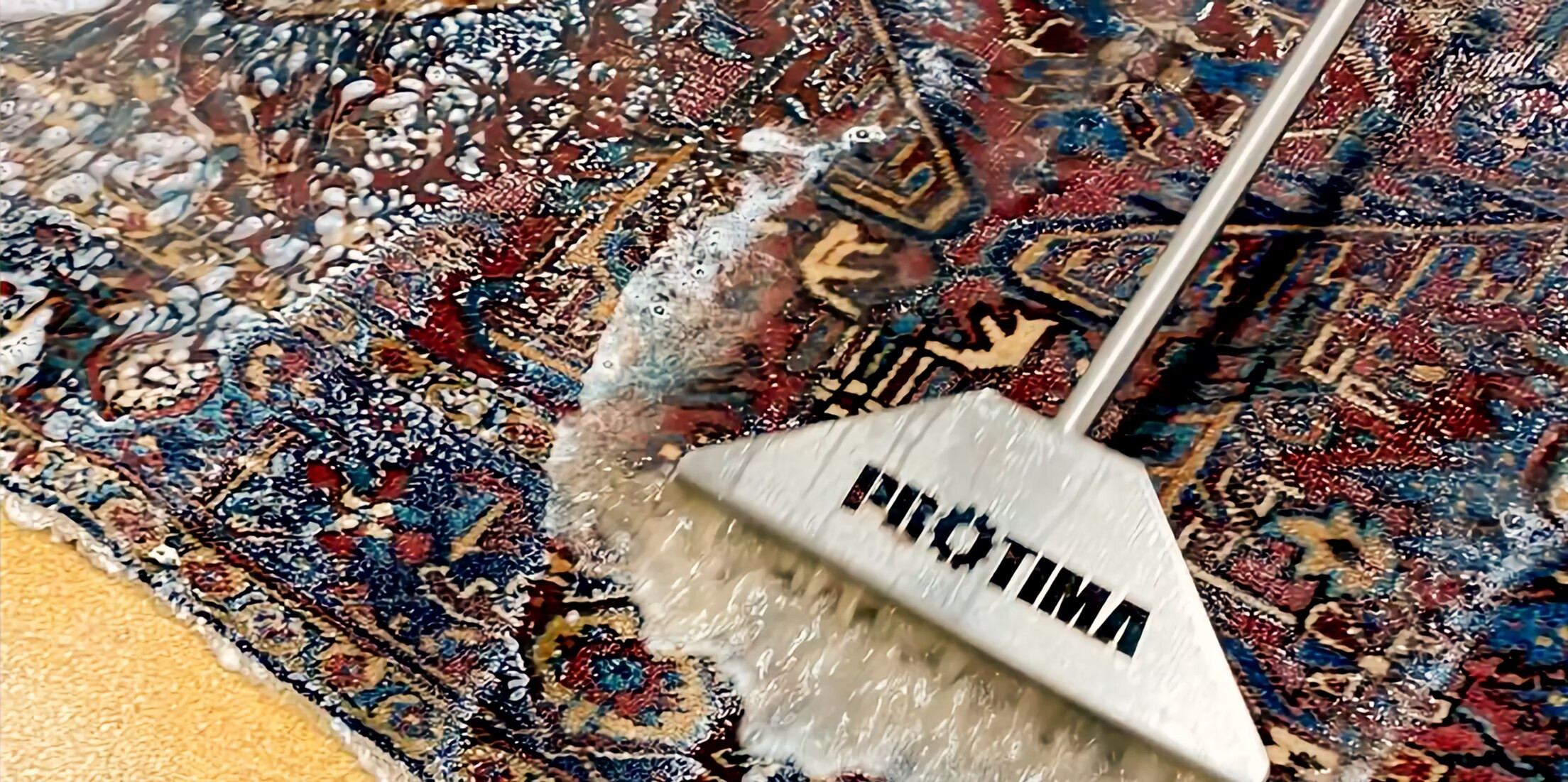
A domestic rug wants a proper wash every three to five years, sooner in a hallway or a house with animals. Use a specialist wool rug cleaner who takes the rug away and washes it flat, not a general carpet cleaning service that works in place with a machine designed for fitted synthetic carpet.
Call sooner for anything that has soaked through to the floor, for pet urine that has been left, for a dye that has run, and for any damage to the binding or the foundation. Repaired early these are small jobs. Left, they are not.
Questions
How often should I vacuum a handmade rug?
Once or twice a week in a room you use daily, more in a hallway. Turn the beater bar off. Grit ground into the base of the pile is what actually wears a rug out, and regular gentle vacuuming is most of the care a rug needs.
Can I use a steam cleaner on a wool rug?
No. Heat and saturation together will shrink wool, set protein stains and can distort the foundation permanently. Wool is cleaned cool and damp, never hot and wet.
What should I do the moment something spills?
Lift solids with a blunt edge working inwards, then blot with a clean white cloth using firm pressure. Never rub. Use cool water only, a little at a time, then dry the area with air moving under it.
How often does a rug need professional cleaning?
Every three to five years for a normal domestic room, sooner in a hallway or a house with animals. Use a specialist wool rug cleaner who washes off site, not a general carpet cleaning service.
Why has my rug faded on one side?
Sustained direct sunlight fades every dye. Rotate the rug end for end twice a year so it ages evenly instead of in one bleached band.