Choosing a Hallway Runner
Choosing · 30 July 2026 · 5 min · Published by Raheem & Son for RS Living
A hallway takes more traffic per square metre than any other floor in a house, and it is the one place a rug is chosen on looks alone. What actually survives there.
Size it to the corridor, not to a catalogue
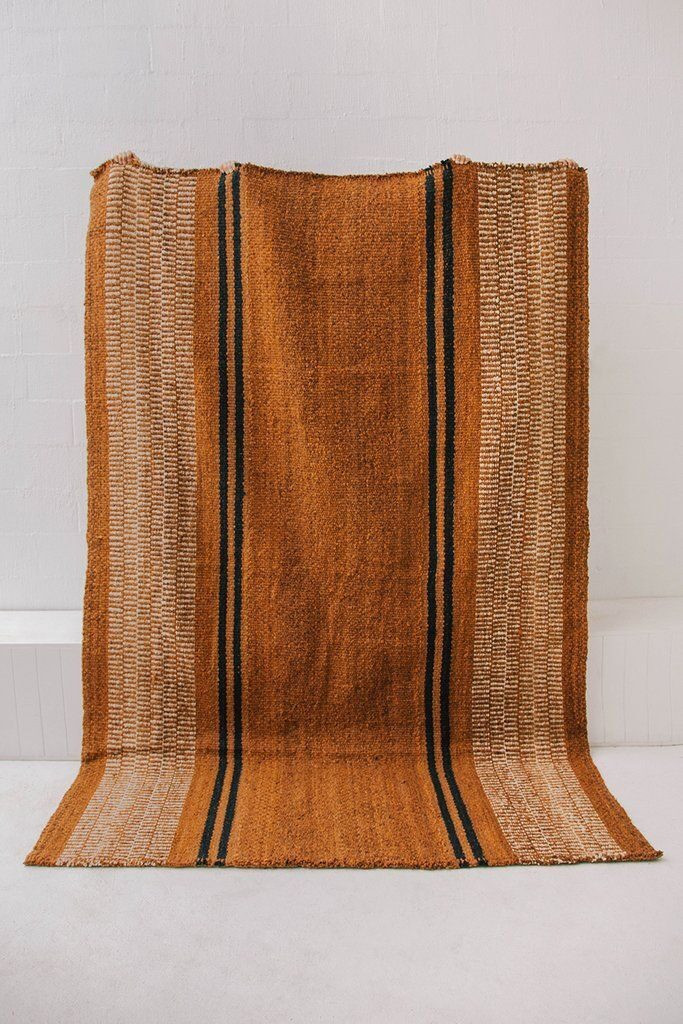
Width first. Leave an even margin of floor on both sides, roughly eight to fifteen centimetres in a domestic hallway. Wall to wall reads as fitted carpet and loses the point of a runner. Too narrow and you walk with one foot on the rug and one on the floor, which is the single most common runner mistake and the reason so many of them curl.
Length second. Stop it short of the ends rather than running it to the skirting. A gap of twenty to thirty centimetres at each end frames it. Critically, keep it clear of the door swing: a runner that a door drags over will wear a visible arc into the pile within a year and will eventually stop the door.
If the hall has a turn in it, do not attempt one shaped piece. Two runners with a break at the corner works. One rug bending round a corner never does.
This is the strongest argument for made to order. Hallways are almost never a standard size, and a runner is the piece most often bought too narrow because that was what the shop had.
What survives a hallway
A hall takes concentrated traffic on a narrow strip, and it takes it in outdoor shoes carrying grit. Grit is what actually destroys a rug, because it cuts the fibre at the base of the pile every time it is walked on.
Construction. Hand-knotted or a tight flatweave. Both put the wear on a dense, well-anchored surface. A deep hand-tufted pile in a hall will flatten along the walking line and show it clearly.
Pile height. Low. Six to ten millimetres. High pile in a corridor crushes into a visible track and also fouls the door.
Fibre. Wool for resilience, because it springs back and hides soil well. Jute for hard wear and a coarse natural look, though it is less forgiving of a wet spill. Avoid bamboo silk entirely: it is beautiful and it will not survive a front door.
Colour. Mid-tone, and patterned or flecked rather than plain. A plain pale runner by a door is a maintenance decision you will regret. A pattern with a few tones in it absorbs the reality of a hallway.
Keeping it flat and keeping it alive
A runner on a hard floor must have a pad. Without one it creeps down the corridor, rucks at the ends, and becomes something to trip on at the top of a staircase.
Rotate it end for end every six months. A hallway wears unevenly, hardest nearest the door, and rotating spreads that over the whole piece.
Vacuum it more often than the rest of the house. Getting grit out before it is ground in is most of the maintenance a runner needs.
Put a doormat outside and a second one inside. Most of what shortens a runner's life is walked in on shoes and could have been stopped before the rug.
Questions
How wide should a hallway runner be?
Wide enough to walk on with both feet, with an even margin of bare floor of about eight to fifteen centimetres on each side. Both feet on the rug is the test that matters.
How much space should I leave at the ends?
Roughly twenty to thirty centimetres, and always enough that the doors clear it. A door dragging on a runner wears an arc into the pile.
What is the most hard-wearing runner?
A low-pile hand-knotted wool runner, or a tight wool flatweave. Jute is very hard-wearing but coarser and less tolerant of spills.
Can I have a runner made for an unusual hallway?
Yes. Everything in the store is woven to order, so a runner is made to your corridor rather than to a standard size.