What a Sample Tells You That a Screen Never Will
Before you order · 2 June 2026 · 4 min · Published by Raheem & Son for RS Living
A hand-sized piece of the actual rug answers questions no photograph can. How to read one, how to light it, and the mistakes people make when they judge one.
What a sample is
A sample is a piece of the real thing: the same wool, dyed in the same way, knotted or tufted at the same density, finished the same. It is small, and everything about it except its size is true of the rug you would receive.
That makes it the only honest answer to two questions. What colour is this, really. And what does it feel like underfoot.
How to read one
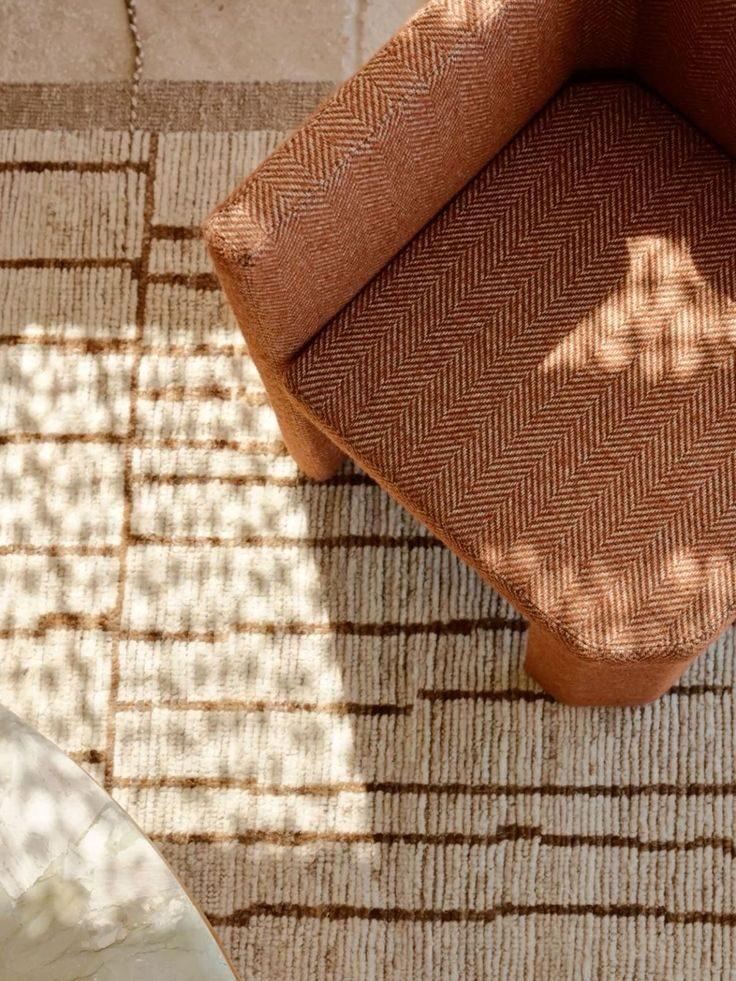
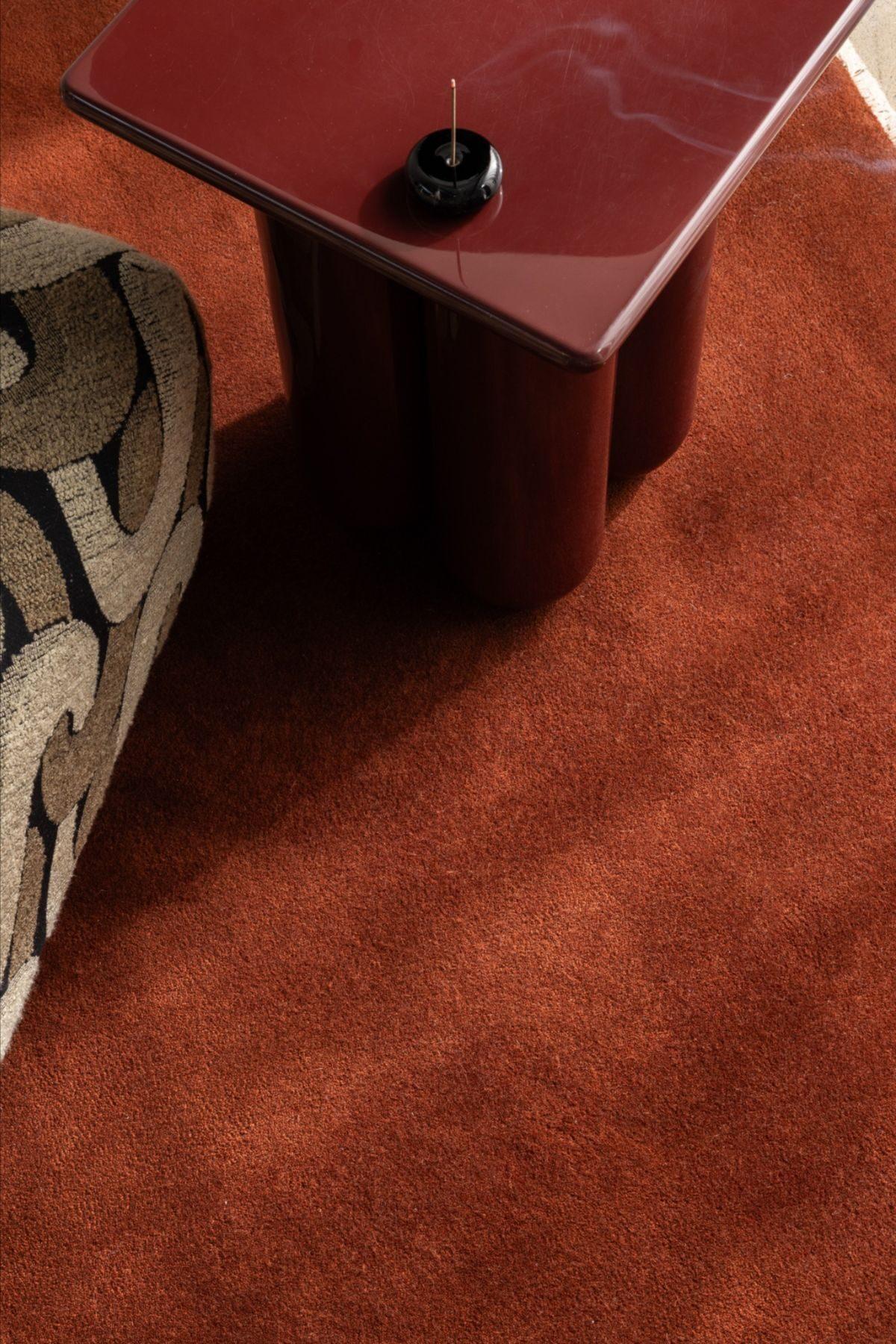
Put it on the floor. Colour seen at eye level on a table is not the colour you will live with, because you will only ever see this rug from above, at a shallow angle, with the pile lying away from you.
Look at it twice. Once in daylight, once under the lamps you use in the evening. A warm bulb pulls greys towards brown and pushes blues towards grey. If those two readings disagree strongly, the room is the problem rather than the rug, and you should choose for the light you use the room in.
Press it, then release. A dense pile springs back. A loose one stays flat. That recovery is what makes a rug still look good in five years, and it is invisible in every photograph ever taken.
Rub it firmly with your palm for a few seconds. A small amount of loose fibre is normal on a fresh sample. A lot suggests a loose spin.
Hold it against your actual sofa, your actual floor, your actual wall. Never against a white desk. Colour has no absolute value, only a relationship to whatever is next to it.
What a sample cannot tell you
Scale. A hand-sized square of a large-scale pattern tells you nothing about how that pattern reads across three metres. For pattern, trust the photograph and the dimensions, not the sample.
Batch. Your rug will be dyed in its own batch, and it will sit very slightly off the sample in depth of shade. This is normal and unavoidable in hand-dyed yarn. Use the sample to decide whether the colour family is right, not to colour-match to a millimetre.
Wear. No sample can show you how a rug looks after two years of a hallway. Construction and fibre predict that, and the specification tells you both.
Questions
How do I get a sample?
Ask through the store and tell us the piece and the colours you are weighing up. Samples of the actual yarn and pile are the whole reason a made to order store can work honestly.
Will my rug be exactly the colour of the sample?
Very close, and not identical. Yarn is dyed in batches and each batch lands slightly differently. Judge the sample on colour family and tone rather than on an exact match.
Can I keep the sample to compare later?
Yes, and it is worth doing. Keep it out of direct sun, because a sample left on a windowsill fades and then misleads you when you compare it a year later.