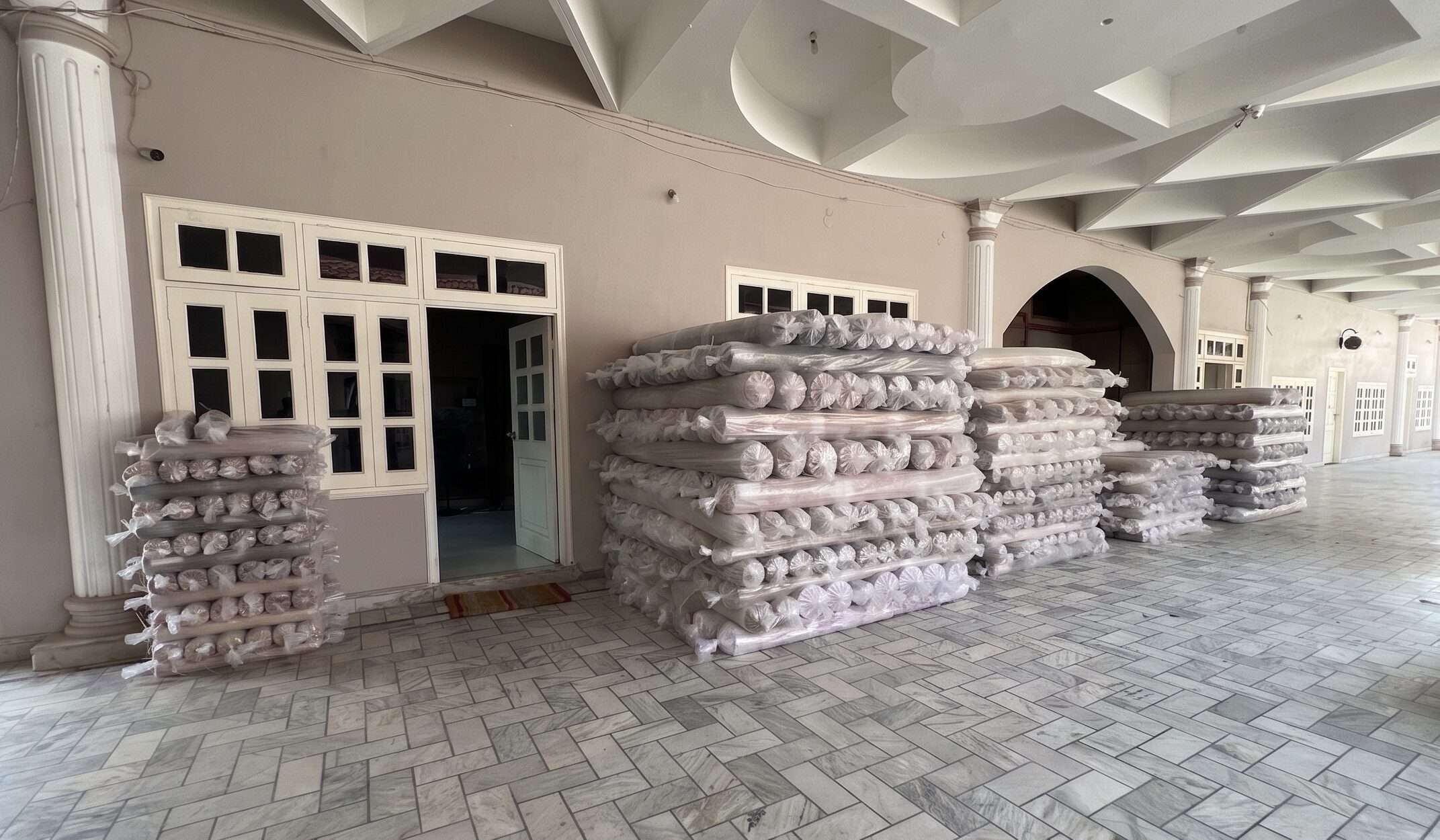
Something will be damaged, and sooner than you think
In a hotel, a restaurant or a busy office, a rug will be burned, flooded, permanently stained or torn. Not as a possibility to insure against but as a routine event in the operating life of the building.
The question is only whether the operator can replace it in a fortnight from stock, or whether they wait four months for a reweave that does not quite match the rugs either side of it.
Attic stock is the difference, and it is decided at specification, not at handover.
How much to hold
For repeating pieces, guest room rugs and other items produced in quantity, a reasonable reserve is five to ten per cent of the installed quantity, with a floor of at least two pieces of any design however few were installed.
For unique pieces, a single lobby rug or a one-off stair runner, holding a spare is rarely economic. Hold spare yarn instead, enough for a substantial repair, plus the full technical specification and the loom drawing.
For high-traffic zones, entrances, lift lobbies, restaurant thresholds, weight the reserve upward. These are where the damage concentrates.
Match the reserve to the operator's replacement expectation. A property that replaces soft furnishings on a five year cycle needs less reserve than one intending the rugs to last fifteen.
Store it properly or do not bother
Attic stock that has been stored badly is not attic stock, it is a mismatched rug you paid to keep.
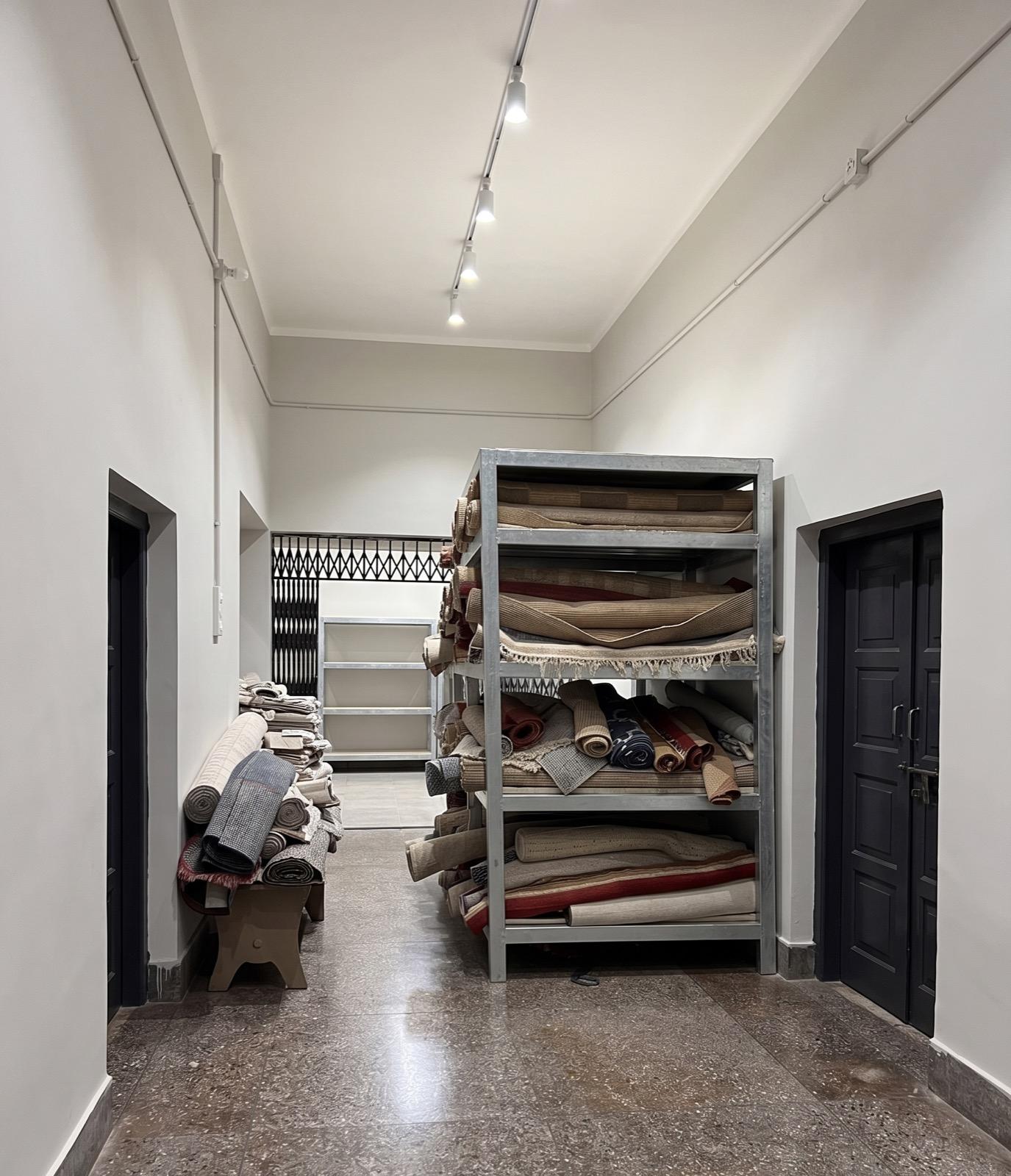
Rolled on a core, pile outward, never folded. Horizontal on racking, not standing on end, which crushes the lower edge over time.
Dry, dark and ventilated. Daylight fades a stored rug exactly as it fades an installed one, and a store room with a window will produce a spare that no longer matches after two years. Damp produces mildew.
Wrapped breathably. Sealed polythene traps moisture against wool in a way that a woven cover does not.
Inspected annually. Unroll, check for moth, refold nothing, reroll and put back. Moth damage in a store room is discovered at the moment of need, which is the worst possible moment.
Labelled so that someone who was not involved in the project can find the right piece. Design reference, size, phase, and where it belongs.
Repair before replacement
A handmade rug is repairable in ways a machine-made one is not, and a good repairer can do more than most operators expect.
Reweaving a damaged area, knot by knot, into the existing foundation is possible on hand-knotted pieces and, done well, is close to invisible. It needs matching yarn, which is the argument for holding yarn as well as pieces.
Binding, selvedge and fringe repairs are routine and cheap, and they are the most common actual failure on a contract rug because they take the impact of vacuums and trolleys.
Professional wet cleaning resolves a great deal that looks permanent. Before condemning a rug for staining, have a specialist wool rug cleaner look at it.
Reserve replacement for structural damage, burns through the foundation, and contamination that cannot be cleaned.
What to hand over at completion
The operations team who will run this building in year seven will not have met anyone who specified it. What they have is the handover file, so the file has to carry everything.
The full construction specification for every piece: fibre, blend, construction, density, pile height, weight, backing, finish.
The sealed physical colour master, and a note of where the duplicate is held.
The attic stock inventory, with quantities, locations and the storage conditions required.
The manufacturer's contact and the original order references, so a reweave can be quoted against the real specification rather than reverse engineered from a damaged rug.
The fire test report for the construction, which the fire officer may ask for years after handover.
And a plain-language care and cleaning schedule written for housekeeping, not for a specifier. The most expensive damage in the first two years of a contract rug is almost always done by cleaning.