The container is the harshest place the rug will ever be
A rug that has survived weaving, washing and finishing then spends four to six weeks inside a steel box crossing the tropics. Internal temperatures swing widely between day and night, and every swing moves moisture between the air and the goods.
Almost every shipment problem that is blamed on manufacturing quality is in fact a packing problem. Mildew, crushing, edge damage and water staining are all preventable, and all of them are decided before the doors are closed.
Roll, never fold
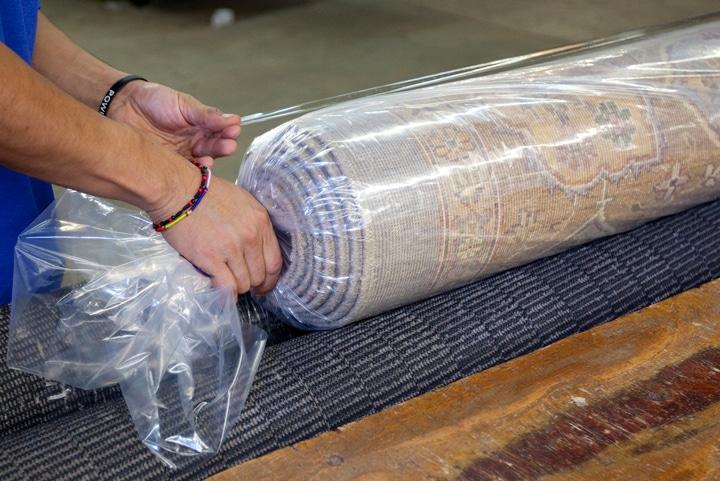
Handmade rugs are rolled, with the pile facing outward. Rolling pile-in compresses the pile against itself along the whole length and sets a crush that can take months to recover, if it recovers at all.
Roll around a core. A rug rolled on itself collapses under the weight of the rugs stacked above it and develops a flattened oval section, which shows as a permanent ridge down the length of the piece. A cardboard or plastic core keeps the section round and takes the compression.
Do not fold, ever, on a pile rug. A fold in a knotted foundation is a crease that becomes a permanent line. Flatweaves tolerate folding better but should still be rolled where the shipment allows it.
Roll to a diameter the destination can actually handle. A five metre lobby rug rolled to a 60cm diameter needs equipment and a goods lift at the other end. Ask the consignee what they can receive before deciding the roll.
Moisture is the enemy, and the rug must be dry before it is wrapped
The single most destructive packing error is wrapping a rug that has not fully dried after washing. Sealed in polythene for five weeks in a warm container, residual moisture produces mildew, and mildew on wool is often not recoverable.
Confirm drying before packing, and make it an inspection point rather than an assumption. This is one of the checks worth putting in a written pre-shipment protocol.
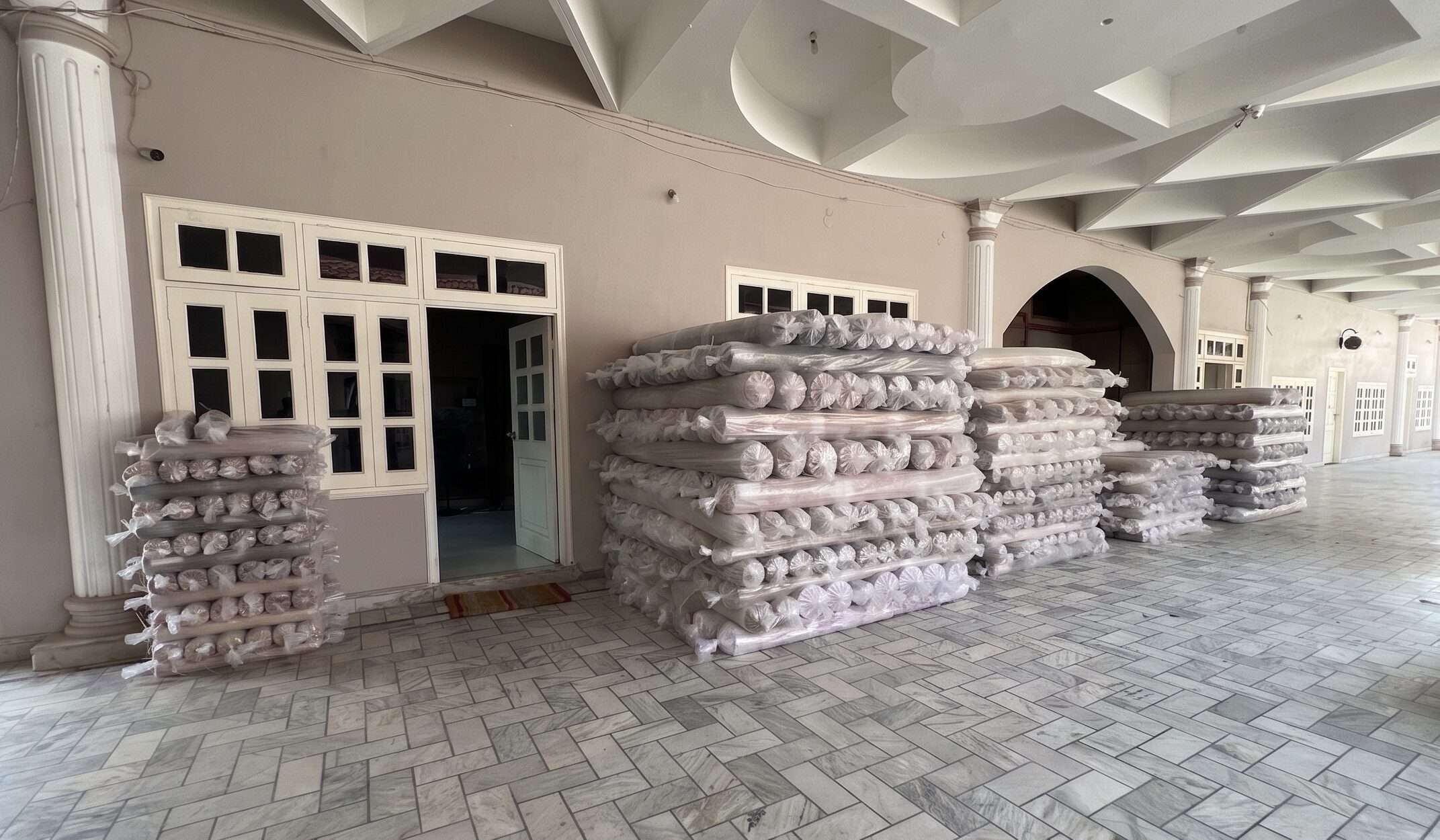
Wrap in a way that keeps rain and handling dirt out without sealing moisture in. Woven polypropylene over an inner layer is the normal approach for sea freight. Fully sealed heavy polythene is worse than useless if anything inside is even slightly damp.
For high-value pieces, or any route through a humid transhipment port, include desiccant. Container desiccant bags are inexpensive against the value of the goods and they materially reduce the condensation that forms on the container roof and rains back onto the cargo.
Keep the goods off the container floor on dunnage. Condensation collects at the bottom, and a roll lying directly on steel wicks it.
Marking, so the right rug reaches the right room
On a hotel programme the rugs are not interchangeable. Piece 14 goes in suite 512 and nowhere else, and the person unloading the truck has no way of knowing that unless it is written on the outside.
Mark every roll on the outside, at both ends, so it is readable however the roll is stowed. At minimum: purchase order number, item or design reference, exact finished size, piece number within the order, gross weight, and destination reference such as the room or zone.
Add the handling marks the goods actually need, and no more. Keep dry, do not fold, this way up where the roll must not be stood on end.
Number the rolls sequentially against the packing list, and make the packing list match the invoice line for line. Customs delays on rug shipments are far more often caused by a packing list that disagrees with the invoice than by anything about the goods.
Photograph every roll marked and ready, and send the photographs with the packing list. When something is missing at the far end, that photograph settles in a minute what would otherwise take a fortnight of correspondence.
Loading the container
Rolls stow lengthwise along the container. Heaviest at the bottom, and never stack so high that the lower rolls carry more than they can without deforming.
Fill the voids. A part-loaded container in a sea state lets the cargo move, and cargo that moves abrades its own wrapping and then itself. Airbags or dunnage in the gaps are cheap.
Never load rugs with anything that can leak, stain or transmit odour. Wool takes up smells and holds them, and a rug that arrives smelling of the cargo beside it is a rejected rug.
Decide FCL against LCL on damage risk rather than on the freight quote alone. Consolidated cargo is handled several more times, by people who do not know what is in the roll. For a full hotel programme the full container is usually the better economics once the risk is counted.