How to Choose Pillows That Work With Your Rug
Styling · 2 May 2026 · 5 min · Published by Raheem & Son for RS Living
The rug sets the palette and the sofa carries it. A method for choosing cushions that belong with the floor without matching it exactly, which is the mistake almost everyone makes.
Pull from the rug, do not copy it
The rug is the largest coloured surface in most rooms, so it sets the palette whether you intend it to or not. Cushions are the cheapest way to answer it.
The instinct is to find cushions in the rug's main colour. That is the mistake. A cushion in the dominant colour disappears against the floor and does nothing.
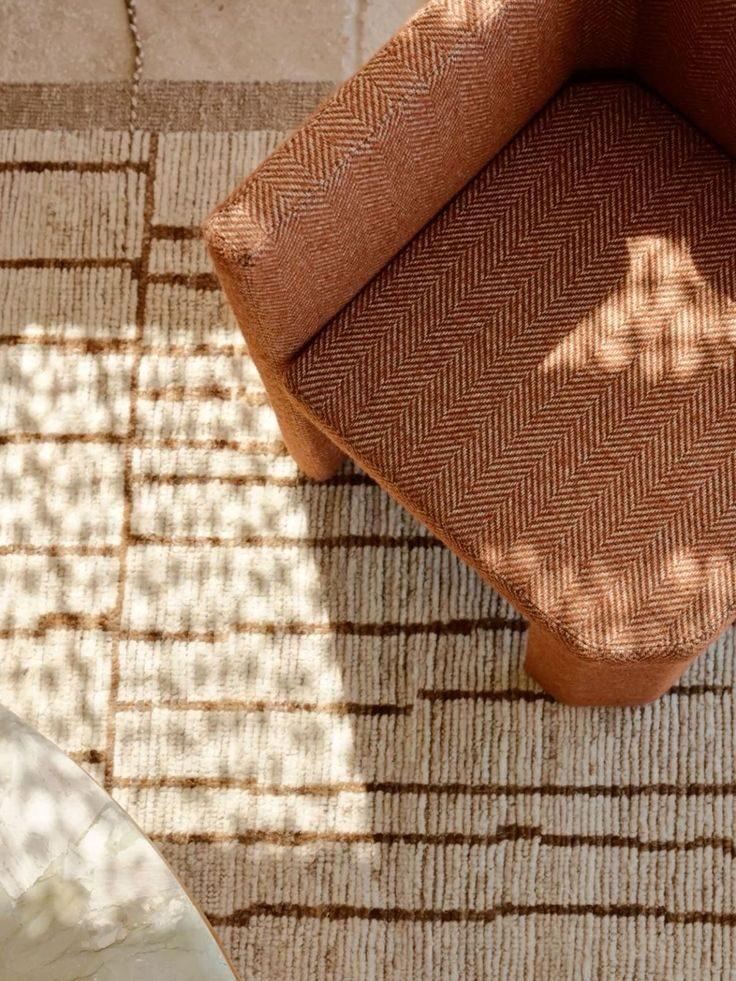
Pull from the minor colours instead. Every hand-knotted rug carries three or four secondary tones that appear in perhaps five per cent of its surface: a rust in a mostly blue rug, an olive in a mostly cream one. Those are the cushion colours. They tie to the floor and still register as a separate object.
Mix the scale, keep the family
If the rug is boldly patterned, at least half the cushions should be plain or nearly so. If the rug is quiet, the cushions are where pattern belongs.
Where you use several patterned cushions together, keep them in one weave family and vary the scale. Flatwoven kilim cushions of three different repeats read as a collection. A kilim next to a printed cotton next to an embroidered velvet reads as three separate shopping trips.
Our own pillows are woven from the same yarns as the rugs, which is a shortcut rather than a sales line: the same dye lot family means the tones will sit together without you having to test them.
How many, and what size
Odd numbers on a long sofa, even numbers on a symmetrical arrangement. Five on a three-seater, three on a two-seater, two on a chair.
Vary the size. A common set is two at 50cm, two at 45cm and one lumbar at roughly 30 by 50. All-identical cushions look like a showroom, not a room.
Insert one size larger than the cover. A 50cm cover on a 55cm insert is full and sits up. A 50cm cover on a 50cm insert collapses at the corners within a month, and that limp look is almost always the insert rather than the cover.
When the rug is on the wall
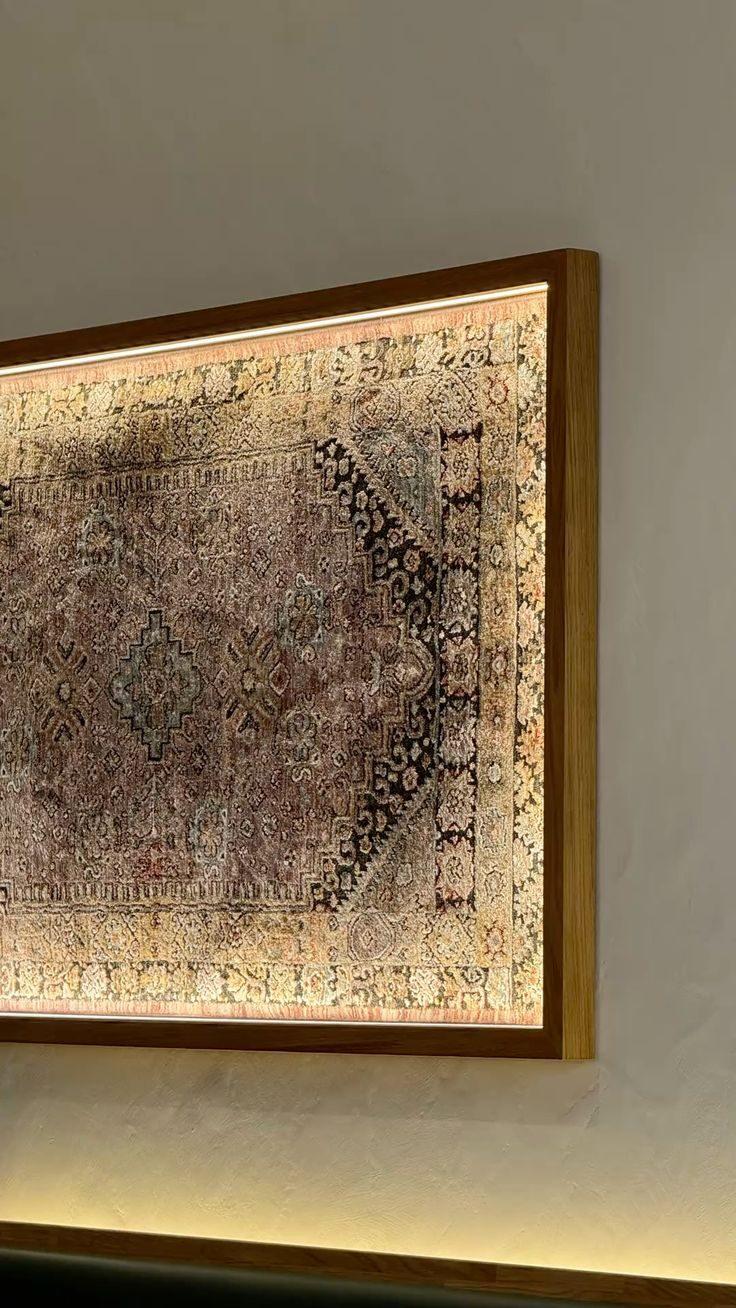
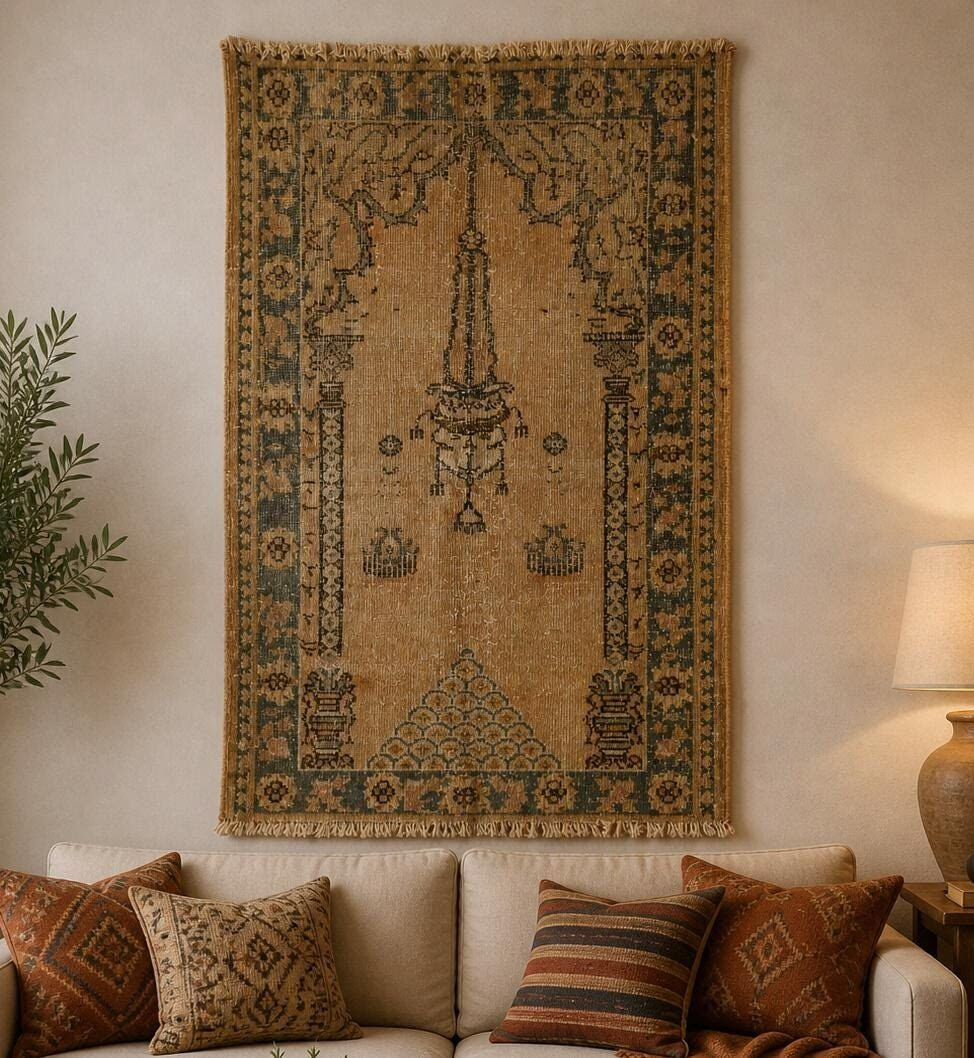
A rug hung above a sofa, as in the picture above, changes the arithmetic. Now the textile is at eye level and directly behind the cushions, so contrast matters more than harmony.
Go plainer and lighter on the cushions than you otherwise would. A patterned cushion in front of a patterned hanging cancels both.
Leave twenty to twenty-five centimetres between the top of the sofa back and the bottom of the hanging, and let the hanging run to roughly two thirds of the sofa's width. Hanging a rug on the wall covers the fixing method, which matters more than most people expect.
Questions
Should cushions match the rug?
No. Cushions in the rug's dominant colour disappear against it. Pull from the rug's minor colours instead, the tones that occupy only a small share of its surface.
How many cushions should a sofa have?
Five on a three-seater, three on a two-seater, two on a chair. Vary the sizes rather than repeating one size across all of them.
Why do my cushions look flat?
Almost always the insert rather than the cover. Use an insert one size larger than the cover, so a 50cm cover takes a 55cm insert.
Can I mix several patterned cushions?
Yes, if they stay in one weave family and differ in the scale of their pattern. Mixing weaves as well as patterns is what makes a group look accidental.