How to Choose the Right Pattern Scale for a Rug
Choosing · 14 March 2026 · 6 min · Published by Raheem & Son for RS Living
A pattern that reads beautifully in a photograph can overwhelm a small room or vanish in a large one. How to judge scale before you order, and why the repeat matters more than the motif.
Scale is the repeat, not the motif
People choose a rug by its motif: a checkerboard, a diamond, a floral. What actually decides whether it works in your room is the repeat, meaning how many times that motif appears across the floor.
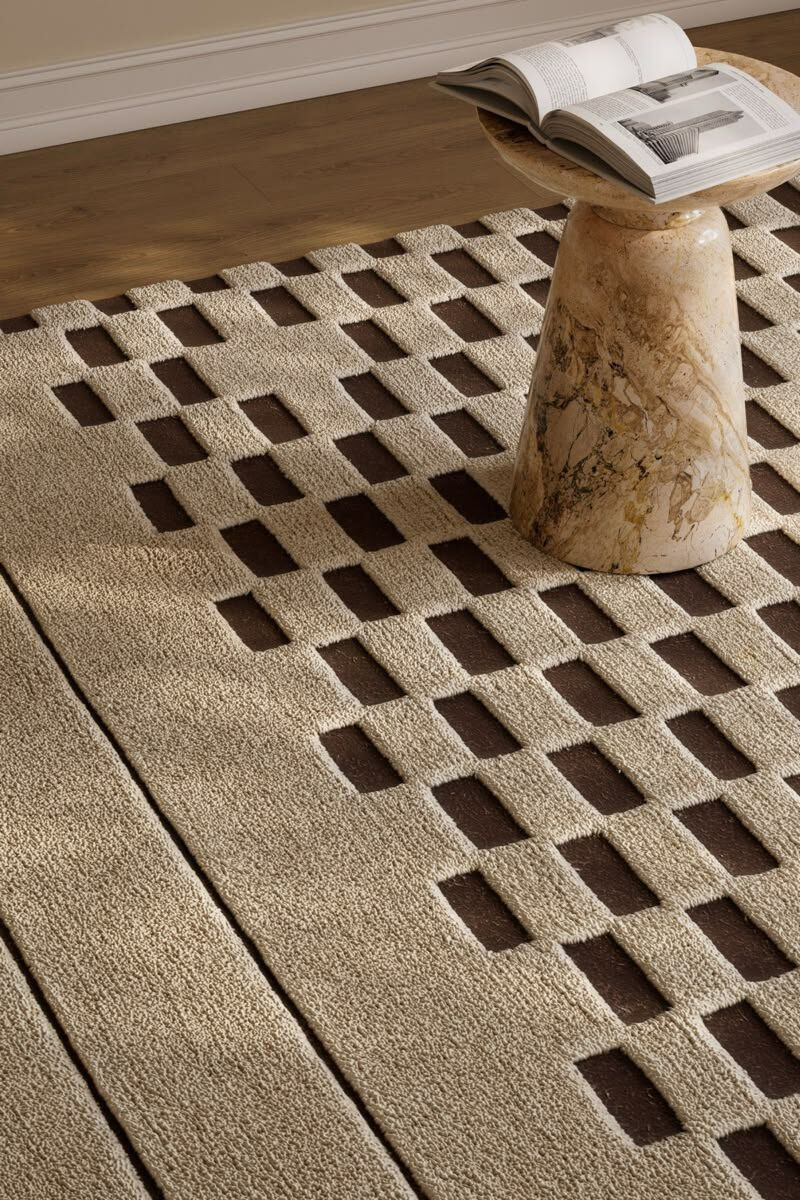
A checkerboard with 15cm squares in a 2 by 3 metre rug gives roughly thirteen squares across. The same rug with 30cm squares gives six. Identical design, completely different object. The first reads as texture, the second as architecture.
This is the single most useful thing to ask for that almost nobody asks: not the pattern, but the size of one unit of it. Because everything at RS Living is woven to order on the looms at Bhadohi, that unit is a decision rather than a fixed property of a product on a shelf.
How room size changes the answer
In a small room, a large repeat cuts the floor into a few big blocks and the eye reads the room as smaller still. A tighter repeat behaves like texture, and texture always makes a space feel larger than pattern does.
In a large room the opposite applies. A tight repeat across four metres turns to visual noise, a grey blur from standing height. A generous repeat holds its shape and gives the floor structure.
The rough working rule: aim for eight to fourteen units across the shorter dimension of the rug. Fewer than six and the pattern becomes a graphic statement that will dominate everything else you own. More than twenty and you have bought texture, which may be exactly right, but know that is what you are buying.
The test that takes five minutes
Print the pattern at true size on ordinary paper, tape four or six sheets together, and put it on the floor where the rug will go. Stand at the door.
This sounds crude and it is more reliable than any photograph, because a rug is the only thing in a room you look at from directly above at a shallow angle, never straight on.
Look at it in daylight and again under lamps. A high-low or carved pattern, like the checkerboard above, is made of shadow rather than colour, so it nearly disappears in flat overhead light and comes alive in raking light from a window or a low lamp.
Pattern and everything else in the room
One strong pattern per room is the safe number. If your sofa is patterned, the rug should be quiet, and the reverse.
Where you want both, separate them by scale rather than by colour. A large-repeat rug under a small-repeat upholstery reads as deliberate. Two similar repeats fight, and the room looks accidental.
Furniture placement erases pattern. A checkerboard under a large sofa and a coffee table may only show at the borders, so if the pattern is the reason you are buying it, plan for the parts that stay visible.
Questions
What size pattern is best for a small living room?
A tighter repeat, roughly ten to fourteen units across the shorter side of the rug. It reads as texture rather than as blocks, and texture makes a small room feel larger.
Can I change the scale of a rug's pattern?
Yes. Everything here is woven to order, so the size of one unit of the pattern is specified along with the rug's dimensions. Ask for the repeat measurement, not just the design name.
Why does a checkerboard rug look flat in photographs?
Because a high-low checkerboard carries its pattern in relief rather than in colour, and photographs flatten shadow. These are the rugs where asking for a sample matters most.
How many patterns can one room take?
One dominant pattern, and any others separated from it by scale rather than colour. Two patterns at a similar repeat compete and the room reads as unresolved.