Pendant Lights Over a Dining Rug: Height and Placement
Light · 5 July 2026 · 5 min · Published by Raheem & Son for RS Living
The numbers that decide whether a dining pendant lights the table or blinds the guests, and how the rug beneath changes what you should hang.
The height, precisely
Seventy-five to ninety centimetres from the tabletop to the bottom of the shade. That is the range, and it is narrower than people expect.
Higher than ninety and the light spreads too wide, stops defining the table and starts lighting the room badly. Lower than seventy-five and it blocks the sightline across the table, which is the whole point of eating together.
Eighty centimetres is the safe default for a standard 75cm-high dining table with a ceiling at 2.4 to 2.7 metres. Add roughly 8cm for every additional 30cm of ceiling height above that.
Sit down at the table before you fix it. Every measurement above is a starting point, and the only test that matters is whether you can see the person opposite.
Sizing the fitting to the table
A single pendant should be roughly one third to one half the width of the table. On a 90cm-wide table that is a 30 to 45cm shade.
For a long table, two or three smaller pendants beat one large one. Space them evenly along the table's length and keep them at least 75cm apart, centre to centre, or they read as one confused cluster.
Over a round table, one central pendant, and keep it generous. An undersized pendant over a round table is the most common lighting mistake in a dining room.
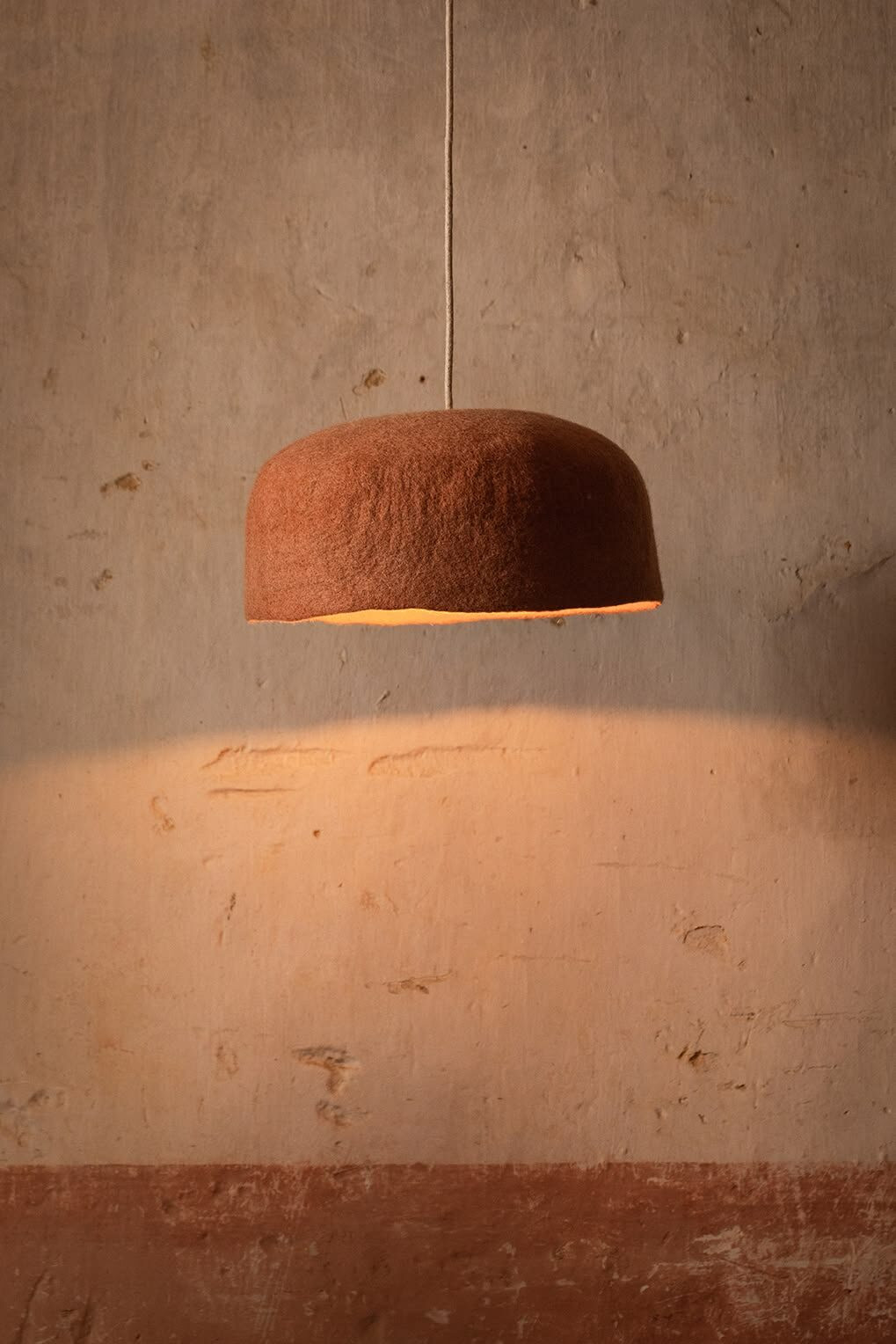
A solid shade, like the felted dome above, throws light down onto the table and leaves the ceiling dark, which is flattering. An open or glass fitting lights the whole room and is harder to make intimate.
How the rug below changes it
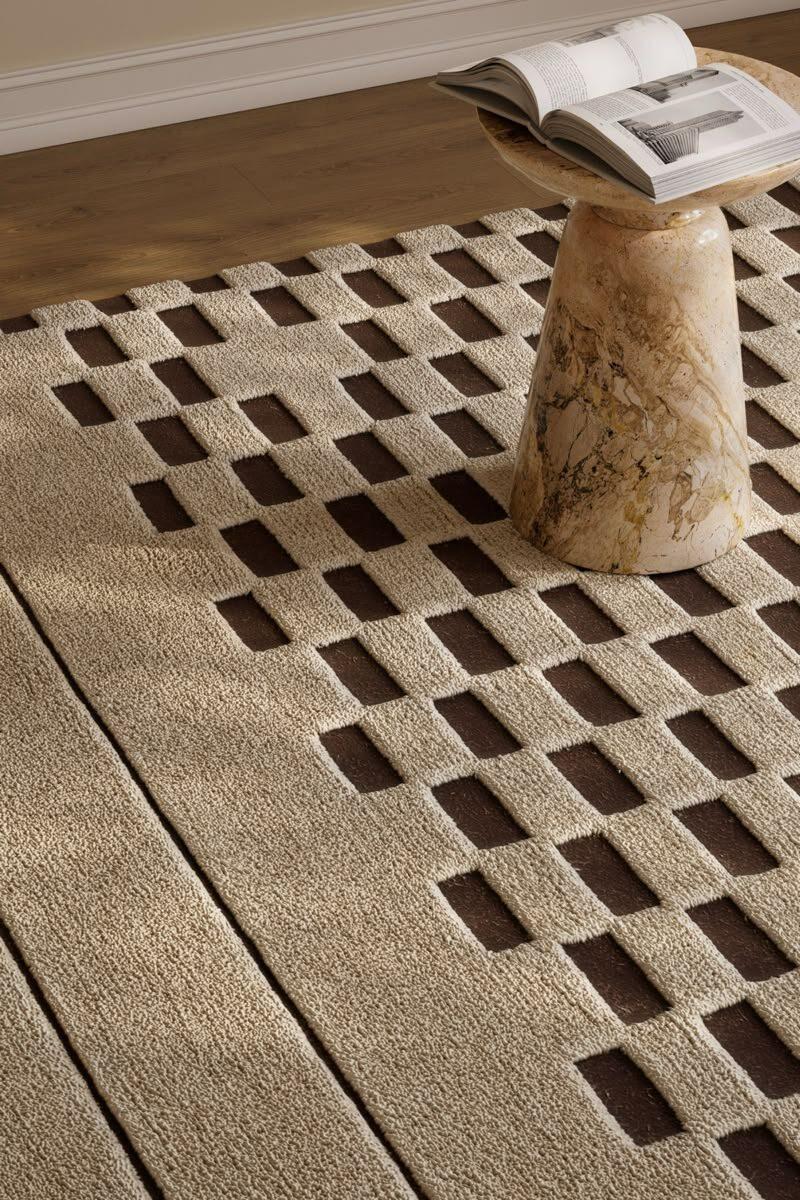
A dining rug is the one rug in the house that is looked at while people are seated, from a low angle, which is the angle at which pile texture shows most.
That argues for a downward-throwing pendant rather than a diffuse one. Light falling from a solid shade spills past the table edge and rakes the rug around the chairs, where the rug is actually visible.
It also argues for a low-pile or flatweave rug under a dining table, for the ordinary reason that chairs drag, and for the additional reason that a deep pile in raking light shows every chair track.
Size the rug so a chair stays fully on it when pulled out, which means sixty to seventy-five centimetres beyond every edge of the table. Sizes and fitting has the full set of dimensions.
Small things that get missed
Centre the pendant on the table, not on the room. These are rarely the same point, and a pendant centred on the ceiling above an off-centre table looks like a mistake because it is one.
Put it on a dimmer. A dining table wants bright light for a working lunch and low light at nine in the evening.
Use 2700K and a CRI of 90 or above. Food and wool both look wrong under cool white.
Check the shadow before you commit. A pendant hung slightly too low casts a hard ring on the table that no amount of dimming will fix.
Questions
How high should a pendant hang over a dining table?
Seventy-five to ninety centimetres from the tabletop to the bottom of the shade, with eighty as the default for a standard table under a 2.4 to 2.7 metre ceiling.
What size pendant for a dining table?
Roughly one third to one half the table's width. On a 90cm-wide table that means a 30 to 45cm shade.
How many pendants over a long table?
Two or three smaller ones rather than a single large fitting, spaced evenly and at least 75cm apart centre to centre.
What rug works under a dining table?
A low-pile or flatweave, sized to extend sixty to seventy-five centimetres beyond every edge so a chair stays on it when pulled out.