How to Style a Pouf: Six Places It Earns Its Keep
Styling · 17 October 2026 · 6 min · Published by Raheem & Son for RS Living
A pouf is a seat, a footrest and a side table depending on the hour. Where it works best, what size to choose and how to pair it with a rug.
What a pouf actually is
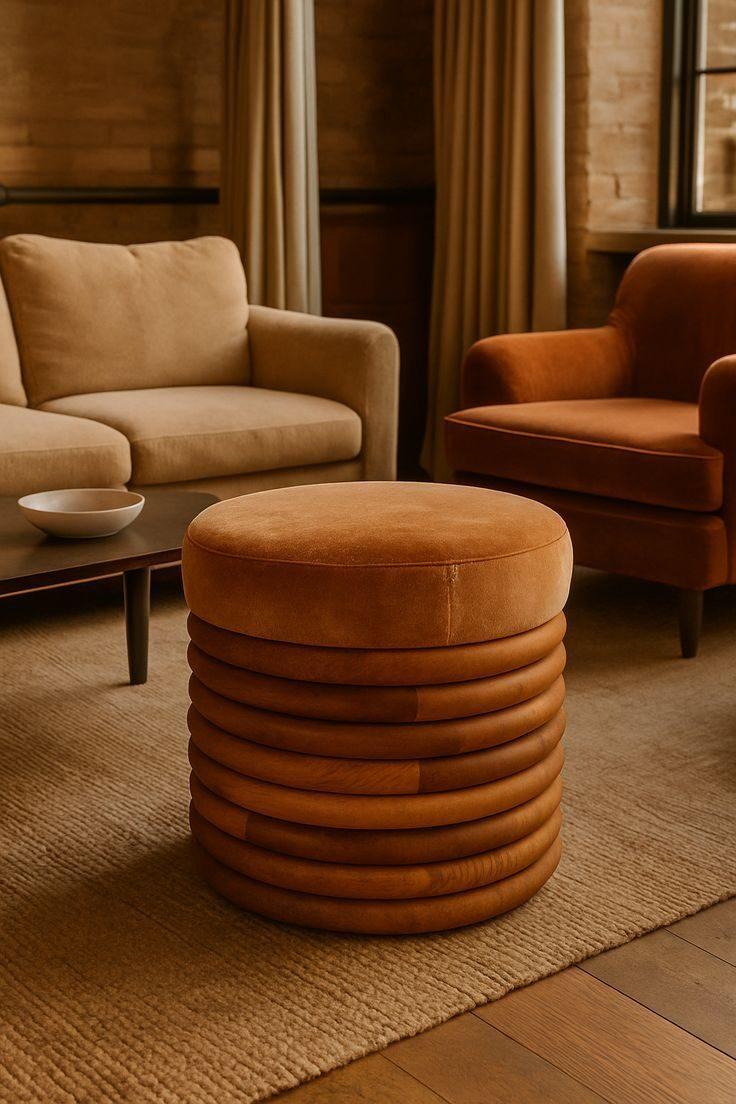
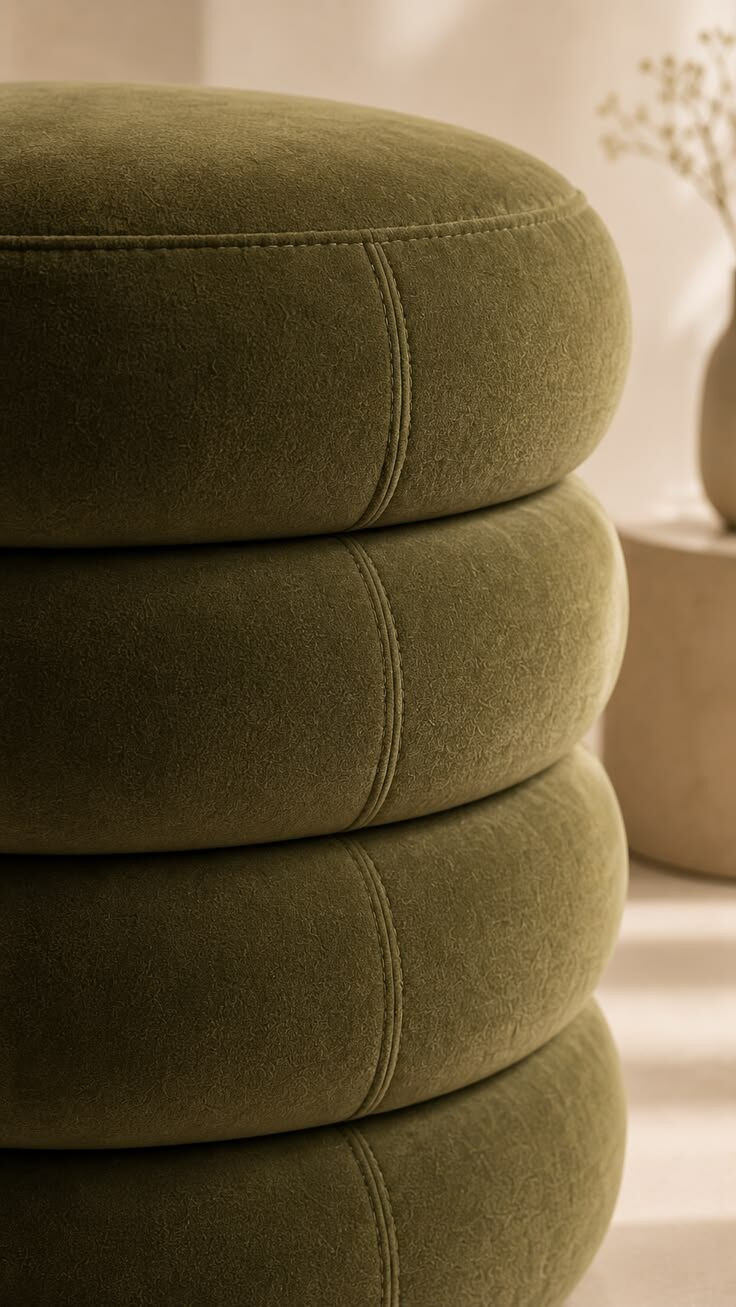
A pouf is a firm, low, upholstered seat with no frame and no legs. It sits directly on the floor, it moves with one hand, and it does three jobs: extra seat, footrest and, with a tray on top, a small table. That flexibility is the whole reason to own one, so the best place for a pouf is somewhere it will be asked to change jobs.
An ottoman usually has a frame, legs and sometimes storage inside. A pouf is simpler and softer. It is also lighter, which matters more than it sounds: a piece you can move without thinking gets moved, and a piece you have to plan around stays in one spot and becomes clutter.
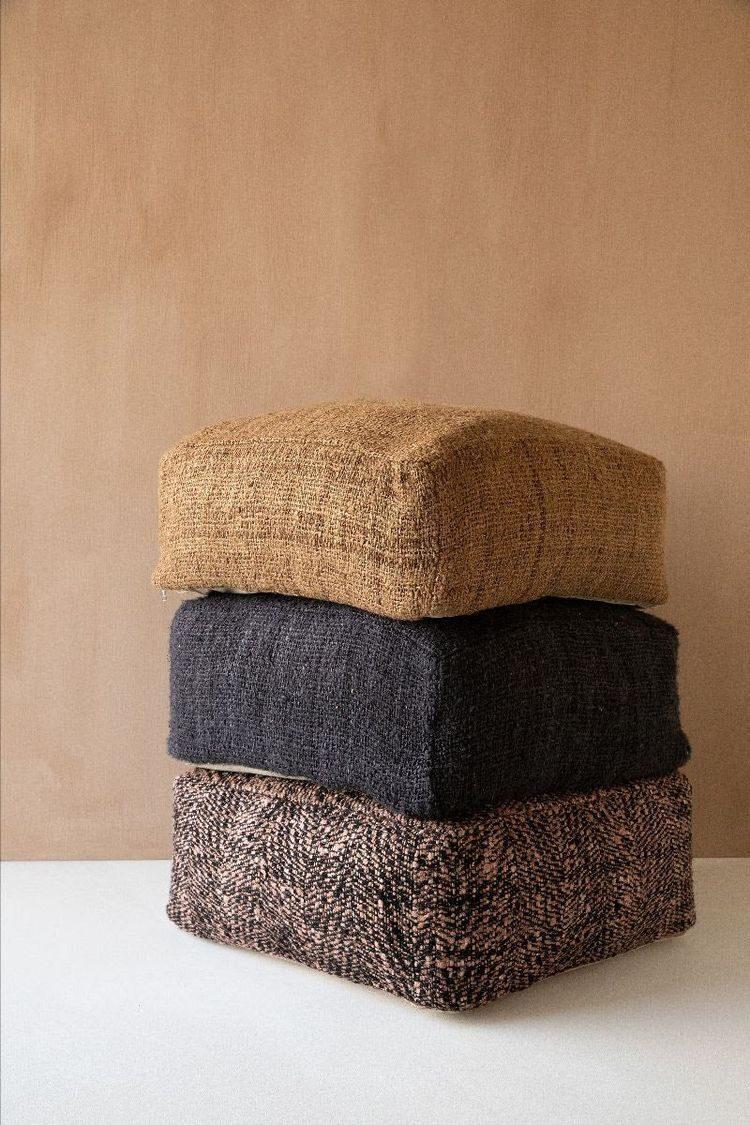
Most of our poufs are wool. Three are cowhide, and one is a jute and wool blend. Shapes run from ball and round drum to cube, tall and stool, and each shape suits a different job, which is what the rest of this guide is about.
In front of a sofa, instead of or beside a coffee table
The most common use is the simplest. Put a pouf in front of the sofa where your feet would go. In a small room it can replace the coffee table entirely; in a larger room, a pair of poufs either side of a low table gives you footrests and spare seats without adding chairs.
Height is the thing to check. A footrest wants to sit a little below the sofa seat so your legs rest level rather than angled up. A round drum or cube pouf at a typical sofa seat height or slightly under works well. Measure your sofa seat from the floor before you choose.
If the pouf is going to hold a tray, choose a flatter top. A ball pouf is lovely to look at and comfortable to sit on, but a tray slides on it.
At the end of a bed or in a bedroom corner
A pouf at the foot of a bed is a place to sit while you put shoes on, and a place to leave tomorrow's clothes. Two small poufs often look better there than one large one, because they leave a gap in the middle you can walk through.
In a bedroom corner with a chair, a pouf becomes the footrest that turns the chair into a reading seat. A tall pouf can also stand in for a bedside table beside a low bed, as long as you keep to a lamp and a book rather than a full glass of water.
Pairing a pouf with a rug
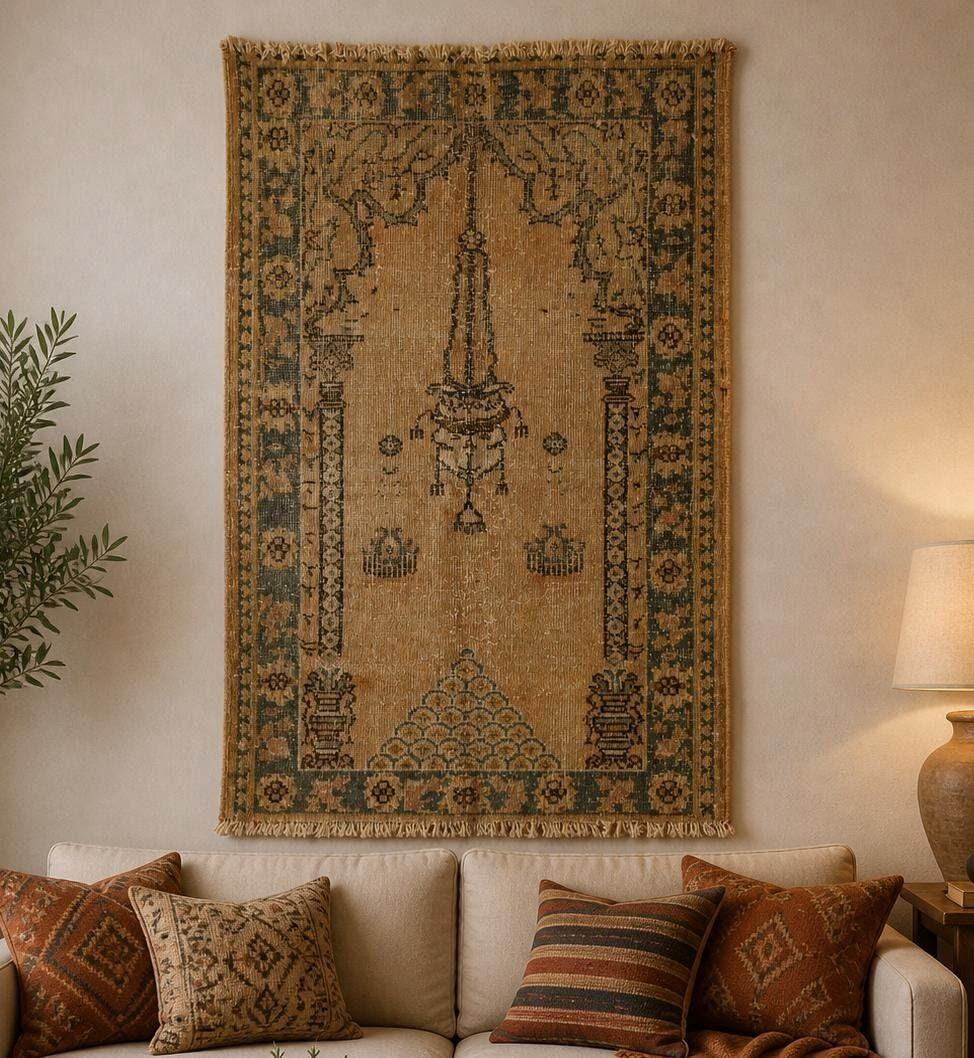
A pouf reads as part of the rug it stands on, so it is worth thinking about them together. On a patterned rug, a plain pouf in one of the rug's quieter colours keeps the floor calm. On a plain or natural rug, such as jute, a pouf with texture or a stronger colour gives the eye somewhere to land.
Keep the pouf on the rug rather than half on and half off. A pouf straddling the edge of a rug looks like it has been left there by accident. If the rug is small, move the pouf off it completely.
Texture contrast works better than colour matching. A smooth wool pouf on a knotted pile rug, or a cowhide pouf on a flatweave, looks deliberate. See matching a rug to your upholstery for the same principle applied to sofas.
Choosing a shape
Shape decides use more than size does.
| Shape | Best at | Watch for |
|---|---|---|
| Ball | Extra seat, visual softness | Not a stable surface for a tray |
| Round drum | Footrest, seat, tray table | Check height against your sofa seat |
| Cube and square | Lines up with sofas and beds, takes a tray | Reads more formal |
| Tall | Side table, perch beside a low bed | Less comfortable as a footrest |
| Stool | Compact seat in small rooms and hallways | Smaller top |
Living with it
Wool poufs want the same care as a wool rug: vacuum the surface with a brush attachment, blot spills straight away with a clean white cloth and cool water, and keep them out of sustained direct sun. Cowhide is different; see wool vs cowhide poufs.
Every pouf is made to order, with an estimated production time of about 45 days, and shipping is free. Images on product pages may be digitally rendered, so colour and texture can vary slightly from what you see.
A simple way to decide where yours goes
Before choosing a pouf, write down the one job you most want it to do. If the answer is "somewhere to put my feet up in the evening", it belongs in front of the sofa and its height matters most. If it is "a spare seat when people come round", it can live against a wall or beside a chair and be pulled into the group when needed, so weight and grip matter more than height. If it is "a surface for a tray or a book", the top must be flat and firm.
Then look at the room at the time of day you use it most. A pouf that is in the way of the route from the door to the sofa will be kicked and moved every day, and it will end up somewhere else. Put it where it does its main job without blocking a path, and the other jobs will follow on their own.
Common mistakes
Choosing by photograph alone. A pouf shot on its own looks bigger than it does next to a sofa. Measure the seat height and depth of the sofa you have and compare them with the pouf's dimensions before you order.
Too many poufs. One or two give flexibility; four or five turn a living room into a waiting room. If you need more seating than two poufs give, a bench or a chair is usually the better answer.
Matching everything. A pouf in exactly the colour of the sofa disappears. Pick a colour from the rug, or choose a texture that is clearly different, so the pouf reads as a deliberate piece.
Leaving it in the sun. A pouf by a sunny window fades on the side facing the light. Turn it now and then, as you would rotate a rug.
Three worked examples
A small flat with a two-seat sofa and no room for a coffee table: one round drum pouf in front of the sofa, a wooden tray on top for cups and the remote, lifted off when someone wants to put their feet up. One piece doing two jobs.
A family living room with a large L-shaped sofa: a pair of cube poufs tucked under the end of a rectangular coffee table, pulled out as extra seats when children or guests sit on the floor side of the table.
A bedroom with a reading chair in the corner: a tall or stool pouf beside the chair holding a lamp and a book during the day, moved in front of the chair as a footrest at night.
Questions
Can a pouf replace a coffee table?
In a small room, yes. Choose a round drum or cube shape with a flat top, put a tray on it for drinks, and you have a footrest and a table in one piece.
What height should a footrest pouf be?
A little below your sofa or chair seat height, so your legs rest level. Measure the seat from the floor and choose a pouf at or slightly under that.
What are RS Living poufs made of?
Most are wool. Basil, Evander and Elise are cowhide, and the Rafa pouf is a jute and wool blend.
Should a pouf sit on the rug?
Yes, fully on it. If the rug is too small for that, move the pouf off the rug entirely so it does not straddle the edge.