The Pouf as a Functional Object with a Craft History
The Moroccan pouf, particularly the version made from natural leather and hand-embossed or hand-dyed, has become one of the more visible objects of the global craft-interiors movement. Its appeal is partly aesthetic and partly functional: it is seating, a footrest, a side table, a design accent, and a soft object that can be repositioned without effort. In spaces where formal furniture feels too rigid, the pouf introduces a note of flexibility.
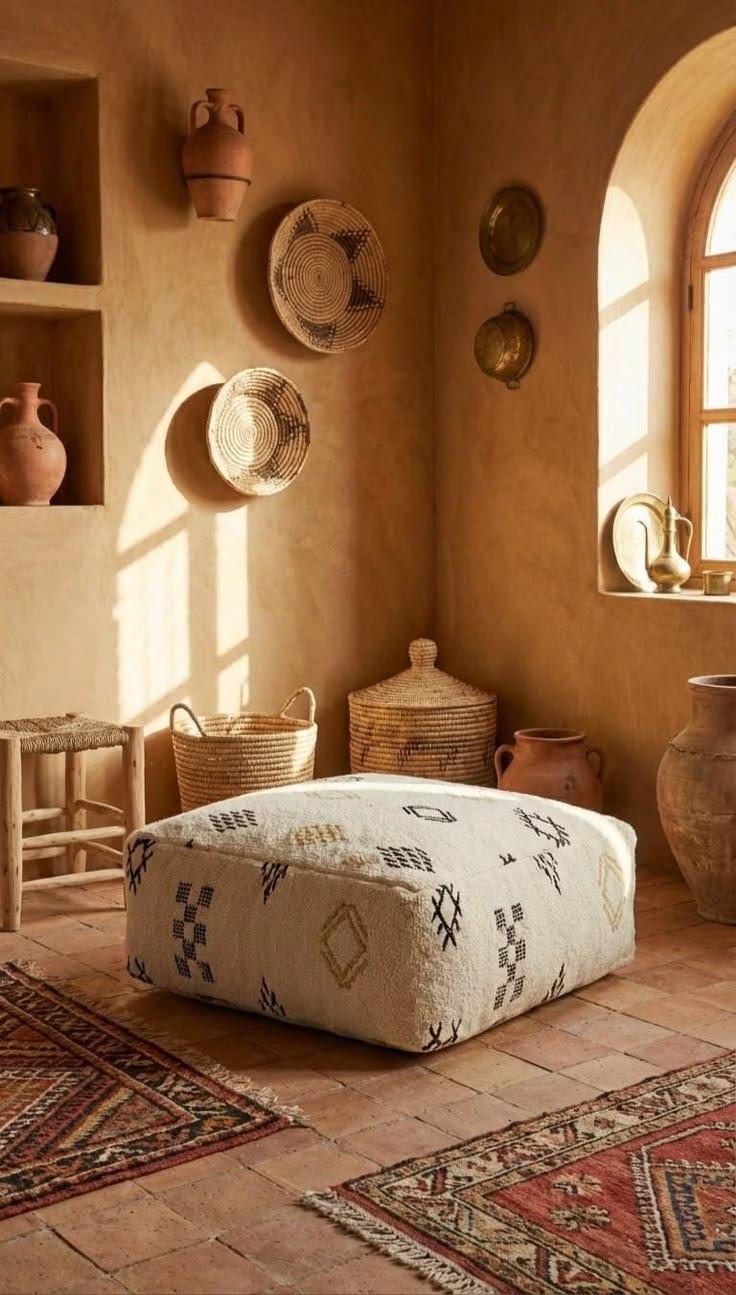
The Berber weaving tradition that produced the flatweave kilim and the Beni Ourain pile rug also encompasses a broader material culture of floor-centred living, including cushions, bolsters, and woven floor pieces that are designed to be used at ground level. Floor cushions woven in the Berber idiom, with geometric patterns and undyed or naturally dyed wool, are part of this same tradition. Understanding their origin helps clarify how to use them well.
Materials and Construction: What to Look for in a Quality Pouf
Leather poufs vary considerably in quality. At the highest end, full-grain leather, tanned in the traditional tanneries of Fez or similar centres, is hand-cut, hand-stitched, and hand-tooled or hand-dyed. The surface has natural variation and, over time, develops a patina that improves the object rather than degrading it. Lower-quality poufs use split leather or bonded leather, which is stiffer, more uniform, and less likely to age well.
Woven poufs and floor cushions, particularly those made from Berber wool, should be assessed by the same standards as any handwoven textile: consistent tension, clean edges, fibres that are soft and resilient rather than scratchy, and dyes that are even and stable. The filling also matters. A well-made pouf should feel firm enough to function as a seat without compressing flat, but not so rigid that it is uncomfortable. Natural fillings such as wool scraps or cotton rags are traditional; synthetic fillings are common and practical.
Placing Poufs and Floor Cushions in a Room with a Rug
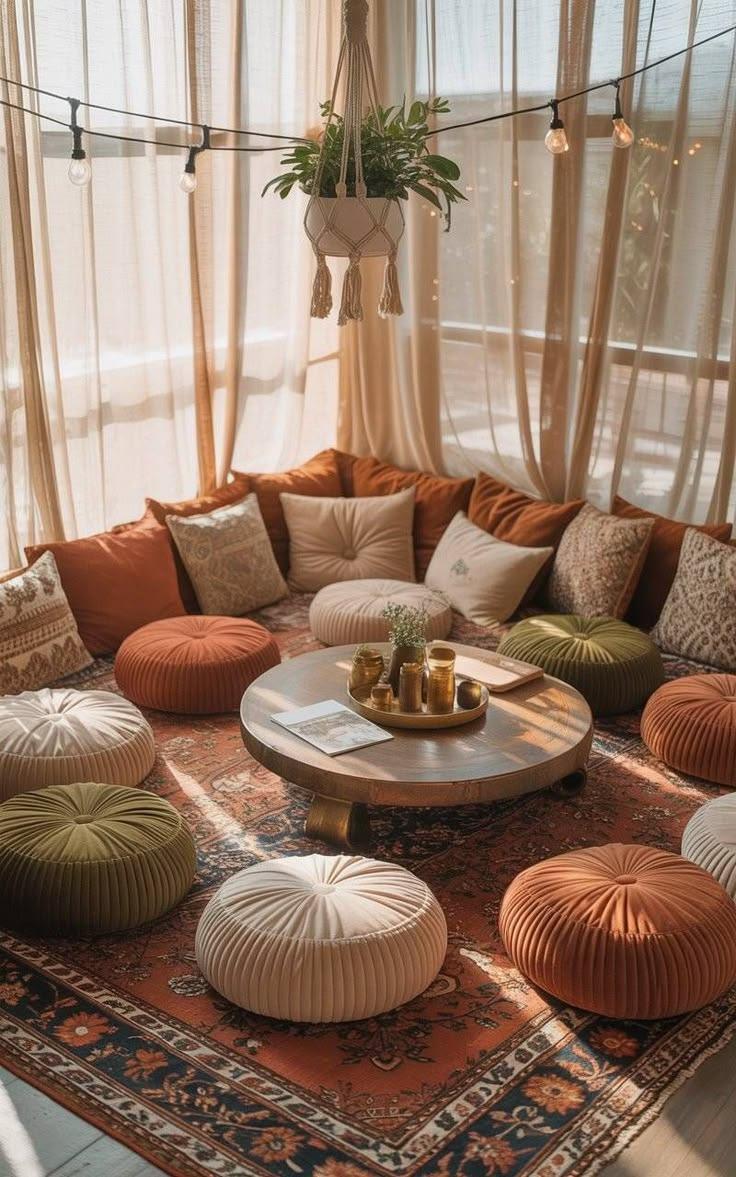
The most common use of a pouf in a contemporary interior is as an element within a seating composition anchored by a central rug. A pouf placed within the rug's border reads as part of the floor composition and adds a layer of height variation to what is otherwise a flat plane. Two or three poufs grouped near a low coffee table, on a rug that defines the seating area, create a sitting zone that invites informal use without requiring additional furniture.
The relationship between pouf and rug is primarily tonal. A leather pouf in warm tan or amber works naturally on a rug with ochre or terracotta tones; a darker charcoal leather reads more strongly against lighter, neutral pile. Woven Berber poufs in undyed or lightly dyed wool sit most naturally on similarly neutral or geometric-pattern rugs, avoiding visual competition between the two textured objects.
For interiors with a strong layered-floor approach, our piece on the complete guide to layering rugs covers the compositional principles that apply equally to adding non-rug floor objects.
Scale and Proportion: Getting It Right
A pouf that is too small for the room or too large for the rug it is placed on will look like an afterthought rather than an intention. Standard poufs are typically around 50 to 60 centimetres in diameter and 30 to 35 centimetres in height, though considerable variation exists. For a large living room with a generous rug, one or two poufs of standard size may look sparse; a cluster of three or four, varied in size and placed with deliberate asymmetry, creates the kind of casual abundance that works in that context.
In smaller rooms or on more modest rugs, a single well-chosen pouf is often more effective than multiple. The object should feel like it belongs in the space rather than having been placed there to fill a gap. When in doubt, err on the side of fewer objects of higher quality rather than more objects of lesser quality.
Floor Cushions and the Ground-Level Interior
Floor cushions, particularly large cushions at 60 or 70 centimetres square, suit interiors that lean toward a ground-level domestic culture: spaces where people sit low, eat low, or simply prefer a relaxed floor-level arrangement. This is not a new idea; it is the arrangement of most traditional homes across North Africa, the Middle East, South Asia, and Japan, adapted here for contemporary contexts that often lack the dedicated low-table furniture to complete the picture.
Flat kilim cushions, stuffed firmly with a feather or wool filling, are among the most versatile floor objects available. They can be stacked for height, spread for breadth, or propped against a wall as a backrest. Their flatwoven faces take dye in a way that produces strong, saturated geometric patterns, and they are durable enough to withstand the kind of casual, everyday use that would quickly degrade a more fragile decorative cushion.
Our floor seating and the living floor piece explores the broader design logic of ground-level living in more depth.
Mixing Berber Objects with Non-Moroccan Interiors
One of the persistent styling challenges with Berber poufs and floor cushions is avoiding the effect of a themed or costume-style interior, where every object signals a single cultural reference. The best use of these objects is as individual pieces within a diverse interior rather than as elements of a Moroccan-inspired room set.
A single leather pouf in an otherwise spare Scandinavian-influenced living room, placed on a neutral flatweave, introduces warmth and craft without making a cultural statement. A group of woven Berber cushions against a linen sofa in a calm, neutral interior works for the same reason: the objects are valued for their material quality and their visual character, not as signifiers of a specific place.
Care and Longevity of Leather and Woven Poufs
Leather poufs require occasional conditioning with a natural leather conditioner to maintain suppleness and prevent cracking. Keep them away from direct prolonged sunlight, which can fade the dye and dry the leather. If spilled on, blot immediately with a dry cloth rather than wiping, which can spread the liquid and leave a tidemark.
Woven floor cushions should be rotated regularly if they are used as seating, to distribute wear evenly across the surface. Spot clean with a damp cloth and allow to dry fully in air before returning to use. Avoid machine washing, which can distort the structure of flatwoven wool. For a deeper clean, seek a specialist textile cleaner with experience in handwoven pieces. Our care and cleaning resource covers general principles that apply to both rugs and woven textile objects.
Frequently asked
Can a leather pouf be used outdoors?
Natural leather poufs are not suitable for outdoor use in wet conditions. If you want a pouf for a covered outdoor area, look for options made from treated or synthetic leather that is specified for outdoor use.
How do I choose a pouf that works with my existing rug?
Match tonally rather than trying to coordinate pattern. A pouf in a tone that echoes one of the secondary colours in the rug tends to work well. Avoid very close colour matches, which can make the objects look like an unsuccessful attempt at uniformity.
What filling is best for a pouf that will be used as a seat?
A firm filling that does not compress flat under weight is preferable for seating use. Traditional natural fibre fillings are good; if you are buying an unfilled pouf, a dense wool or cotton filling is recommended over loose polyester.
Are Berber poufs suitable for homes with young children?
Yes. They are soft, floor-level, repositionable, and generally robust. Leather surfaces wipe clean relatively easily. Woven surfaces are harder to clean after liquid spills, so a leather pouf may be the more practical choice in high-use family rooms.
By RS, 5 November 2025
More in Interiors and Styling.
Follow the journal in Google Search. Readers who add us as a preferred source see our writing marked in Top Stories and in AI Overviews.