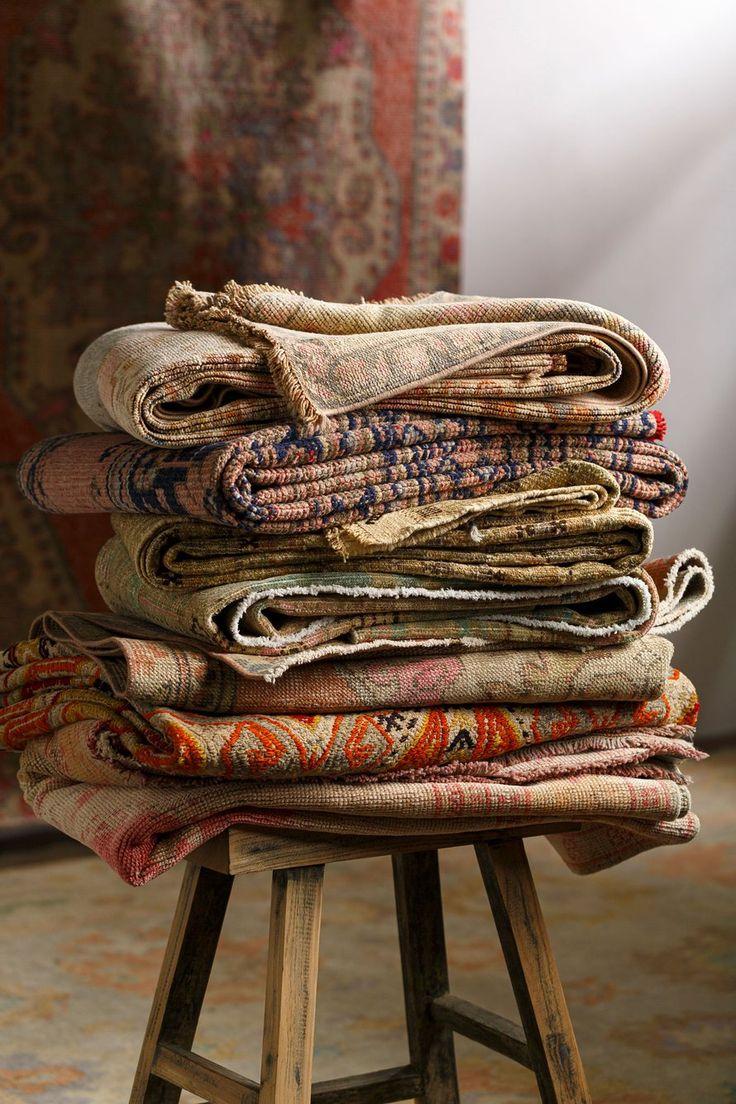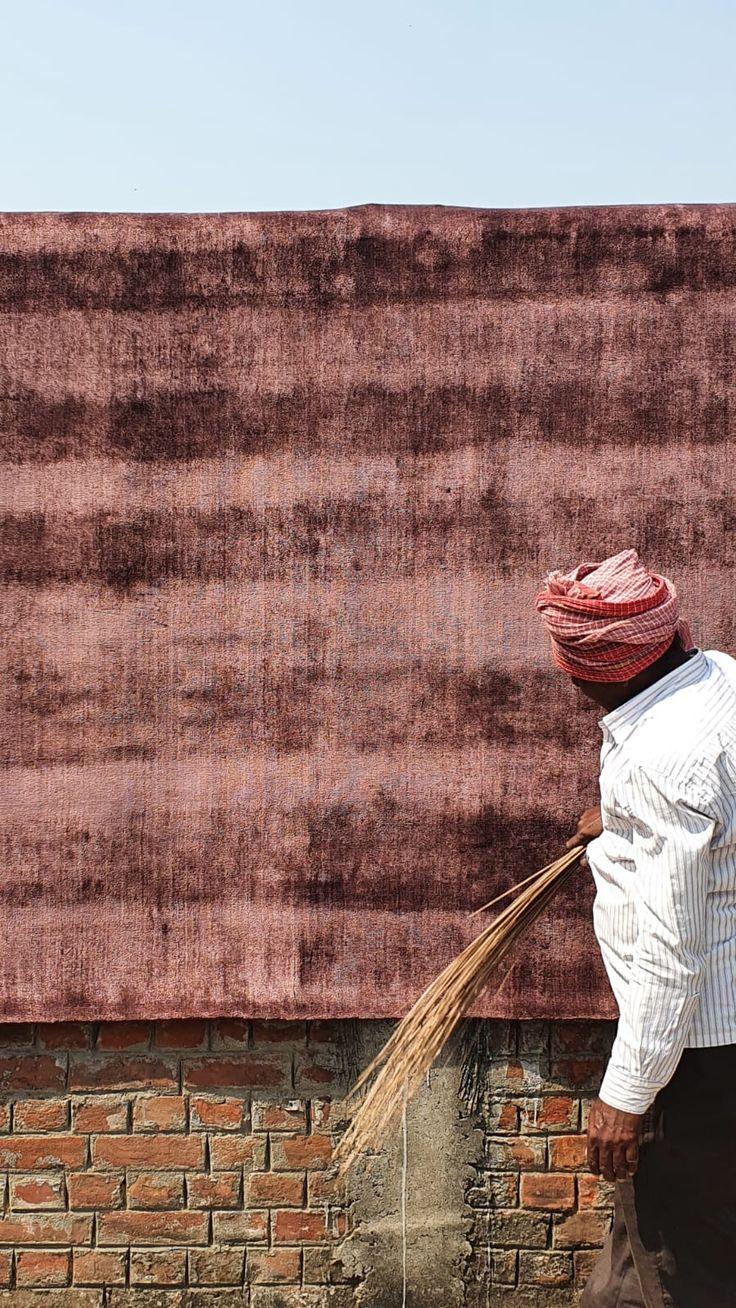
The Ground Plane as a Design Intention
In many of the world's most refined domestic traditions, the floor is not a surface you walk across to reach furniture but the primary site of living. Japanese tatami arrangements, Moroccan majlis rooms, Indian darbar layouts, and the low-slung interiors of many Scandinavian informal spaces all treat the ground plane as a place to inhabit rather than a surface to cover. The shift toward floor seating in contemporary Western interiors reflects a rediscovery of this older logic.
The rug, in a floor-seating arrangement, changes its role entirely. It is no longer a surface treatment for a room organised around elevated furniture. It becomes the room itself: the warm, softened ground on which people sit, recline, and gather. The choice of rug is therefore more consequential in this kind of interior than in almost any other context.
What the Rug Must Provide
In a floor-seating arrangement, the rug must function as both floor covering and upholstery. It is in direct contact with the human body at points that conventional rugs rarely are: the side of a leg, the back of a knee, the palm of a hand. Its texture and pile quality become immediately, physically legible rather than visually appreciated from a standing distance.
Softness matters more here than in any other residential application. A medium to high pile hand-knotted wool rug is ideal because the pile provides cushion under the body and the wool fibre is naturally warm to the touch. The underlay beneath the rug is also more important than usual: a generous felt or felt-rubber underlay adds a layer of softness between the rug and the hard floor that significantly improves the experience of sitting directly on the surface.
Our rug process page explains how pile density and wool quality translate into the tactile experience, which is particularly relevant when choosing a rug for a living floor.
Layering for the Living Floor
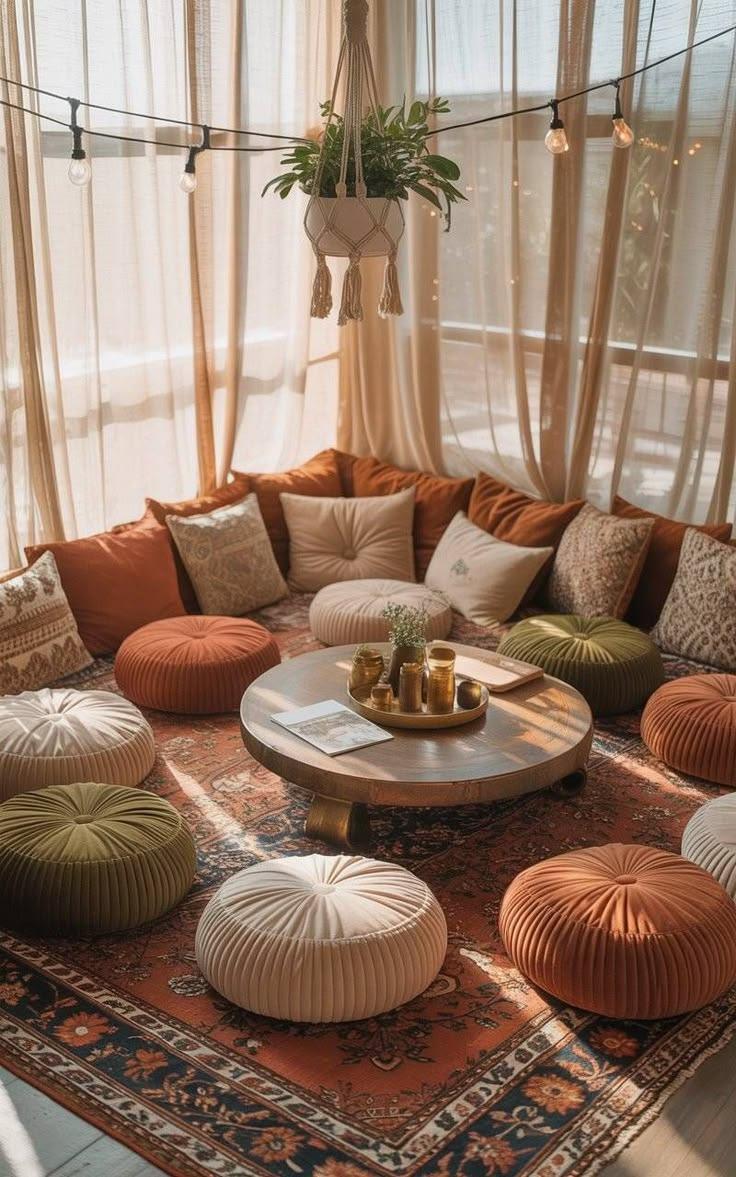
Layering takes on a different logic in a floor-seating context. Rather than using a smaller upper rug as a decorative accent within a furniture grouping, layering here is about building depth under the body. A large, flat natural-fibre base with a generous pile rug over it creates a surface that is both stable and comfortable. Additional cushions, bolsters, and low ottomans can be placed on this layered ground to define smaller zones within the larger space.
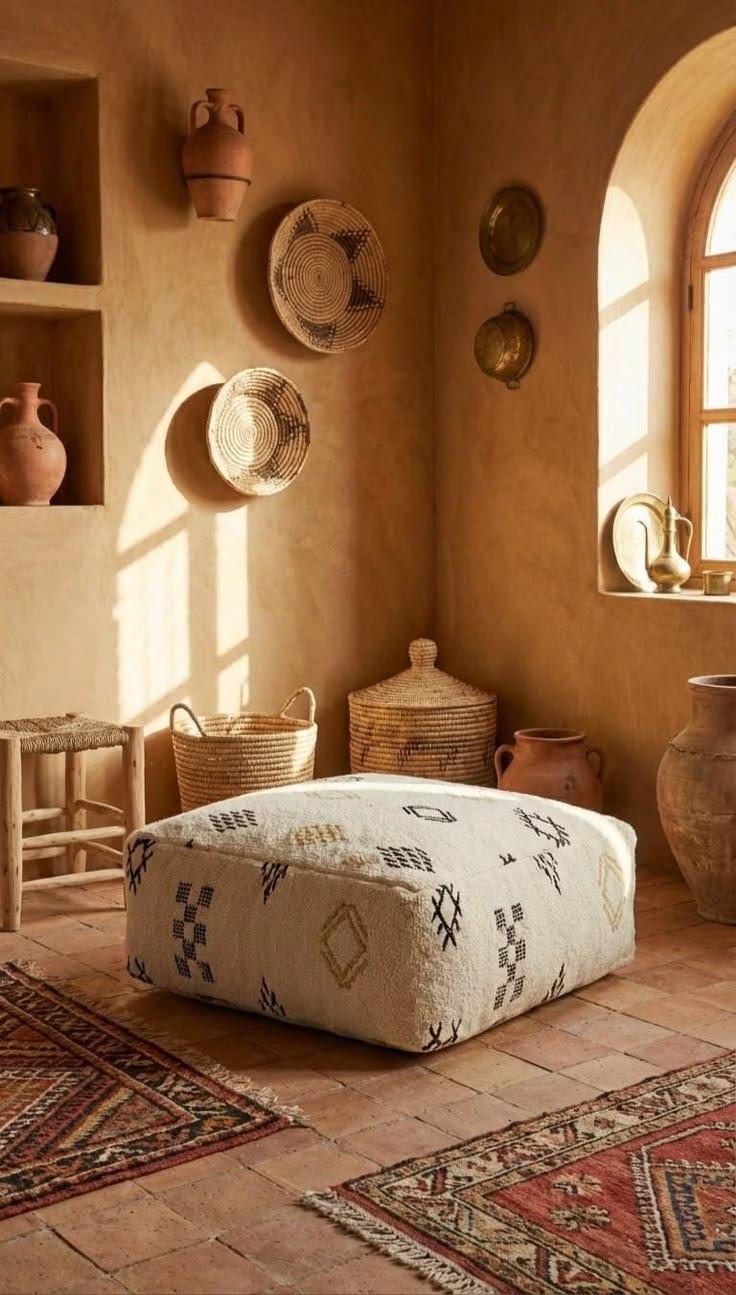
In Moroccan-influenced interiors, the floor layer is sometimes supplemented by wrapped bolsters and large floor cushions covered in woven or embroidered textiles that relate to the rug beneath them. The visual effect is of a room whose comfort is distributed across the entire floor rather than concentrated in a few elevated seats. The rug is the infrastructure for all of this.
Low Furniture and the Floor Level
Floor seating works best when the furniture hierarchy in the room is consistent. A room with a low coffee table and floor cushions but conventional sofa height reads as unresolved. If the room is organised around the floor plane, the low table, low shelving, and any elevated furniture should remain close to the ground: a platform bed rather than a four-poster, a bench at thirty to forty centimetres rather than a standard chair at forty-five.
This is also a spatial efficiency argument. A room organised around floor living typically feels larger than a conventionally furnished room of the same dimensions because the eye line is lower and the upper half of the room is largely clear. The ceiling height reads as more generous. The room breathes.
Pattern, Colour, and the Living Floor Aesthetic
The aesthetic of a living floor room tends to favour richness over restraint, though both approaches are possible. Moroccan and Middle Eastern references bring strong geometric pattern, warm terracotta and deep indigo, and layered textiles. Japanese references favour plain or very subtly textured surfaces, natural materials, and extreme reduction. Indian references can be either, depending on the specific influence: a darbar-style room may use very rich colours and detailed flatweaves, while a more contemporary Indian interior might use a single large natural-dyed wool rug in a muted palette.
Whatever the aesthetic register, the rug should be large enough to contain the entire seating area. In a living floor context, a rug that is too small produces a floating effect that undermines the idea of the room being grounded in the textile. The rug should ideally define the room's zone from wall to wall, or at least encompass the entire inhabited area. Visit our collections to explore formats suitable for this kind of arrangement.
Practical Maintenance for a Heavily Used Rug
A rug in a living floor arrangement is subject to more sustained body contact than a rug under furniture, which means it collects more skin cells, body oils, and incidental food and drink residue. Regular vacuuming, at least once or twice weekly in a lived-in space, is essential. Professional cleaning should happen more frequently than for a conventionally used rug: annually rather than every few years.
Rotating the rug periodically ensures wear is distributed evenly across the surface rather than concentrated in the heaviest-use areas. Our care and cleaning guide details the full maintenance routine for pile and flatweave rugs in high-use contexts.
Frequently asked
What pile height is most comfortable for floor seating?
A medium pile of approximately ten to fifteen millimetres provides enough cushion to be comfortable under the body without being so high that it feels unstable for seated postures. Densely knotted medium pile is more supportive than loosely knotted high pile.
Can a flatweave kilim work for floor seating?
A kilim works best for floor seating when paired with a generous underlay and supplemented by floor cushions. On its own, a flatweave has no pile cushioning, which makes it less comfortable for sustained contact than a pile rug.
How large should a rug be for a floor seating room?
As large as the space allows. In a living floor context, the rug should contain the entire inhabited area. A rug that ends before the seating area creates an uncomfortable boundary underfoot.
Are there specific rug shapes that work better for floor seating rooms?
Large rectangles are the most practical for most rooms. Square rugs work well in rooms where seating radiates from a central point. Circular rugs can work in smaller conversation areas but rarely cover enough area for a full floor seating arrangement.
By RS, 14 January 2026
More in Interiors and Styling.
Follow the journal in Google Search. Readers who add us as a preferred source see our writing marked in Top Stories and in AI Overviews.