What Is the Foundation of a Rug and Why Does It Matter?
Every hand-knotted rug is built on a foundation of vertical and horizontal threads: the warp, which runs the length of the rug, and the weft, which runs across it. The pile you see and touch is tied around the warp threads row by row, and the weft threads lock each row in place after knotting. Together, these unseen threads are the skeleton of the rug.
The quality and material of the foundation determine whether the finished rug lies flat and stays flat, whether it holds its dimensions under tension during weaving, and how it behaves over decades of use. A rug with a weak or poorly tensioned foundation will develop waves, lose its shape, and eventually distort beyond recovery. A rug with a sound foundation, properly tensioned and correctly finished, will remain stable for a century or more.
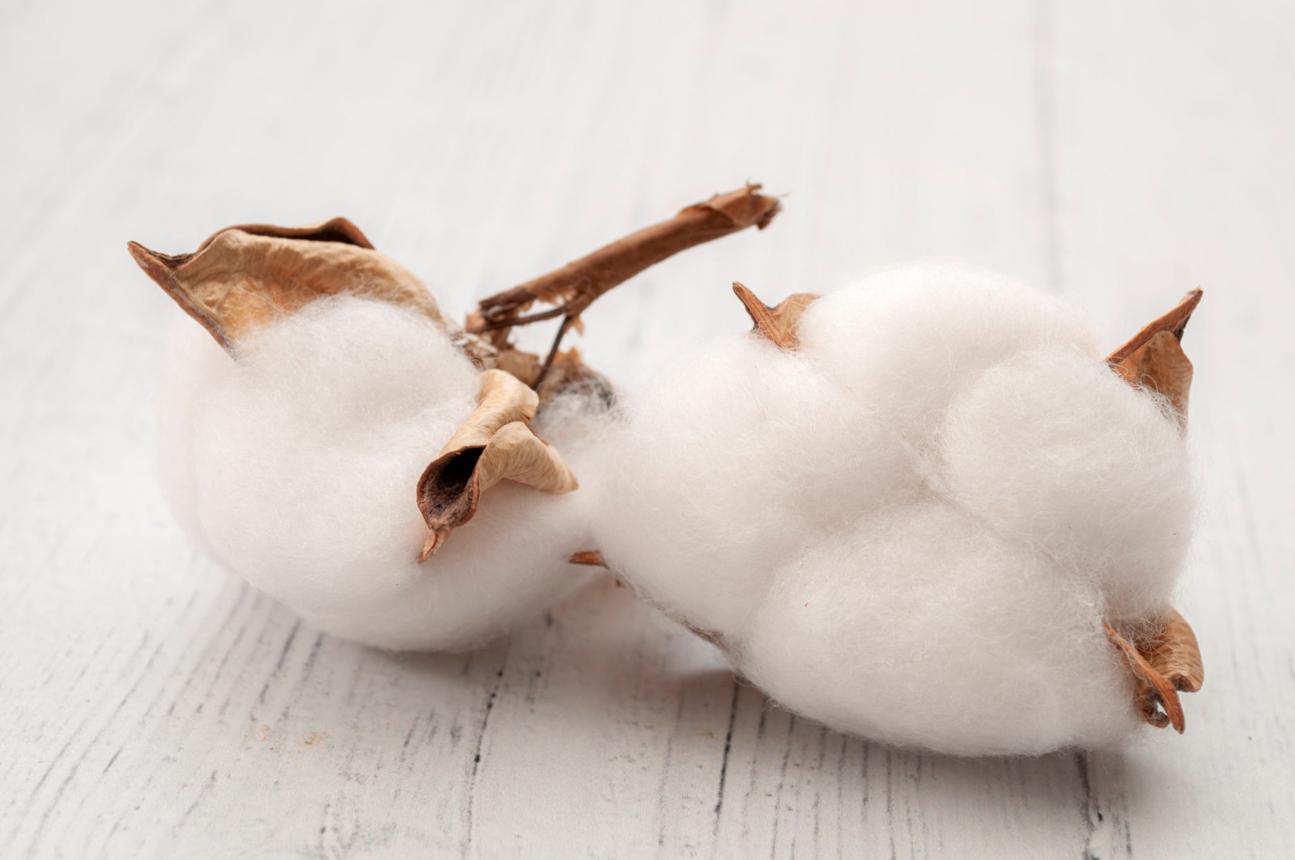
Cotton is the material of choice for the foundation in most high-quality hand-knotted rugs, and for good technical reasons.
Why Cotton Is Preferred for Warp and Weft
Cotton has properties that make it almost uniquely suited to the structural role it plays in a handmade rug. It has very low elasticity compared to wool or silk, which means it does not stretch under the considerable tension that loom-weaving places on the warp threads. This dimensional stability is what allows a large rug to maintain square, even corners rather than pulling or bowing.
Cotton is also exceptionally strong in proportion to its weight. A cotton warp thread can bear the tension required to hold hundreds of rows of tightly packed knots without breaking or fatiguing. It is resistant to moisture in the sense that it does not weaken significantly when wet, which matters during the washing stages of rug production and throughout the rug's working life.
The smoothness of spun cotton also allows the weft threads to slide cleanly into place after each row of knotting, ensuring that the pile is packed evenly and that the finished surface is level. A coarser or more elastic foundation fibre would make this levelling more difficult and the finished surface less consistent.
Cotton Warp vs Wool Warp: What the Difference Means for You
Some rug-weaving traditions use wool for the warp, particularly in tribal and nomadic rugs where cotton was not readily available. Wool-warped rugs have their own character and are often sought by collectors for their softness and informality, but they behave differently from cotton-warped pieces in practical terms.
A wool warp stretches slightly, which can cause the rug to pull slightly across its length when placed under consistent weight or foot traffic. Wool-warped rugs also tend to be softer and more flexible, which some buyers prefer but which can make flat laying more challenging, particularly on smooth floor surfaces.
For most residential and commercial applications, a cotton warp delivers better long-term dimensional performance. If you are comparing hand-knotted constructions or reviewing a specification sheet, the warp material is worth noting alongside the pile fibre.
The Weft: Cotton's Second Structural Role
The weft threads pass horizontally through the warp after each row of knots is tied, locking the row in place. In most hand-knotted constructions, two or more passes of weft are made per row, each beaten down with a metal comb to pack the row tightly and create a level surface for the next row of knotting to begin.
Cotton weft threads perform this locking function with precision because of their consistency and tensile strength. They grip the warp threads firmly, prevent row migration, and create the dense, stable surface that gives a well-made hand-knotted rug its characteristic solidity underfoot.
In some constructions, particularly older or tribal pieces, wool or silk weft may be used. These variations are not inferior but they do produce a rug that feels and behaves differently. A buyer examining a rug specification should look for information on both warp and weft materials, not just the pile.
Cotton as Pile: A Different and Underused Material
While cotton's primary role in rug-making is structural, it can also appear as a pile fibre. Cotton pile rugs have a distinct aesthetic: they are flat, clean, and cool to the touch, with a matte surface that reads differently from wool or silk. They are particularly effective in warm climates or minimalist interiors where a textured wool pile might read as too heavy.
Cotton pile has limitations. It does not have the natural crimp of wool, which means it does not spring back after compression in the same way, and it can flatten under sustained foot traffic more readily. For purely decorative applications or lightly used rooms, this is rarely a problem. For high-traffic areas, a wool pile on a cotton foundation is generally the more durable choice.
Cotton pile also takes dye differently from wool, producing flatter, more consistent colour fields with less tonal variation. This can be an asset in designs that require clean, solid areas of colour.
What to Look for When Evaluating a Rug's Foundation
When examining a handmade rug, the foundation is not directly visible from the face, but it can be assessed from the back. A rug with a cotton foundation will show a clean, flat, slightly structured back with clear row lines. The warp and weft threads will be visible at the edges and in the fringe, where they emerge as the natural extension of the warp.
The fringe of a genuine hand-knotted rug is not sewn on separately. It is the actual warp threads of the rug, cut and finished at the end of weaving. A rug with a cotton warp will have a firm, stable fringe that lies flat. A rug with a sewn-on fringe is indicating that the foundation is different from what the fringe implies, which is worth investigating before purchase.
Our rug process guide explains the construction stages in more detail and may help buyers interpret what they see when examining a rug from the back.
Cotton and the Long-Term Life of a Handmade Rug
The cotton foundation of a well-made handmade rug is one of the reasons these pieces last as long as they do. Cotton does not degrade under normal indoor conditions and does not attract the moth damage that can affect wool pile if a rug is stored without proper care. The structural integrity of a cotton-warped rug remains sound even after the pile has worn and the rug has been professionally washed multiple times over decades.
Buyers considering a handmade rug as a long-term acquisition should understand that the foundation material is as important as the pile fibre in determining the rug's lifespan. A wool pile rug on a sound cotton foundation, properly cared for, is not a purchase to be replaced. It is a purchase to be maintained and passed on.
For advice on caring for a handmade rug throughout its life, our care and cleaning guide covers everything from routine maintenance to professional washing.
Frequently asked
Why is cotton used for rug warps rather than wool or synthetic fibres?
Cotton has very low elasticity and high tensile strength, which keeps the rug dimensionally stable during weaving and throughout its life. Wool warps stretch under tension, which can cause shape distortion. Synthetic warps are used in lower-grade productions but do not perform as well over time.
Can I tell what a rug's foundation is made of without cutting into it?
Yes, to a good degree. Examine the fringe closely. If it is cotton, the threads will be smooth, firm, and consistent. Looking at the back of the rug will also reveal the warp and weft threads. A cotton foundation has a distinctive clean, flat appearance.
Does cotton pile feel different from wool pile?
Yes. Cotton pile is cooler, flatter, and has a matte finish compared to the warmth and slight sheen of wool. It does not spring back as readily under compression, but it offers a very clean, contemporary aesthetic that works well in specific design contexts.
Does the foundation material affect how a rug is cleaned?
The foundation should be considered when planning professional cleaning. Cotton foundations respond well to wet washing, which is why traditional rug washing methods are safe for most hand-knotted rugs. Your care provider should be informed of the foundation material as part of the cleaning assessment.
By RS, 2 October 2025
More in Materials and Construction.
Follow the journal in Google Search. Readers who add us as a preferred source see our writing marked in Top Stories and in AI Overviews.