Why Bhadohi Is the Right Starting Point for Bulk Rug Procurement
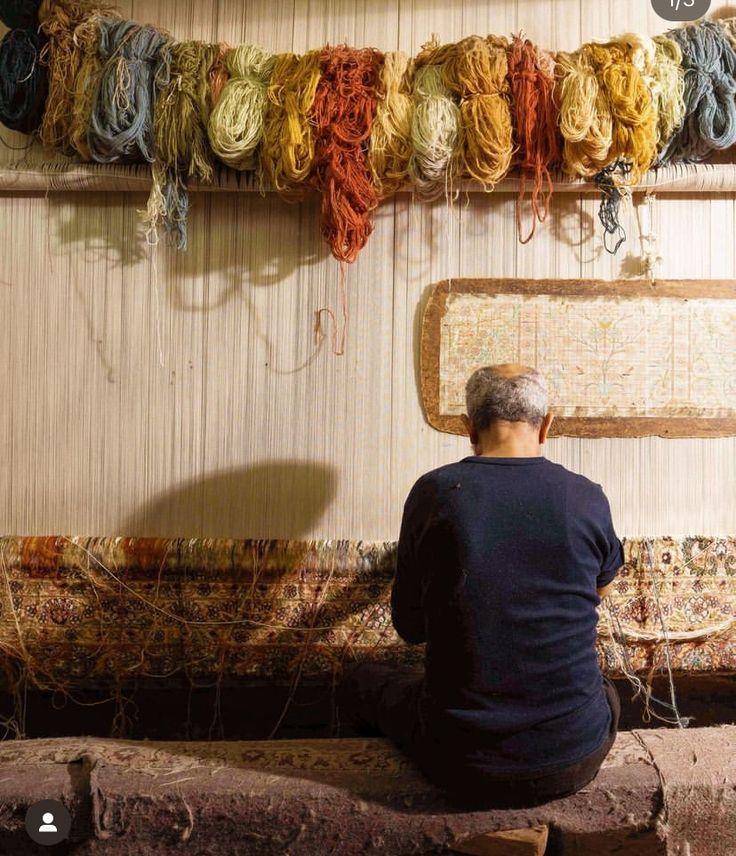
Bhadohi, in the eastern part of Uttar Pradesh, is the undisputed centre of India's hand-knotted carpet and rug industry. The cluster concentrates weavers, dye houses, washing facilities, finishing workshops, and export infrastructure within a compact geography, which means that a manufacturer operating here can co-ordinate large production runs with a level of oversight that is simply not possible when sourcing from dispersed village workshops. Raheem and Son has been weaving in Bhadohi since 1927, across four generations and more than 1,400 looms. That depth of local knowledge is not easily replicated.
For buyers placing a bulk order from India for the first time, the most important early decision is not which design to choose but which partner to work with. The manufacturing landscape in Bhadohi ranges from family-run operations with deep craft knowledge to intermediary traders who outsource production without direct loom oversight. The distinction matters because quality consistency across a large run depends on the manufacturer's ability to control every production stage, from yarn sourcing to final washing. Our manufacturing overview explains how we structure production oversight for bulk commissions.
CEPC registration (Carpet Export Promotion Council) is one indicator worth checking. It confirms that the exporter is a recognised participant in the Indian carpet trade, with access to official export documentation and compliance support. We hold CEPC registration and can provide documentation to buyers who require it as part of their supplier qualification process.
Building a Brief That Produces the Right Sample
A bulk order from India begins long before a purchase order is raised. It begins with a brief, and the quality of the brief determines the quality of the sample, which in turn determines the quality of the production run. Buyers who arrive with vague requirements receive approximations; buyers who arrive with precise specifications receive rugs that match their vision. The brief should state the construction type (hand-knotted, hand-tufted, or flatweave), the primary fibre (wool, silk, bamboo silk, or a blend), the knot density range required, the size ladder, the colourway direction, and the intended end market.
Colourway communication is where most briefs go wrong. Digital renders look different on every screen, and the gap between a monitor colour and a dyed wool pile under showroom lighting can be significant. Supply physical references wherever possible: paint chips, Pantone codes, fabric swatches, or existing product samples that represent the target palette direction. Our team will produce tuft cards in the actual fibre before cutting a sample, giving you a low-cost checkpoint before committing loom time. Visit our how-to-order guide for the brief template we use with wholesale and import accounts.
Size specification requires more precision than buyers sometimes expect. Confirm whether the stated size is the finished size including selvedge and fringe, or the pile area only. Confirm which sizes in your ladder sit within standard loom widths and which require custom loom set-ups, since the latter add to both lead time and cost. If you are running a retail range with a standard size ladder, share the full ladder from the outset so that the manufacturer can plan loom allocation across the programme.
Sampling Lead Times and What to Expect at Each Stage
Sampling for a bulk order typically passes through two stages. The first stage is a colour and construction sample, usually a small woven piece of 30 to 50 centimetres square, showing the pile height, knot density, colourway, and a representative motif. This stage takes between 25 and 35 days from brief confirmation at our facility. The purpose is to align on the physical product before investing full loom time in a production-scale sample.
The second stage is a production sample, sometimes called a strike-off, which is a piece at or near the full production size in the exact specification that will go into bulk. This is the sample against which the buyer gives written approval and against which the pre-shipment inspection is calibrated. Revisions between stage one and stage two are normal and should be budgeted into the project timeline. Buyers who expect to approve a first sample and move straight to production often find themselves frustrated; buyers who build two sample rounds into their calendar manage the process smoothly.
Once sample approval is given in writing, bulk production begins. Lead times from sample approval to container-ready product start at approximately 60 days for hand-knotted construction at moderate knot density and can extend further for very fine constructions, large size runs, or complex colourways. Flatweave and hand-tufted constructions are faster. Discuss your target delivery date with our bulk quote team at the outset so that we can advise on feasibility before production commences.
Quality Controls That Should Be in Every Bulk Order Agreement
A written quality specification sheet, agreed before production begins, is the cornerstone of a well-managed bulk order. This document should record the agreed knot count per square decimetre, pile height in millimetres with tolerance, warp and weft material, pile fibre specification, washing method, and size tolerances. It creates an objective reference for pre-shipment inspection and protects both buyer and manufacturer if a dispute arises.
Pre-shipment inspection by an independent third party is standard practice for serious import programmes and should be written into the purchase order as a condition of final payment. Inspectors check pile height, knot density on a sample basis, colour consistency between pieces, size accuracy, selvedge quality, and packing condition. The fee for a third-party inspection is a small fraction of the order value and is far less costly than receiving a container of goods that does not meet your buyer's expectations.
Dye lot consistency across a large run requires specific attention. Request that dye lot samples from the beginning, middle, and end of each production batch be retained and available for inspection. Where a design is produced in multiple colourways, each colourway should have its own dye lot record. Our manufacturing process covers the quality checks we build into every stage of production, from yarn receipt to finished packing.
Flexible Volumes and What No Minimum Order Quantity Actually Means
A common concern among buyers approaching a manufacturer for the first time is whether their volume is large enough to be taken seriously. At Raheem and Son, we do not impose a fixed minimum order quantity. This reflects a deliberate commercial position: we work with buyers at many different scales, from designers commissioning a small run for a retail concept to importers placing multi-container annual programmes. The right volume for a first order is the volume that lets us produce your specification consistently, which depends on the design and construction, not on an arbitrary threshold.
That said, the economics of hand production mean that very small quantities of a single design carry higher unit costs than larger runs. Loom set-up, dye batching, and washing each have fixed costs that spread more efficiently across larger pieces. The most cost-effective structure for a buyer who wants multiple designs at modest quantities per design is to consolidate into a single order across the full range rather than placing individual orders design by design.
For buyers who want to test a new supplier relationship before committing to a large programme, a structured test order is the most practical approach. Agree a specification, place a modest first order, conduct your own inspection on receipt, and assess quality and communication before scaling. Our trade programme is designed to make this process straightforward, with a dedicated contact for each account and clear documentation at every stage.
Documentation, Incoterms and Getting Your Order Home
A standard bulk rug export from India includes a commercial invoice, packing list, bill of lading or airway bill, certificate of origin issued by the relevant authority, and, where the fibre specification requires it, a phytosanitary certificate. Your customs broker should confirm the correct HS code classification for your specific construction and fibre combination before the order ships, as duty rates vary by country and product type.
Most Bhadohi exporters ship on FOB (Free on Board) terms from the port of Nhava Sheva (near Mumbai) or occasionally from Kolkata for east-coast destinations. CIF (Cost, Insurance, Freight) terms are available from many exporters for buyers who prefer to have the manufacturer arrange ocean freight, though FOB gives the buyer more control over freight costs and carrier choice. Whichever Incoterm you agree, confirm explicitly who holds responsibility for marine insurance during the ocean transit.
Packing quality directly affects the condition in which goods arrive. Handmade rugs should be rolled face-inwards around a core, wrapped in polythene, and packed in cartons or woven PP bags appropriate to the weight. Confirm packing specifications with your supplier and ensure that carton markings meet the import requirements of your destination country. Our team can advise on packing standards for your specific trade lane and, where required, arrange palletisation for container or less-than-container load shipments.
Frequently asked
Is there a minimum order quantity for bulk rugs from Raheem and Son?
We do not impose a fixed minimum order quantity. Volume requirements depend on the construction type and design complexity rather than an arbitrary threshold. Contact our team with your specification and we will advise on the most practical order structure for your needs.
How long does a typical bulk rug order take from brief to delivery?
From brief to container-ready product, allow between 90 and 130 days for hand-knotted construction, including two sample rounds. This covers sampling (25 to 35 days), any revisions, bulk production (from 60 days), pre-shipment inspection, and container loading. Flatweave and hand-tufted orders are faster.
Which documents does an importer need when shipping rugs from India?
Standard documentation includes a commercial invoice, packing list, bill of lading, and certificate of origin. Your customs broker will advise on any additional requirements for your specific market, HS code, and fibre combination.
Can I visit the production facility before placing a bulk order?
Yes. Factory visits are welcome and strongly recommended for buyers planning significant annual programmes. Seeing the weaving halls, dye facility, and washing units in person gives you a reliable basis for supplier qualification. Contact our team to arrange a visit schedule.
By RS, 21 June 2026
More in Sourcing and Suppliers.
Follow the journal in Google Search. Readers who add us as a preferred source see our writing marked in Top Stories and in AI Overviews.