Why the Source Matters as Much as the Product
Sourcing handmade rugs in bulk is not simply a procurement exercise. Every piece carries the accumulated decisions of a workshop: the grade of wool selected, the natural dye ratios mixed, the knot density held constant across a production run. When those decisions are sound, the rugs that arrive in your warehouse are consistent, saleable, and able to bear your margin. When they are not, no amount of photography conceals the variation.
Bhadohi, in Uttar Pradesh, has been the centre of India's hand-knotted carpet industry for generations. The concentration of weavers, dye houses, and finishing workshops in one region means that experienced exporters can co-ordinate large runs efficiently. That said, not every workshop operating in the cluster maintains the same standards, so due diligence at the sourcing stage is essential. Our about page explains the family lineage behind Raheem and Son and why origin and oversight matter for every consignment.
Defining Your Brief Before You Approach a Supplier
Before requesting quotes, buyers should be able to specify the construction type (hand-knotted, hand-tufted, flatweave), the primary fibre (wool, silk, bamboo silk, jute, or blends), the approximate knot density range required, the size run, and the colourway direction. Suppliers who receive vague briefs produce vague samples, and vague samples lead to disputes on delivery.
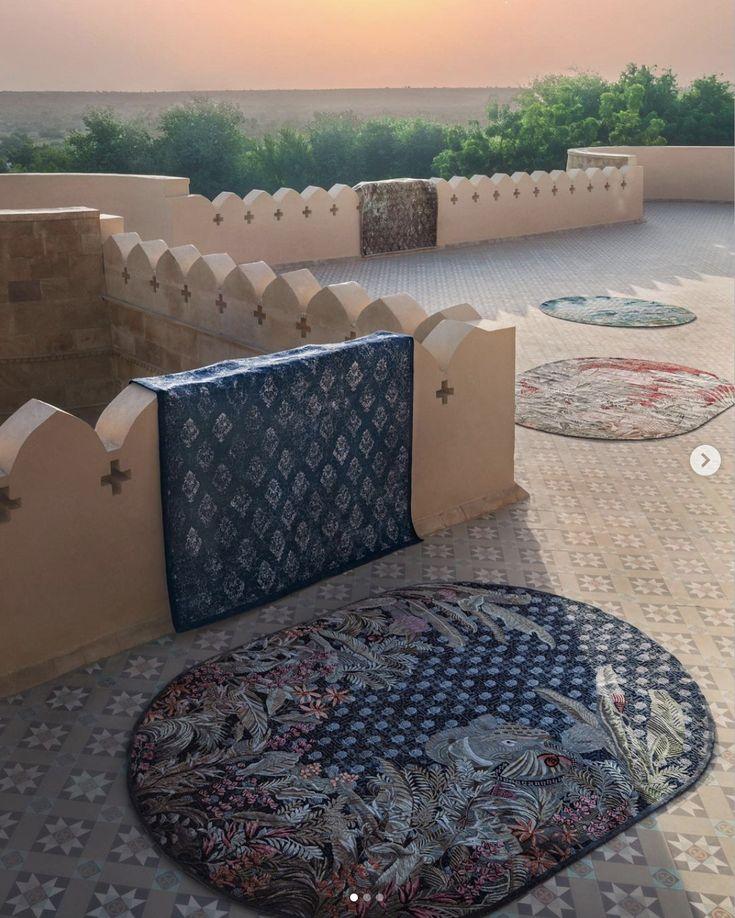
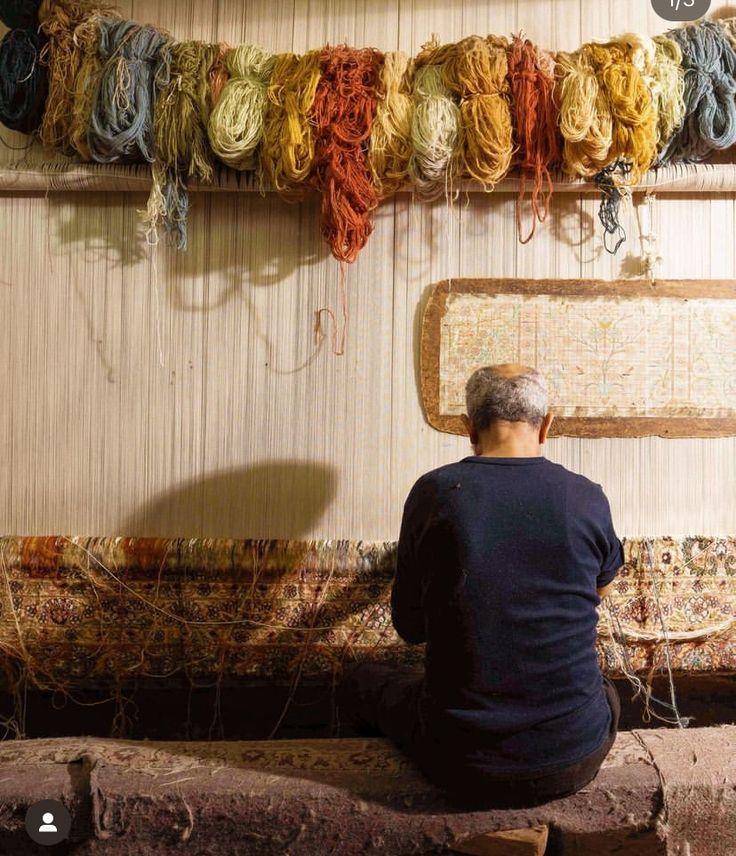
Colourways are a particular source of friction. If you are buying to complement an existing retail range, bring Pantone or RAL references. If you are open to the supplier's palette, ask to see their current dye cards alongside finished samples rather than digital renders, as screen colour and dyed pile are rarely identical. Our digital library includes reference imagery that importers are welcome to use as directional guidance when briefing our team.
Size runs for retail are typically a ladder: for example, 2x3 ft, 4x6 ft, 5x8 ft, 8x10 ft, 9x12 ft. Confirm which sizes have standard loom widths available and which require custom loom set-ups, as custom looms add to both lead time and minimum order quantities.
Quality Controls That Should Be Non-Negotiable
Consistent pile height, straight selvedges, squared corners, and matched dye lots are the baseline. Beyond the baseline, ask for a written quality specification sheet before production begins. This document should record the agreed knot count per square decimetre, the pile height in millimetres, the warp and weft material, and the washing and finishing method. It forms the reference against which pre-shipment inspection is conducted.
Pre-shipment inspection by an independent third party is standard practice for serious import programmes. Inspectors measure pile height, check for defects (knot skips, colour bleeding, size deviation), and verify packing. Budget for this cost from the outset. The small fee relative to order value is far cheaper than a container of goods that do not meet your customer's expectations.
Ask your supplier whether they operate under any environmental or social certification. While certifications vary in rigour, a supplier who has pursued independent auditing is generally more willing to be transparent about their production chain. Our sustainability page outlines how we approach responsible sourcing of fibre and natural dyes.
Lead Times: What is Realistic for Hand-Knotted Production
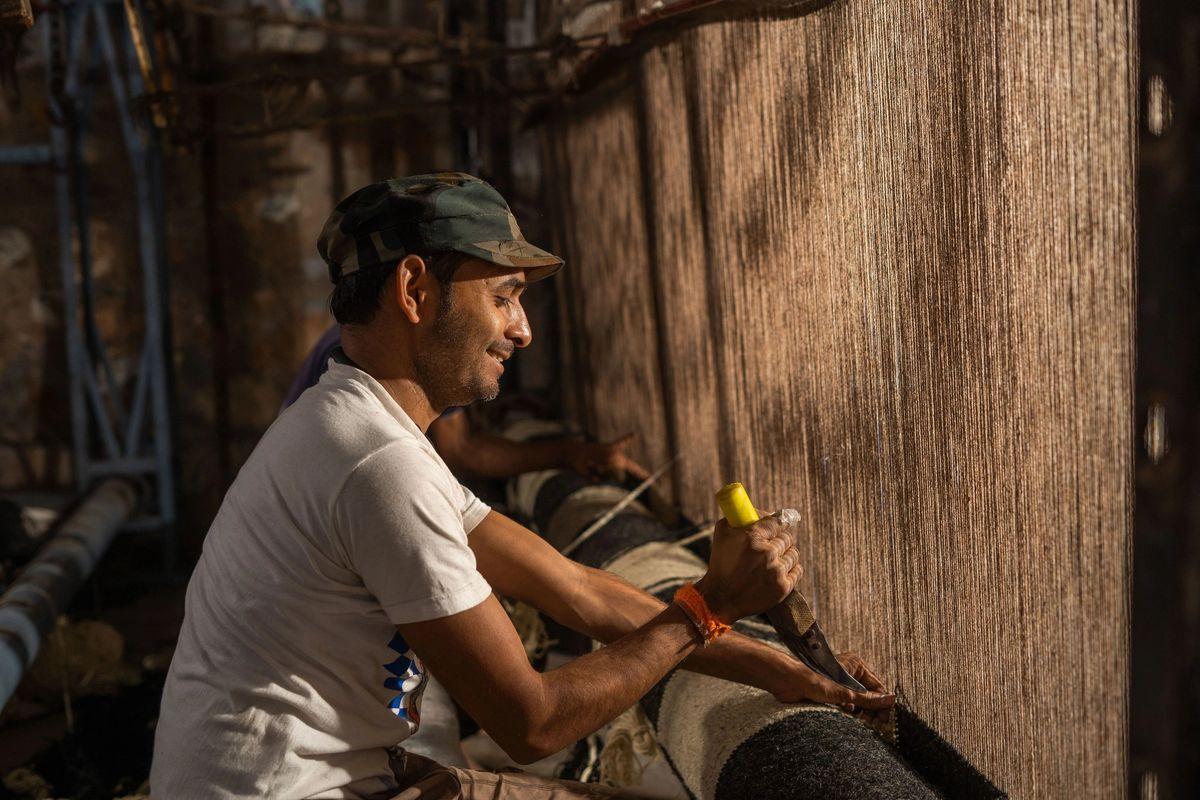
Hand-knotted rugs are slow to make. A skilled weaver working on a piece of moderate knot density can complete roughly one square foot per day, which means that a production run of several hundred pieces requires weeks of loom time plus finishing. Buyers who plan seasonal ranges should work backwards from their floor date and add a buffer for inspection, customs clearance, and domestic freight.
Generally speaking, production lead times for hand-knotted orders depend on pile complexity, size range, and workshop capacity. Flatweave and hand-tufted constructions are faster. Rush orders are sometimes possible for established accounts but usually carry a premium and may require the buyer to accept a reduced size range. Our trade programme gives registered buyers clearer visibility into current production windows.
Plan your annual buying calendar with your supplier, not against them. Exporters who know your seasonal peaks can reserve loom capacity, pre-position yarns, and stage production across the year so that neither party is scrambling.
Documentation, Duties and Shipping Logistics
A standard rug export from India includes a commercial invoice, packing list, bill of lading or airway bill, certificate of origin, and, where required, phytosanitary or CITES documentation for specific fibres. Buyers who are new to importing from India should confirm the HS code classification of their goods with their customs broker before placing an order, as duty rates vary by construction and fibre.
Most large rug exporters are accustomed to shipping on FOB (Free On Board) terms from the nearest port, though CIF (Cost, Insurance, Freight) terms are also common for smaller buyers. Establish who is responsible for marine insurance on each shipment. For high-value hand-knotted consignments, insurance is not optional.
Packing quality affects the goods in transit. Rugs should be rolled face-inwards, wrapped in polythene, and packed in sturdy cartons or woven bags rated for the weight. Check that your supplier's packing method matches the transit conditions your logistics chain imposes, particularly if goods will be handled multiple times before reaching your warehouse.
Building a Long-Term Sourcing Relationship
The best import programmes are partnerships built over several seasons, not spot purchases. A supplier who knows your retail positioning, your quality floor, and your growth plans can invest in the right loom capacity, train weavers to your specific standards, and flag when a raw material (for example, a particular grade of highland wool) is subject to supply pressure.
Factory visits, even infrequent ones, change the relationship. Seeing the loom room, meeting the washing team, and understanding the constraints of hand production creates a shared frame of reference that prevents most of the misunderstandings that arise from distance. If you cannot visit in person, a structured video walk-through of your first production run is a reasonable substitute.
If you are ready to explore a bulk sourcing conversation with our team, the contact page is the right starting point. We ask buyers to share a brief covering construction, fibre, size range, and approximate annual volume so that we can give you an informed response rather than a generic catalogue.
Frequently asked
What is a typical minimum order quantity for bulk hand-knotted rugs?
Minimum order quantities vary by workshop and construction type. Hand-knotted pieces have higher minimums than tufted or flatweave because of the loom set-up investment. We recommend discussing your planned volume directly with our trade team, who can confirm what is feasible for your specific size and design brief.
Can I order a mix of sizes within one bulk order?
Yes. Most exporters accommodate size ladders within a single order. The key is to confirm which sizes share a standard loom width and which require separate set-ups, as this affects pricing and lead time.
How do I verify dye lot consistency across a large production run?
Request dye lot samples from the beginning, middle, and end of the production run before the goods are packed. A reliable supplier will welcome this request. Your pre-shipment inspector can also check for dye lot variation as part of their standard AQL sampling.
What certifications should I look for when sourcing rugs from India?
Look for suppliers who can provide transparency on their wool sourcing and dye inputs. Social compliance audits (covering working conditions and fair wages) are increasingly requested by European and North American buyers. Specific certification schemes vary, so discuss requirements with your compliance team and share them with the supplier early.
By RS, 8 September 2025
More in Sourcing and Suppliers.
Follow the journal in Google Search. Readers who add us as a preferred source see our writing marked in Top Stories and in AI Overviews.