The Distinct Visual Role of Lustre Fibres in a Rug
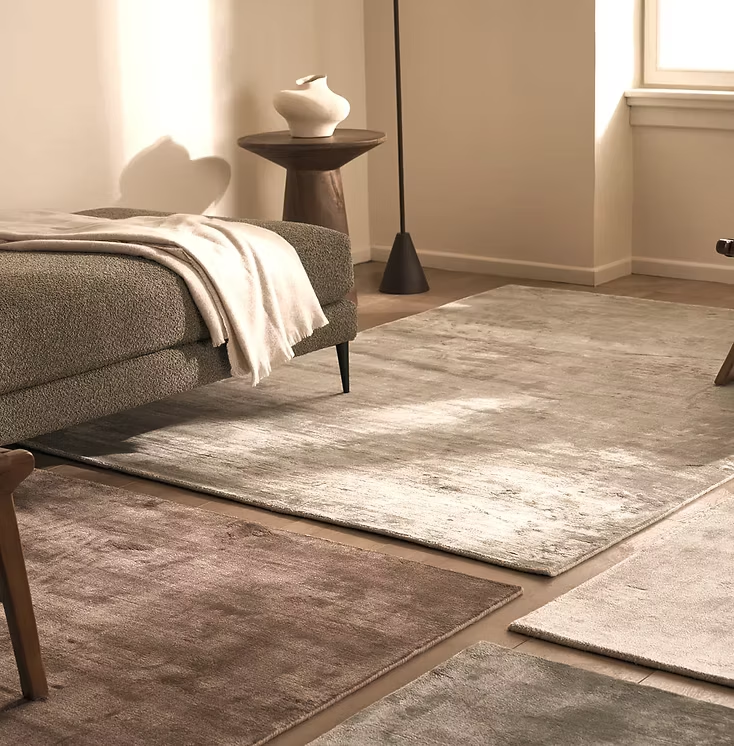
Wool, however fine, absorbs light. Silk reflects it. The practical consequence of this optical difference is that a rug incorporating silk or bamboo silk pile appears to shift in colour and depth as the viewing angle changes, as the light moves across the room, or as different light sources illuminate the space. This quality, called chatoyancy in gemology, is one of the reasons silk rugs have been prized across cultures for centuries.
Incorporating lustre fibres into a rug design is not simply about adding shimmer. When used with restraint, silk or bamboo silk highlights can make a motif appear to float above the surrounding wool ground. When used across the full pile, they produce a piece of exceptional visual richness. Understanding the difference between genuine silk and bamboo silk (also called art silk or viscose) is essential before specifying or purchasing either. Our rug process page illustrates how different fibres are incorporated at the loom.
Genuine Silk: Properties, Performance and Price
Genuine silk is a protein fibre produced by the Bombyx mori silkworm. The filament is exceptionally fine, very strong for its weight, and has a natural triangular cross-section that reflects light at multiple angles, producing the characteristic silk lustre. In a rug pile, genuine silk allows very high knot densities because of its fineness, enabling exceptional design detail.
Genuine silk rugs, particularly all-silk pieces, are among the most labour-intensive and expensive handmade rugs produced. The material cost is high, the knotting is slow because the threads are fine and require care, and the production is specialised. All-silk rugs from centres such as Qom in Iran or Kayseri in Turkey represent the apex of the craft.
In Indian production, genuine silk is used both in all-silk rugs and in wool-silk blends. A wool pile rug with silk highlights in the motifs combines the durability of wool with the visual impact of silk without the full cost of an all-silk piece. For buyers who want the quality of genuine silk without the premium of an all-silk rug, a blend is often the most practical choice.
Bamboo Silk: What It Is and How It Compares
Bamboo silk, also called art silk, viscose silk, or Tencel depending on the specific source, is a regenerated cellulose fibre produced from plant matter (bamboo, wood pulp, or other cellulose sources). The fibre has a lustrous surface that closely resembles genuine silk in appearance and is sold under various trade names, sometimes simply as "silk" in lower-quality market descriptions.
Bamboo silk is significantly less expensive than genuine silk and is widely used in contemporary rug production. In the right application, it produces attractive results: the sheen is pronounced, the dye takes well and produces bright, vibrant colours, and the fibre blends well with wool. Many of the striking, high-contrast contemporary rugs in the current market use bamboo silk for their shimmer effect.
The key limitation of bamboo silk is durability. The fibre is weaker than genuine silk when wet, and it does not recover from crushing as readily as wool. In high-traffic areas, bamboo silk pile can matt and lose its lustre. For residential rugs in lower-traffic settings, bamboo silk is entirely appropriate; for commercial or high-traffic applications, genuine silk or wool is a better choice.
Identifying Genuine Silk vs Bamboo Silk in a Finished Rug
The simplest field test is to pull a few fibres from an inconspicuous area (ideally from the fringe) and burn them. Genuine silk burns slowly, smells of burning hair, and leaves a crushable ash. Bamboo silk/viscose burns faster, may flare, smells of burning paper, and leaves a soft grey ash. This test is not always possible in a retail or showroom context, so knowing your supplier and asking for fibre documentation is the more reliable approach.
Reputable suppliers will specify the fibre accurately in their product descriptions and are able to provide fibre certificates or test results on request. If a rug is described simply as "silk" without further specification, ask for clarification. Our descriptions always specify the fibre type and source, and we are happy to provide documentation on request through our contact page.
Care Requirements for Silk and Bamboo Silk Rugs
Silk rugs require specialist care. They should not be cleaned with alkaline detergents, which can damage the protein fibre structure. Professional wet-washing by a specialist rug cleaner is recommended for periodic deep cleaning. Spot-cleaning on genuine silk should be done with plain cold water and a clean white cloth, blotting rather than rubbing.
Bamboo silk rugs are similarly sensitive to alkaline cleaning products and to aggressive rubbing when wet, which can distort the pile direction and reduce the sheen. They should be cleaned professionally and spot-cleaned with care. Because bamboo silk is a cellulose fibre, it is susceptible to mildew if stored or cleaned damp.
For both fibre types, avoid prolonged direct sunlight, which can fade dyed pile faster than it fades wool. Our full care and cleaning guide includes specific guidance for silk and bamboo silk constructions and is written to be shared with end clients or housekeeping teams.
Frequently asked
Is bamboo silk an acceptable substitute for genuine silk in a rug?
In visual terms and in lower-traffic residential settings, yes. Bamboo silk produces a comparable sheen effect at a lower price point. However, genuine silk is significantly more durable and appropriate where longevity or high traffic is a factor. The substitution is acceptable only when accurately disclosed.
Can a silk rug be placed in a high-traffic area?
All-silk rugs are generally not recommended for high-traffic floor areas. The fibre is susceptible to crushing and soiling under heavy use. Silk-highlight rugs (wool ground with silk motifs) are more practical in moderate-traffic settings. For high-traffic areas, wool or flatweave constructions are more appropriate.
Will a silk rug fade in sunlight?
All dyed fibres fade with prolonged UV exposure, but silk can be more susceptible than wool. Minimise direct sunlight on silk rugs, or use UV-filtering window treatments in sun-facing rooms.
How do I clean a bamboo silk rug if it gets wet?
Blot excess moisture immediately with a clean white cloth. Do not rub. Allow to dry flat in a well-ventilated space away from direct heat. For significant wetting (a spill that has soaked the pile), consult a professional rug cleaner rather than attempting to dry it at home.
By RS, 17 February 2026
More in Materials and Construction.
Follow the journal in Google Search. Readers who add us as a preferred source see our writing marked in Top Stories and in AI Overviews.