The Foundation: Warp, Weft, and Structure
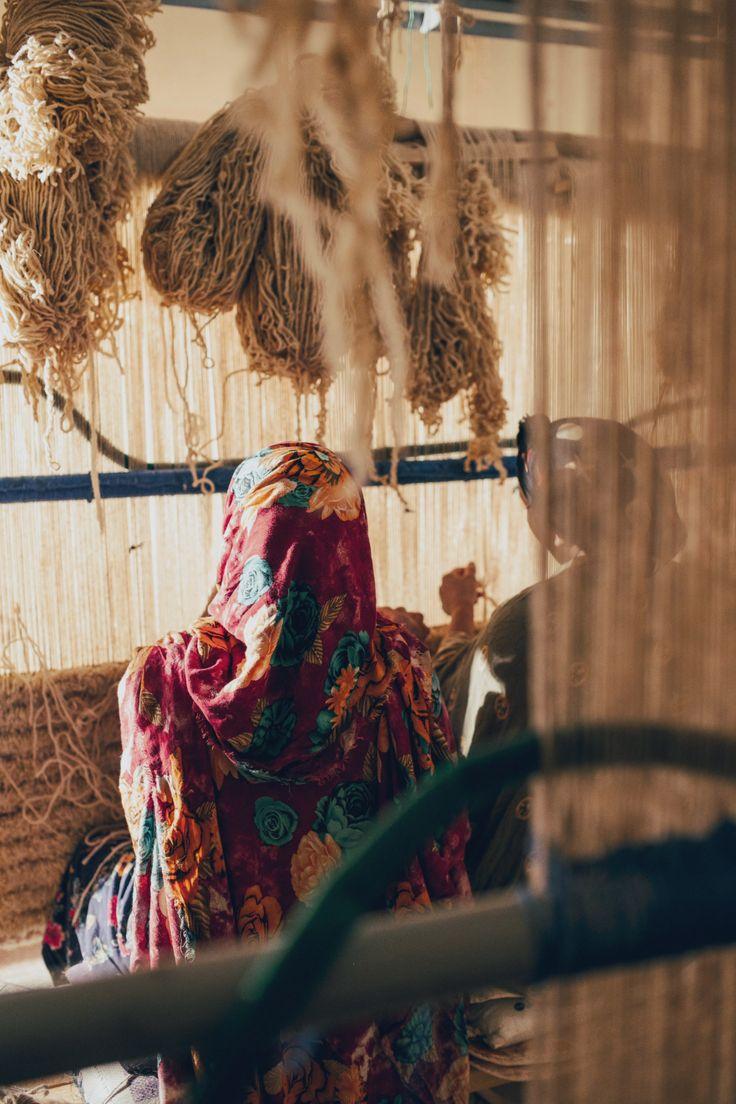
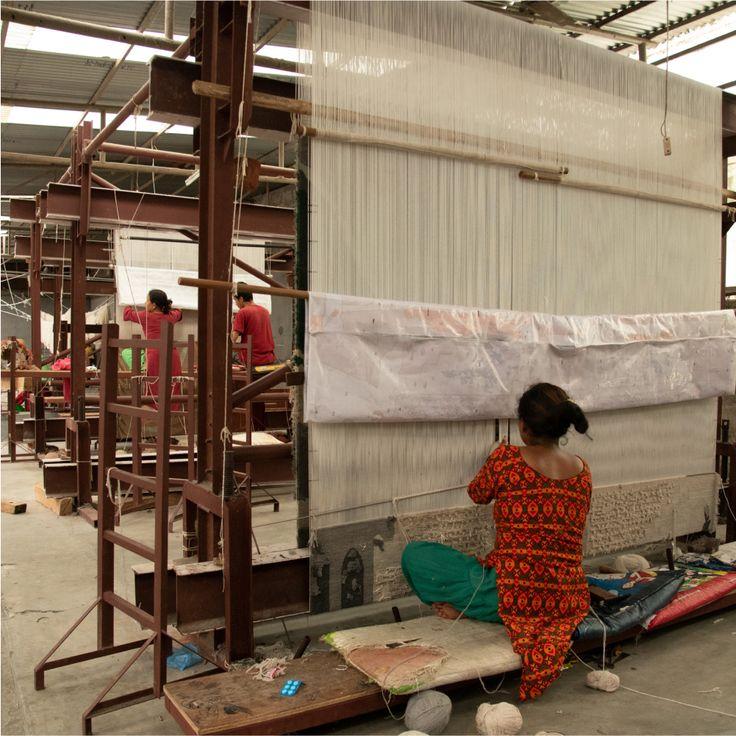
Before a single knot is tied, a hand-knotted rug begins with its structural foundation: the warp. The warp consists of vertical threads, typically cotton or wool, stretched tightly between the upper and lower beams of a loom. These threads are the skeleton of the rug; every knot tied in the pile attaches to them, and every horizontal weft thread passes through them. The tension and regularity of the warp determine whether the finished rug lies flat, holds its rectangular shape, and remains stable through decades of use.
Weft threads are woven horizontally through the warp after each row of knots, securing the knots in place and building the rug row by row. The weft is typically beaten down firmly with a heavy comb beater to pack the rows tightly together. In some rug traditions, two or more rows of weft alternate between knot rows; in others, a single weft pass follows each row. The number and weight of weft threads contribute to the rug's density and to the way the back of the finished piece looks.
The pile sits above this structural foundation, formed by the cut ends of the knot yarns. When all three elements, warp, weft, and pile, are well executed, the result is a structure of remarkable integrity. A well-made hand-knotted rug can survive heavy use for generations because the structure distributes stress across thousands of individual knot points rather than concentrating it in any single place. Explore our rug process page for a visual overview of how this structure comes together in production.
The Two Principal Knots: Persian and Turkish
Two knot types dominate the hand-knotting tradition worldwide. The Persian knot, also called the Senneh knot or asymmetric knot, wraps around one warp thread and under the other, with both cut ends emerging between the two warp threads. This allows the knot to be tied on a single warp thread, which means that a rug made with the Persian knot can achieve very fine detail and tight curves in the design, because individual knots occupy half the lateral space of a Turkish knot.
The Turkish knot, also called the Ghiordes knot or symmetric knot, wraps fully around two adjacent warp threads, with the cut ends emerging outside the pair. This produces a knot that is physically wider and typically used in traditions that favour geometric designs and bold compositions rather than fine curvilinear detail. Turkish knotting is structurally robust and is common in rugs from Anatolia and the Caucasus.
Both knot types produce durable, high-quality results when properly executed. The choice of knot type is typically determined by regional tradition and the design requirements of the piece rather than by absolute quality hierarchy. Very fine rugs exist in both traditions; the knot type is a characteristic, not a quality indicator.
Reading Knot Density: What KPSI Really Tells You
Knot density, typically expressed as knots per square inch (KPSI) or knots per square decimetre, is a measure of how many individual knots are tied per unit of rug surface. Higher density means more knots in the same area, which allows the design to be rendered with greater detail and allows the pile to wear longer before individual knots become visible.
However, density is not the only or even the primary determinant of rug quality. A high knot count in coarse, poor-quality wool will produce a rug that looks fine in photographs but performs poorly over time. A moderate knot count in hand-spun, high-lanolin wool, woven by skilled artisans from a well-resolved design, will produce a rug of extraordinary quality. Knot count and yarn quality together determine the performance and longevity of the finished piece.
Our detailed article on how to read knot density provides guidance on interpreting KPSI specifications in context, including how to compare density figures across different rug types and traditions.
The Role of the Cartoon in Design Translation
The design of a hand-knotted rug is not applied after weaving; it is built knot by knot as the rug grows on the loom. This means the design must be translated into a knot-by-knot instruction before weaving begins. The document that encodes this instruction is the cartoon: a gridded paper guide where each cell represents one knot and is coloured to indicate the yarn colour to be used at that position.
The cartoon hangs above the loom, and the weaver reads it row by row, tying knots in the sequence the grid prescribes. On a complex piece with many colours and fine detail, this reading is demanding work. The weaver must maintain accurate count across the full width of the rug while tracking position within the repeat of the design and managing multiple yarn bobbins simultaneously.
The quality of the cartoon, and the skill with which the designer has translated the intended design into knot-scale instructions, directly affects the quality of the finished rug. A well-drawn cartoon with clear transitions, balanced compositions, and accurate proportions enables the weaver to produce a rug that realises the design fully. An ambiguous or poorly proportioned cartoon produces avoidable compromises in the finished piece.
Shearing, Washing, and Finishing
When the last row of knots is tied and the rug is cut from the loom, the pile surface is uneven. The cut ends of the knot yarns vary slightly in length because tying individual knots by hand introduces natural variation. The rug is sheared, passing the surface through mechanical or hand-operated shearing blades to level the pile to a consistent height and reveal the design with clarity.
Shearing is followed by washing, a step that relaxes the fibres, removes any residual lanolin or processing oils, and begins to soften the pile. The washing process and the drying conditions that follow affect the final colour appearance and the handle of the rug. Rugs washed and dried in open air in natural light develop a particular surface quality that distinguishes them from rugs dried mechanically. Our article on how a rug is washed covers this step in detail.
Final finishing may include stretching the rug to correct any dimensional distortion introduced during weaving, applying fringes or selvedge binding, and a final quality inspection that checks for missed knots, dye irregularities, or structural issues requiring correction. Only after this inspection process does a rug leave the workshop.
Why This Method Has Persisted for Millennia
The hand-knotting technique has been in continuous practice for at least two and a half thousand years, with evidence of knotted pile textiles from archaeological discoveries in Central Asia. The fact that the method has not been displaced by mechanisation in the markets where it matters most, the fine rug trade and the bespoke design sector, is not sentiment. It is a reflection of what the technique uniquely produces.
No machine currently replicates the structural integrity of a hand-knotted rug, where every knot is individually secured to the warp. Machine-made rugs, whether woven or tufted, use different construction methods that produce visually similar but structurally different results. The differences become apparent over time: a hand-knotted rug typically grows more beautiful as it ages, its pile softening and its colours mellowing, while machine-made alternatives tend to deteriorate toward the end of their design life rather than gracefully ageing beyond it.
Understanding the method is the clearest path to understanding why hand-knotted rugs command the prices and the reverence they do. They are not expensive because of brand premium or scarcity marketing. They are expensive because they are the product of many hundreds of hours of skilled human labour, using materials processed with care, in a technique that has been refined across centuries and that consistently produces results no other method can match.
Frequently asked
How does hand-knotted construction differ from hand-tufted?
In a hand-knotted rug, each tuft of pile is individually tied to the warp structure. In a hand-tufted rug, a tufting gun punches yarn through a canvas backing; the pile is not structurally integrated with the foundation in the same way. The two construction methods produce different durability and quality outcomes over time.
How long does it take to hand-knot a rug?
The time depends on the size, knot density, and design complexity. A modestly sized rug at medium knot density may take several weeks. A large, fine-count rug with a complex design may take many months. Multiple weavers often work on a single large rug to manage the time.
Does a higher knot count always mean a better rug?
Not automatically. Knot count is one quality indicator among several. Yarn quality, dye stability, design quality, and the skill of the weaver all contribute significantly to the overall quality of the finished piece. High knot count in poor materials is still a poor rug.
Are Persian and Turkish knots interchangeable?
They serve different design purposes. The Persian knot allows greater design fineness and is preferred for intricate curvilinear patterns. The Turkish knot is suited to bold geometric compositions and is structurally robust. Most rugs use one or the other consistently throughout.
By RS, 14 January 2026
More in Materials and Construction.
Follow the journal in Google Search. Readers who add us as a preferred source see our writing marked in Top Stories and in AI Overviews.