Arriving in Bhadohi
Bhadohi sits in the eastern part of Uttar Pradesh, roughly midway between Varanasi and Allahabad, and its identity is inseparable from the carpet. The town and its surrounding villages account for a significant share of India's handmade rug exports. The workshops, called karkhanas, range from small domestic rooms where a single family works a single loom to larger structured facilities with multiple looms running in parallel. Raheem & Son has been part of this community since 1927.
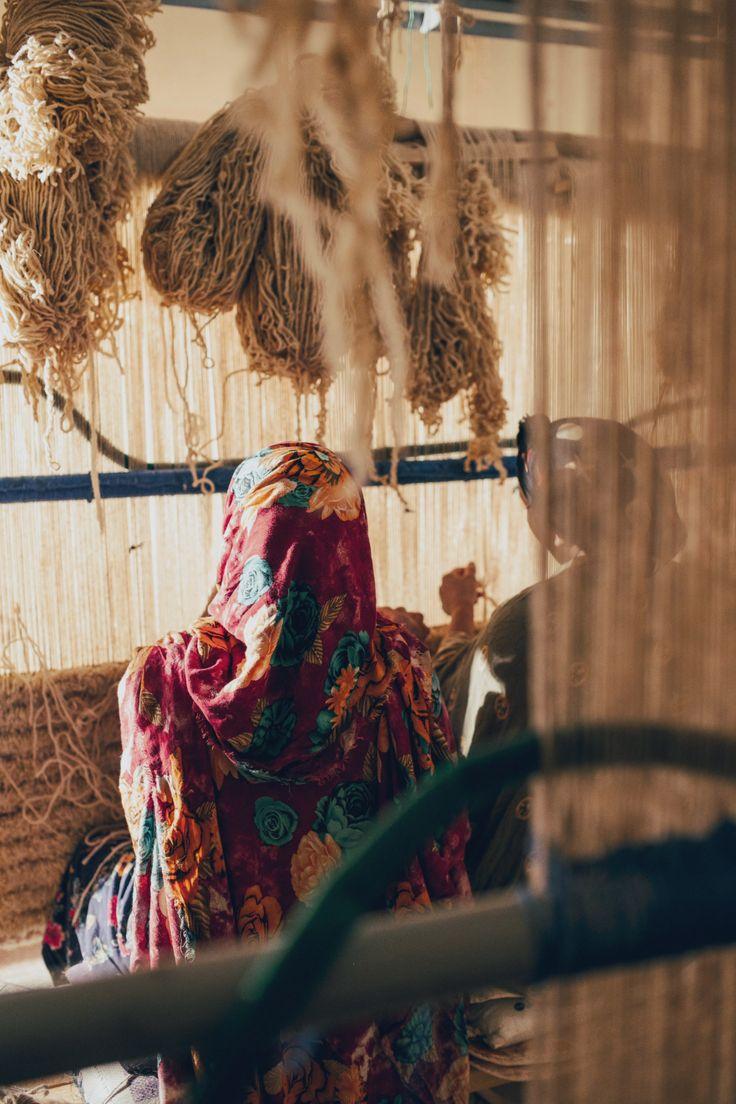
The first thing you notice arriving at a working workshop in the early morning is the sound. The rhythmic tapping of the weaver's comb, used to pack each row of knots firmly against the previous one, sets the tempo of the day. It is a sound that has changed very little over the centuries the craft has existed in this region.
The Loom and Its Architecture
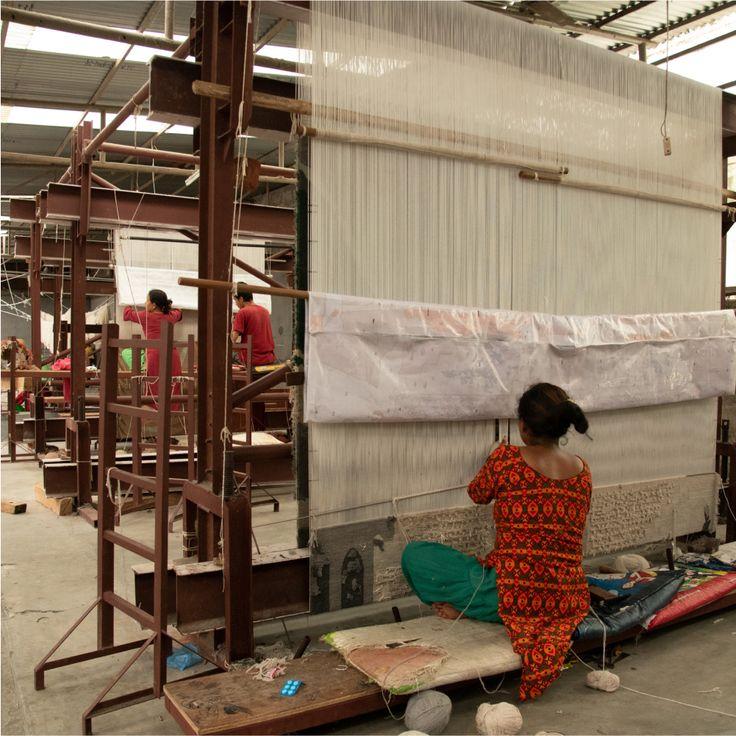
The vertical loom is the central piece of equipment in any hand-knotting workshop. Warp threads, typically cotton for stability, are stretched between two horizontal beams and held under tension. The weaver sits or stands in front of the warp face, working from a cartoon, a colour-coded grid of the design, mounted beside or behind the loom. Each square on the cartoon corresponds to a single knot.
The loom's width determines the rug's width. The height of the loom, or the adjustability of its beams, determines the maximum pile length. For very large pieces, the warp is sometimes rolled over the top beam as work progresses downward, allowing rugs far taller than the loom's physical height. This technique, called rolling the loom, is the same one that allowed the great court workshops of the Mughal period to produce room-scale carpets on relatively modest infrastructure.
Tying a Knot: The Core of the Work
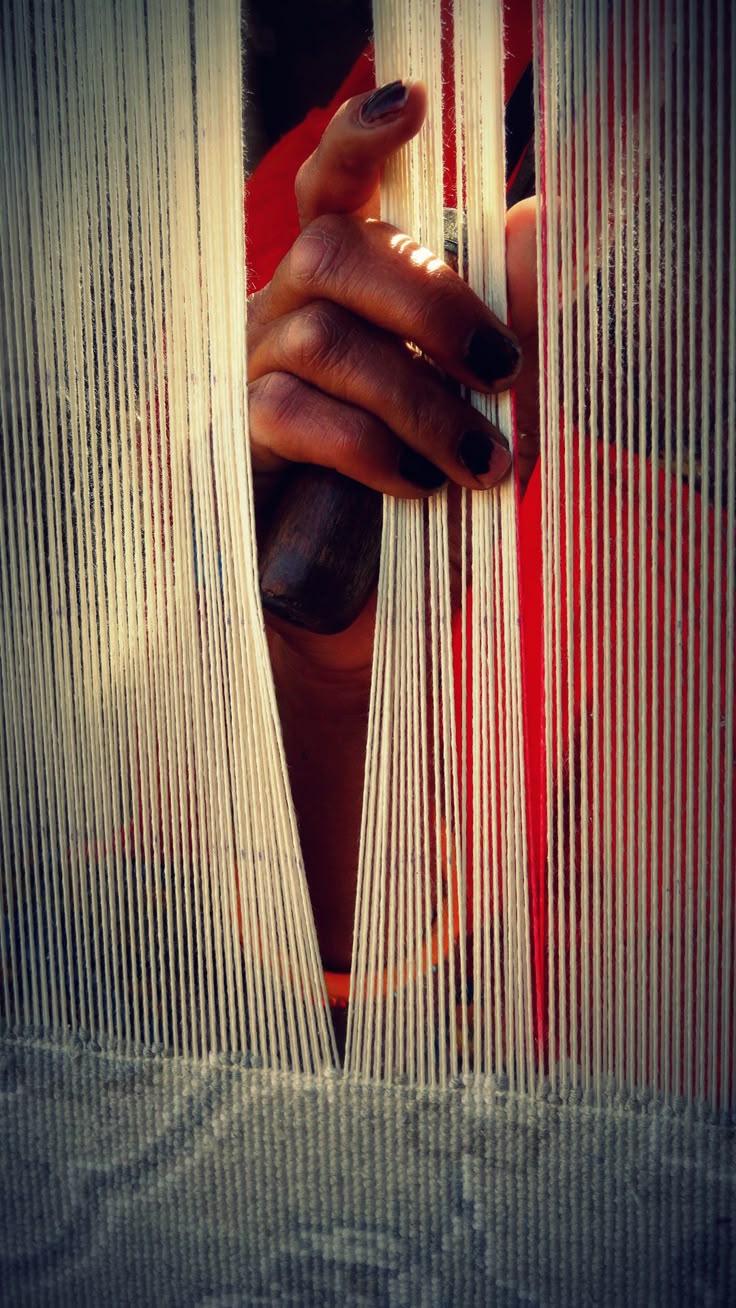
Each knot is tied by hand around two adjacent warp threads using a short length of coloured yarn. The knot type most common in the Bhadohi tradition is the asymmetric Persian knot, which allows for refined curves and fine detail. After each row of knots is complete, one or two weft threads are passed horizontally through the warp to secure the row, and the weaver's comb is used to press everything firmly together.
The speed of an experienced weaver is striking to observe. A skilled hand can tie a knot in a second or two, meaning many thousands of knots per day across the loom's width. But speed is never the primary metric. A weaver who rushes produces uneven tension, knots that sit at slightly different heights, and pile that reads as rough rather than smooth when the rug is clipped. The discipline is patience, not pace.
You can explore how knot density relates to design complexity and pile quality in our detailed piece on how to read knot density.
Colour and the Yarn Preparation
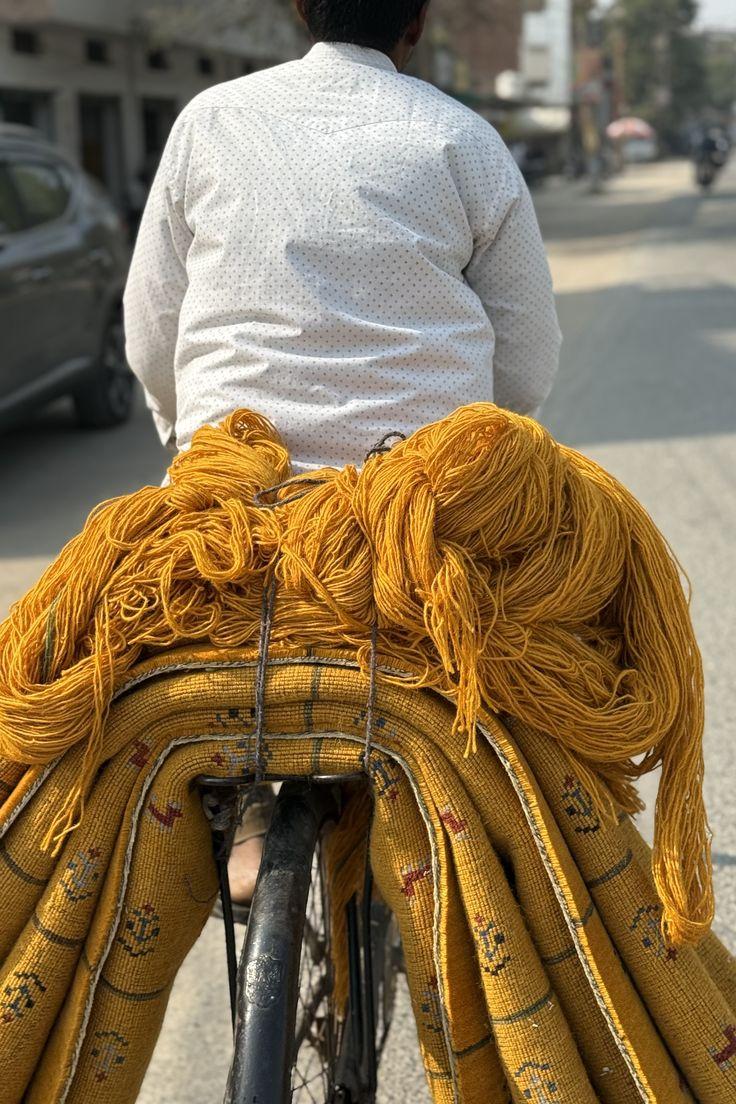
Before a single knot is tied, the yarn has already passed through a substantial preparation process. Wool is spun, plied for strength, and then dyed in the colours specified by the design cartoon. Natural dyeing is a separate skill from weaving, requiring knowledge of mordants, dye ratios, and fibre preparation. At Raheem & Son, we maintain relationships with dye specialists who work with both natural and carefully selected synthetic dyes depending on the design requirement.
The dyed skeins arrive at the workshop sorted by colour according to the cartoon. The weaver works through the colour sequence row by row, switching yarn as the design demands. A complex design with many colours in a single row requires constant yarn management. A simpler geometric or tonal design allows longer, uninterrupted runs and slightly faster progress.
Finishing: The Work After the Weaving
When the weaving is complete, the rug is cut from the loom and taken for finishing. The pile is clipped to an even height using large shears, a process called shearing or clipping, which reveals the design in its final clarity for the first time. Any unevenness in pile height, any loose weft ends at the edges, any minor knot irregularities are corrected at this stage.
Washing follows. The rug is taken to an open yard and washed with water, mild agents, and traditional brushes. This stage softens the pile, sets the colours, and removes any lanolin or oil residue from the yarn. After washing, the rug is stretched to its correct dimensions on a drying frame and allowed to dry in open air. The final quality check happens once the rug is fully dry and the pile has recovered its full height. Our rug process page covers each of these stages in further detail.
What a Workshop Visit Teaches
Spending time in a Bhadohi workshop changes the way you relate to a handmade rug. The abstraction of 'hand-knotted' becomes concrete. You see the cartoon pinned to the loom, the rhythm of the weavers, the growing face of the pile as each row accumulates. You understand, viscerally, why a rug with a higher knot density takes longer to produce, why the finishing work is as skilled as the weaving, and why the price of a hand-knotted rug at its honest value reflects not materials alone but time measured in individual human decisions.
For buyers and collectors who cannot visit in person, we try to make this transparency available through our writing and through direct communication with our team. If you have specific questions about how a rug in our collection was made, we encourage you to contact us directly. The craft deserves to be understood, not simply purchased.
Frequently asked
Can I visit the Raheem & Son workshops in Bhadohi?
We occasionally host trade buyers and serious collectors for workshop visits. Contact us to discuss whether a visit can be arranged around your travel schedule.
How long does it take to weave a hand-knotted rug?
A small rug at moderate knot density might take one weaver several weeks. A large, complex piece at high density can take a team of weavers many months. Timeline depends heavily on size, knot count, and design complexity.
What is the difference between Bhadohi rugs and rugs from other Indian weaving centres?
Bhadohi is known for hand-knotted pile rugs across a wide range of designs and materials. Other Indian centres like Jaipur are associated with flat-woven dhurries and block-printed textiles, while Kashmir is associated with very fine silk knotting. Each region has its own technical and design tradition.
Do all Raheem & Son rugs come from Bhadohi?
The majority of our hand-knotted production is rooted in the Bhadohi craft community, where our family has worked since 1927. Some specialist pieces, particularly kilims and flatweaves, draw on artisan communities in other regions.
By RS, 28 October 2025
More in Materials and Construction.
Follow the journal in Google Search. Readers who add us as a preferred source see our writing marked in Top Stories and in AI Overviews.