Why Wool Origin Changes What You Are Buying
A rug described as having a wool pile covers an enormous range of actual material quality. The breed of sheep, the altitude and climate of its grazing environment, the season of shearing, the washing and carding method applied to the raw fleece, and the spinning tension all affect the character of the finished yarn and, in turn, the behaviour of the pile in a woven rug. Buyers who understand these variables can write a meaningful wool specification; those who do not may receive anything from a lustrous highland pile to a coarse, short-stapled commercial fibre under the same generic label.
At Raheem and Son, we source wool for different product tiers from different origins, and we discuss fibre specification with buyers as part of the initial briefing process rather than treating it as a background decision. The rug process page covers how raw wool is assessed, washed, and spun at our facility before it reaches the loom. Our collections indicate the primary fibre for each construction range so that buyers can orient their brief appropriately.
New Zealand Wool: Consistency, Brightness, and Commercial Reliability
New Zealand wool, predominantly sourced from Merino and cross-bred Romney and Corriedale flocks, is one of the most widely specified wools in the global handmade rug industry for very practical reasons. Its staple length is long, its base colour is clean white, and its micron count is consistent within grades. These properties translate directly into reliable dye uptake, predictable colour reproduction across large production runs, and a pile that resists crushing and cleans readily.
The long staple length means that New Zealand wool yarn can be spun with good strength and a natural sheen. The pile in a finished rug reflects light cleanly, making colourways appear vivid and well-defined. For buyers whose market rewards strong, saturated colour accuracy and consistent dye lot matching across a seasonal range, New Zealand wool is a dependable specification. It is commercially processed at scale, which means it is available in volume and at predictable cost.
New Zealand wool is available in both commercially processed (machine-carded, machine-spun) and more craft-processed forms. Hand-spun New Zealand wool has a slightly irregular surface texture that many designers prefer for its visual vitality. The hand-spun version is slower to produce and carries a modest premium, but the resulting pile has a character that machine-spun wool does not replicate. Specify which processing method you want in your brief, as the visual difference in the finished rug is meaningful.
Himalayan and Tibetan Wool: Character, Warmth, and Resilience
Tibetan and broader Himalayan wools come from sheep adapted to extreme altitude and cold. The fleece they produce has a natural crimp and a higher lanolin content than lowland breeds, which gives the pile a warmth and slight springiness that is immediately recognisable in a finished rug. This lanolin content also contributes to the pile's natural resilience: the fibres spring back after compression more readily than lower-lanolin wools, and the surface sheds surface dirt without aggressive cleaning.
The coarser micron count of Tibetan wool compared to New Zealand Merino means the pile has a different hand: warmer, slightly more textured, less silky-smooth. This is not a deficiency. It is a distinct material character that many buyers and designers prefer for its depth and authenticity. The pile of a Tibetan-style hand-knotted rug in highland wool has a quality that no synthetic or fine-grade lowland wool precisely replicates.
The natural base colour of Tibetan and Himalayan wools ranges from cream to tan to a warm brown depending on the breed and season, and this base affects the achievable dye palette. Deep, cool colours require more dye investment over a warm base; warm tones take beautifully. Experienced dye masters in the Bhadohi tradition work with the base colour of the fibre rather than against it, and the resulting palette often has a complexity and depth that rugs dyed on a neutral white base do not achieve.
Indian Wool: The Volume Fibre, Honestly Evaluated
Indian wool, primarily from Rajasthani and Bihari cross-bred sheep, dominates the volume segment of India's handmade rug production. It is coarser in micron count and shorter in staple length than New Zealand or Tibetan wool, which means it does not take dye with the same vibrancy and does not produce the same lustrous pile. It is, however, robust, widely available at consistent volumes, and suitable for rugs where texture and weight are the primary design intent rather than colour brightness or pile luxury.
Indian wool is frequently used in blended yarns: combined with New Zealand wool to improve dye uptake and pile sheen, or with synthetic fibres to improve pile resilience at a lower price point. These blends are legitimate and widely used, but the blend percentage should be accurately disclosed in the specification. A rug described as wool that is in fact a wool-polypropylene blend has different performance characteristics and different resale value from a pure highland wool piece.
For buyers who are building a value-tier offering or who need to hit a specific price point for a competitive retail environment, Indian wool or Indian-New Zealand blends can be appropriate specifications, provided the material is described honestly to the end buyer. We produce rugs across all fibre tiers and advise buyers on the most appropriate specification for their target price and performance requirements.
Staple Length, Micron Count, and Processing: The Specification Details That Matter
Two technical parameters are worth including in any wool specification: staple length and micron count. Staple length refers to the length of the raw fibre and affects pile strength and yarn quality; longer staple produces stronger, more lustrous yarn. Micron count (the diameter of the fibre) affects softness and dye uptake; finer microns produce softer, silkier pile and take dye more evenly. New Zealand Merino typically measures between 17 and 22 microns for fine grades; Tibetan wool is typically coarser, ranging from 26 to 32 microns.
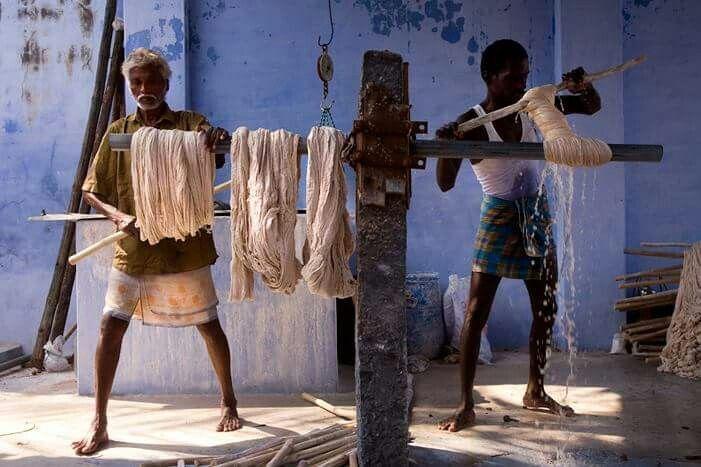
Processing method matters as much as origin. Wool that is machine-washed at high temperatures to strip lanolin and then machine-carded and machine-spun produces a more uniform, commercial yarn. Wool that is hand-washed, dried slowly, and hand-spun retains more of the fibre's natural character, including some lanolin content and slight variation in yarn diameter, which gives the finished pile its distinctive vitality. Ask suppliers to specify the processing method alongside the origin when providing a wool specification.
Finally, the spinning tension affects pile behaviour. Tightly spun yarn produces a dense, firm pile that resists compression and wears evenly. Loosely spun yarn produces a softer, fluffier pile that is luxurious underfoot but compresses more readily in high-traffic areas. The spinning specification should match the intended use: tight spin for commercial and high-traffic residential applications, looser spin for luxury residential pieces where tactile softness is the priority.
Matching Wool Specification to Your Product and Market
For luxury residential and hospitality prestige applications, specify highland wool (Tibetan or Himalayan) or fine-grade New Zealand Merino in hand-spun form. These specifications produce the pile quality that commands a premium price and delivers a long ownership experience. For commercial contract applications requiring consistent colour matching across large runs, machine-processed New Zealand wool in a defined grade is the most reliable specification.
For buyers building retail ranges at accessible price points without sacrificing the handmade positioning, a New Zealand and Indian wool blend in a clearly specified ratio is a legitimate middle path. The key is accurate labelling: your end customer should know what they are buying and you should be confident that what the specification says and what is actually in the pile correspond. We can provide fibre certificates and traceability documentation for orders where this is a commercial requirement.
If you would like to assess the difference between wool grades in a physical form before specifying, our sample programme can supply tuft cards in multiple wool specifications so you can compare pile character, colour vibrancy, and hand directly. Contact our team through the rug process page to request material samples alongside your design brief.
Frequently asked
Is New Zealand wool or Himalayan wool better for a handmade rug?
Neither is universally better. New Zealand wool delivers consistent colour accuracy and pile resilience, making it ideal for retail ranges where dye lot matching matters. Himalayan and Tibetan wool delivers warmth, natural resilience, and a distinctive pile character suited to prestige residential and design-led products. The right choice depends on the application and the aesthetic intent.
How can I confirm the wool specification of a rug I am being quoted on?
Ask for a written material specification confirming the fibre origin, grade, micron count where available, processing method, and spinning type. Reputable manufacturers can provide this information and, for premium specifications, fibre certificates. Physical tuft card samples in the specified wool are the most reliable physical check.
Does wool grade affect dye results in the finished rug?
Yes, significantly. Finer wool with a cleaner base colour (such as New Zealand Merino) takes dye more evenly and produces more vivid, consistent colour. Coarser wools or those with a naturally warmer base tone produce a dye result that reads differently, often warmer and more complex, which can be a design asset but requires understanding during the colour approval process.
Can I blend different wools in a single rug pile?
Yes, blended wool piles are common and can combine the strengths of different fibres. A New Zealand and Himalayan wool blend, for example, offers colour consistency from the New Zealand component and natural resilience from the highland component. Specify the blend ratio explicitly and ask your manufacturer to confirm it in the material documentation.
By RS, 15 June 2026
More in Materials and Construction.
Follow the journal in Google Search. Readers who add us as a preferred source see our writing marked in Top Stories and in AI Overviews.