Why Dye Method Matters More Than Most Buyers Realise
The dye method used in a handmade rug determines how the colours age, how they hold up to light and cleaning, how wide the achievable palette is, and what the environmental footprint of the production process looks like. Yet many buyers never ask about it, accepting the generic description of a rug as hand-dyed without understanding what that actually means in practice. Two rugs described as hand-dyed can use entirely different chemistry with entirely different implications for quality and sustainability.
At Raheem and Son, we work with both natural dye and chrome dye processes, recommending each honestly based on the design brief and the buyer's priorities. Our sustainability approach and our rug process documentation explain how we manage both dye processes and the environmental guardrails we apply to each. The information below is not a sales argument for one over the other; it is a factual framework for making an informed choice.
Natural Dyes: What They Are and What They Actually Deliver
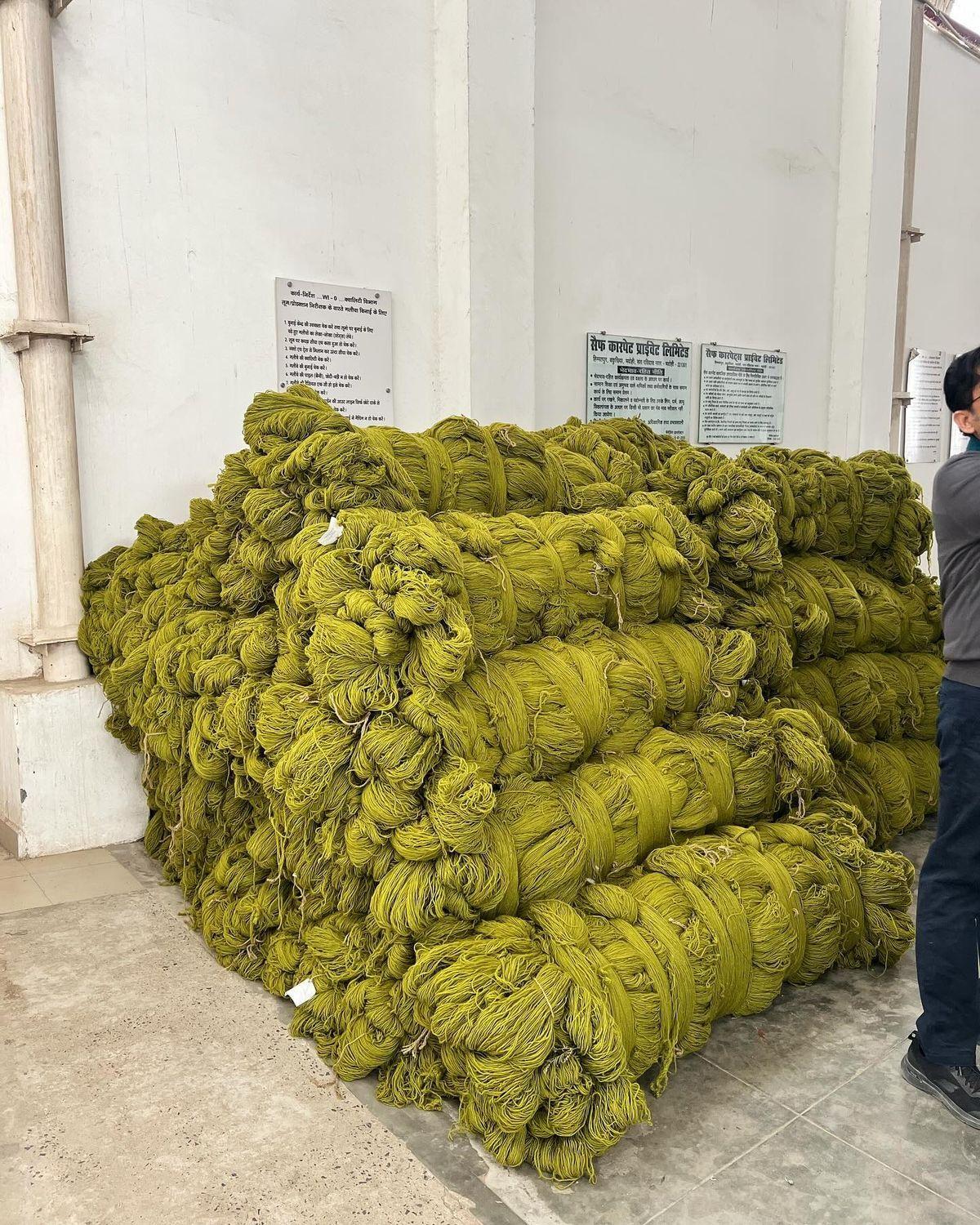
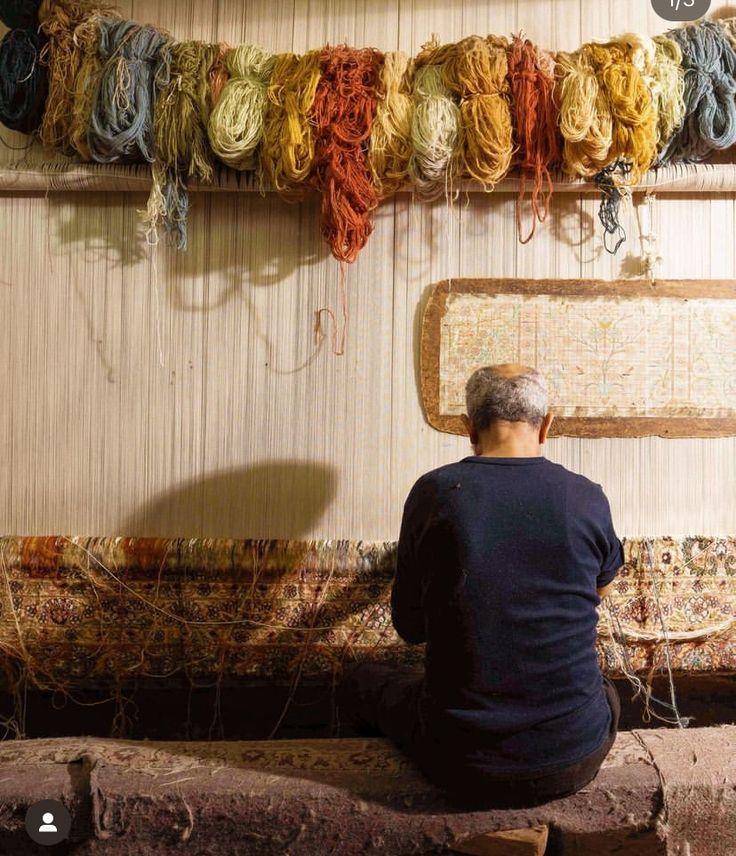
Natural dyes are derived from plant, mineral, and occasionally insect sources. The primary plant-based sources used in Indian rug dyeing include indigo (for blues), madder root (for reds and terracottas), pomegranate rind (for golds and greens), and various tannin-rich plant materials (for browns, greys, and blacks). These materials require skilled mordanting (the process of using metal salts to fix the dye to the fibre) to achieve adequate colour fastness. The mordant used affects both the final colour and the environmental profile of the process.
Natural dyes produce colours with a particular visual quality: they tend to read with depth, warmth, and a slight variability within a single dye batch that gives naturally dyed rugs their characteristic organic feel. This slight variation is not a defect; it is an inherent property of plant-based colourants that are not produced to industrial consistency. Buyers who want the rich, layered palette of a traditional rug and are comfortable with natural dye's characteristic ageing behaviour will find it the right choice.
The limitation of natural dyes is palette range. The achievable spectrum is narrower than synthetic dyes, and certain bright, cool tones (particularly vivid blues, greens, and synthetic oranges) are difficult or impossible to achieve reliably with plant-based sources. Natural-dyed rugs tend to sit in warm, earthy, ochre, and muted palettes. If your brief requires a wide range of saturated modern colours, natural dye is likely to constrain the design.
Chrome Dyes: Reliable Colour, Wider Palette, Specific Considerations
Chrome dyes (more precisely, metal-complex dyes using chromium salts as the mordant) are the dominant dye system in the commercial handmade rug industry worldwide. They offer a very wide colour palette including bright, saturated, and cool tones that natural dyes cannot produce, excellent light fastness and wash fastness, and consistent dye lot reproducibility across large production runs. For buyers who need colour accuracy and consistency across a multi-piece order, chrome dyes are the more reliable technical choice.
The environmental consideration is the use of chromium salts in the dye process. Hexavalent chromium (Cr VI) is a regulated toxic substance and its use in wastewater is controlled in most markets. Responsible chrome dyeing uses trivalent chromium (Cr III), which is significantly less harmful, and requires proper effluent management so that dye wastewater does not enter waterways untreated. Buyers with sustainability commitments should ask suppliers specifically about their effluent management and the chromium compounds used.
Chrome-dyed rugs are often labelled as hand-dyed or simply dyed without specifying the dye chemistry. This is not inherently misleading, but it does leave buyers who care about dye provenance without the information they need. Asking for the dye method explicitly and including it in the specification sheet is the straightforward solution. Suppliers who are operating responsibly welcome the question; those who resist it are giving you useful information about their transparency.
How Natural and Chrome Dyes Age Differently
Natural dyes and chrome dyes age differently, and the ageing direction is an important part of the specification for buyers who care about long-term product character. Natural dyes, particularly indigo and madder, mellow over time in a way that many designers find desirable: indigo blues soften to a distinguished faded quality, reds warm toward ochre and amber. This natural mellowing is the same process that makes antique naturally dyed rugs so visually appealing. A buyer purchasing a naturally dyed rug is, in a sense, purchasing a product that will become more interesting over decades.
Chrome dyes are formulated for stability and retain their colour more aggressively under comparable light and cleaning conditions. This is generally considered a quality attribute in the commercial rug market, where colour consistency over the product's lifespan is the expectation. However, when chrome-dyed rugs do fade, the fading is often less even than the mellowing of natural dyes, and the result can be a less appealing aged appearance than naturally dyed pieces.
For buyers building a heritage or artisan positioning for their brand, natural dyes and the ageing narrative they carry are a genuine brand asset. For buyers building a commercial range where colour consistency across seasons and replacement pieces is the priority, chrome dyes in a responsibly managed process are the practical specification. Both are legitimate; the choice should be conscious and clearly communicated to the end buyer.
Azo-Free and Low-Impact Synthetic Alternatives
Between natural dyes and conventional chrome dyes sits a category of low-impact synthetic dyes that are increasingly specified in sustainability-conscious rug programmes. These include azo-free reactive dyes and low-metal-complex dyes that offer a wider palette than natural dyes without the chromium compounds of conventional chrome dye processes. They are certified under standards such as OEKO-TEX Standard 100 for the absence of harmful residues in the finished textile.
Low-impact synthetic dyes have better light fastness than natural dyes in most laboratory conditions, a wider palette, and significantly lower environmental loading than conventional chrome dyeing when properly managed. For buyers whose sustainability programme requires avoiding both natural-dye palette restrictions and chromium mordants, this category is worth exploring with your manufacturer.
Whichever dye method you specify, ask for the test data that supports the claimed colour fastness. Light fastness ratings (typically graded on a Blue Wool Standard 1 to 8 scale) and wash fastness ratings should be available from any supplier operating at a professional standard. These numbers allow you to compare claims objectively and include performance requirements in your purchase specification.
How to Write a Dye Method Specification and What to Ask
A complete dye specification for a handmade rug order should confirm the dye system used (natural, chrome, azo-free synthetic, or blend), the mordant system where relevant, the minimum light fastness rating required (for most commercial applications, a rating of 5 or above on the Blue Wool Standard is appropriate), the minimum wash fastness rating, and the effluent management standard applied by the dye house.
Include dye specification in the quality sheet alongside knot density, pile height, and material. Pre-shipment inspection should include a visual check for dye lot consistency across the pieces in the order and can be extended to include laboratory testing of a sample piece if the order value warrants it. Major third-party inspection agencies offer colour fastness testing as part of their standard rug inspection protocols.
If you are working with a natural dye specification and are concerned about colour fastness, request that sample pieces be assessed against a light fastness standard before bulk production begins. Natural dyes vary significantly in their fastness depending on the mordant used and the dye source, and there is no substitute for test data on the specific dye recipe applied to your specific fibre. Our sustainability documentation explains the natural dye process we use and the quality controls we apply.
Frequently asked
Are natural dyes always more sustainable than chrome dyes?
Not automatically. Natural dyes require large quantities of plant material, water, and mordant chemicals. Some mordants (such as alum or iron) are low-impact; others are more chemically significant. Chrome dyeing with trivalent chromium under proper effluent management can have a lower environmental footprint than poorly managed natural dye processes. Sustainability should be assessed by the complete process, not just the dye source.
How do I know if a rug is naturally dyed?
Ask for the dye specification in writing. Physical indicators include a slightly uneven but harmonious colour quality (natural variation between dye batches) and a palette that sits in warm, earthy, or muted tones. The burn test does not distinguish dye types. A manufacturer who can name the specific dye sources and mordants used is more likely to be operating a genuine natural dye programme.
What light fastness rating should I require for a commercial specification?
For most commercial and hospitality applications, a minimum Blue Wool Standard rating of 5 to 6 is appropriate. Spaces with high natural light exposure should specify 6 or above. Ask your supplier for the test certificate rather than accepting a rating claim without supporting documentation.
Can I mix natural-dyed and chrome-dyed rugs in the same range?
Yes. Many buyers maintain separate natural-dyed and chrome-dyed lines, positioned differently in terms of price, provenance, and aesthetic. The natural-dyed range typically occupies a heritage or artisan tier; the chrome-dyed range occupies the commercial or contemporary tier. Communicating the distinction clearly to your end buyer is the key to making this work commercially.
By RS, 11 June 2026
More in Heritage and Sustainability.
Follow the journal in Google Search. Readers who add us as a preferred source see our writing marked in Top Stories and in AI Overviews.