How Rug Trends Differ from Fashion Trends
Rug design trends operate on a different timescale from clothing or even furniture. A rug is a significant purchase with a long expected service life: buyers do not typically replace handmade rugs seasonally, and the better the rug, the longer the commitment. This means that the design movements that actually shape buying decisions are not trend reports from trade fairs but slower, deeper currents that build over several years and persist for a decade or more before they are replaced.
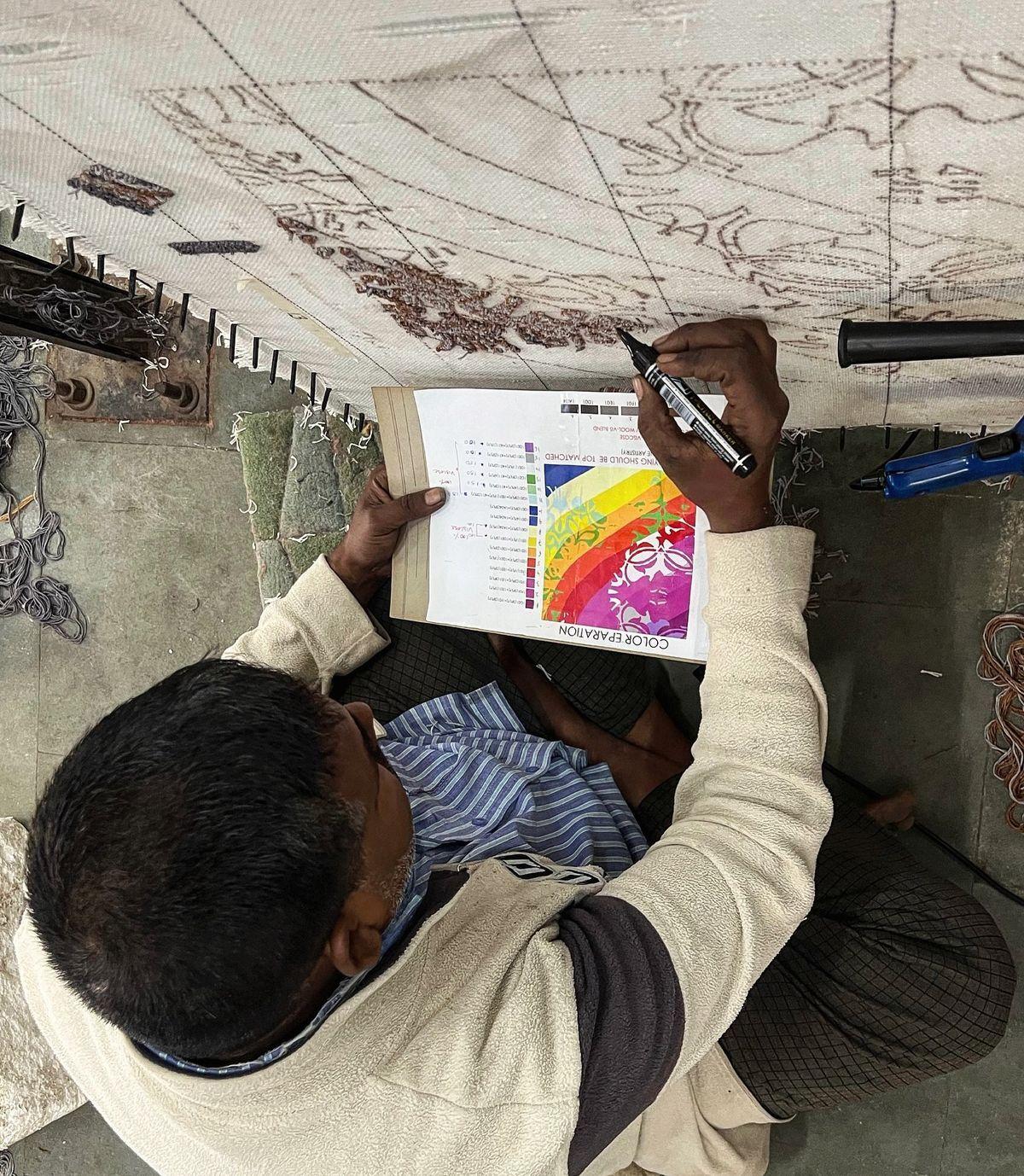
Understanding this longer cycle is important for buyers developing product ranges. The most reliable direction to invest in is one that is moving from early adoption toward mainstream relevance, not one at the peak of its exposure. Early-peak trends are already crowded with competitive product; the window on the way up is where differentiated product earns its premium. Our oem-private-label programme helps buyers develop proprietary designs that are ahead of the commodity segment of any trend.
With that context, several significant directional movements are currently shaping the handmade rug market globally, and all of them are relevant for buyers positioning a range for the next two to three years. Each is examined here with practical implications for product development and sourcing.
Natural and Undyed Tones: The Dominant Colour Direction
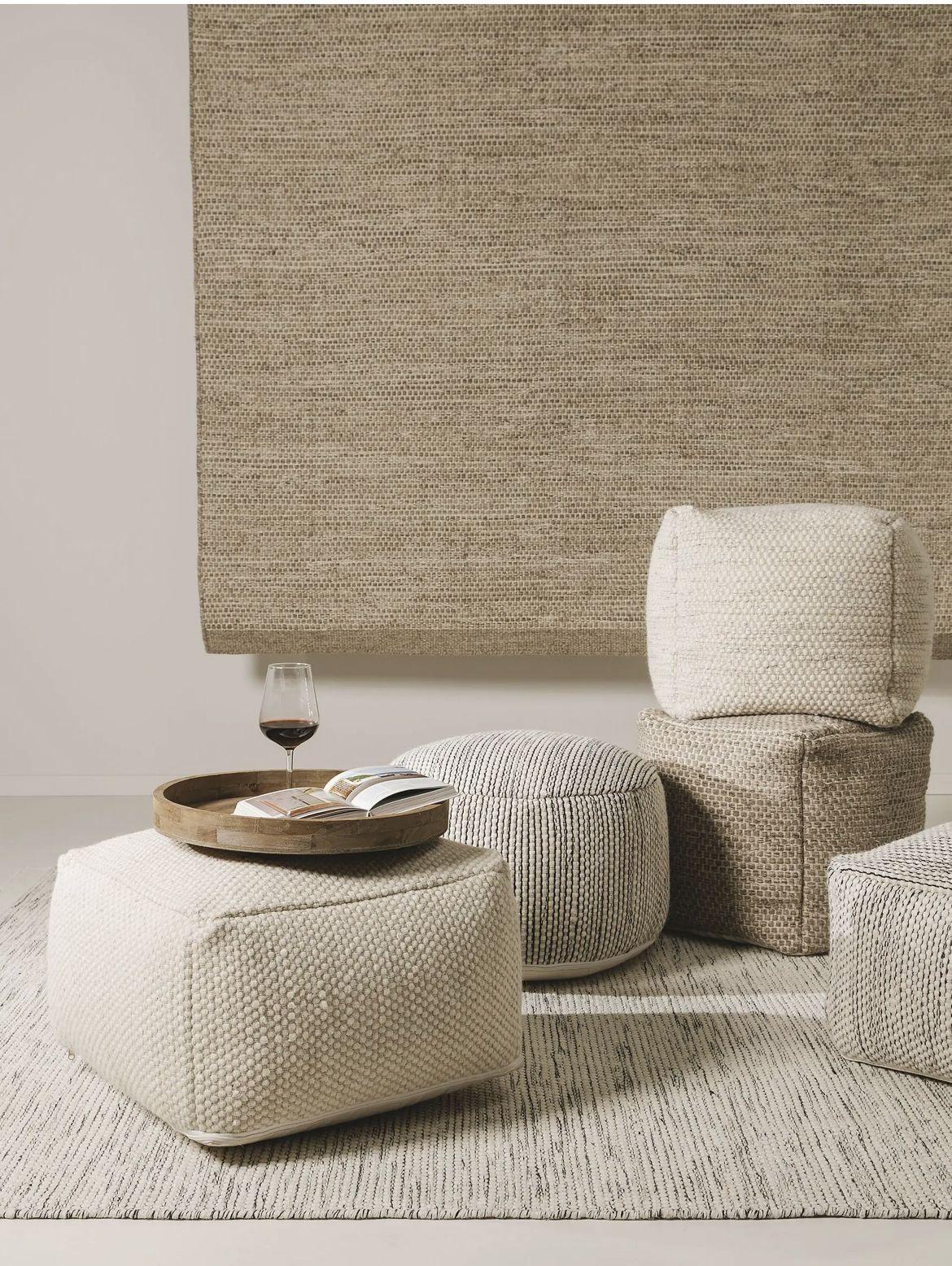
The most persistent and broadly applicable colour direction in the contemporary handmade rug market is the movement toward natural, undyed, and minimally processed tones. Ivory, warm sand, stone, oatmeal, blush, terracotta, and soft sage have displaced the jewel-toned Persian palette as the default for mid-market and upper-market residential purchasing in Europe and North America. This shift reflects the broader interior design preference for materials with visible provenance and honest character rather than heavily processed, saturated colour.
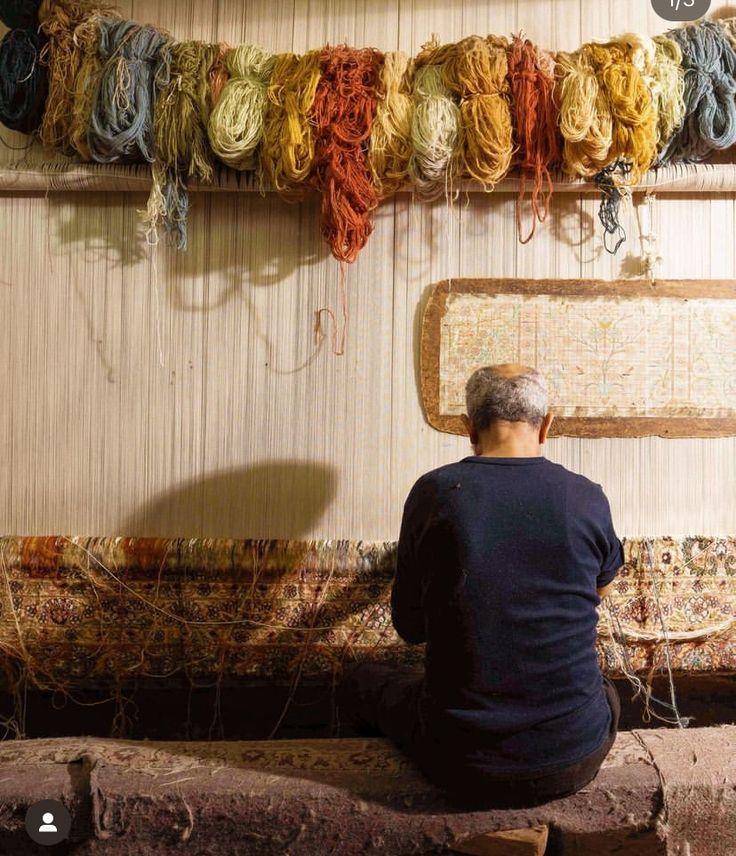
In practical production terms, this direction has increased demand for undyed natural wool pieces, naturally toned jute and sisal flatweaves, and low-saturation botanical-dyed palettes in dusty rose, muted ochre, and clay. Buyers who have not yet moved their ranges toward the lighter, warmer end of the spectrum are finding that consumers in key markets are making the selection for them. The practical challenge is that natural and low-saturation dye palettes require more careful dye lot management than high-saturation colours, as slight batch variation is more visible against a neutral ground.
The natural tone direction does not mean uniformity. Texture, weave complexity, and tonal layering within a single colourway are the design moves that differentiate product in this palette. A tonal stripe in five related ivory-to-flax tones reads more richly than a plain flat ivory, and both are serving a buyer who has moved away from pattern-heavy alternatives. Our collections include a growing range in this direction.
Abstract and Distressed Patterns: Moving Away from Traditional Geometry
Abstract pattern in handmade rugs has been a consistent direction for over a decade, but the specific expression has evolved. Early abstract rug design borrowed heavily from abstract expressionism and produced field rugs with large, bold, loosely painted motifs. The more recent movement is subtler: distressed traditional patterns where Persian or tribal motifs are deliberately abraded, bleached, or overprinted to appear aged and fragmentary, and minimal abstract field patterns that use pile height variation rather than colour to create design.
The distressed traditional pattern is particularly strong in the North American market, where consumers respond to the combination of heritage visual vocabulary and contemporary muted palette. These pieces reference antique rugs without being reproductions, and they carry a design authority that both abstract and traditional originals sometimes lack for buyers who find pure abstraction cold and pure traditional pattern formal.
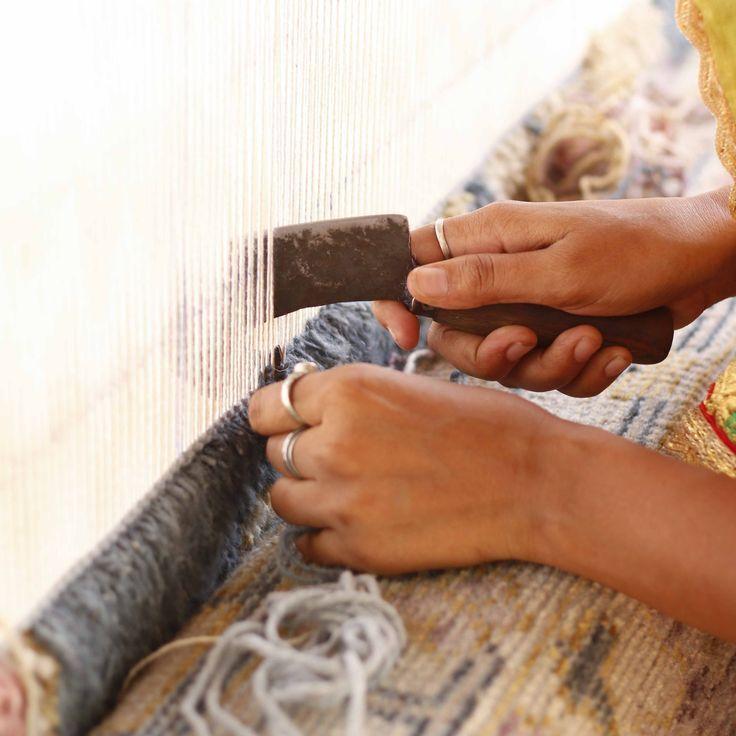
Abstract pile-height design, where the pattern is created by alternating high and low pile areas rather than by colour change, is an emerging direction that suits the natural tone preference. A rug that is entirely ivory can carry a rich geometric or abstract design through pile variation alone. This technique requires precise craftsmanship to execute consistently, which is one area where Bhadohi's skilled workforce provides a genuine production advantage over lower-skill production regions.
Global Craft Revival: Pattern Traditions Beyond Persia
The handmade rug market has historically been dominated by Persian and Central Asian visual traditions. The current period is seeing a genuine broadening of reference, with buyers and designers drawing on Berber, South American, Japanese, African, and South Asian pattern traditions that were previously considered niche or specialist. This diversification reflects both broader cultural curiosity and the reality that the Persian tradition, now widely replicated at all price points, has lost some of its distinctiveness.
For production, this means an expanded design brief. Berber-influenced abstracts in cream and charcoal, Andean geometric stripes, Japanese shibori-influenced tonal patterns, and Indian block-print motifs translated into woven pile are all in active development across the Bhadohi production cluster. Buyers who can brief and specify these directions with cultural precision and design intelligence will find receptive production partners. Generic or poorly researched interpretations of non-Western traditions carry reputational risk and rarely produce commercially strong product.
Raheem and Son's in-house design team can develop custom designs that reference global craft traditions with the specificity and respect the material demands. Our OEM programme supports buyers at every stage from concept to production-ready specification. Discuss design direction with our team through the oem-private-label enquiry channel.
Sustainable Design: Certification, Transparency, and Natural Process
Sustainability is no longer a niche buyer priority but a mainstream commercial consideration. The design implication of the sustainability direction is that product positioning increasingly requires material transparency: what the rug is made from, where the fibre comes from, and what dyes were used are questions that buyers are asked by their retail customers with increasing frequency.
The design vocabulary that accompanies the sustainability direction is the natural palette and honest texture already described above. There is a strong coherence between the material story (natural fibre, natural dye, artisan production) and the visual story (undyed and lightly dyed tones, visible weave character, honest construction). Products that deliver both are well positioned in the premium segment.
Design trends cannot be separated from production reality. A design direction that looks compelling on a mood board but requires production processes that compromise the sustainability story undermines both the commercial and the ethical position. The most durable trend positions are those where the design and the production chain reinforce each other honestly.
Size and Format Trends: Where the Market Is Moving
Beyond colour and pattern, format preferences have also shifted. Oversized rugs, pieces at 300x400 cm and above that make a single dominant statement in a large open-plan living space, have grown in demand at the upper end of the market. At the same time, small accent rugs at 60x90 cm and under, used as layering elements over natural fibre ground rugs or as bath and bedside accents, have become a volume category in retail.
Round rugs have stabilised as a mainstream format rather than a novelty, particularly for dining rooms and for accent placement in entrance halls and bedrooms. Runner production for staircases and corridors has grown as consumers have extended handmade rug use beyond living areas.
The implication for buyers is that range completeness across sizes, including both oversize and small accent options, is more important than it was a decade ago when the 8x10 ft rectangle dominated. Buyers who stock only the standard residential sizes are missing demand at both the large and small ends of the range.
Frequently asked
What rug colours are most in demand in European markets in 2026?
Natural tones, specifically warm ivory, stone, sand, and blush, are the dominant demand in the European mid to upper market. Low-saturation botanical dyed palettes in terracotta, sage, and dusty rose are performing well in the premium segment. Jewel tones remain in demand in the contract and hospitality sector but have declined in residential retail.
Are traditional Persian-pattern rugs still commercially viable?
Yes, particularly in distressed or abrash treatments that give traditional motifs a contemporary aesthetic. Pure traditional Persian patterns without a contemporary treatment are increasingly concentrated in the antique and collector market rather than general retail. The strongest commercial position for traditional reference is a hybrid that carries pattern heritage with a modern colour palette.
How quickly can Raheem and Son produce samples in a new custom design?
Custom design samples are typically available within 25 to 35 days of confirmed brief and artwork approval. This applies to both pile and flatweave constructions. Complex pile-height variation designs may require a slightly longer development window for the first sample.
Can I see current design and colour directions in your range before briefing a custom design?
Yes. Our collections page and our digital library are available for reference. For trade buyers considering an OEM programme, we can also share our current design development mood boards at the start of a briefing conversation. Contact our team to arrange a design consultation.
By RS, 6 June 2026
More in For Interior Designers.
Follow the journal in Google Search. Readers who add us as a preferred source see our writing marked in Top Stories and in AI Overviews.