What Makes a Flatweave Different from a Pile Rug
A flatweave rug has no pile. Where a hand-knotted or tufted rug builds its surface from loops or cut fibres projecting above a foundation, a flatweave is constructed entirely from the interlacing of warp and weft threads. The pattern emerges from the colour sequencing of those threads alone, without any vertical dimension. The result is a textile that is thinner, lighter, and more graphic than a pile rug, and in many respects more resilient because there is nothing to compress, shed, or delaminate.
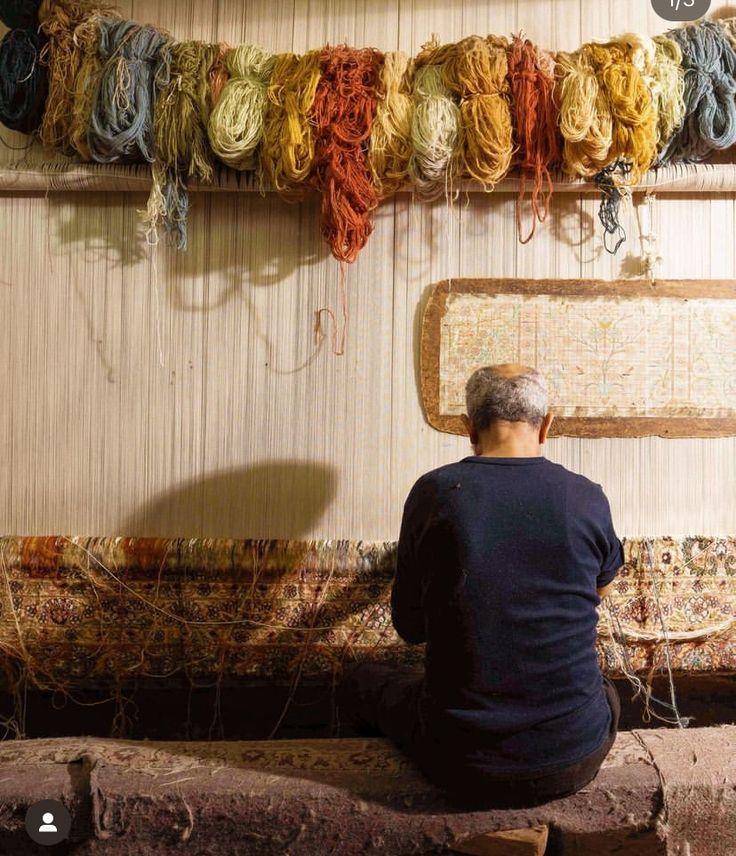
Dhurries are the dominant Indian flatweave tradition. Woven on pit looms or frame looms with cotton or wool weft, they have been made in the Indian subcontinent for centuries, and Bhadohi and the surrounding regions of Uttar Pradesh have been central to their production for generations. The tradition is practical in origin: dhurries were floor coverings for everyday domestic and communal use, valued for their washability and their ability to be folded and stored. In contemporary interiors, these same characteristics read as virtues rather than limitations. Browse our weaving page to see how dhurrie construction sits alongside other techniques we practise.
The reversibility of a well-made dhurrie is one of its most underappreciated qualities. Because the pattern is formed by the weft threads rather than by a surface pile, both faces of the rug carry the same design at equal quality. Rotating and flipping a dhurrie periodically, as you would a mattress, distributes wear across both surfaces and effectively doubles the useful life of the piece.
Construction Methods: Cotton Dhurrie, Wool Dhurrie, and Kilim
Cotton dhurries are the most common variety in the Indian production tradition. The warp is typically undyed cotton, and the weft is coloured cotton yarn woven in a plain or tapestry weave. Cotton dhurries are cooler underfoot than wool, easy to clean, and dimensionally stable, which makes them practical choices for warm climates, kitchens, and layered arrangements. Their flat surface can carry fine geometric detail because the weft threads can be packed densely.
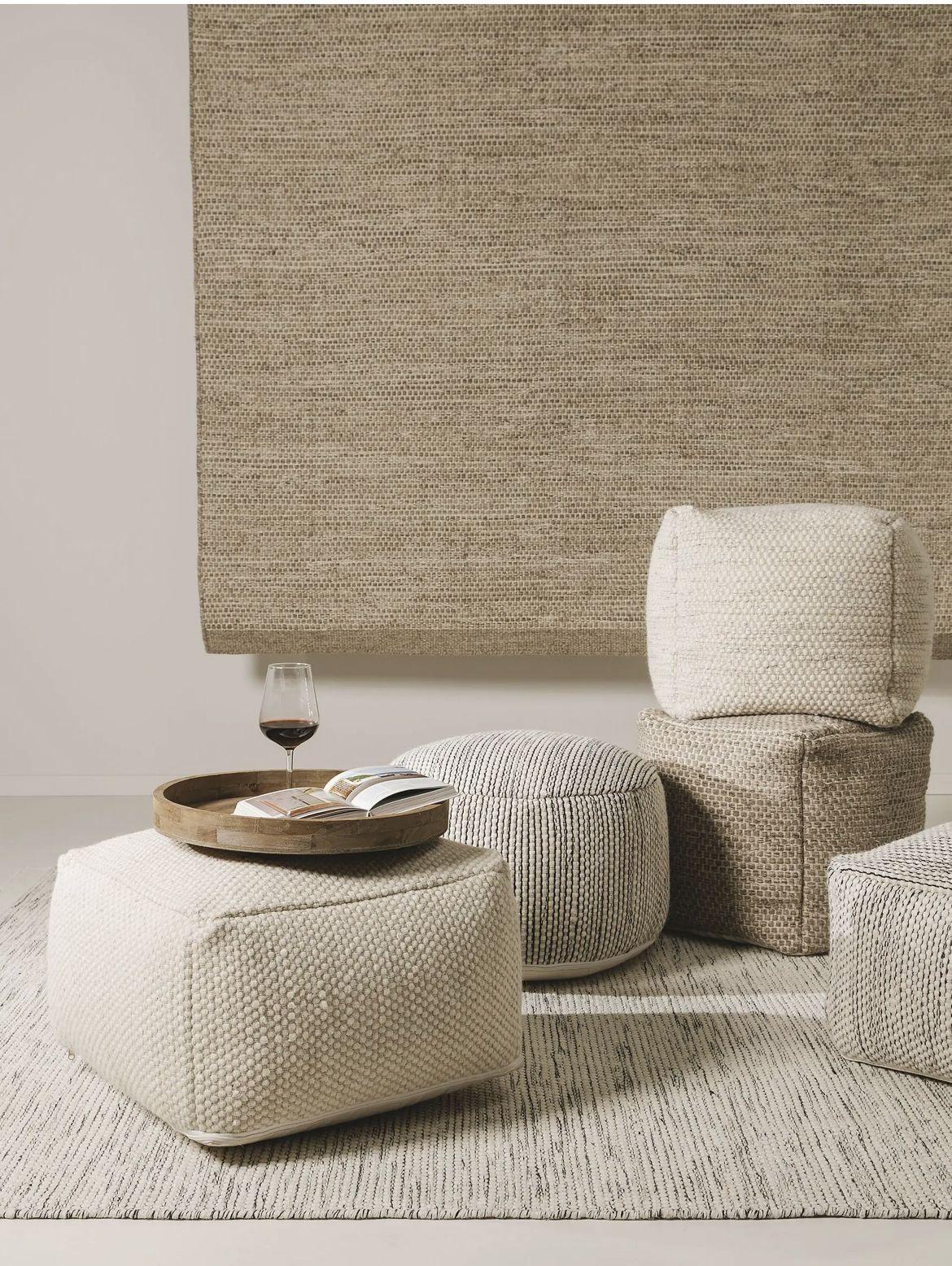
Wool dhurries share the same basic structure but carry the warmth and resilience of a wool pile rug in a flatweave format. Wool weft produces a softer, more springy texture than cotton and a richer visual depth, particularly in natural-dyed colourways where the fibre's slight irregularity catches light differently across the surface. Wool dhurries are appropriate for living rooms, bedrooms, and any space where tactile warmth is a priority. Our collections include both cotton and wool flatweave options across a range of colourways.
Kilims, while sometimes confused with dhurries in the market, are a distinct tradition originating in Central Asia and the Middle East, characterised by slit-weave or interlocked weft technique that allows very fine diagonal and curved lines in the pattern. Some kilim-influenced constructions are now produced in Bhadohi, and the visual vocabulary of the kilim has been absorbed into the broader Indian flatweave repertoire. Understanding the difference matters when specifying: a true kilim has structural slits at colour joins that may need binding; a dhurrie does not.
Design Vocabulary: From Geometric Classics to Contemporary Abstraction
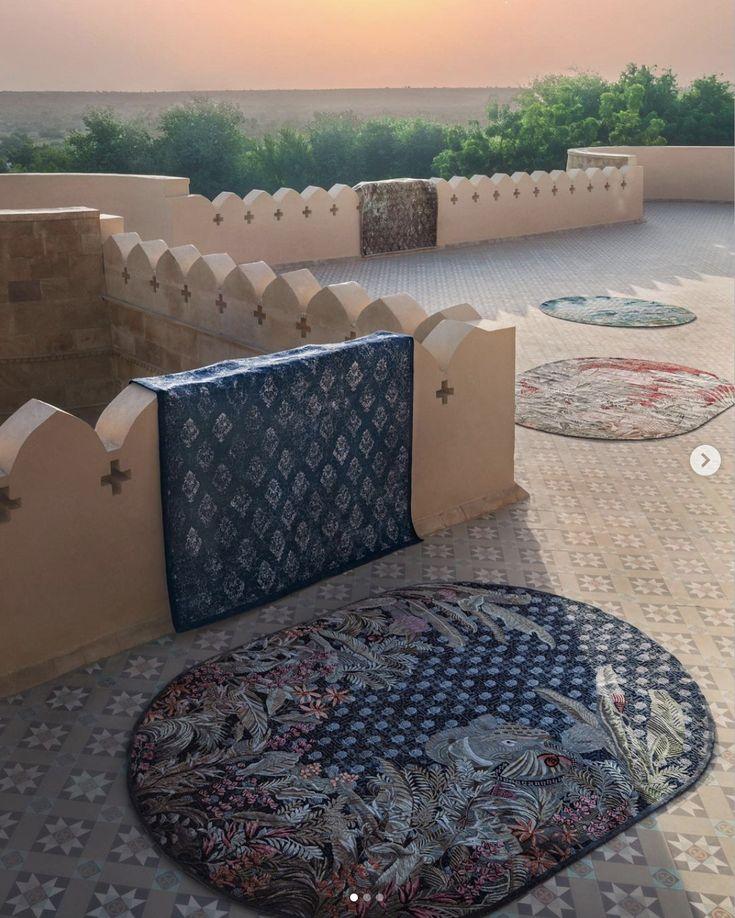
The design vocabulary of the traditional dhurrie is fundamentally geometric. Straight lines, right-angle turns, and interlocking step patterns are natural to the warp-and-weft structure, where curves must be approximated through careful stepping of the weft colour. This geometric character, once considered a limitation of the medium, has made dhurries extraordinarily relevant in contemporary interiors that favour clean line and graphic clarity over the organic complexity of a knotted pile.
Contemporary production in Bhadohi has extended the dhurrie's design range considerably. Stripe constructions in graduated tones, abstract field patterns inspired by modernist painting, and tonal textural weaves that appear almost plain but carry subtle woven variation are all now produced alongside traditional geometric patterns. The OEM and private-label programmes that Raheem and Son offers allow importers and retail brands to develop bespoke dhurrie designs tailored to their market without minimum order quantity constraints at the enquiry stage.
Scale matters in flatweave design in a way that differs from pile rugs. Because the pattern relies on line rather than pile texture for its visual weight, a motif that reads clearly at 8x10 feet may appear delicate and tentative at 2x3 feet. When briefing a dhurrie design, share both the intended rug size and the room context so that the weaving team can confirm whether the pattern repeat is appropriate to the scale.
Durability, Care, and Why Flatweaves Suit High-Traffic Spaces
The durability argument for flatweave rugs is straightforward: without pile, there is nothing to crush, pill, or shed. A well-woven dhurrie in good-quality wool or cotton fibre will wear evenly across its entire surface, and surface wear manifests as gradual softening of the weave rather than the bald patches or pile thinning that eventually affects pile rugs. In high-traffic residential corridors, retail floors, and light-commercial environments, a dhurrie will frequently outlast a pile rug of comparable quality at a lower initial cost.
Cleaning is simpler than for pile rugs. Cotton dhurries can often be machine-washed on a gentle cycle or hosed down and air-dried flat. Wool dhurries benefit from professional hand-washing but dry quickly and do not require the extended drying protocols that a thick pile rug demands. Regular vacuuming on both faces and prompt attention to spills are the daily maintenance requirements. Avoid prolonged exposure to direct sunlight, which fades natural dyes in any textile, flatweave or pile.
One practical consideration for flatweave use is underlay. Because dhurries are thin and relatively light, they will move on smooth floor surfaces without an appropriate non-slip pad. Specify a pad sized slightly smaller than the rug to prevent the edges from riding up. On carpeted floors, flatweaves may present a trip hazard at their edges, which can be minimised by selecting a construction with a bound or taped edge finish.
Sourcing Dhurries from Bhadohi: What to Know Before You Order
Bhadohi has a deep production base for flatweave textiles. The region's concentration of weavers, dye houses, and finishing workshops means that dhurrie orders can be produced at a range of price and quality points, from volume commodity production to fine custom work in natural dyes. Understanding which tier of production aligns with your buying programme is the first step in finding the right supplier.
Raheem and Son has operated in Bhadohi since 1927, with over 1,400 looms and 6,000 weavers across our production network. Our flatweave capacity sits alongside our hand-knotted production, which means that buyers can source a mixed programme of pile and flatweave rugs from a single supplier, simplifying logistics and quality oversight. Sampling for flatweave constructions is typically faster than for hand-knotted pieces: strike-off samples are usually available within 25 to 35 days of brief confirmation.
We hold CEPC (Carpet Export Promotion Council) registration, which means our export documentation, quality records, and production standards are subject to periodic review. For buyers who need to demonstrate supply-chain diligence to their own compliance teams, this registration provides a starting point for supplier verification.
How to Brief a Dhurrie Commission
A clear brief for a dhurrie commission covers six elements: size and size ladder (if ordering a range), fibre (cotton, wool, or blend), colour direction with physical references where possible, pattern concept or reference imagery, pile treatment (flatweave dhurries are by definition flat, but finish details such as fringe length and selvedge treatment should be specified), and intended installation environment. Supplying all six at the outset eliminates most of the back-and-forth that delays sampling.
For colour, physical references are essential. Digital renders of flatweave patterns vary considerably from the woven reality because the interlaced structure of the weave creates a mixed optical effect: two colours woven in close proximity interact visually in a way that neither colour swatch anticipates. Request a small woven swatch in the proposed colourway before committing to a full sample.
Volume buyers who run annual buying programmes should discuss dhurrie designs alongside pile rug programmes rather than treating them as a separate sourcing exercise. Consolidated programmes often allow more competitive pricing, shared shipping, and co-ordinated production scheduling. Visit our collections page to see the design directions currently available in flatweave, and contact our export team to discuss a bespoke programme.
Frequently asked
What is the difference between a dhurrie and a kilim?
Both are flatweave rugs with no pile, but they originate in different traditions and use different weft techniques. Dhurries are the Indian tradition, typically woven in cotton or wool in a plain or tapestry weave. Kilims are a Central Asian and Middle Eastern tradition using a slit-weave technique that allows finer diagonal lines but creates structural slits at colour joins. Some kilim-influenced designs are now produced in Bhadohi.
Are flatweave rugs suitable for outdoor or semi-outdoor use?
Cotton flatweave rugs can tolerate damp conditions better than pile rugs and are sometimes used in covered outdoor areas. However, prolonged UV exposure fades dyes in any natural-fibre textile. For fully outdoor use, consider synthetic-fibre flatweaves specifically rated for exterior environments. Our natural-fibre dhurries are recommended for indoor or sheltered semi-outdoor use.
Can dhurrie rugs be made in custom sizes?
Yes. Our loom capacity accommodates standard and custom sizes. The warp width of the loom sets an upper limit on the unjoined width achievable in a single piece. For very wide rugs, pieces are seamed, which an experienced installer can execute to a very high standard with matching weft direction.
Do dhurrie rugs require a specific underlay?
A non-slip underlay is recommended for flatweave rugs on smooth floors because the thin, flat construction has less grip than a pile rug. Choose an underlay slightly smaller than the rug to prevent edge curling. On softer substrates such as carpet, a low-profile non-slip mesh underlay works well.
By RS, 20 June 2026
More in Materials and Construction.
Follow the journal in Google Search. Readers who add us as a preferred source see our writing marked in Top Stories and in AI Overviews.