Why the Design Process Is the Most Important Stage in a Custom Commission
A custom rug commission is a translation exercise. A design that exists as a digital file, a sketch, an architectural drawing, or even a verbal description must be converted into a specific pattern of knots, dyes, and pile in a way that faithfully captures the design intent while respecting the physical constraints of the construction method chosen. The quality of that translation determines whether the finished rug matches the vision or merely approximates it.
The design process is where most custom commissions either succeed or fail. Not because weavers lack skill, but because the instruction they receive is insufficiently precise. At Raheem and Son, we have developed a structured brief-to-sample process that is designed to surface ambiguities before they become production problems. Our OEM and private label programme covers this process in the context of brand and wholesale commissions. Our how-to-order guide provides a brief template for buyers who want to structure their initial instruction clearly.
Stage One: Writing a Brief That Leaves No Room for Guesswork
The brief is the foundation of the custom process. A strong brief specifies the construction method (hand-knotted, hand-tufted, or flatweave), the pile fibre (wool, silk, bamboo silk, or a blend), the approximate knot density or quality grade, the size or sizes required, the colourway direction with physical colour references, the design source material, the intended use environment, and any specific technical requirements (underfloor heating, commercial traffic, fire rating).
Colourway references should be physical wherever possible. Paint chips, fabric swatches, stone samples, or existing product pieces give the dye team a tangible target. Pantone codes are useful as a secondary reference but must be understood as a point of direction rather than a match guarantee, since the behaviour of dye on wool pile under room lighting does not precisely replicate how a printed Pantone chip appears in graphic design software.
Design source material should be supplied in the highest resolution and most editable format available. Vector files (Adobe Illustrator AI or EPS, PDF with live vectors) allow our design team to manipulate elements, adjust repeat scales, and optimise the design for the specific loom and knot density without losing quality. High-resolution raster files (minimum 300 dpi at finished size) are workable but may require additional interpretation. Low-resolution or screenshot images are not suitable as production artwork.
Stage Two: Design Interpretation and Loom Programme Development
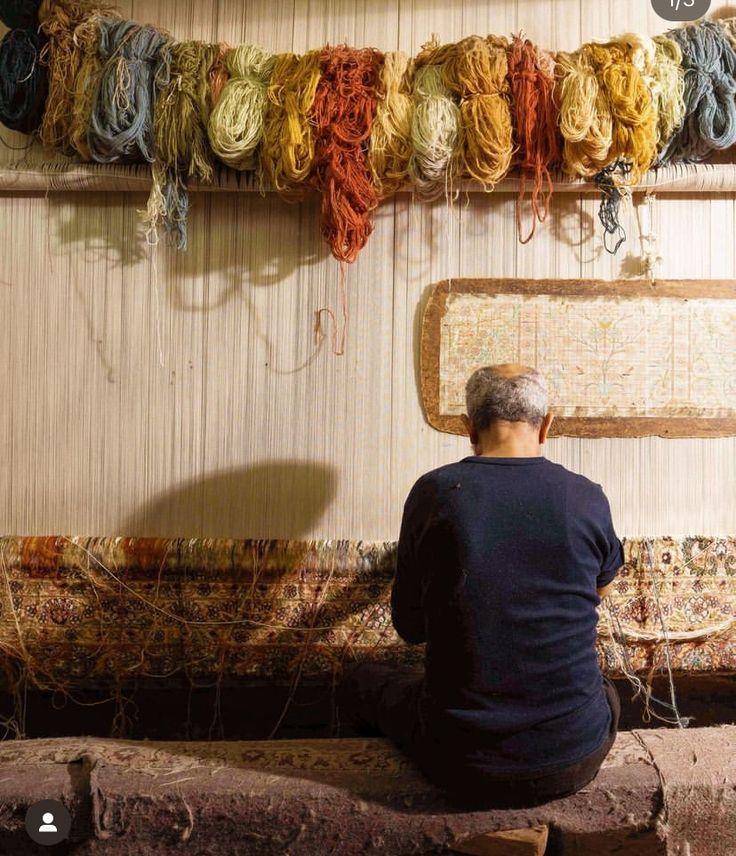
Once the brief is received, our design team interprets the artwork in the context of the specified construction and knot density. This stage is called design-to-weave adaptation and it is a skilled craft process in its own right. A photographic image, a complex botanical illustration, or a brand logo must be converted into a grid-based pattern where each unit of the grid corresponds to one knot. Details that are smaller than one knot (approximately 2 to 5 millimetres depending on the density) cannot be reproduced and must either be simplified or the knot density must be increased to accommodate them.
The design team produces a point paper or digital equivalent: a colour-coded grid map of the full design at the specified knot density that shows exactly what the weaver will produce. This document is what is handed to the loom. Buyers who request a digital preview of the point paper before sampling begins get an early opportunity to check that the design intent has been correctly understood and to request adjustments before loom time is committed.
Colour development runs in parallel. The dye master produces tuft cards: small woven or tufted samples in each of the proposed dye colours, in the actual pile fibre and pile height specified. These are assessed against the brief's colour references and adjusted through iterative rounds until the colour palette is approved. This pre-sampling colour approval stage is the most cost-effective point at which to make palette changes. Changes made after a full woven sample is produced are far more costly in time and material.
Stage Three: The Woven Sample and What to Look for When You Receive It
Once the loom programme and colour palette are approved, a woven sample is produced. For custom commissions, this is typically a section of the design at full pile specification, large enough to show at least one complete repeat of the motif, the border relationship, and the principal colour interactions. Sampling lead times at our facility run between 25 and 35 days from brief confirmation to sample dispatch.
Assess the sample under the lighting conditions it will experience in the room where the rug will be installed, not in your studio or office. Natural north light, warm tungsten artificial light, and daylight with direct sun all read the same dye colours differently. A colour that is approved under office fluorescent light and then deployed in a candlelit dining room will disappoint. Take the sample to the space and assess it against the key finishes: floor, primary upholstery, wall colour, soft furnishings.
Provide written feedback on the sample, not verbal. Specify exactly what you want changed and how: not "the blue needs to be warmer" but "the blue in the border should shift approximately 10 percent toward the indigo tones in the reference fabric I supplied, rather than the cooler sky-blue it currently reads." Precise written feedback creates a shared record, prevents the same conversation recurring at the revision stage, and gives the dye team an actionable instruction rather than an interpretative judgment.
Stage Four: Revisions, Final Approval, and Moving to Production
Most custom commissions require at least one round of revision after the initial sample. This is normal and should be anticipated in your project timeline. A second sample, incorporating the written revisions from the first, should address the specific changes requested and should be assessed using the same process as the first sample. In our experience, the large majority of commissions reach an approval-ready state by the second sample. Where a third sample is required, it is usually because the first round of feedback was broad rather than specific.
Final approval should be given in writing, referencing the sample identification number and confirming that production may proceed against the approved sample as the quality standard. This written approval is the reference document for pre-shipment inspection: the inspector checks the production pieces against the approved sample in terms of colour, pile height, knot density, size, and finishing. Without a clear written approval, the inspection has no objective standard to work from.
Once approval is confirmed, bulk production begins. Our standard production lead time from approval to container-ready goods starts at 60 days for hand-knotted construction at moderate complexity and may extend for very fine or very large commissions. Maintain communication with your production contact during the production window, particularly regarding the pre-shipment inspection schedule, so that the inspection can be booked in advance of the goods being packed and does not delay the shipping window.
Managing Client Expectations Through the Process
Interior designers managing a custom rug commission on behalf of a client carry the additional challenge of translating the client's expectations into a brief precise enough for production. The most effective approach is to involve the client at the tuft card stage, before the full woven sample is produced, so that any fundamental colour or direction issues are resolved early in the process at low cost. Showing a client the tuft cards under the actual room lighting is a straightforward, low-risk way to confirm alignment before committing to woven sampling.
Be clear with clients about the lead time for a custom commission. From brief to delivery, a hand-knotted custom rug typically requires four to five months minimum, accounting for two sampling rounds, production, inspection, shipping, and domestic freight. Clients who are told this at the outset manage their expectations accordingly; clients who learn it three months into a project that was supposed to be ready for an opening date do not. Build the timeline into your project schedule before the commission is placed.
The custom process, managed well, is one of the most satisfying in the design world. A rug that arrives as an exact realisation of a specific design intent, in a room built to receive it, is a remarkable object. The brief, the samples, and the approval process are the structure that makes that outcome possible rather than leaving it to chance. Our team at Raheem and Son is available at every stage to advise, adjust, and respond, and we welcome direct engagement from designers who want to work through the process with an experienced production partner.
Frequently asked
How long does the complete custom rug process take from brief to delivery?
From initial brief to delivery at destination, allow four to five months for a hand-knotted custom commission: approximately 25 to 35 days for sampling, revision rounds, bulk production from 60 days, pre-shipment inspection, and sea freight. Flatweave and tufted commissions can be completed faster.
What file format should I supply for my design artwork?
Vector format (Adobe Illustrator AI, EPS, or PDF with live vectors) is strongly preferred. High-resolution raster files (minimum 300 dpi at full finished size) are workable as secondary references. Low-resolution images are not suitable for production artwork and will require re-drawing, which adds time and cost.
Can I make changes to the design after the first sample is approved?
Changes can be made at any point before production begins, but changes after the sample is approved and production has started are costly to implement and disruptive to the schedule. The most cost-effective point to make changes is before the first woven sample is produced, during the colour development and point paper stages.
Is it possible to commission a rug without having a design, using the manufacturer's design library?
Yes. Private label commissions, where the buyer selects from our design archive and commissions production in a custom colourway, specification, or size, are a common and practical alternative to full OEM design development. This approach is faster and has a lower sampling investment while still producing a product specific to your brief.
By RS, 9 June 2026
More in For Interior Designers.
Follow the journal in Google Search. Readers who add us as a preferred source see our writing marked in Top Stories and in AI Overviews.