Why Care Matters More Than Construction for Longevity
A hand-knotted wool rug made from good-quality fibre in a sound construction can remain in excellent condition for 50 years or more. Rugs of that age, still vibrant and serviceable, exist in homes, hotels, and collections worldwide. The construction provides the potential for longevity; the care regime determines whether that potential is realised. A poorly maintained hand-knotted rug can be irreparably damaged within a decade; a well-maintained one improves with age, the pile settling to a lustrous patina that no new rug replicates.
Silk rugs require a higher level of attentiveness than wool because the fibre is more delicate, more reactive to moisture and alkalis, and more susceptible to damage from abrasion and UV exposure. The principles of care are similar, but the margin for error is narrower. This guide addresses both wool and silk rugs, noting where the approach differs. Our care-and-cleaning page provides a condensed version of these guidelines suitable for sharing with clients or end consumers.
The first and most important principle of rug care is also the simplest: act quickly. The difference between a stain that comes out completely and one that becomes a permanent feature of your rug is almost always the response time. A spill treated within the first few minutes is a maintenance event. The same spill treated after several hours, or after it has dried, is a cleaning challenge that may require professional intervention.
Routine Maintenance: Vacuuming, Rotation, and Underlay
Regular vacuuming is the single most important routine maintenance task for a pile rug. Grit and dust particles settle into the pile and, under foot traffic, act as fine abrasives that cut the wool or silk fibres at their base. Removing this particulate matter regularly prevents the invisible attrition that eventually manifests as pile thinning and foundation damage.
Vacuum the pile surface regularly, using a suction-only head without a rotating beater bar. Beater bars are appropriate for machine-made synthetic rugs but can damage the pile and selvedge of handmade rugs, particularly silk. Vacuum in the direction of the pile, not against it. The reverse of the rug should also be vacuumed periodically to remove grit that has settled through the pile to the foundation.
Rotate your rug 180 degrees every six to twelve months if the room has a consistent traffic pattern. This redistributes wear across the full surface rather than allowing one end (typically near a doorway) to bear all the foot traffic. Ensure that an appropriate non-slip underlay is in place under all pile rugs on smooth floors. The underlay protects the rug's foundation by preventing it from sliding and creasing, and it reduces the abrasive contact between the rug's back and the floor surface. Our collections page includes accessories available to trade buyers.
Responding to Spills: The First Five Minutes
When a liquid spill occurs on a handmade rug, the first response is to blot, not rub. Blotting lifts the liquid out of the pile; rubbing drives it deeper into the fibre and spreads it across a larger area. Use a clean white cloth or paper towel, applied with firm pressure, working from the outside edge of the spill toward the centre to prevent spreading.
For water-based spills (wine, coffee, juice, tea), blot as much liquid as possible, then apply a small amount of cool water and blot again. Do not soak the rug. Continue blotting until the area is as dry as possible, then allow to air-dry with good ventilation. Avoid walking on the wet area until it is fully dry. Do not use a hairdryer or direct heat, which can cause wool to shrink or silk to distort.
For oil-based spills (food oils, grease, butter), scrape away any solid matter gently with a blunt edge first, then apply a small amount of dish soap diluted in cool water to the affected area and blot. Rinse with clean cool water and blot dry. For more complex stains (ink, blood, pet urine), contact a professional rug cleaner before attempting home treatment, as the wrong approach can set the stain permanently.
Professional Cleaning: When, Why, and What to Expect
Even with diligent routine care, handmade rugs accumulate embedded dirt, dust mite allergens, and residual spill matter that vacuuming alone cannot remove. Professional wet-washing every three to five years, or sooner for rugs in high-traffic or allergy-sensitive environments, restores the pile to its original vibrancy and removes the buried particulate that causes fibre deterioration.
Professional rug cleaning for handmade textiles is a specialist service, distinct from carpet cleaning. The correct process for a hand-knotted wool or silk rug involves immersion washing in cool or lukewarm water with a pH-neutral detergent, gentle agitation, thorough rinsing to remove all soap residue, and careful hand-pressing and drying flat on a non-colour-leaching surface. Rotary machine cleaning, steam cleaning, and chemical foam treatments are not appropriate for handmade pile rugs, particularly silk.
When selecting a professional rug cleaner, confirm that they have experience with handmade rugs specifically and ask how they handle wool and silk pile. Ask whether the rug will be washed by immersion or by surface application. Request that a pre-wash inspection is conducted to identify any existing damage, colour instability, or areas requiring special attention before cleaning begins.
Repairs: What Can Be Corrected and When to Act
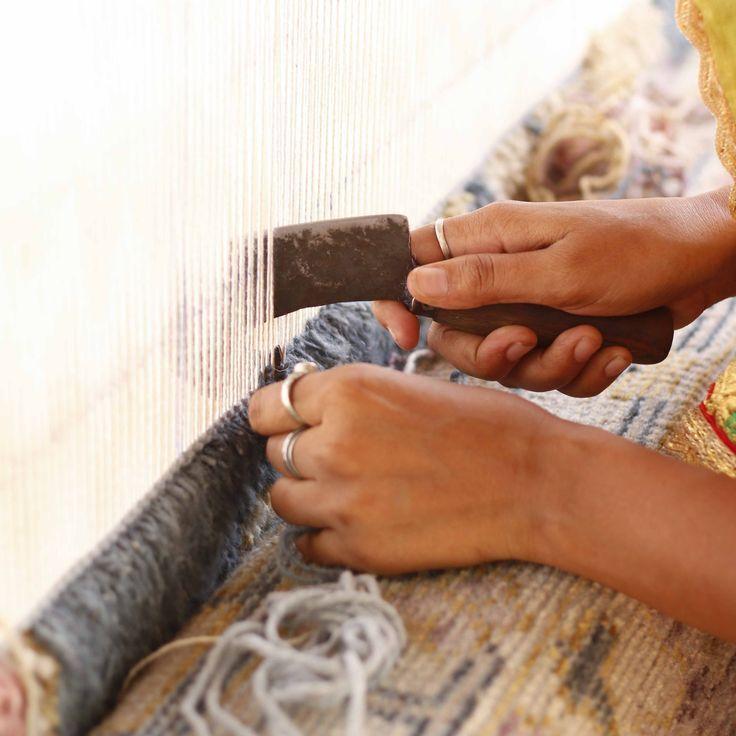
One of the significant advantages of hand-knotted rugs over machine-made alternatives is repairability. Worn areas, damaged selvedges, loose fringes, moth damage, and even sections of foundation damage can be repaired by a skilled rug conservator using techniques that closely match the original construction. A repaired hand-knotted rug, when the work is well executed, is structurally sound and visually indistinguishable from the undamaged original.
Address damage promptly rather than waiting. A fraying selvedge left unattended will continue to unravel toward the pile, turning a minor repair into a significant one. A moth-damaged area, if caught early when only the pile is affected, can be rewoven; if left until the foundation is damaged, the repair becomes far more complex and expensive. Annual inspection of the rug's condition, ideally when it is removed for cleaning, is good practice.
For silk rugs, the barrier to effective repair is higher because silk pile is more difficult to match and the foundation is more delicate to work on. Repairs to silk rugs should be entrusted only to conservators with specific experience in silk textiles. Our care page at care-and-cleaning lists the types of damage that are routinely repairable and those that require specialist conservation treatment.
Storage: How to Put a Rug Away Safely
Rugs that are stored incorrectly can suffer irreversible damage: compression creasing from folding, moth infestation, mould from moisture, and colour transfer from inadequate wrapping. Proper storage is especially important for valuable silk rugs and for any rug put away for more than a few weeks.
To store a handmade rug, clean it professionally before storage, then roll it (do not fold it) around an acid-free tube in the direction of the pile, face-in, to protect the surface. Wrap the rolled rug in acid-free tissue or clean cotton muslin, not in plastic sheeting, which traps moisture. Store horizontally, not upright, in a dry, well-ventilated environment away from direct sunlight and heat sources. Cedar chips or lavender sachets placed inside the wrapping deter moths without the chemical residue of mothballs.
Inspect stored rugs every six months for signs of moth activity. Evidence includes small irregular patches of missing or thinning pile, fine webbing on the surface, and small moth larvae. If moth damage is found, treat the rug immediately and seek professional advice on the extent of the infestation before returning the rug to use.
Frequently asked
Can I wash a handmade wool rug at home?
Small dhurries and flatweave rugs can often be washed carefully by hand in cool water with a mild detergent and allowed to dry flat. Pile rugs, particularly hand-knotted wool or silk, should be professionally cleaned. Home washing of pile rugs risks colour bleeding, pile distortion, and foundation damage if not done correctly.
How do I treat a red wine spill on a wool rug?
Blot immediately with a clean white cloth, working from the outside in. Apply a small amount of cool water and blot again. A mixture of cool water and a small amount of white wine vinegar (no more than a tablespoon per cup of water) can help lift wine stains from wool. Do not use hot water, bleach, or strong detergents. If the stain persists after initial treatment, contact a professional rug cleaner.
How do I know if my rug has a moth problem?
Signs of moth damage include small patches of missing pile where the fibres have been eaten down to the foundation, fine silk-like webbing across the pile surface, and the presence of small cream-coloured larvae. Moths prefer dark, undisturbed areas, so check under furniture and at the edges of the rug. Prompt action significantly limits the extent of damage.
How often should a handmade rug be professionally cleaned?
For rugs in normal residential use, professional cleaning every three to five years is generally sufficient. Rugs in high-traffic areas, homes with pets or children, or settings where allergy management is a priority may benefit from more frequent cleaning. Regular vacuuming extends the interval between professional washes by removing surface particulate before it settles into the pile.
By RS, 8 June 2026
More in Care and Longevity.
Follow the journal in Google Search. Readers who add us as a preferred source see our writing marked in Top Stories and in AI Overviews.