What Makes Wool the Gold Standard in Handmade Rugs?
Wool has served as the primary fibre for handmade rugs across Central Asia, the Indian subcontinent, and the Middle East for thousands of years. That longevity is not sentiment. It is engineering. The wool fibre is naturally crimped, which means it compresses under foot traffic and springs back. Synthetic fibres do not behave this way. They flatten and stay flat. A wool rug, tended properly, can outlive several generations of owners.
At Raheem & Son, the weavers in Bhadohi work almost exclusively with hand-spun and mill-spun natural wools sourced from high-altitude flocks. The altitude matters because sheep at higher elevations grow denser, longer fibres with a tighter scale structure. That tight structure is what makes high-quality wool resist soil and wear at the surface level, where the rug meets daily life.
Buyers often ask whether the softness they feel in a showroom will last. With wool it does. The lanolin content in natural wool acts as a mild soil repellent, and the fibre retains its lustre through decades of use and proper care and cleaning.
The Environmental Case for Natural Wool
Polypropylene and nylon rugs are made from petroleum. They do not biodegrade in any meaningful human timeframe, and microplastics shed into the environment with every wash. A natural wool rug, at the end of its life, returns to the soil. The fibre is biodegradable, and nitrogen-rich wool clippings have long been used as a slow-release fertiliser.
The production side matters too. Our sustainability commitments cover the full supply chain, from the pastures where the wool is shorn to the water used in washing and dyeing in Bhadohi. Natural dyes, where they are used, draw on plant sources and metal mordants rather than synthetic chromium-based compounds. This is not a cosmetic claim. It shapes every decision about sourcing and process.
Carbon footprint comparisons between wool and synthetic fibres are nuanced. Sheep emit methane, which is a real consideration. But when the full product lifecycle is accounted for, a well-made wool rug that lasts forty years performs significantly better than a synthetic rug replaced every five to eight years. Longevity is the most powerful environmental argument wool has.
Wool Grade and Pile Construction: What Buyers Should Know
Not all wool is equal. The grade of a fleece is determined by staple length, fibre diameter, and cleanliness. Finer grades produce softer, more lustrous pile suitable for detailed floral and medallion patterns. Coarser grades, often used in tribal-style or flat-weave constructions, offer robustness and a distinctive texture that suits more informal settings.
Pile height and knot density interact closely with wool grade. A high-density construction in a fine wool creates a surface that takes intricate pattern with crisp definition. A lower-density weave in a coarser wool tends toward a looser, more relaxed character with a different tactile quality. Neither is inferior. They serve different spaces and design intentions. For a detailed look at how these variables combine, see our piece on how to read knot density.
Comfort and Indoor Environment Benefits
Wool is hygroscopic. It absorbs and releases moisture from the air, which helps moderate indoor humidity in a small but measurable way. In dry winter environments, a wool rug acts as a gentle buffer. In humid climates, it absorbs excess moisture without feeling damp. This hygroscopic quality also reduces the build-up of static electricity, which is why wool rugs tend not to attract the same levels of airborne dust as synthetic alternatives.
The natural crimp of wool also traps air within the pile, which contributes to thermal insulation underfoot. In rooms with hard flooring, a thick wool pile creates a noticeably warmer surface to walk on. This is especially relevant in bedrooms and living rooms where bare feet make contact with the floor regularly.
Acoustic benefits are a further consideration. Wool pile absorbs sound energy, reducing echo and reverberation in hard-surface rooms. This is particularly useful in apartments with concrete or timber floors, where a wool rug can meaningfully improve the acoustic character of a room. We have written at length about this in our piece on acoustics and rugs.
Comparing Wool to Wool-Blend and Synthetic Pile
Wool-blend constructions, often wool combined with cotton warps or a small proportion of synthetic fibre, can offer cost advantages and sometimes improved dimensional stability. A cotton foundation warp, for example, keeps the rug flat in humid environments. These blends are not inferior to pure wool constructions. They are different tools for different requirements.
Where blends fall short is in the long-term resilience of the pile surface. The wool portion of a blend will wear and recover as pure wool does. The synthetic portion will not. Over years of use, this disparity shows in how the pile ages. Pure wool ages gracefully, developing a subtle patina. Synthetic pile tends to show wear more obviously.
How to Choose a Wool Rug That Will Last
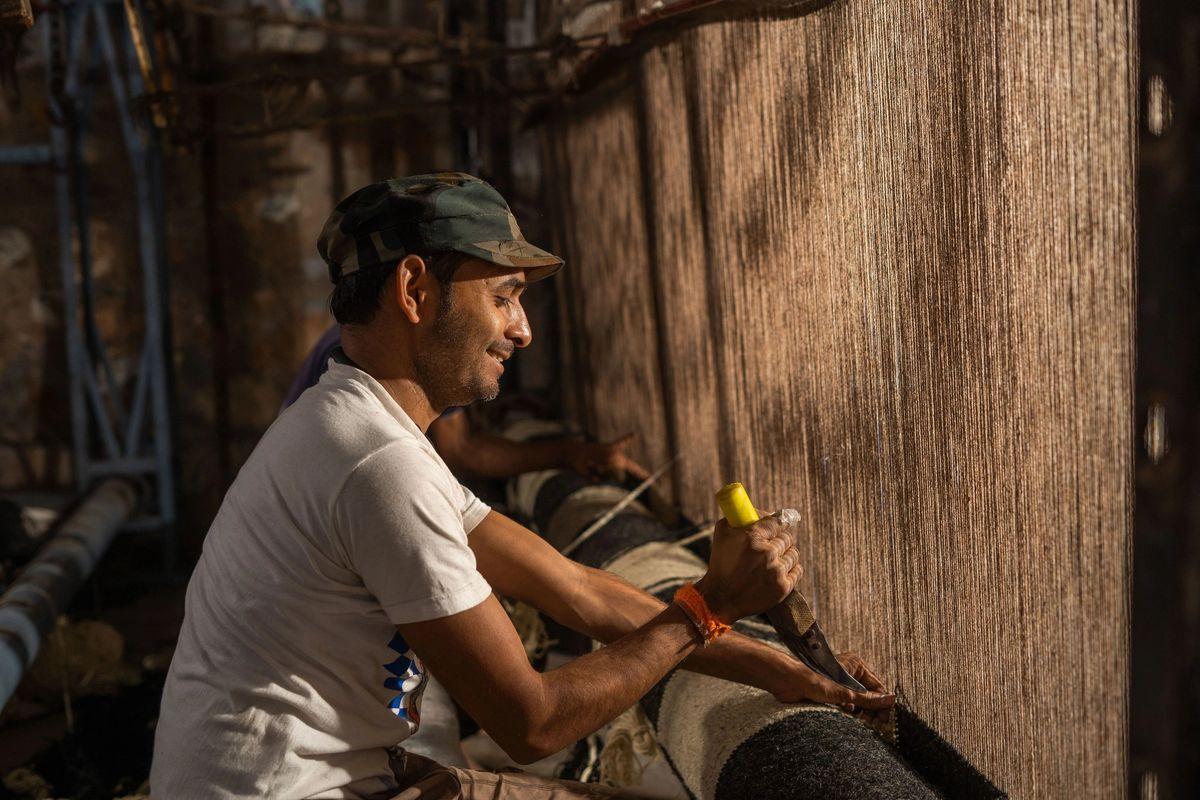
The two most reliable indicators of a long-lived wool rug are construction type and wool quality. Hand-knotted construction, in which each knot is tied individually by a weaver, produces the most durable result. Hand-knotted rugs can be re-knotted and repaired indefinitely. Tufted rugs, which use a backing adhesive that degrades over time, cannot.
When examining a wool rug, look at the back. A hand-knotted rug shows individual knots in a regular pattern across the foundation. The pile should spring back after compression and show even density across the surface. Thin or inconsistent pile, or a back that shows a secondary fabric layer rather than individual knots, indicates a tufted construction.
For buyers commissioning or sourcing at scale, our personal curation service provides access to the full atelier range and the ability to specify wool grade, pile height, and construction type to precise requirements.
Frequently asked
Are natural wool rugs suitable for high-traffic areas?
Yes. High-quality hand-knotted wool rugs are among the most durable floor coverings available. The fibre's natural resilience means it compresses under foot traffic and recovers. In very high-traffic commercial settings, construction density and pile height selection matter. Contact our team for guidance specific to your application.
How does wool compare to silk in a handmade rug?
Wool is more durable and forgiving underfoot. Silk offers finer detail and a distinctive sheen but is less suited to high-traffic areas. Many fine rugs combine both: a wool pile for the ground areas and silk highlights for fine detail. See our piece on rug materials compared for a fuller breakdown.
Is a natural wool rug safe for people with wool allergies?
Wool allergy is relatively uncommon. Most reactions attributed to wool are caused by lanolin, the natural grease in the fleece, or by the processing chemicals used in lower-quality wool. High-quality, properly washed natural wool rugs present a low risk for most people. If in doubt, request a sample before committing to a larger piece.
By RS, 4 September 2025
More in Materials and Construction.
Follow the journal in Google Search. Readers who add us as a preferred source see our writing marked in Top Stories and in AI Overviews.