Why Stair Runners Are the Most Demanding Specification
A stair runner is subject to more concentrated foot traffic per square metre than almost any other flooring textile in a residence or commercial property. Every step is a riser-edge impact, a bending stress, and a compression event. The runner must maintain its integrity through years of this treatment while remaining visually consistent and, critically, safe underfoot.
The specification process for a stair runner is therefore more exacting than for a flat area rug. Material, pile construction, width, pattern repeat, fixing method, and underlay are all load-bearing decisions rather than purely aesthetic ones. Getting any one of them wrong can mean a runner that looks beautiful on day one and is failing structurally within a few years.
Material Selection for High-Wear Stairs
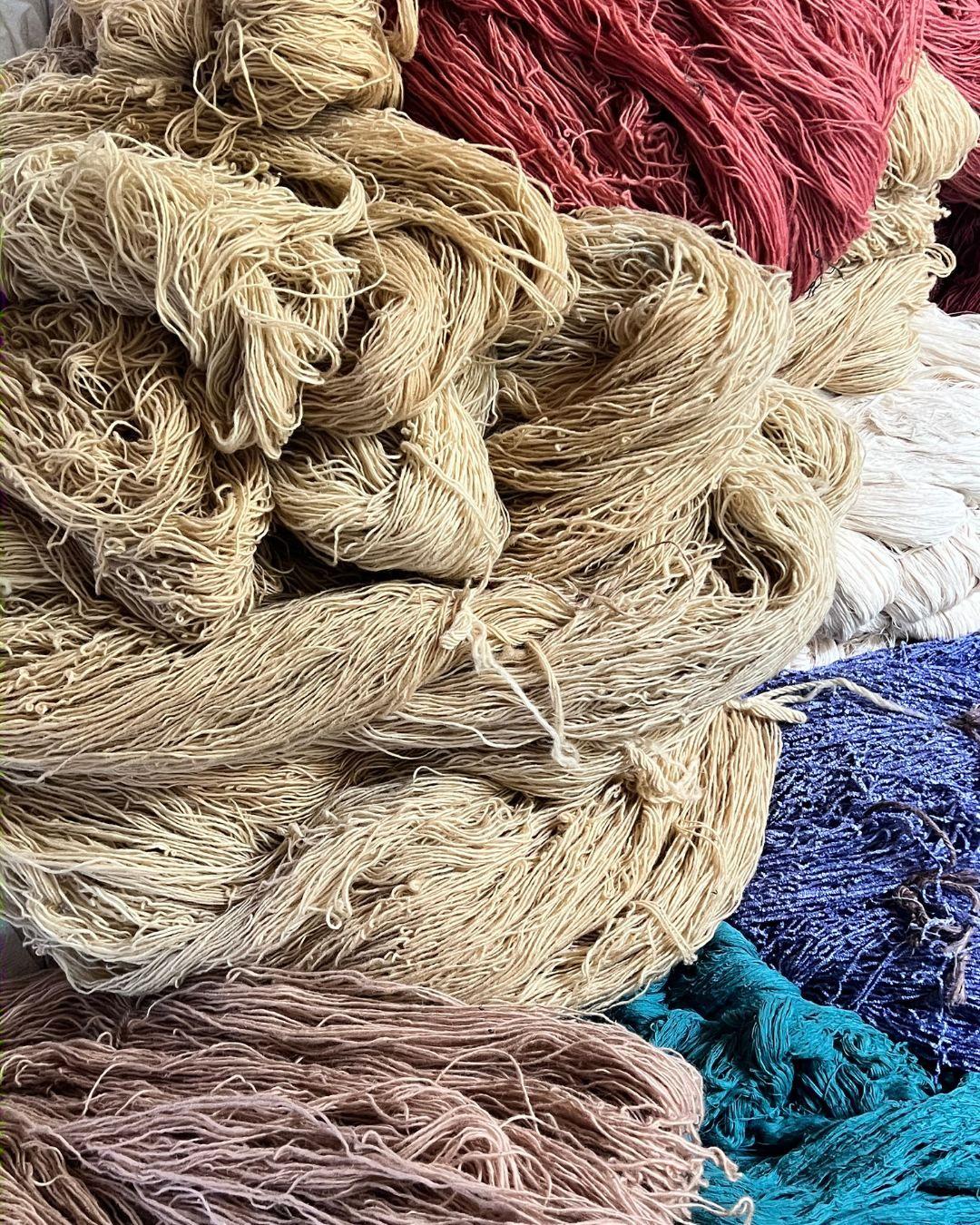
Wool remains the most reliable fibre for stair runners because of its natural resilience: wool fibres spring back after compression rather than permanently flattening. A well-constructed wool runner at appropriate pile density will maintain its appearance under sustained traffic far longer than a softer, lower-density alternative.
Pile height is a related consideration. A very high pile, while luxurious underfoot on a flat surface, is vulnerable to bending stress at the riser edge and will develop wear lines more quickly. Medium pile heights, densely knotted, distribute the riser-edge stress across more fibre and last longer. For very high-traffic stairs, flatweave construction eliminates the pile variable entirely and can be extremely durable, though it offers less cushioning underfoot.
Silk and bamboo silk are not recommended for stair runner applications. The fibre, while beautiful, is too delicate for the repeated impact and friction of stair use. Our wool grades explained piece covers the technical properties of different wool grades relevant to this decision.
Width, Length, and Pattern Repeat
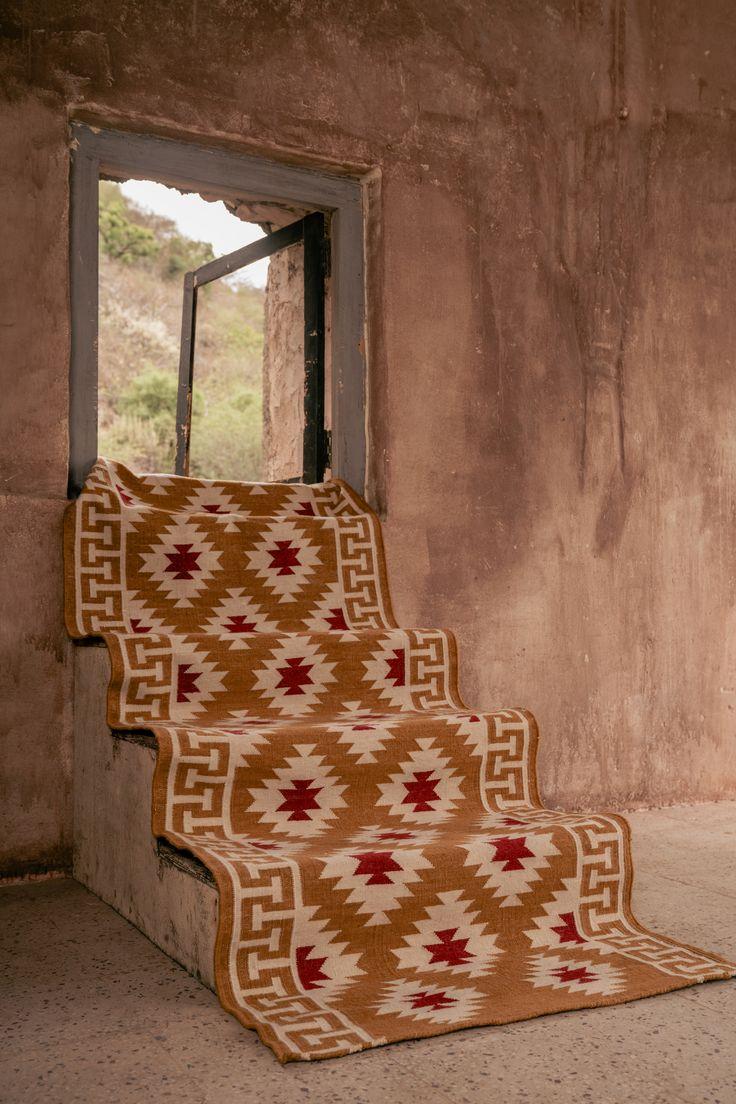
Standard stair runners are produced in widths between approximately sixty and ninety centimetres, though custom widths are available. The runner should typically be narrower than the stair tread width by at least fifteen to twenty centimetres on each side, leaving a margin of bare tread or painted riser visible. This is both aesthetic convention and a practical safety consideration: carpet edges on stairs should be fixed, not free.
Length calculation requires measuring each tread depth plus each riser height for the full run of stairs, adding a margin for fixing and for the nosing, the projecting front edge of each tread. Where a pattern repeat is involved, additional length must be ordered to allow the repeat to align at each nosing. Cutting into a repeat at the nosing produces a visual discontinuity that is particularly noticeable on a symmetrical design. Always factor the pattern repeat into the length order.
Fixing Methods and Their Implications
Stair runners are fixed by rods, by gripping strips (sometimes called stair rods), or by direct fitting with tack strips. Rod fixing is the most traditional and allows the runner to be repositioned or removed for cleaning without damage to the runner itself. It is the preferred method for valuable handmade pieces. The runner is folded under at the base of each riser and the rod holds the fold in place.
Direct fitting with tack strips produces a cleaner, flatter result and is more common in modern installations. It is more permanent and makes cleaning more complex. For a handmade runner that may need professional washing every few years, rod or clip fixing that allows removal is worth specifying even if it costs slightly more in installation time.
Underlay is non-negotiable. A good quality felt or felt-rubber underlay prevents the runner from slipping, cushions the stair edge impact, and extends the life of the runner significantly. Specify underlay cut to the runner width and placed at least several centimetres shorter than the runner on each end to avoid bunching at the riser base.
Pattern Choice for a Stair Runner
Pattern on a stair runner reads very differently from pattern in a flat room. The viewing angle is oblique, the repeat breaks at each nosing, and the pattern must work as a continuous vertical element as well as a flat composition. Borders running along the length of the runner are a classic choice because they frame the runner and provide visual continuity from top to bottom. All-over geometric repeats also work well because they do not require precise centring at each nosing.
Centred medallion designs are more challenging on stairs because the medallion rarely lands at a visually satisfying position relative to the nosing unless the repeat length exactly matches the stair geometry. If a client is committed to a medallion format, the repeat should be confirmed against the actual stair measurements before the order is placed.
Plain or tonal designs eliminate the repeat question entirely and are a reliable choice in traditional and contemporary interiors alike. The texture of the weave provides visual interest without the complexity of pattern alignment. For bespoke stair runner commissions, speak to our team via contact or explore our custom manufacturing capabilities.
Maintenance and Long-Term Care
Stair runners accumulate grit and debris that are pressed deeper into the pile with each footfall. Regular vacuuming along the length of the runner, not across it, is the most important maintenance habit. Professional cleaning every few years, more frequently in high-traffic properties, removes embedded grit that vacuuming cannot reach and that, if left, acts as an abrasive against the fibres.
Rod-fixed runners should be lifted and repositioned periodically, shifting the wear point relative to the riser edge. This distributes the heaviest wear across a slightly wider section of the runner and extends its functional life meaningfully. Our care and cleaning guide covers these routines in full.
Frequently asked
What pile height is best for a stair runner?
A medium pile height in the range of eight to twelve millimetres, densely knotted, offers the best balance of comfort and durability on stairs. Very high pile bends under riser-edge pressure and wears faster at those points.
Can I use a hand-knotted rug as a stair runner?
Yes, provided the pile density and material are appropriate for the traffic level. Hand-knotted wool runners are among the most durable options available. Confirm width and fixing requirements with our team before ordering.
How much extra length should I order to account for fixing and pattern repeat?
Beyond the measured tread and riser length, allow at least thirty centimetres for fixing margins and add one full pattern repeat per run to allow for alignment. Your installer can confirm the exact additional requirement for your specific stair geometry.
Can I commission a custom-width stair runner?
Yes. Custom widths are available through our bespoke service. Contact our team with your stair measurements and we will advise on the most appropriate construction.
By RS, 3 December 2025
More in Interiors and Styling.
Follow the journal in Google Search. Readers who add us as a preferred source see our writing marked in Top Stories and in AI Overviews.