A District That Shaped a Global Trade
Bhadohi sits in the Gangetic plain of eastern Uttar Pradesh, a few hours east of Varanasi. It is not, by the usual measures of Indian geography, a remarkable place: a mid-sized district of agricultural land, small towns, and a mixed economy. What makes Bhadohi singular in the global context is the density of its handmade rug industry. A substantial proportion of the world's hand-knotted and hand-woven rugs, exported to markets in Europe, North America, the Gulf, and Asia, originate here.
This concentration did not happen accidentally. Bhadohi's rug trade grew through a combination of geographic advantage, historical trade networks, and the accumulation of craft knowledge over generations. The district and its neighbours, including Mirzapur, developed as a regional cluster where skill, supply chains, and market access reinforced each other. Today, the industry encompasses thousands of individual workshops, finishing facilities, export houses, and the families and communities that depend on it.
The History of Carpet Weaving in the Region
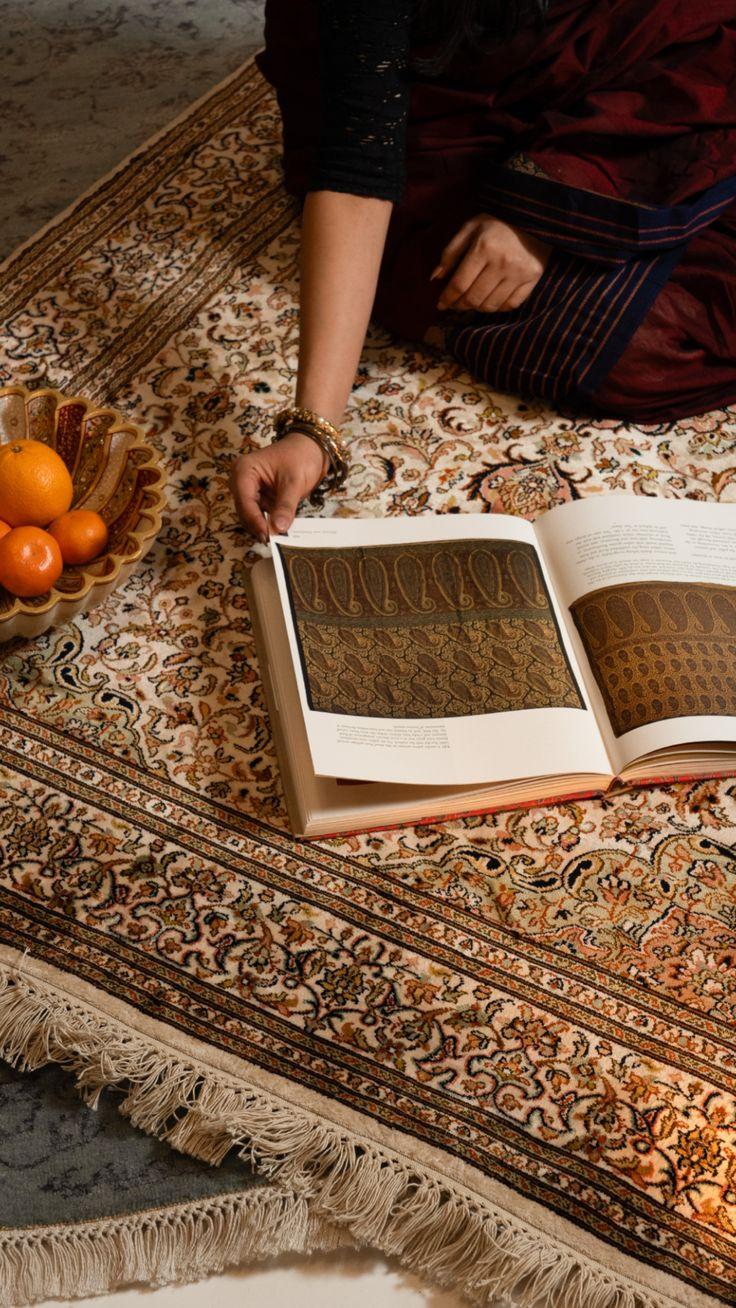
The roots of organised carpet weaving in the Bhadohi-Mirzapur region are generally traced to the Mughal period, when Persian carpet-weaving techniques were introduced to the Indian subcontinent under court patronage. Over the following centuries, the craft spread from the imperial workshops into broader artisan communities, finding particularly fertile ground in the villages of eastern Uttar Pradesh, where agricultural rhythms made seasonal weaving a natural complement to farming life.
By the late nineteenth and early twentieth centuries, the region had become a significant supplier of handmade rugs for export markets, with trading houses established to bridge Indian production and European and American demand. Raheem and Son was founded in Bhadohi in 1927, at a moment when this export trade was well established but the craft itself remained deeply embedded in village production structures rather than in large centralised factories.
How Production Is Organised: Villages, Workshops, and Export Houses
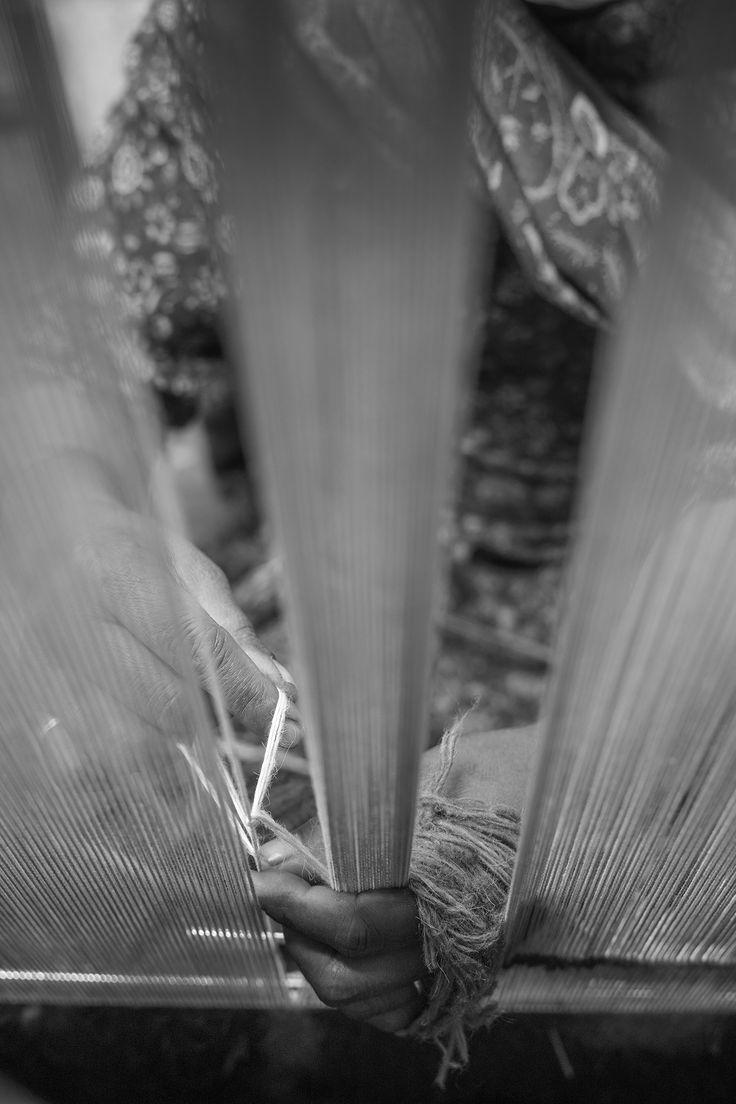
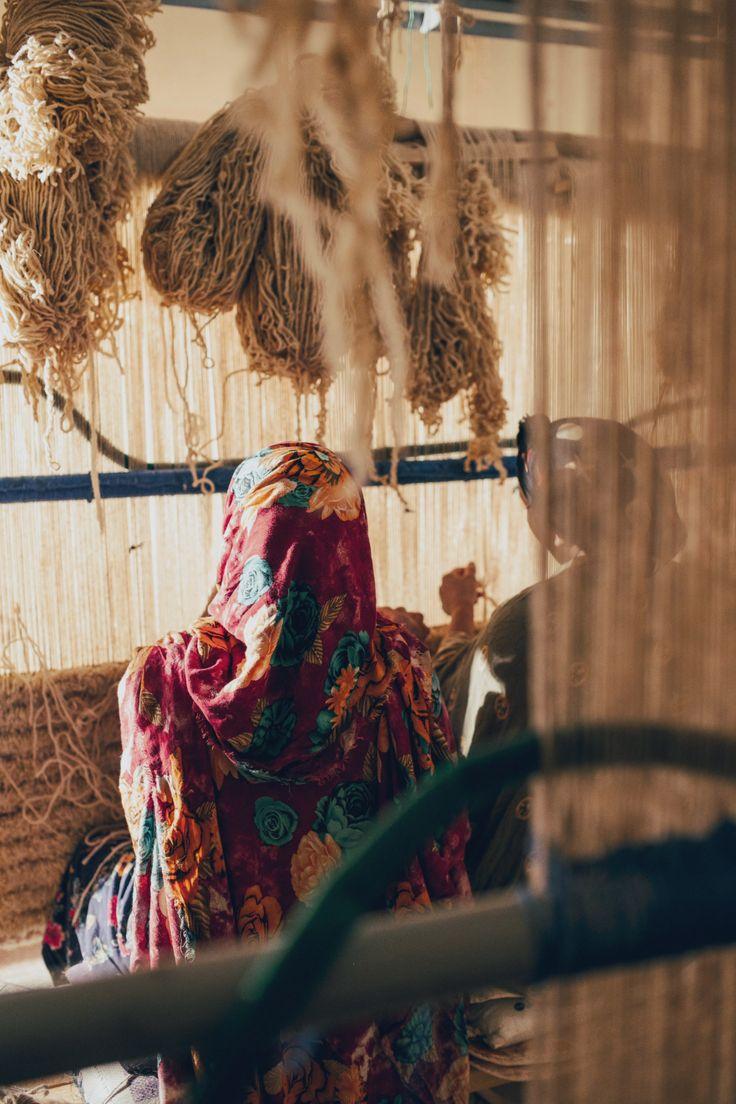
Understanding Bhadohi's production structure helps buyers and importers understand where quality variation originates. Rug production in the region is not primarily a factory industry. Much of the knotting work is done in village workshops or in domestic settings, by weavers who have learned the skill from family members and who work on commissions supplied by local contractors or export houses.
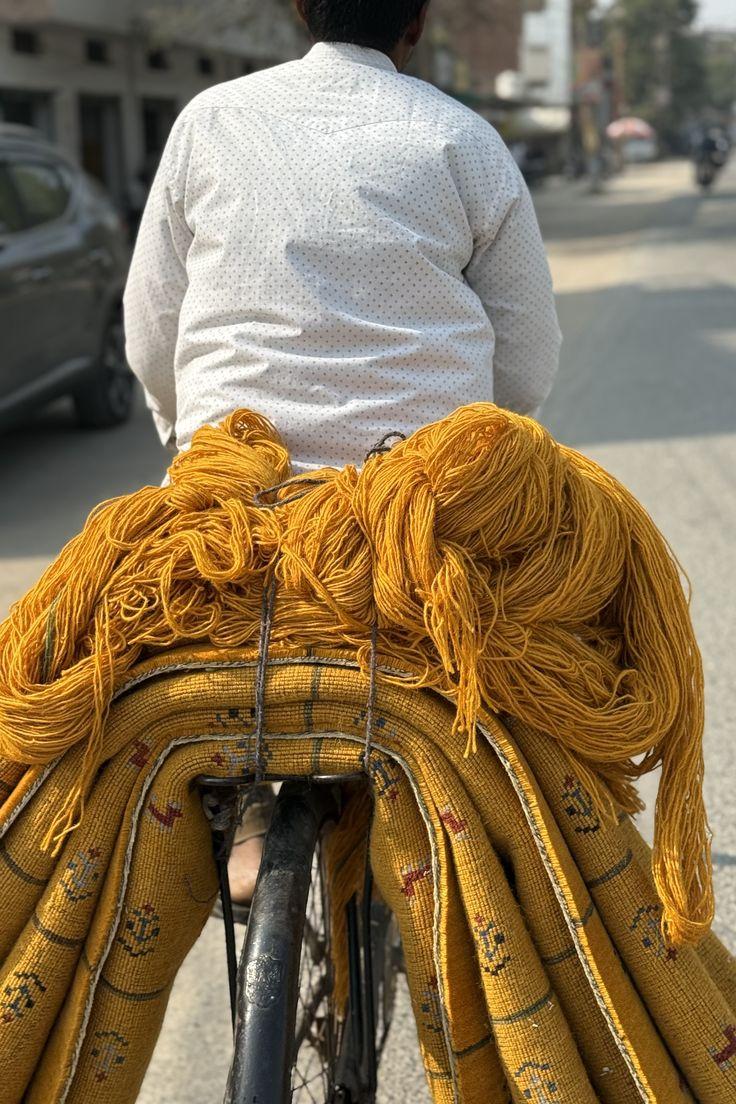
These export houses provide the design, yarn, and loom setup; the village weavers produce the knotted fabric; finishing operations including washing, drying, shearing, and inspection take place in larger facilities closer to the town centres. The quality of the finished rug depends on the consistency and care exercised at each link in this chain. Export houses with close relationships with their weaving communities and rigorous finishing standards produce work that is meaningfully different from those who treat the village supply chain as interchangeable.
For importers who want to understand how their supply chain is structured, a visit to Bhadohi during a production run is the most informative thing they can do. We welcome trade visits and can arrange introductions to different stages of the process. Contact us via our trade programme page.
The Craft Workforce: Who Actually Makes the Rugs
The weavers of Bhadohi are predominantly from communities with multi-generational ties to the craft. Skill is transmitted within families and within tight-knit village groups; a weaver who grew up watching older relatives work at the loom has absorbed a great deal of craft knowledge before ever tying their first knot professionally. This inheritance is one of the reasons why the Bhadohi region is capable of producing work of very high technical quality when the production conditions support it.
The workforce includes both men and women, and craft roles are often differentiated: knotting, finishing, dyeing, and design each have their own specialist communities. The wages and working conditions in the industry vary, and this is an area where responsible buyers and importers rightly ask questions. Producers who invest in their weaving communities, through fair pay, safe working environments, and consistent work, tend to attract and retain the most skilled weavers, which ultimately shows in the quality of the output.
What Bhadohi Produces: The Range of Construction and Style
The Bhadohi-Mirzapur cluster produces a wider range of rug constructions than almost any other single region. Hand-knotted rugs in both Persian and Tibetan knot types, hand-tufted rugs in cut and loop pile, flatwoven dhurries in cotton and wool, kilim-style woven pieces, and various blended constructions are all produced within a relatively compact geographic area. This range makes the region a comprehensive source for buyers who need variety across a project or a product range.
At the higher end of the quality spectrum, Bhadohi produces hand-knotted rugs in fine wool and silk that compare favourably with the finest examples from other weaving traditions. These pieces require the most skilled weavers and the longest production times, and they represent a genuine benchmark of craft achievement. At the more accessible end, the region's volume production capabilities allow for competitive pricing on quality goods, provided buyers understand how to specify and verify what they are buying.
Sustainability and the Future of the Craft
The handmade rug industry in Bhadohi faces pressures that are common to most traditional craft sectors: competition from machine-made alternatives, wage pressure from a modernising economy, and the challenge of attracting younger workers to a skill that requires years of learning. These are real tensions, and producers who are serious about the long-term health of the craft are actively working to address them.
Initiatives that provide consistent, fairly paid work; invest in natural dyeing and sustainable materials; and maintain connections with design markets that value genuine handmade quality are part of the response. For buyers and importers who want their purchasing to support the continuation of this craft, the clearest action is to ask specific questions about who made the rug, under what conditions, and to direct business toward producers whose answers are credible and verifiable. Our sustainability approach explains how we engage with these questions in our own production.
Why Provenance Matters When Buying a Rug
A rug described as handmade, or as Indian, or even as Bhadohi, tells you very little on its own. Those labels span an enormous range of quality, craft investment, and production ethics. What matters is understanding who made the rug, what materials were used, what standard of finishing was applied, and whether the producer can account for the supply chain with any specificity.
Raheem and Son has been rooted in Bhadohi for nearly a century. Our production relationships, our weaving communities, and our finishing facilities are all local to the region we have always called home. When we describe a rug as coming from Bhadohi, we mean something specific: that it was made by people we know, in a place we can show you, using materials we have selected. That specificity is what the label should carry, and it is what we hold ourselves to.
Frequently asked
Is Bhadohi the same as Mirzapur in the rug trade?
Bhadohi and Mirzapur are neighbouring districts in Uttar Pradesh and together form the core of the Indian carpet weaving cluster. They are distinct districts but are often referred to together in the trade. The styles and constructions produced in both areas overlap considerably.
Can buyers visit Bhadohi to see production?
Yes. Trade visits to Bhadohi are possible and we welcome them. Contact our team through our trade programme page to arrange a visit during a suitable production period.
Why do rugs from the same region vary so much in quality?
Quality is determined by material grade, knot density, finishing care, and the skill and conditions of the weavers. Within the Bhadohi region, these factors vary significantly between producers. Evaluating the producer, not just the region, is essential.
Does Raheem and Son produce all its rugs in Bhadohi?
Our core production is rooted in Bhadohi, where we have operated since 1927. We work with weaving communities we have long-standing relationships with and maintain direct oversight of production and finishing.
By RS, 22 November 2025
More in Heritage and Sustainability.
Follow the journal in Google Search. Readers who add us as a preferred source see our writing marked in Top Stories and in AI Overviews.