A Craft Passed Through Generations
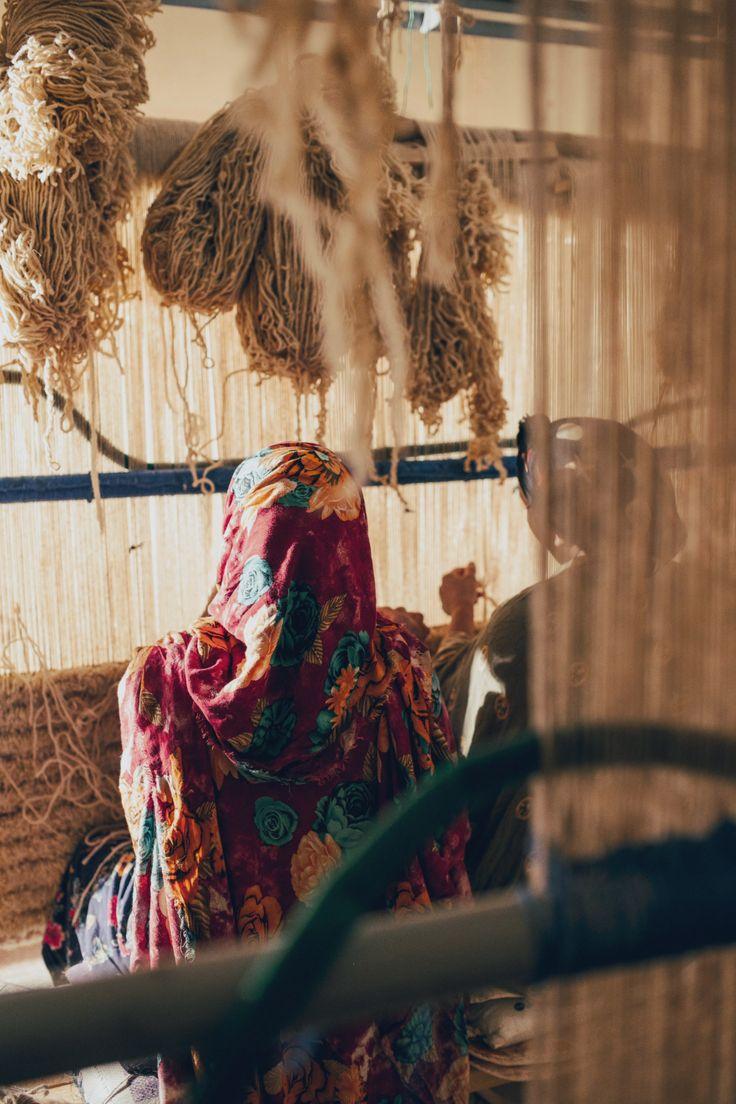
In the workshops and home looms of Bhadohi, the weaving of rugs is rarely a career choice. It is an inheritance. Children grow up watching parents and grandparents work the loom, learning to read a cartoon, count knots, and manage tension before they are formally taught. By the time a young weaver takes a seat at the loom for the first time as a practitioner rather than an observer, they carry years of absorbed knowledge.
This form of intergenerational transmission produces weavers of unusual depth. The technical vocabulary of the craft, the names for knot types, the methods for correcting tension, the habits around pile direction and shearing, is passed orally and by demonstration rather than through written curriculum. What is lost in standardisation is gained in embodied understanding, the kind that allows an experienced weaver to feel a problem in the pile before it is visible to the eye.
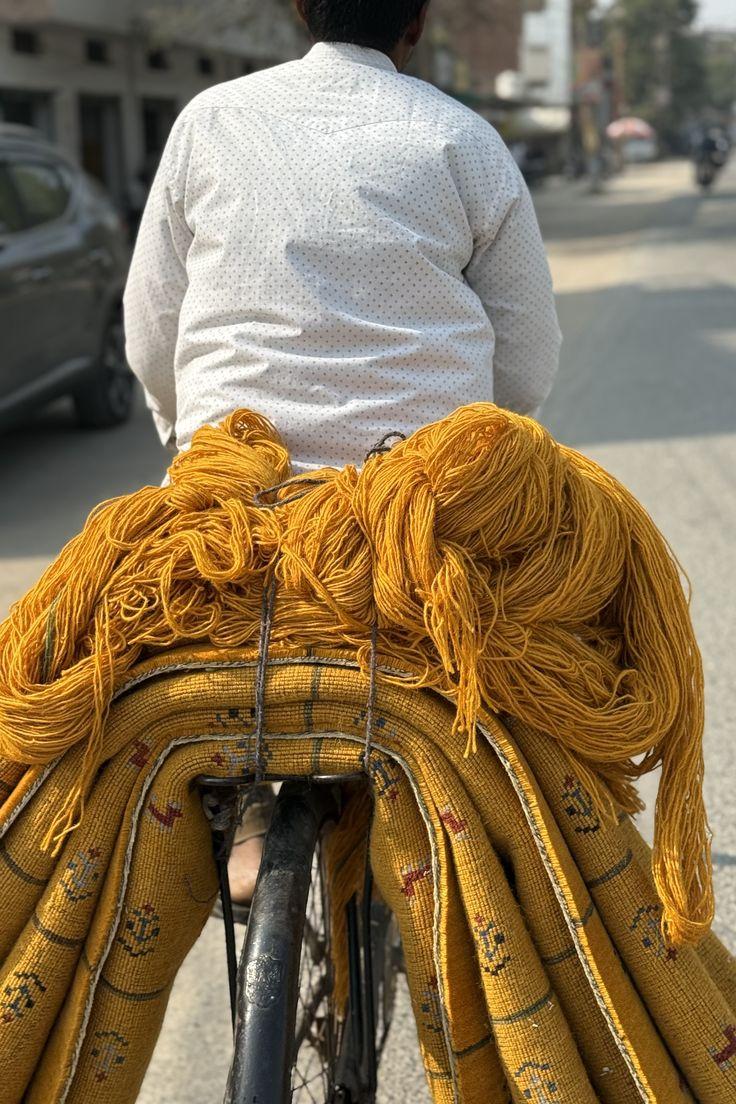
Raheem and Son has worked with weaving families across the Bhadohi region since the house was established in 1927. That continuity means that some of our current weavers represent the third or fourth generation of a family relationship with our atelier. Read more about our workshop origins in our piece on Bhadohi.
The Training That Shapes a Weaver
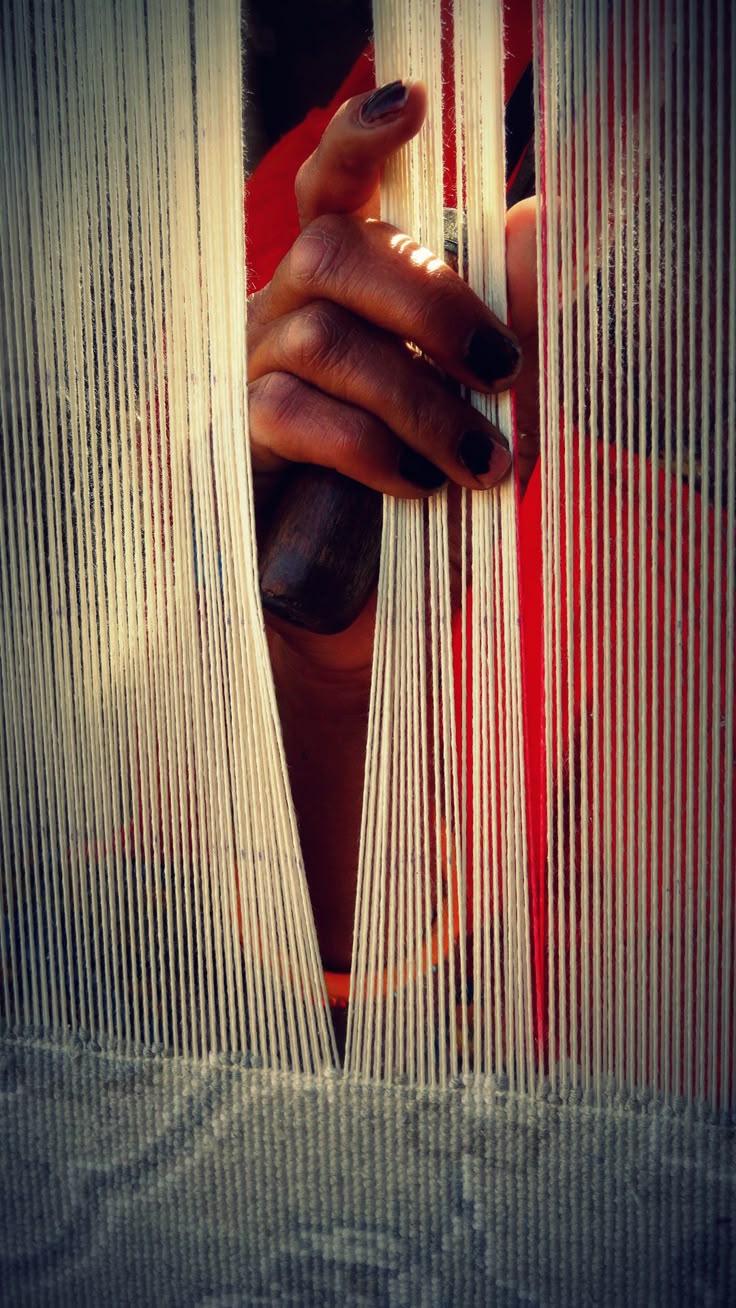
Formal weaving training in the traditional sense begins with the simplest task: threading and tensioning the warp. A warp must be evenly tensioned across its full width; variation causes the finished rug to buckle or distort. Learning to set a warp correctly is a foundation skill that takes weeks to master and months to do with consistent speed.
From there, the apprentice weaver learns to tie the foundation knot, typically the Persian knot or the Turkish knot depending on regional tradition and the design requirement. Each knot involves looping a short length of yarn around one or two warp threads and pulling the cut ends through. Tied in sequence across thousands of rows, these knots build the pile. A trained weaver can tie hundreds of knots per hour, and an experienced weaver working on a fine-count piece maintains that speed with a precision that borders on the meditative.
Reading the cartoon, the gridded design guide mounted above the loom, is a separate skill. The weaver must interpret each coloured square as a knot in a specific yarn colour, working from the design outward without losing count. On complex pieces with many colours and intricate transitions, this reading skill becomes as demanding as the knotting itself.
The Daily Life at the Loom
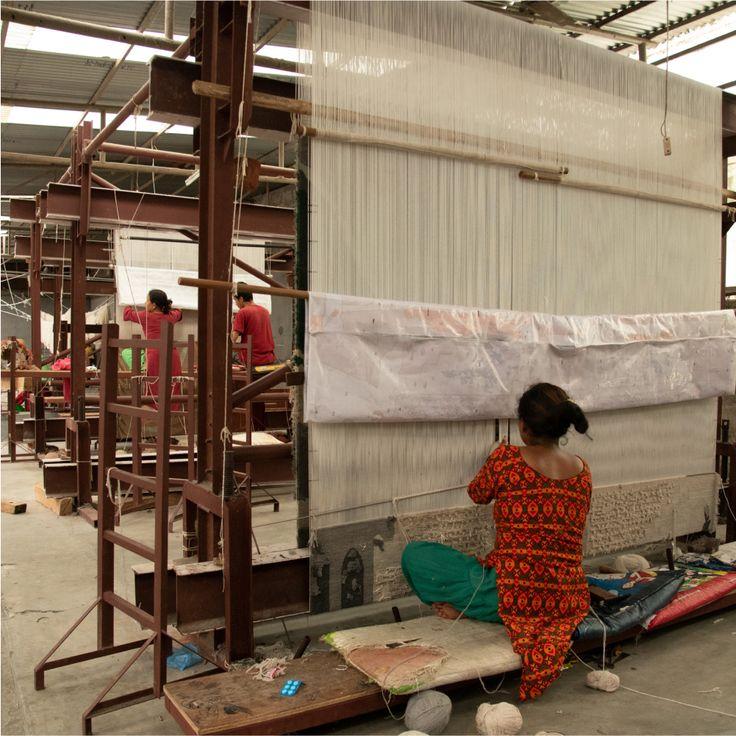
Weaving is a physically demanding occupation. The weaver sits or crouches before the loom for most of the working day, arms raised at shoulder height to tie knots, then descending to beat the weft with a comb beater. The posture, the repetitive motion, and the eye strain of reading fine cartoons in variable light conditions impose real physical costs over a career. Experienced weavers often develop strong forearm and shoulder musculature from years of this work.
Despite the physical demands, the workshop is often a space of conversation and companionship. Weavers working on a single large loom develop a rhythm together, one on each side of the wide piece, coordinating their knot-tying so that neither pulls the warp out of alignment. This collaborative dimension of the craft is rarely visible in the finished rug but is embedded in every row.
Breaks are structured around the natural light, particularly in workshops without strong artificial lighting. Morning work typically begins early, while the light is good and the temperature is comfortable. Midday breaks allow rest during the hottest hours. Evening work, under artificial light, continues for pieces on deadline. The rug that arrives at a client's home carries the trace of all of these hours.
What Skill Looks Like in a Finished Rug
It is tempting to reduce weaver skill to knot count, to assume that a higher knot density is always the product of greater ability. This is a partial truth. Tying fine knots consistently requires skill, but so does managing a complex colour composition across a large surface, maintaining pile height without mechanical tools, and matching colour lots accurately across a rug that may take months to complete.
The easiest place to see weaver skill in a finished piece is at the transitions: the points where one colour meets another. A skilled weaver produces a clean, controlled edge between fields. A less practiced weaver may produce a slightly serrated edge where individual knots stray. On simple bold designs, this difference is negligible. On fine botanical patterns or precise geometric compositions, it is immediately apparent.
Examine the back of any fine hand-knotted rug and you see the weaver's work in its most honest form. The knot tails should be even, the rows straight, and the overall surface consistent. Irregularities in the back often correspond to visible irregularities in the pile face. Learn more about the process that takes a rug from cartoon to completed piece.
Preserving the Craft for the Next Generation
The greatest risk to traditional hand-knotting is not the substitution of machine-made rugs in the mass market. It is the erosion of the master-apprentice relationship that transmits deep craft knowledge. When weaving incomes are insufficient, young people leave the craft for other industries. When they leave, they take potential decades of future mastery with them.
Maintaining fair and consistent wages for skilled weavers is the most direct intervention. Beyond wages, providing safe and well-lit workshop conditions, opportunities to work on challenging and varied commissions rather than repetitive production, and recognition of the weaver's contribution to the finished product all factor into whether a talented young weaver chooses to remain in the craft.
Our sustainability commitments outline the specific practices we follow in relation to the workshops we work with, including wages, working conditions, and the long-term partnerships that allow craft knowledge to be passed forward rather than lost.
What the Weaver Brings That No Machine Can
There is a quality in a hand-knotted rug that is not reproducible by machine: the slight variation in pile height, the small tonal shifts within a single colour field caused by hand-spun yarn, the precise but not mechanical regularity of the knot rows. These variations are not errors. They are the signatures of a human hand working over time, and they are part of what gives a fine handmade rug its visual warmth.
When a collector or designer holds a hand-knotted rug and says it feels alive, they are responding to this quality without necessarily being able to articulate it. The rug is alive in the sense that it records human attention, sustained over weeks or months, translated into fibre and dye. Each knot is a small decision made by a specific person on a specific morning.
Understanding this does not require romanticising the weaver's labour. It requires simply recognising that the craft produces something that has a different character from industrial production, and that this character is inseparable from the conditions that allow skilled weavers to work well.
Frequently asked
Where are Raheem and Son rugs woven?
Our rugs are woven primarily by artisan families and workshop weavers in the Bhadohi region of Uttar Pradesh, India, known for centuries as one of the world's principal centres of hand-knotted carpet making.
How long does it take to become a skilled rug weaver?
Basic proficiency takes months. Genuine mastery, the ability to work on complex commissions with consistent quality across large surfaces, typically develops over several years of sustained practice. Many of the most skilled weavers have been at the loom for decades.
Can I visit the workshops where rugs are made?
For significant commissions or trade clients, we occasionally facilitate workshop introductions. Contact our team to discuss whether a visit is appropriate to your project.
Are weaving families credited on individual rugs?
We maintain internal records of which workshop and family produced each piece. For bespoke commissions, we can include this provenance information with the rug on delivery.
By RS, 2 October 2025
More in Heritage and Sustainability.
Follow the journal in Google Search. Readers who add us as a preferred source see our writing marked in Top Stories and in AI Overviews.