A Tradition That Predates Modern Trade
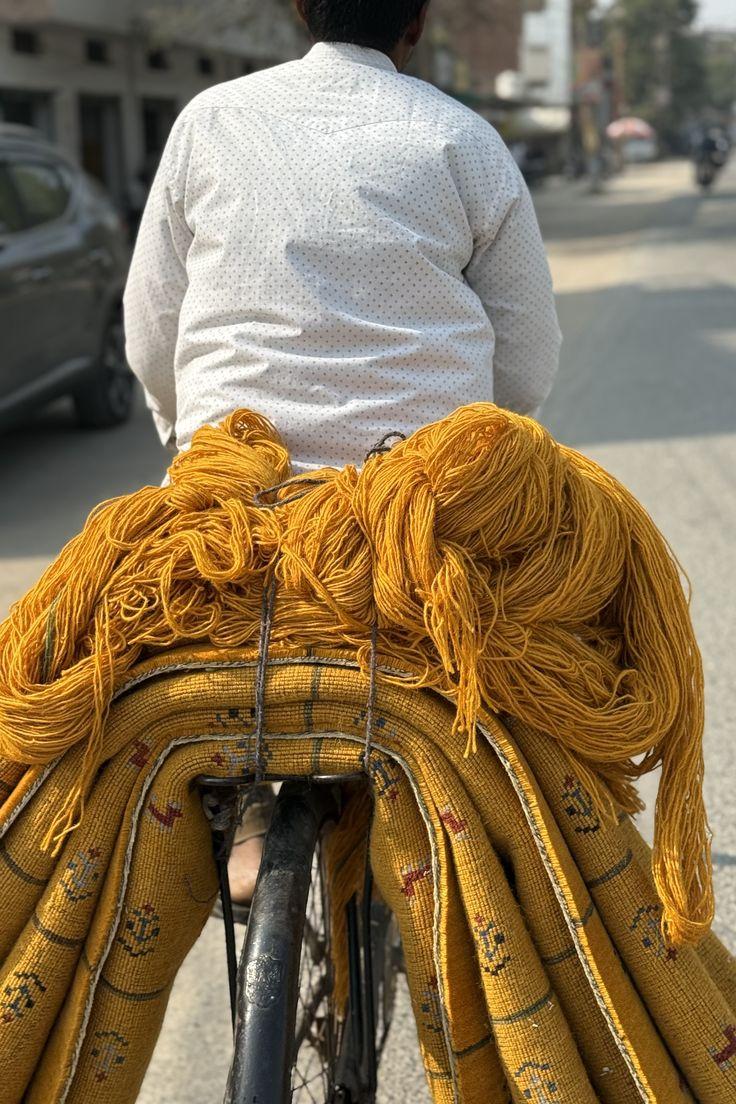
India's carpet-weaving history stretches back several centuries, rooted in the Mughal court's patronage of Persian and Central Asian weavers who brought their techniques to the subcontinent and, over generations, fused them with local craft traditions. The result was a distinct Indian rug idiom: a synthesis of Persian precision, local colour sensibility, and the particular character of Indian wool and silk.
The major weaving centres that developed over those centuries, Agra, Jaipur, Kashmir, and most prominently Bhadohi in Uttar Pradesh, each developed their own technical and aesthetic signatures. Bhadohi, often called the carpet city of India, became the commercial and craft hub of the trade, responsible for a significant proportion of India's handmade rug exports. Raheem and Son has been part of that community since 1927, across four generations of continuous production.
What Distinguishes Indian Handwoven Rugs from Other Origins
The global rug market includes exceptional pieces from Iran, Turkey, Afghanistan, Nepal, Morocco, and elsewhere. Each tradition has its own qualities. Indian hand-knotted rugs occupy a particular position within that landscape: they are capable of very high technical specification, they are produced by a large and skilled artisan workforce, and they sit at a price point that, for equivalent quality, is often more accessible than Persian or Turkish alternatives of comparable density.
Indian rugs also benefit from the country's native wool resources. Indian highland wool, combined with imported New Zealand wool for longer-staple fibre, gives Indian pile rugs a specific softness and resilience. The dyeing tradition, which in Bhadohi has deep roots in natural and mineral colouring, produces surfaces with depth and variation that distinguish them from synthetically dyed alternatives. You can explore the materials dimension further in our piece on wool grades explained.
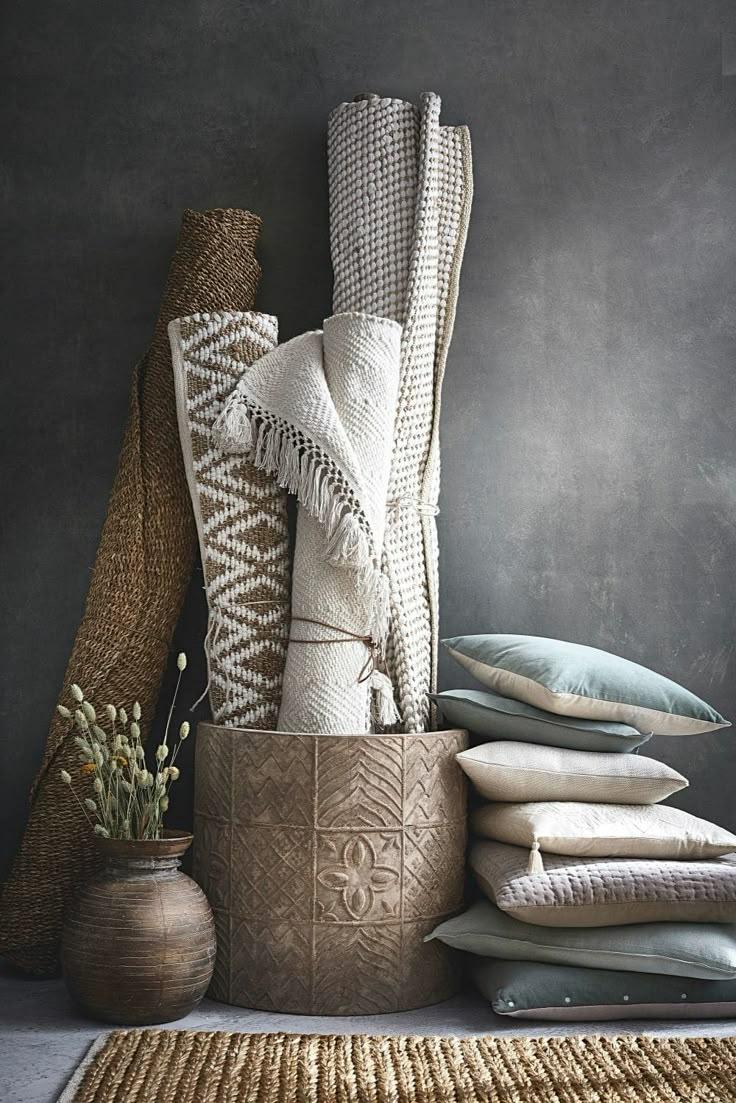
The scale of the Indian weaving industry also enables a range of construction types that few other origins can match. Hand-knotted, hand-tufted, flatwoven dhurrie, and hand-woven kilim are all produced within a relatively compact geographic area, allowing manufacturers to offer diverse product ranges from a single supply base. For importers and trade buyers, this versatility is practically significant.
The Craft of Hand-Knotting: Where the Value Is Made
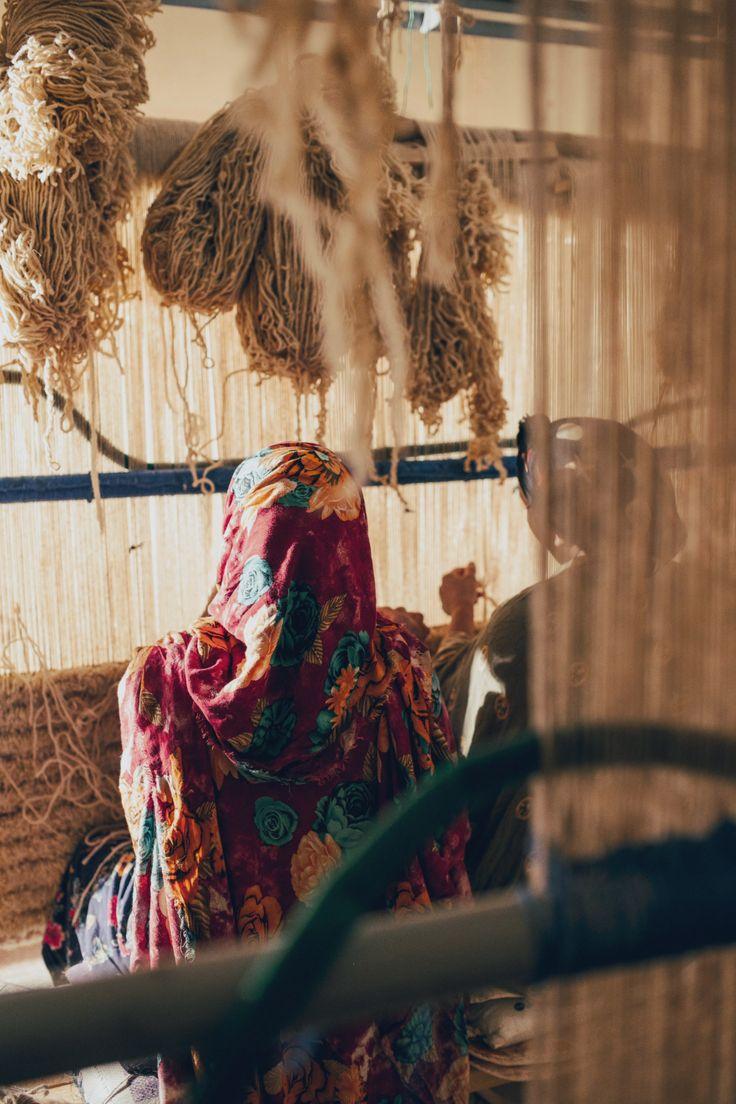
A hand-knotted rug is built knot by knot, row by row, on a vertical loom. Each knot is tied by hand around warp threads, then secured by weft passes that compact the rows together. The density of this knotting, measured in knots per square inch or knots per square metre, determines how finely a pattern can be rendered and contributes significantly to the rug's durability and weight.
High-density hand-knotted rugs require considerable time to produce and demand consistent skill from the weaver. The tension of each knot must be even; the colour transitions must be clean; the pile must be cut to a uniform height. These are not automated processes. The quality of the result depends entirely on the skill and attention of the person at the loom, which is why provenance and maker reputation matter in this trade.
Our weaving overview describes the technical process in more detail, including how knot types vary between regional traditions.
Materials That Define the Finest Pieces
The hierarchy of rug materials in Indian production runs from cotton foundation rugs through to all-wool pieces, wool-and-silk combinations, and, at the highest end, all-silk rugs woven to very fine knot counts. Each step up the material hierarchy adds luminosity and tactile refinement, but also care requirements and, often, fragility.
For most residential and commercial contexts, a high-quality wool pile on a cotton foundation offers the best balance of beauty, durability, and practicality. Adding silk highlights to specific design elements, typically borders or central medallions, introduces reflective variation without making the whole piece fragile. All-silk rugs are best reserved for wall display or very low-traffic floor positions where their qualities can be appreciated without undue wear.
The grade and origin of the wool itself matters considerably. Longer-staple wools produce a lustre that shorter-staple equivalents cannot match, and high-altitude wools from cold climates tend to have stronger, more resilient fibres. When evaluating a rug's material quality, asking about the specific wool used is a more informative question than asking about the rug's country of origin alone.
What to Look for When Buying a Luxury Indian Rug
Even knot density across the face of the rug is a basic quality indicator: run your hand against the pile and look for consistency of resistance and texture. Edges should be straight and firm without being stiff or over-bound. The pile should lie evenly after being brushed in different directions, recovering without matting.
Turn the rug over. The back of a hand-knotted rug reveals the knot structure directly: individual knots should be clearly visible and evenly distributed. A rug where the back looks muddy or the knot rows are irregular has likely been produced with inconsistent tension or a rushed finishing process. The back of the rug does not lie.
Colour should be consistent within each field: any variation should look like the natural abrash of dye-lot differences rather than the patchy fade of poor dyeing technique. Ask whether natural or synthetic dyes were used, and in what proportion. For buyers concerned with longevity and character, natural or vegetable-dyed rugs are generally preferable, though they do require slightly more care.
Buying from Source: The Import and Trade Perspective
For importers, the Indian handmade rug trade offers established infrastructure, a broad product range, and a workforce whose scale and skill are matched by few other origins. The challenge is navigating the range of quality levels that exist under the same broad category of handmade Indian rugs, from genuine craft production to goods that use the label loosely.
Working directly with established manufacturers who have verifiable production facilities and transparent supply chains is the clearest way to ensure you are buying what you think you are buying. Raheem and Son maintains open relationships with trade buyers across markets and welcomes visits to our Bhadohi production base. Our export services can provide further information on trade terms, production capacities, and sampling programmes.
Heritage as a Living Practice
What makes the finest Indian rugs exceptional is not simply technical achievement, though that is real and measurable. It is the continuity of a living craft tradition, one where knowledge is transmitted between generations through direct mentorship at the loom rather than through manuals or machinery. The weaver who ties knots today in Bhadohi is working within a tradition that connects to the earliest days of the Indian rug trade, and that connection is visible in the work.
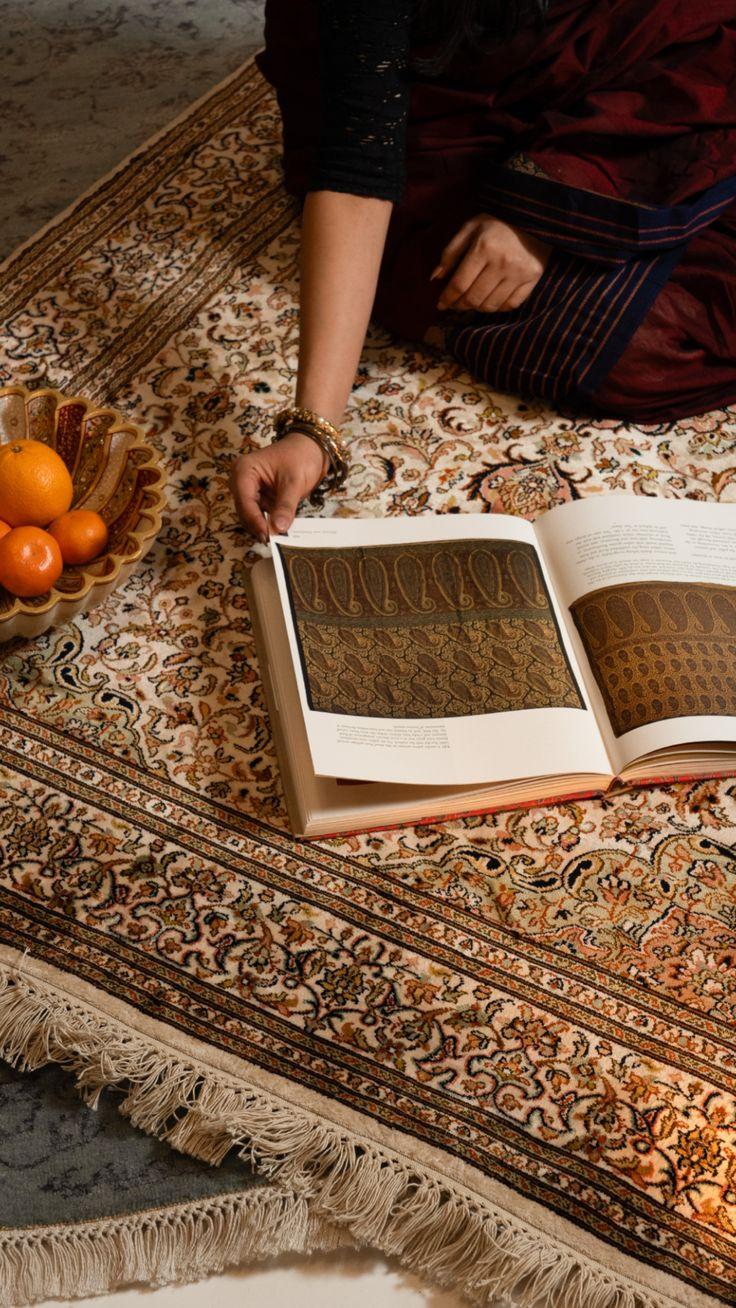
For buyers who care about what they put on their floors, this provenance is part of the value. A handwoven Indian rug from a producer with genuine roots in the tradition is not just a floor covering; it is a document of craft continuity, one that will carry its quality forward into the next generation of the home that houses it.
Frequently asked
Are Indian handmade rugs as durable as Persian or Turkish rugs?
Yes, when produced to equivalent knot densities and with comparable materials. Durability is primarily a function of construction quality and material grade rather than country of origin.
What is Bhadohi's specific reputation in the rug trade?
Bhadohi is one of the world's largest concentrations of hand-knotted rug production, with a workforce and infrastructure that has developed over generations. The town is responsible for a significant share of India's handmade rug exports.
How can I verify that a rug described as handmade truly is?
Examine the back of the rug. Hand-knotted rugs show individual knots clearly on the reverse. Request documentation of the production origin and, where possible, visit or verify the manufacturer's production facilities.
Do you offer trade pricing for importers?
Yes. We work with trade buyers, importers, and wholesale accounts across multiple markets. Contact our trade team for information on pricing structures and sampling.
By RS, 2 October 2025
More in Heritage and Sustainability.
Follow the journal in Google Search. Readers who add us as a preferred source see our writing marked in Top Stories and in AI Overviews.