Why Commission Rather Than Choose
There is a version of rug shopping where you browse, find something close enough, and live with the compromise. A standard size that is slightly too small, a colour that almost works but does not quite respond to the light in your room, a pattern that is interesting but not quite yours. For many spaces and many buyers, this is perfectly fine. For some, it is not.
Commissioning a bespoke rug means starting from your space rather than from someone else's inventory. It means the piece is sized to the room, coloured to your palette, and designed to work with the specific architecture and furniture you already have. It also means you understand exactly what the rug is made of, who made it, and how. For buyers who care about these things, a commission is not a luxury; it is simply the right way to acquire something that will be underfoot for decades.
Where to Begin: Defining What You Actually Need
The starting point is almost never the rug itself. It is the room, the floor plan, and the way the space is used. Before you think about pattern or colour, establish the exact dimensions you need. Measure the floor area, note where furniture sits and how it moves, and decide whether you want the rug to anchor the seating area, define a zone, or cover most of the floor. Our size and fitting guide covers the principles in detail.
Once you have dimensions, think about use. A bedroom rug in a private home is used differently from a living room piece that receives daily foot traffic. Use determines pile height, material, and knot density. A deep pile, high-quality wool rug suits a calm bedroom; a tighter, lower-pile construction may serve a busy sitting room better. Being specific about how the rug will be used saves a great deal of time during the design conversation.
Bring references if you have them: fabric swatches, paint chips, photographs of the room, or images of rugs whose tone or style interests you. You do not need to arrive with a finished brief. Our team at personal curation is experienced at working from loose ideas toward a precise specification.
Design: Pattern, Motif, and What Is Actually Achievable
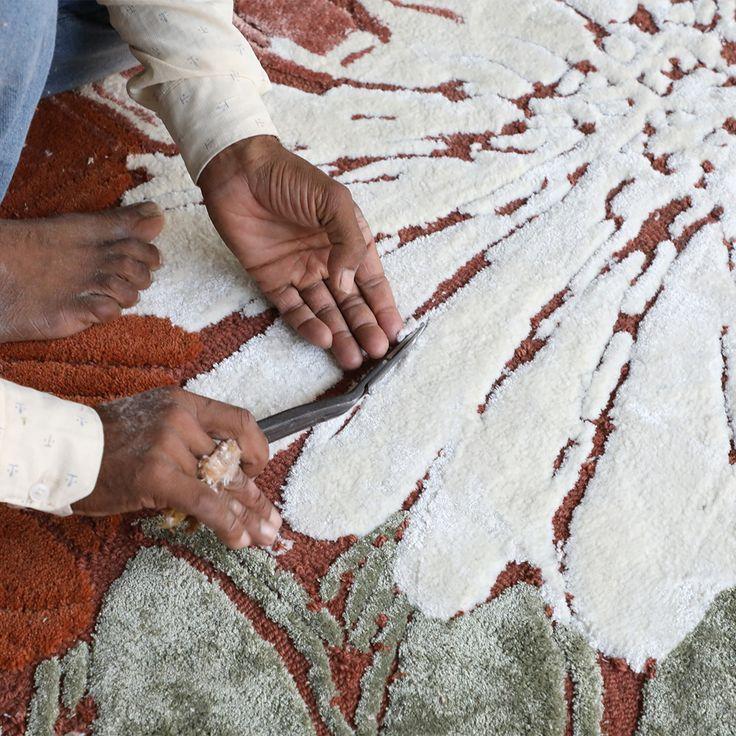
The design conversation is where most people feel uncertain, and where we spend the most time. The question is not just what you want the rug to look like, but what kind of rug you are making. A hand-knotted piece can realise complex figurative patterns with high fidelity, given sufficient knot density. A hand-woven flatweave is better suited to geometric and linear designs. A tufted construction can produce painterly effects in a shorter lead time. Each technique has its own visual vocabulary.
We work with your references and translate them into a cartoon, the full-scale or proportional design document that guides the weavers. At this stage, you review colour samples in the actual yarns that will be used, not digital approximations. Seeing dyed wool in natural light is essential; colours shift significantly between screen, printed swatch, and fibre under your room's lighting conditions.
Motifs can be entirely original, drawn from your own design work or architectural drawings. They can also be adaptations of historical patterns from our archive, or combinations of traditional elements reworked for a contemporary interior. There is no single right approach; the design should serve the room and the owner, not a trend.
Materials, Pile, and Construction: Making the Technical Choices
Wool is the most common foundation for bespoke hand-knotted rugs, and for good reason. It is resilient, takes dye well, is naturally soil-resistant, and improves in character over time. Within wool, there is significant variation: the origin and grade of the fibre affects everything from pile lustre to how the surface wears. High-altitude wools, particularly from regions with harsh winters, produce a longer staple and a more lustrous result.
Silk, either as the primary pile material or woven into the foundation alongside wool, produces a reflective quality that wool alone cannot achieve. Silk highlights in a predominantly wool rug are a common way to add luminosity to specific design elements without the cost or fragility of an all-silk piece. Bamboo silk is a more affordable alternative that approximates some of the visual qualities of silk while being more robust.
Knot density is the technical expression of fineness and detail. Higher knot counts allow more complex patterns and sharper lines, but also require longer production time and, typically, finer yarns. For most residential bespoke rugs, a mid-range density produces excellent pattern fidelity without an unreasonable lead time. Our team will recommend a construction that balances your design ambitions with practical timelines and budget.
The Production Timeline: What to Expect
Once the design is approved and production begins, the timeline depends on the size and complexity of the piece. A straightforward design in a standard size can move relatively quickly; a large, intricate pattern with multiple colour fields will take considerably longer. We will give you a production window at the point of commission and keep you informed at key stages.
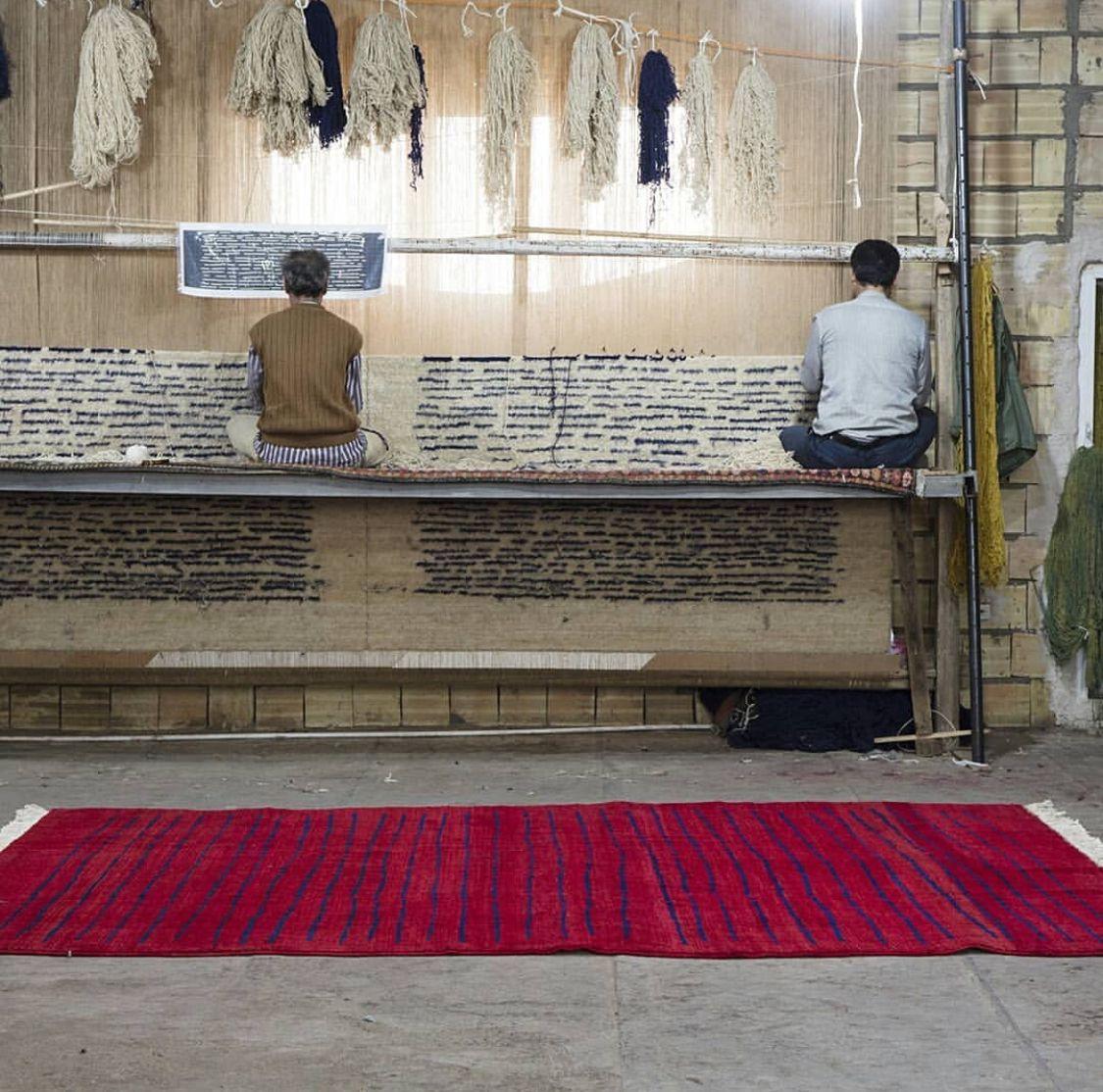
Hand-knotting is not a process that can be meaningfully accelerated. Each knot is tied by hand, and the pace is set by the skill and number of the weavers working on a given piece. Attempting to compress the timeline risks the quality of the work, which is not something we are willing to do. We would rather extend a schedule than deliver a rug that falls short of the standard it was made to meet.
Delivery, Installation, and the First Few Weeks
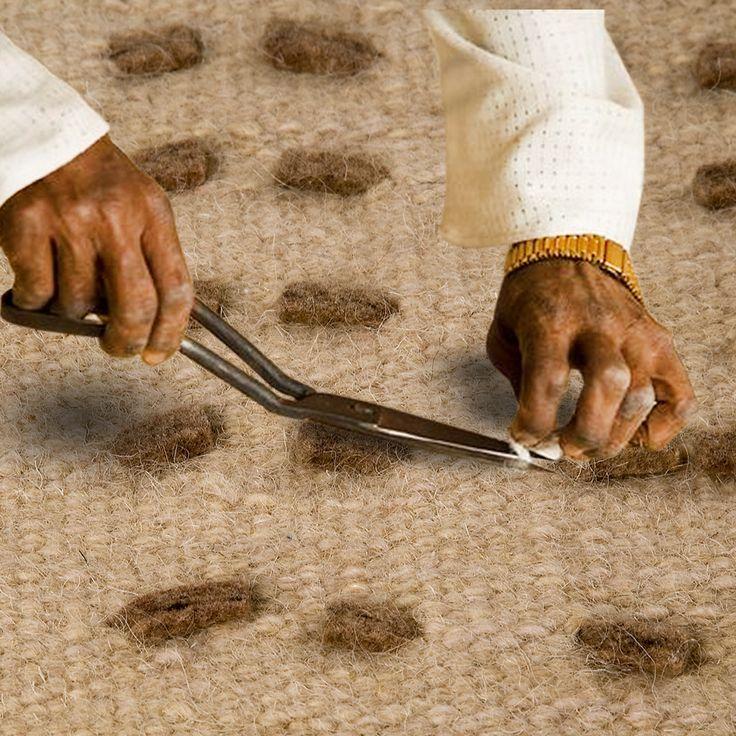
Bespoke rugs are inspected thoroughly before packing. The finished piece is checked against the approved design for colour fidelity, pile evenness, edge straightness, and overall finish. Any minor corrections are made before shipping. For international orders, we coordinate with experienced freight partners who understand how to handle handmade textiles.
When the rug arrives, allow it to unfurl and settle for a few days before judging its final colour and feel. A newly arrived rug may have slight creases from rolling during transit; these relax with time and gentle use. The colour, seen in the natural light of your own room, may appear slightly different from how it looked in our samples, which is expected and normal. If anything gives you cause for concern, we are always available to discuss.
The Value of a Piece Made Only for You
A bespoke rug is not simply a floor covering at a higher price point. It is an object made in response to a specific place and a specific person, one that could not exist in the same form for any other client. Over time, that specificity becomes part of the story the room tells. Guests notice that the rug fits the space exactly, that its colours echo something in the room, that it feels considered rather than chosen from a catalogue.
We have been making rugs for individuals, families, and institutions since 1927, and the commissions we have delivered across that span range from modest bedroom pieces to large-format floor coverings for significant architectural projects. Whatever the scale, the process is the same: a conversation, a design, a making, a delivery. We welcome enquiries at any stage, even if you are not yet sure exactly what you want. That uncertainty is a fine place to begin.
Frequently asked
How long does a bespoke commission take from start to delivery?
It depends on the size and complexity of the design. We provide a specific production window at the point of commission. Contact our team for an estimate based on your requirements.
Can I provide my own design or pattern?
Yes. We can work from original artwork, architectural drawings, fabric patterns, or digital files. Our design team will assess feasibility and translate your reference into a rug cartoon for approval before production begins.
What is the minimum size for a bespoke commission?
We accept commissions across a range of sizes. Speak with our personal curation team to discuss what is practical for your specific requirements.
Can I approve the colours before the rug is woven?
Yes. We provide physical yarn samples dyed to your palette for approval before production begins. We recommend reviewing these in the natural light of your actual space.
By RS, 18 September 2025
More in For Interior Designers.
Follow the journal in Google Search. Readers who add us as a preferred source see our writing marked in Top Stories and in AI Overviews.