Why Bespoke, and When It Makes Sense
A bespoke rug commission is not the right choice for every project. If a rug from an existing collection meets the size, colour, and design requirements, it will arrive faster, cost less, and involve less coordination. The bespoke route makes sense when none of the above is true: when the room dimensions require a size that does not exist in any standard range, when the colour must match a specific architectural material, when the design needs to relate to a client's broader visual language, or when the piece needs to carry the kind of specificity that only a one-of commission can provide.
Interior designers working with residential clients frequently encounter all of these situations. Architects specifying for bespoke hospitality or commercial interiors encounter them almost universally. The bespoke commission is not a luxury add-on but a practical necessity in these contexts.
Stage One: The Brief
A good brief is the most important document in a rug commission. It establishes the parameters within which the design will be developed and prevents misunderstandings that are expensive to correct after production has begun. A complete brief for a rug commission should include: the room dimensions and the intended rug size (or a range if flexibility is available), the installation date and the production timeline needed to meet it, the pile material preference (wool, silk, bamboo silk, cotton, or a combination), the colour palette with reference materials where possible, the design direction (geometric, floral, abstract, tonal, custom artwork), the knotting format (hand-knotted, flatweave, or other), and the budget range.
Not all clients or designers can answer all of these questions at the start of the process. The brief is a starting document, not a final specification. Our team at Raheem & Son will work through the open questions with you, but the more complete the initial brief, the faster and more accurate the design development will be. Begin the conversation via our contact page.
Stage Two: Design Development
Once the brief is received, the design development stage begins. For a commission based on a client's own artwork or pattern, this involves adapting the source material into a cartoon suitable for weaving: a colour-coded grid that corresponds to the knot or weave structure. For a commission based on a design direction rather than specific artwork, our studio will develop proposals that interpret the brief and present them for review.
Design development typically involves several rounds of review. Colour accuracy is particularly important and can be addressed through physical yarn samples sent to the client before production begins. Digital renderings are a useful communication tool but should never be relied upon as colour references because screen calibration varies. A physical yarn card is the only reliable way to approve colour before committing to production.
The design process for a hand-knotted rug also involves decisions about knot density, which determines both the fineness of the detail achievable and the cost and production time of the piece. Our piece on how to read knot density explains these relationships for those approaching this decision for the first time.
Stage Three: Sampling
For significant commissions, a physical sample woven in the actual materials and at the actual knot density is strongly recommended before full production begins. A sample allows the client to approve the colour in situ, the pile height and texture underfoot, and the quality of the weave before the main piece is produced. Samples represent a meaningful additional cost and take time to produce, but they prevent the far more expensive and time-consuming process of adjusting a completed rug that does not match expectations.
For repeat clients with an established relationship and strong colour matching experience, sampling may be waived for commissions that are similar to previously approved work. For first commissions, particularly those with complex colour requirements or unusual design formats, sampling is almost always the right decision.
Stage Four: Production and Progress
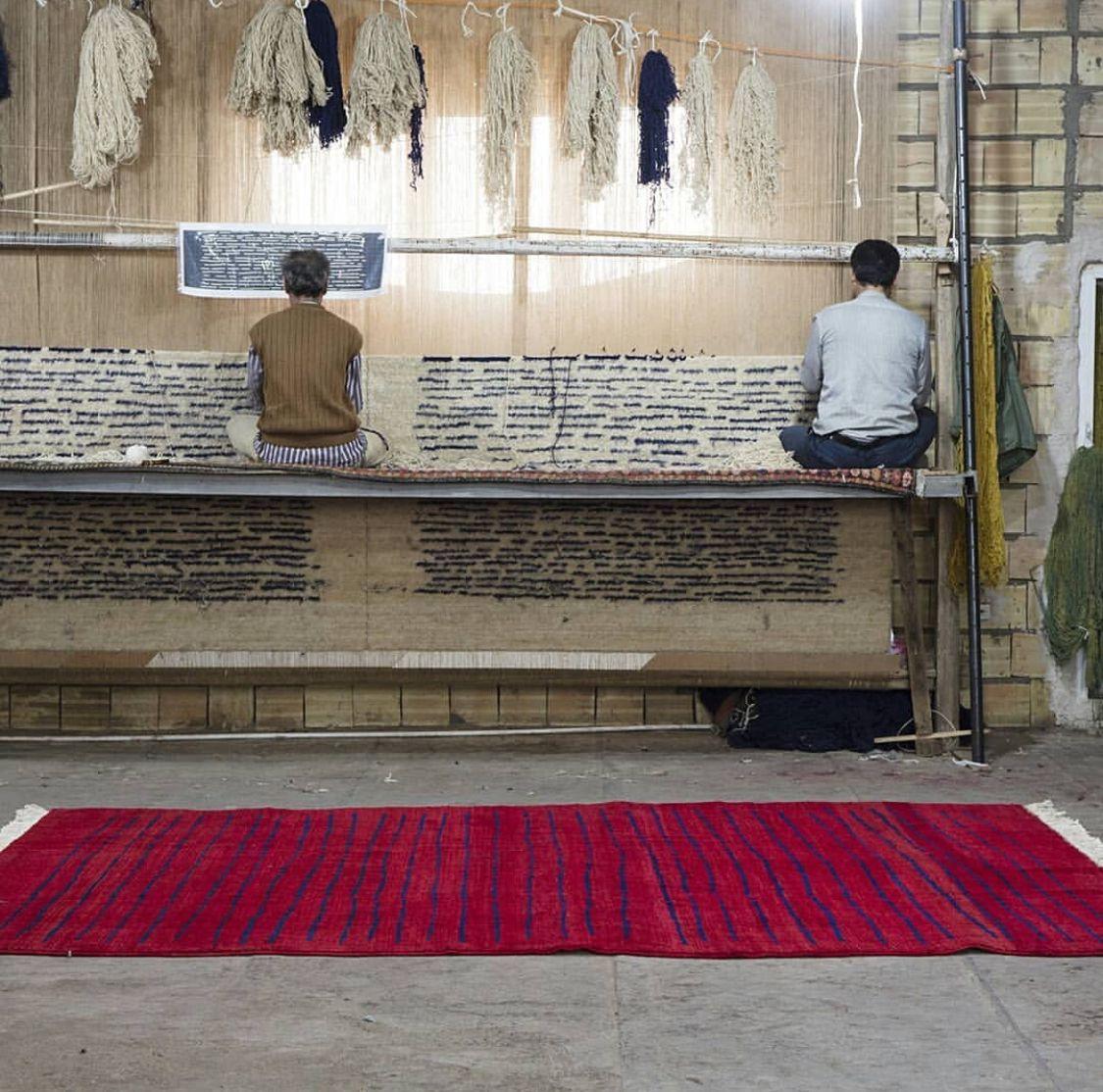
Once the design and sample are approved, production begins on the loom. The timeline from loom start to delivery depends on the size of the piece, the knot density, the number of weavers assigned to the loom, and the finishing processes required. For a standard residential commission at moderate knot density, production timelines can range from a few months for a smaller piece to six months or more for a large, complex commission. Our team will provide a production schedule at the start of the commission with milestone dates.
Progress updates, including photographs of the work on the loom, are available on request. Many clients and designers find it useful to see the piece developing, and it provides an additional opportunity to catch any colour or design issues before the weaving is too far advanced to correct easily. Explore what the workshop environment looks like in our piece at the loom.
Stage Five: Finishing and Delivery
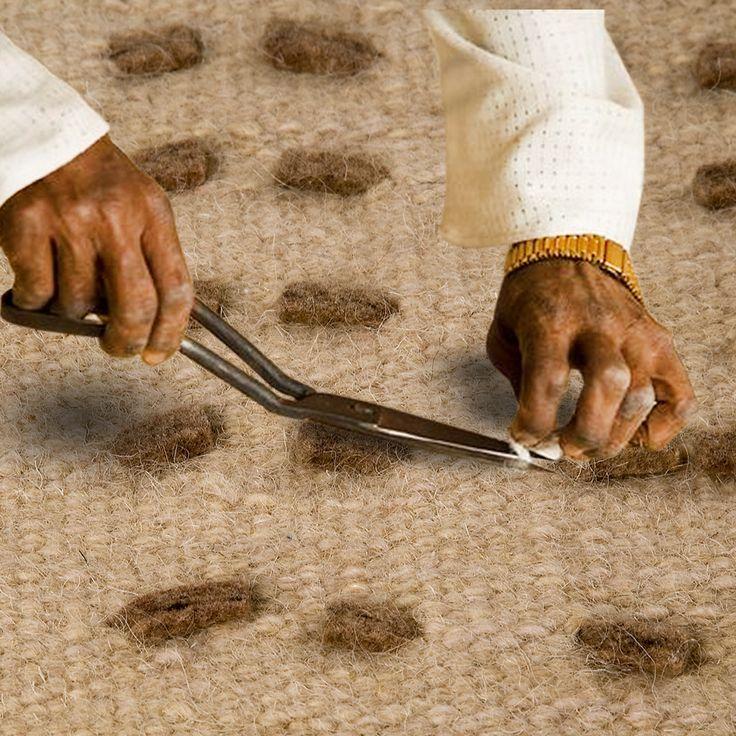
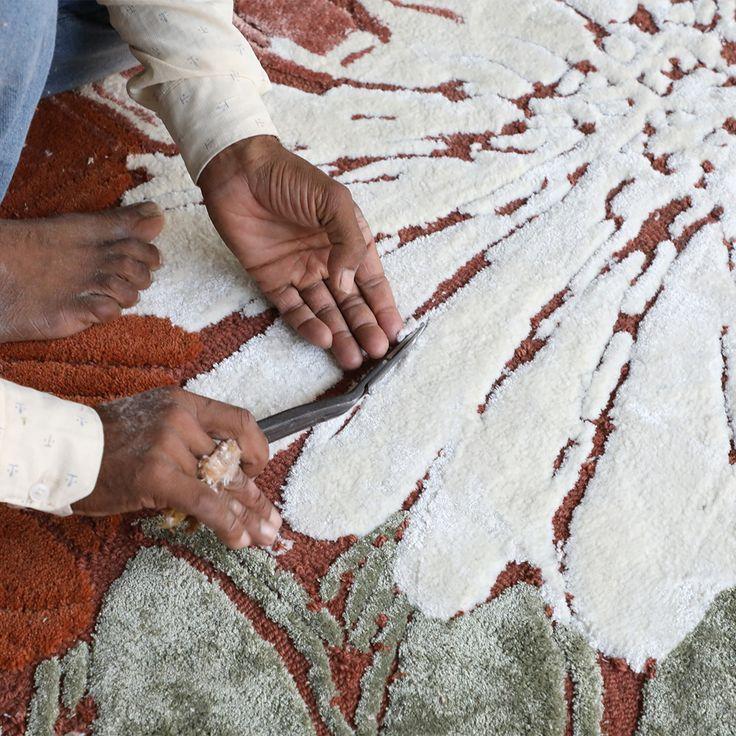
When the weaving is complete, the rug moves through the finishing process: shearing the pile to an even height, washing, stretching to final dimensions, and a final quality inspection. This typically adds several weeks to the timeline and should be factored into delivery planning.
Delivery for international commissions is handled by our export team, with full documentation, customs clearance support, and insurance covering the piece to its destination. Our contract export page covers the logistics process in detail for designers and buyers receiving pieces internationally. Once delivered, our care and cleaning guide provides everything needed to maintain the piece for years to come.
Working with a Designer or Architect
Designers and architects who specify rugs for their clients benefit from our trade program, which provides access to our full specification support service, including faster brief turnaround, dedicated contact points, and access to our sample program for material and colour evaluation. If you are specifying a rug for a client project, registering as a trade partner is the most efficient way to work with us.
For residential buyers commissioning directly without a designer, our personal curation team can provide the same design support and guidance. The starting point is always the same: a conversation about the space, the materials, and what the rug needs to do. Contact us through the personal curation page to begin.
Frequently asked
How long does a bespoke rug commission take from brief to delivery?
Timelines vary significantly depending on size, complexity, and knot density. Smaller commissions at moderate density can be completed in three to four months from design approval. Larger or more complex pieces may take six months to a year. Contact our team with your requirements and we will give you an honest timeline estimate.
Can I commission a rug to match a specific colour from a paint brand or material sample?
Yes. We can work from paint chips, Pantone references, fabric samples, stone samples, or any physical material you can provide. A dye sample and yarn card will be produced for approval before production begins.
Is there a size below which a bespoke rug stops being worthwhile?
We do not apply a strict minimum, but the economics of bespoke production mean that very small pieces are rarely cost-effective compared to existing stock. Contact us to discuss your specific size requirement.
Can I commission a rug using my own artwork or pattern?
Yes. We can translate client-provided artwork into a weaving cartoon. Please share the artwork in the highest resolution available. Our studio will assess how the design translates to the specific knotting or weaving structure and advise on any simplifications that improve the woven result.
By RS, 6 February 2026
More in For Interior Designers.
Follow the journal in Google Search. Readers who add us as a preferred source see our writing marked in Top Stories and in AI Overviews.