Natural Dyeing: A Craft That Requires Chemistry
It is tempting to think of natural dyeing as simply boiling plants and dipping wool. The reality is more demanding. Producing stable, repeatable, saturated colour from organic materials requires precise control of temperature, pH, mordant concentration, dye-bath duration, and fibre preparation. Natural dyers in the rug trade are, in practical terms, applied chemists who work with their senses as much as with instruments.
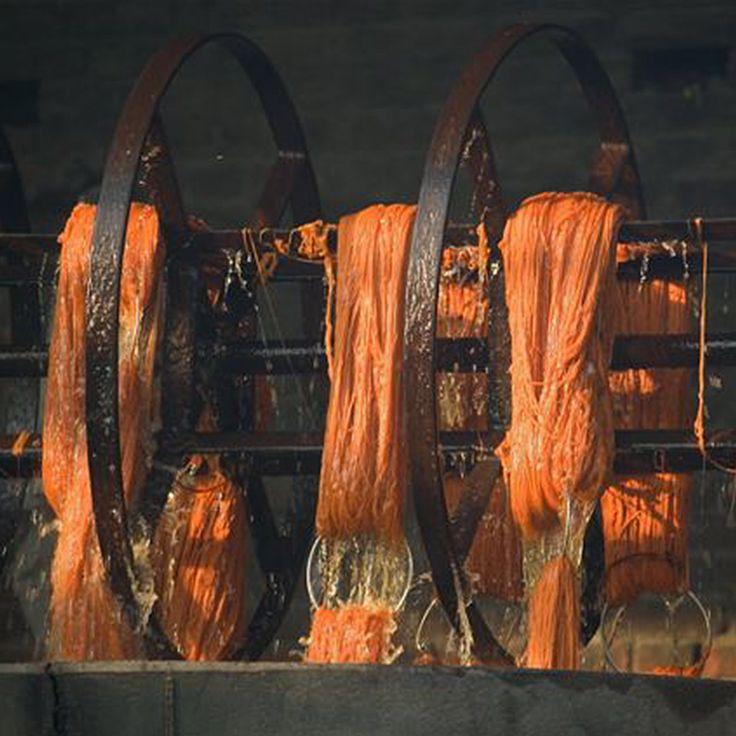
The process begins before the dye bath is prepared. Wool must be scoured to remove grease and debris, then mordanted: treated with a metallic salt that creates a chemical bond between the dye molecule and the fibre. The mordant chosen determines which colours the fibre will accept and how they will appear. Alum, the most common mordant, produces bright, clear tones. Iron mordants shift colours toward green-grey; copper tends toward sage and blue-green. The same dye applied over different mordants can produce markedly different colours.
The Major Natural Dye Sources and What They Produce
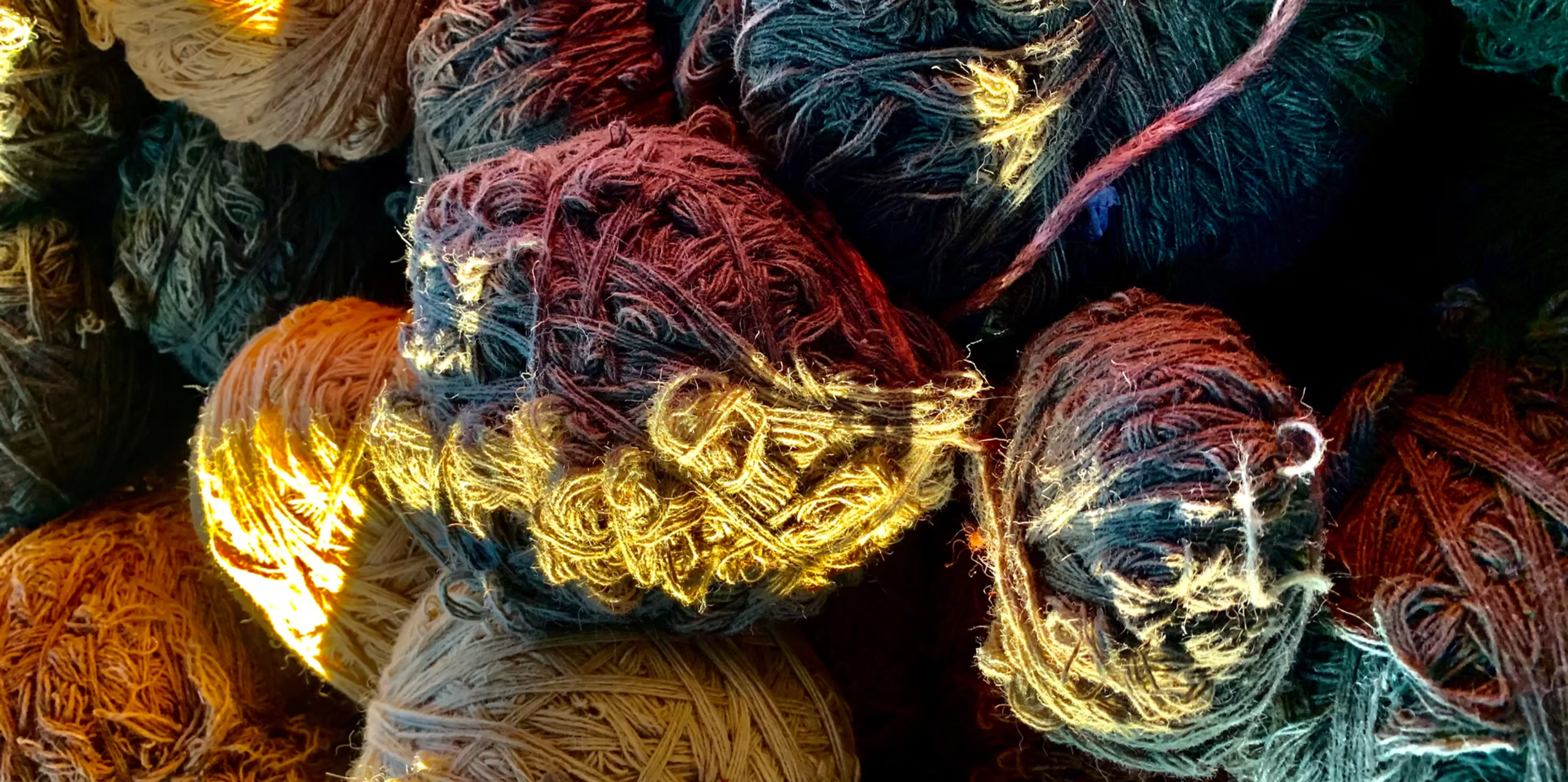
The rug dyeing tradition draws on a relatively consistent palette of natural sources that have been used in South and Central Asian textile production for centuries. Madder root produces the warm reds, pinks, and oranges that appear across most rug traditions. Indigo, derived from the Indigofera plant, is the source of blue; it behaves differently from most other dyes, requiring a reduction vat and careful oxidation rather than a simple dye bath. Pomegranate rind and weld yield yellows and golds. Logwood, walnut, and oak gall provide rich browns and near-blacks.
These sources, combined and layered, produce the range of naturalistic tones that characterise the finest handmade rugs. The palette is inherently warm and earthy, rooted in the colours of the organic world, which is part of why naturally dyed rugs sit so well in interior environments that draw on stone, timber, plaster, and linen.
Our piece on natural dye and living colour explores the philosophy behind this palette in greater depth, including how colours from natural sources respond to light differently over time.
Mordanting: The Chemistry That Makes Colour Permanent
Without mordanting, most natural dyes wash out or fade rapidly. The mordant acts as a fixative, binding the dye molecule to the protein structure of the wool fibre. This bond is what gives naturally dyed wool its colour fastness, allowing a well-prepared piece to hold its palette across decades of use with only gradual, graceful change.
The relationship between mordant and dye is specific. Certain dye classes require particular mordants to produce their most stable colours. Indigo, unusually, does not require a mordant; it bonds directly to the fibre through a different mechanism. Understanding these relationships is the core of a dyer's expertise, and it is the reason that dyers in the traditional rug trade served long apprenticeships before working independently.
For buyers concerned with environmental impact, the mordant choice matters. Alum, iron, and copper mordants, used in modest concentrations, are relatively benign; heavier metal mordants such as chromium and tin are more problematic and are avoided in responsible production. Our sustainability overview covers how we approach this in our own production.
How Natural Dyes Age Differently from Synthetic
The most visible quality of a naturally dyed rug over time is that it ages beautifully. The colours deepen and mellow rather than bleach or flatten. Reds soften toward coral or apricot; blues develop a silvery patina. The tone becomes more complex and, to most eyes, more beautiful than it was when new. This is the antique effect that collectors prize, and it is the result of the organic dye molecules responding, slowly, to light and air over years.
Synthetic dyes, by contrast, tend to fade rather than age. The chemical dye molecules, designed for strong initial colour, can break down unevenly under UV exposure, producing areas that look bleached or flat. High-quality synthetic dyes have improved considerably in recent decades, but the characteristic way a naturally dyed rug improves with time is something that no synthetic process yet fully replicates.
This difference is particularly relevant for buyers who are purchasing a rug for a long-term installation. A naturally dyed piece at ten or twenty years of age, with appropriate care, will typically look more settled and refined than a piece dyed entirely with synthetics. This is one dimension of the true cost of a handmade rug: the long-term aesthetic trajectory of the piece is part of its value.
Abrash: Natural Variation as a Quality Mark
Anyone familiar with handmade rugs will have encountered abrash: the horizontal tonal variation within a single colour field that results from slight differences between dye lots. In a large rug, the weavers may exhaust one dye batch partway through and begin another; even if the recipe is identical, subtle differences in water, mordant concentration, or fibre produce a perceptible tonal shift.
In antique rugs, abrash is universally regarded as a mark of authenticity and is actively prized. In contemporary production, it can be deliberately introduced to add character, or minimised through careful dye-bath management. For buyers who want the natural variation of true hand-dyeing but need consistent colour across a large installation, discussing the dye-batch approach with the producer before committing to an order is advisable.
Specifying Naturally Dyed Rugs for Interior Projects
Designers working with naturally dyed rugs on interior projects should factor in a few practical considerations. First, approve colour in physical yarn or rug samples viewed under the actual lighting conditions of the installation space. Natural dye colours shift significantly between artificial light and daylight, and between different artificial light temperatures. A warm incandescent palette makes madder reds glow; a cool white LED can make the same colour appear flat.
Second, provide clear colour-direction guidance at the commissioning stage. Natural dyeing produces ranges of colour rather than single exact values; knowing whether the client wants the warmest or coolest expression of a particular tone allows the dyer to adjust accordingly. Third, for large-area installations where multiple rug panels will be used, request that all pieces are dyed from the same dye bath where possible, to minimise lot-to-lot variation.
Why Hand-Dyeing Is an Investment Worth Making
The labour and expertise required for natural dyeing make it more expensive than synthetic dyeing. For buyers and specifiers who are weighing the value of the investment, the case rests on three things: aesthetic depth, longevity, and material provenance. A naturally dyed rug has a colour quality that is difficult to achieve by other means, ages in a way that adds to rather than detracts from its beauty, and is produced through a process that is traceable, human-scaled, and rooted in a long tradition.
For a piece that will be in daily use for decades, these are qualities worth paying for. We are glad to discuss our dyeing approach in detail for any buyer considering a bespoke commission or a significant purchase from our collections. Reach out through our contact page to begin that conversation.
Frequently asked
Are naturally dyed rugs harder to maintain than synthetically dyed ones?
Not significantly, for everyday maintenance. Standard care guidance applies. Prolonged direct sunlight will affect naturally dyed rugs, but this is also true of most textiles. Proper care ensures the colour evolves gracefully rather than fading unevenly.
What does abrash mean and is it a defect?
Abrash refers to tonal variation within a colour field, caused by dye-lot differences during production. It is a characteristic of handmade, naturally dyed production and is generally regarded as a mark of authenticity rather than a flaw.
Can I specify a particular natural dye palette for a bespoke commission?
Yes. We can work with specific dye sources to produce a desired palette. Colour approval via physical yarn samples is part of our bespoke commission process.
How do I know if a rug described as naturally dyed truly is?
Ask the producer for details of the dye sources and mordants used. Genuine naturally dyed rugs have a characteristic softness and depth of colour that is perceptible in person. A certificate of natural dyeing from a reputable producer is also a useful reference.
By RS, 20 October 2025
More in Materials and Construction.
Follow the journal in Google Search. Readers who add us as a preferred source see our writing marked in Top Stories and in AI Overviews.