The word abrash refers to the tonal variation that occurs in a naturally dyed rug, shifts in hue across the field that no two dye batches, however carefully matched, can entirely prevent. To the untrained eye, it can look like inconsistency. To anyone who has spent time with antique rugs, it is one of the most beautiful properties a textile can have.
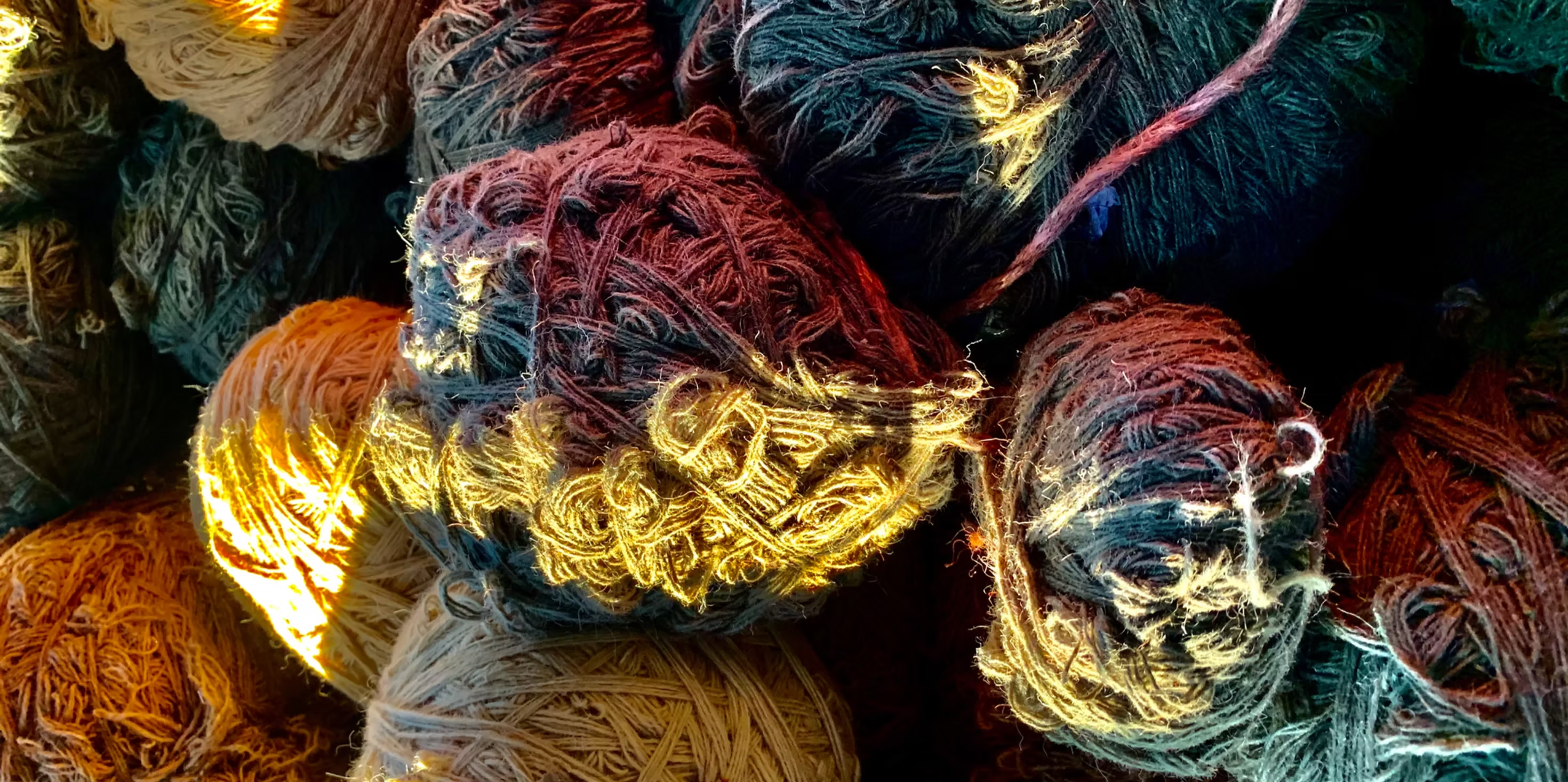
The wool bundles in the image above, loaded with colour, lit by the low afternoon light of our Jaipur dye room, each hold a slightly different absorption of madder, pomegranate, or indigo. The wool itself is the variable: its density, the hardness of the water it was washed in, the temperature of the dye bath on that particular day in that particular month. Natural dyeing is a negotiation, not a formula.
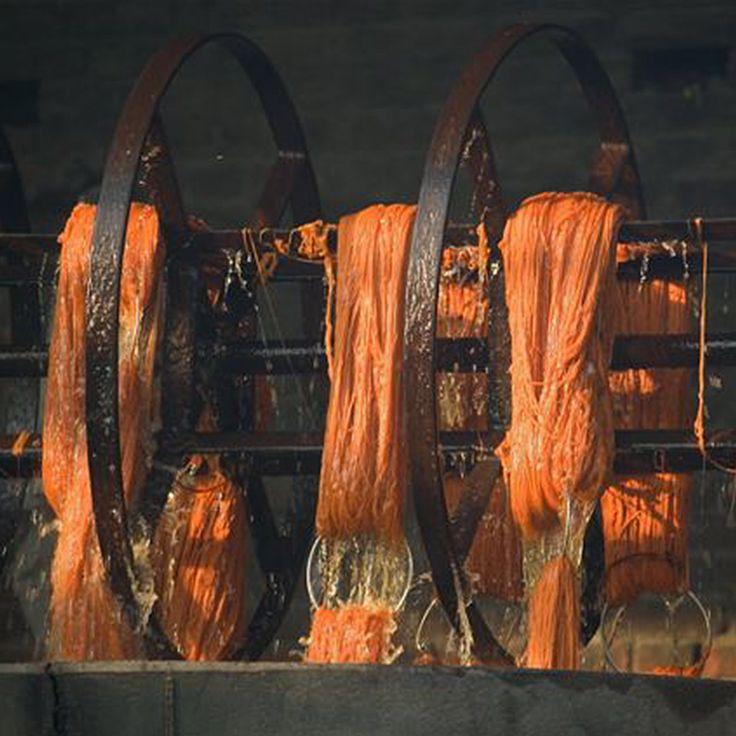
At Raheem & Son, we made a deliberate return to small-batch natural dyeing in 2014, after years of working largely with mordant-fixed synthetics for export consistency. The decision cost us something in predictability. It gave us back something more valuable: colour that lives. A naturally dyed rug will shift slightly over time, not fade, but settle, deepen in some areas, lighten in others, the way a face grows more interesting with age.
We are asked sometimes whether we can guarantee colour consistency across a large order. The honest answer is: not if you want natural dye. But we have never had a client regret the choice once the piece arrived.
By RS, 27 March 2026
More in Materials and Construction.
Follow the journal in Google Search. Readers who add us as a preferred source see our writing marked in Top Stories and in AI Overviews.