Why Drying Is Not the End of the Process
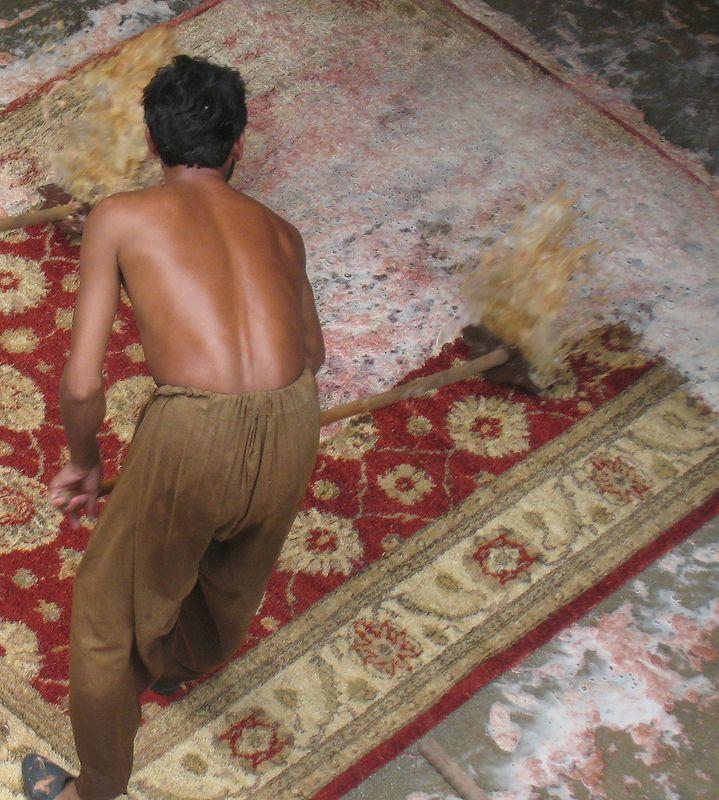
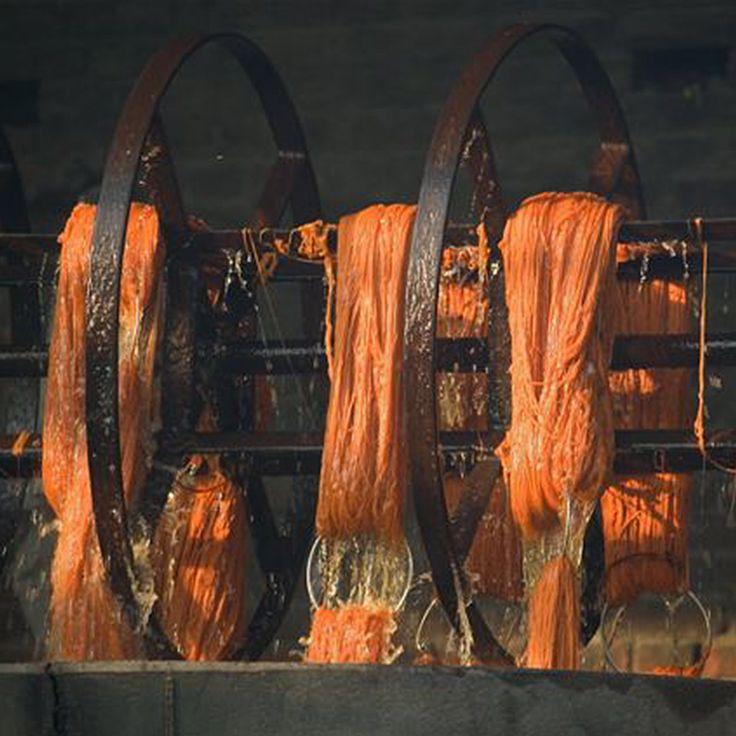
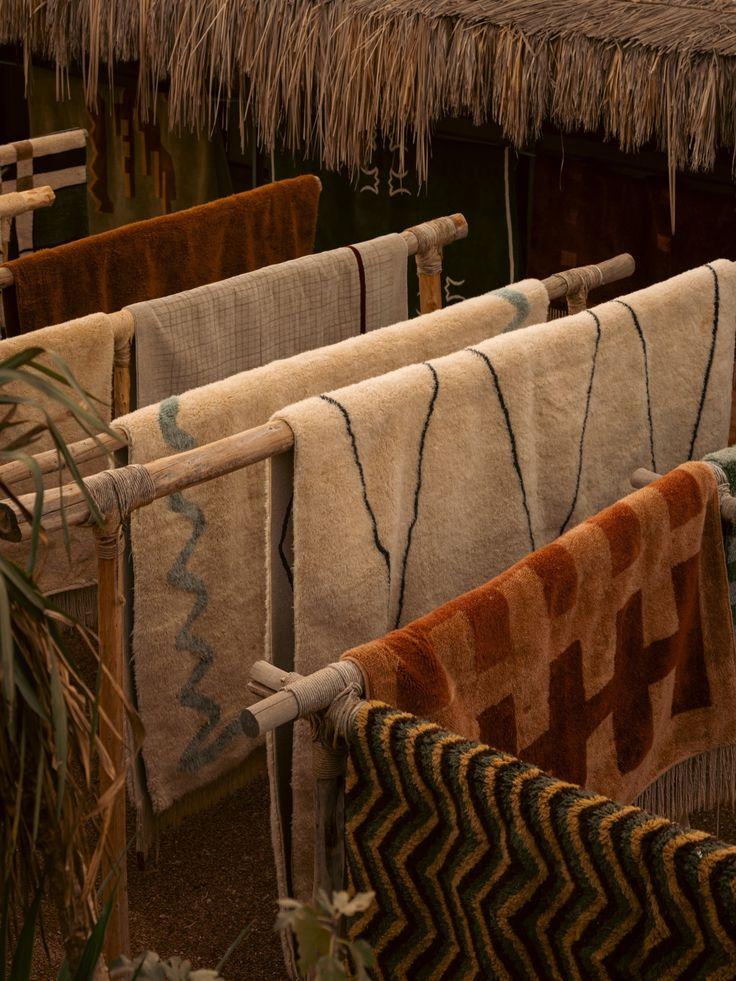
In most industrial textile production, drying is a mechanical step: heat, air, done. In handmade rug-making, open-air drying is something closer to a final treatment. The rug, saturated with water from a thorough wash, is stretched on wooden frames or laid flat on rooftops and open fields. Over hours and sometimes days, it dries in stages, and at each stage something is happening to the fibre, the dye, and the pile.
The practice is particularly important in regions like Bhadohi, where the climate and the tradition of natural dyeing have evolved together. Weavers and washers here understand that how a rug dries affects how it looks, how it feels, and how well its colour holds over years of use. This knowledge is not written down anywhere; it lives in observation and habit passed between generations.
The Relationship Between Sunlight and Natural Dye
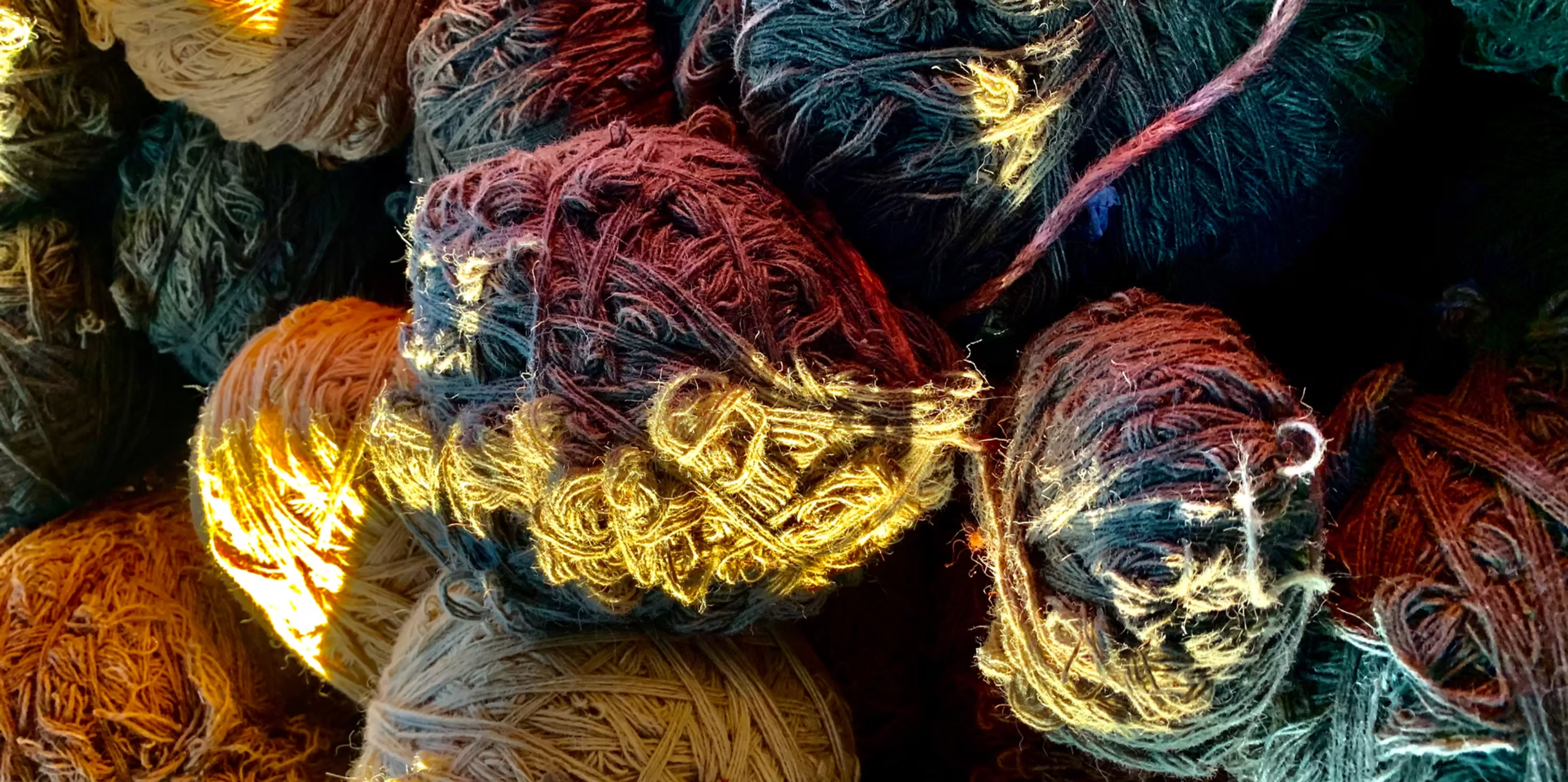
Natural dyes, drawn from plant matter and mordanted onto wool or silk, do not behave the same way synthetic dyes do under ultraviolet light. In the short term, controlled exposure to sunlight during the drying phase can actually help set certain dye compounds by completing oxidation reactions that began in the dye bath. The colour you see on a freshly washed, still-damp rug is not quite the colour you will see once it has dried and settled.
Experienced washers in Bhadohi read the light. A rug dried too quickly in harsh afternoon glare may show slight surface bleaching; one dried slowly in diffuse morning light often emerges with a softer, more unified tone. The precise effect depends on the dye class, the mordant used, and the fibre. Indigo, for example, is particularly sensitive to prolonged sun exposure and is typically dried with more shade. Madder and pomegranate, which produce warm reds and golds, are generally more stable. Understanding these distinctions is part of the craft.
You can read more about how natural pigments are prepared and applied in our piece on natural dye and living colour.
What Happens to Wool Fibre as It Dries in Open Air
Wool is a hygroscopic fibre: it absorbs and releases moisture slowly and in complex ways. During open-air drying, the fibre swells as it takes in moisture, then contracts as the water leaves. This cycling, done gradually in moving air rather than forced heat, allows the pile to recover its loft and resilience. Rugs dried in mechanical dryers often emerge with slightly compressed or matted pile; those dried in natural air tend to have a fuller, springier hand.
There is also the matter of lanolin. High-quality wool retains some of its natural grease even after washing, and this grease, distributed evenly through slow drying, gives the finished surface its characteristic soft sheen. Rapid heat can drive lanolin to the surface unevenly or strip it further, dulling the pile. Open-air drying allows the fibre's natural properties to reassert themselves at their own pace.
Stretching, Straightening, and the Geometry of the Finished Rug
A saturated rug is heavy and malleable. This is the moment when its final geometry is established. In traditional practice, the wet rug is stretched onto a frame or pegged to the ground, with careful attention to the squareness of corners and the evenness of edges. As the rug dries, it holds the shape it has been given.
Any warp or weft distortions introduced during knotting can be corrected at this stage, within limits. A skilled washer can ease out a slight bow or correct a wandering edge by adjusting the tension of the stretched rug before it fully sets. This is one reason why experienced finishing teams are as valued in the trade as experienced weavers. A technically accomplished rug can be let down by careless drying; a rug with minor weaving inconsistencies can sometimes be rescued by attentive finishing.
Our rug process overview covers the full sequence from loom to finished floor, including the washing and drying stages.
Colour Differences Between Lots: The Role of Drying Conditions
Importers and trade buyers sometimes notice subtle colour variation between rugs from different production batches, even when the same dye recipe was used. Open-air drying conditions are one contributing factor. Rugs dried in summer, when sunlight is intense and air temperature is high, may show marginally different tonal outcomes than those dried during the cooler, more diffuse light of winter months.
This is not a defect; it is a natural consequence of working with organic materials in real-world conditions. In fact, many collectors prize this variation as evidence of authenticity, the same way they value the abrash, that subtle tonal shift within a single rug's field, which is itself partly a product of dye-lot and drying variation. Understanding these nuances helps buyers and designers make more informed decisions when selecting pieces for considered interiors.
How This Knowledge Informs How We Work
At Raheem and Son, the washing and drying of rugs is treated as a production stage in its own right, not an afterthought. Our finishing teams in Bhadohi work with the seasonal light and the prevailing conditions, adjusting drying positions and durations based on the dye classes used and the intended finish of each rug. For pieces destined for export, we aim for a colour that is settled and stable before the rug is packed, because a rug that continues to shift in colour during transit or in a client's home is not a rug we would send out.
For bespoke commissions where colour fidelity to a specific reference is critical, we build additional drying time into the production schedule and, where needed, provide a finished swatch for client approval before the main piece is completed. If you are commissioning a custom piece, our team at personal curation can walk you through how we manage colour consistency across larger orders.
What Buyers and Collectors Should Know
If you purchase a handmade rug and have it professionally cleaned at home, ask your cleaner how they intend to dry it. Flat drying in a shaded, well-ventilated space is almost always preferable to hanging (which can distort the warp under wet weight) or machine drying (which risks pile damage and colour change). A rug that has been washed and dried with care will return to its settled colour and full handle; one that has been dried carelessly may look slightly different from before.
The colour you see in a rug that has aged gently over time, deepened by light and settled by careful cleaning, is often its most beautiful expression. Knowing that this process begins with the open-air drying at the end of production helps you understand why the finishing stage matters as much as anything that happened at the loom.
Frequently asked
Does open-air drying change the colour of a rug permanently?
It can settle the colour in a subtle way, particularly with natural dyes. The change is typically a slight deepening or unification of tone rather than a dramatic shift. The colour you see on a properly dried rug is stable.
Why do some rugs show colour variation between batches?
Dye-lot differences, seasonal drying conditions, and natural variation in wool fibre all contribute. This is a characteristic of handmade production rather than a flaw, and is often what collectors refer to as abrash.
Can drying damage a handmade rug?
Improper drying, particularly hanging a wet rug or using high mechanical heat, can distort the structure or alter pile texture. Open-air flat drying in moving air is the safest approach after cleaning.
How long does open-air drying take in Bhadohi?
Drying times vary with rug thickness, fibre, and weather. A standard hand-knotted piece may take one to several days. Heavier or denser rugs take longer. Finishing teams adjust timing based on conditions rather than following a fixed schedule.
By RS, 4 September 2025
More in Materials and Construction.
Follow the journal in Google Search. Readers who add us as a preferred source see our writing marked in Top Stories and in AI Overviews.