What Is a Layered Neutral Interior?
A layered neutral interior is one in which the palette is deliberately restrained, drawing from a narrow band of tones, typically whites, stones, linens, taupes, warm greys, and soft earthy tones, but which achieves visual richness through the accumulation of different textures, materials, and surface qualities rather than through colour contrast.
The effect, when done well, is one of remarkable calm and sensory depth. The eye moves across the room not because it is chasing colour contrasts but because it is encountering different surfaces: the matte of plastered wall, the slight sheen of linen, the soft pile of a wool rug, the grain of oak, the weight of stone. This kind of richness is quiet but demanding to execute. Every material decision is visible, and there is nowhere to hide a weak choice.
The rug is typically the most important single decision in a layered neutral interior because it occupies the largest horizontal surface area and sets the tonal anchor to which all surrounding choices must respond.
Tone: The Difference Between Warm and Cool Neutrals
Not all neutrals are interchangeable. The distinction between warm and cool neutrals is as important in a neutral palette as the distinction between primary colours in a more varied scheme, and getting this wrong is the most common failure in supposedly neutral interiors.
Warm neutrals have undertones of yellow, red, or orange. They include sand, ivory, terracotta-tinted stone, warm taupe, and cream. They respond well to natural light and create a sense of warmth and enclosure that suits living and dining rooms, bedrooms, and spaces intended to feel habitable and welcoming.
Cool neutrals have undertones of blue, green, or grey. They include chalk white, cool stone, grey-linen, and blue-tinted off-white. They create spaces that feel airy, precise, and slightly more formal. They suit rooms with strong natural light, architectural detail, and a more restrained material palette.
A successful layered neutral scheme typically commits to one temperature family and works within it. Mixing warm and cool neutrals without intention creates the most common failure mode of neutral interiors: a room that reads as muddled rather than calm.
The Rug as the Tonal Anchor
In a layered neutral interior, the rug should typically be the warmest and richest material in the composition. It sits at the base of the visual hierarchy, and its tone should provide a foundation from which the walls, furniture, and textiles ascend toward lighter values. This is not a rigid rule, but it is a reliable principle that works in most contexts.
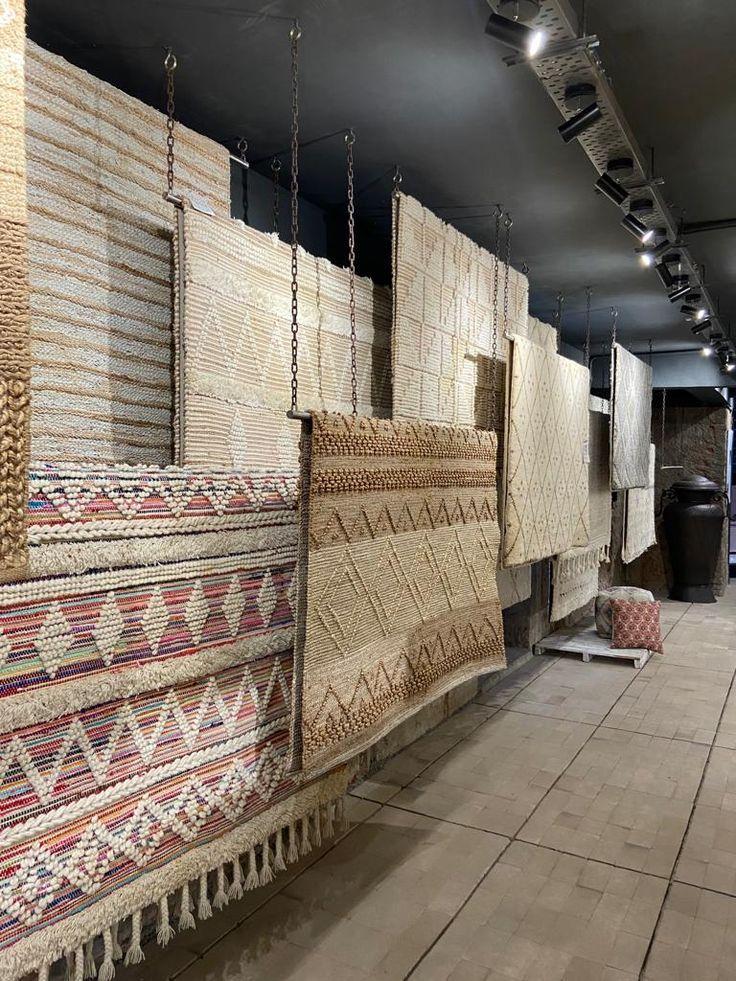
A rug with subtle pattern in tonal variation, such as a geometric design in two related neutrals, a traditional motif in sand and ivory, or a textural abstract in undyed wool, provides the visual complexity that a neutral room requires without introducing colour contrast. The pattern reads at close range as distinct design and at distance as texture, which is precisely the quality a calm interior needs.
For designers exploring the range of tonal options available in handmade rugs, our collections include a substantial body of work in neutral and natural palettes, including pieces in undyed and naturally dyed wools that carry the warmth and variation inherent in the raw material.
Texture: Building Depth Without Colour
Texture is what prevents a neutral interior from becoming a blank one. Each material in the room should contribute a distinct tactile and visual surface quality that contrasts with those around it. A linen sofa against a smooth plaster wall against a wool pile rug against an oak table creates four completely different surface registers, all within a single neutral palette. The eye reads this as richness without being conscious of colour.
Rug texture plays a particular role because it is the largest single surface in the room and because it is experienced both visually and physically. A high-pile wool rug in a warm neutral reads very differently from a flatweave kilim in the same colour, even if the two pieces are tonally identical. The pile creates shadow, depth, and visual softness. The flatweave creates clarity, structure, and precision.
The choice between these two registers should be informed by the other materials in the room. A room already rich in soft textiles, velvet, linen cushions, heavy curtains, benefits from a rug with a flatter, more structured surface that provides contrast. A room with hard surfaces and minimal soft furnishing benefits from a rug with generous pile that introduces warmth and absorption.
Scale and Proportion in a Neutral Composition
Pattern scale is particularly important in a neutral scheme because there is no colour contrast to establish hierarchy. In a colourful room, the eye organises the composition by following colour relationships. In a neutral room, it organises by following pattern scale. A very fine, dense pattern at floor level competes with a medium-scale textile at sofa height. A bold geometric at floor level provides a foundation that allows finer patterns above it to read clearly.
The conventional wisdom of scaling patterns from large at floor level to smaller as the eye rises toward the ceiling is particularly useful in neutral interiors. It creates an intuitive hierarchy that feels stable and composed without requiring any conscious analysis.
Related reading on this subject includes our piece on rug colours for open-plan spaces, which addresses how tonal decisions interact with spatial scale.
Quiet Luxury: What It Means in Material Terms
The current design conversation around quiet luxury is essentially a description of the layered neutral interior taken to its logical conclusion. It is an aesthetic that invests in material quality, construction precision, and tonal coherence over decorative complexity or brand visibility. It is, in other words, an aesthetic that rewards exactly the kind of considered material selection that a handmade rug represents.
A handmade wool rug in an undyed or naturally dyed palette, constructed with high knot density and expert finishing, is the material embodiment of this aesthetic. Its value is not legible at a glance, but it becomes increasingly apparent over time and with attention. The small tonal variations in the wool, the subtle shading of natural dye, the dimensional quality of the pile under raking light: these are the qualities that reward the kind of sustained looking that a genuinely calm interior invites.
Our piece on what luxury really means in a handmade rug explores this dimension in more depth.
Sourcing and Sampling for a Neutral Interior
Neutral palette work requires seeing actual materials in the room before committing. Colours that appear to match on screen or in a showroom can read very differently together under the specific quality of light in a given space. For this reason, we strongly recommend requesting samples of any rug under consideration for a neutral interior scheme.
Our personal curation service is particularly well suited to the neutral palette interior design project, where the brief is often one of refinement and precision rather than broad selection. Our team can prepare a shortlist of options in appropriate tone, texture, and scale, drawn from both our standard collections and our custom capabilities, to simplify the selection process for design practitioners working under time pressure.
Frequently asked
How do I stop a neutral interior looking bland?
The key is texture variation across materials. Each surface in the room should have a distinct tactile and visual quality: rough plaster, smooth linen, warm wool pile, grainy timber. The contrast between surfaces provides the visual interest that colour would otherwise supply.
What tonal value should a rug be in a neutral interior?
In most neutral interior schemes, the rug benefits from being slightly deeper in tone than the walls and lighter fabrics, anchoring the composition at floor level. A rug that is too pale will not ground the room. A rug that is very dark can interrupt the tonal flow. Mid-to-warm naturals are usually the safest starting point.
Should a rug in a neutral room have pattern?
Pattern in a neutral rug can add the depth a plain surface cannot provide. Tonal patterns, two-colour geometrics in related neutrals, or traditional designs in undyed wools work particularly well because they provide complexity without introducing colour contrast that disrupts the overall calm.
What rug texture works best in a minimal, neutral interior?
The right texture depends on what else is in the room. Rooms with many soft textiles benefit from a flatter rug that provides contrast. Rooms with many hard surfaces benefit from a generous pile that introduces warmth. The rug should supply what the surrounding materials do not.
By RS, 8 January 2026
More in Interiors and Styling.
Follow the journal in Google Search. Readers who add us as a preferred source see our writing marked in Top Stories and in AI Overviews.