The Problem with the Word Luxury
Luxury is among the most abused words in any retail category, and the rug market is no exception. It appears on mass-manufactured pieces produced in weeks, on machine-made replicas of traditional patterns, and on objects whose only distinguishing characteristic from the competition is a higher price. The word has been separated from its meaning by repetition.
This matters because buyers who are genuinely seeking quality, who want to acquire something that will improve with age rather than deteriorate, that has been made with considered material selection and skilled labour, that carries the accumulated knowledge of a weaving tradition, need a more precise vocabulary to navigate the market. Luxury, as commonly used, does not provide it.
This article attempts to restore some specificity to the concept by identifying the actual, verifiable qualities that distinguish a truly fine handmade rug from everything that merely claims to be one.
The Material: Where Quality Begins
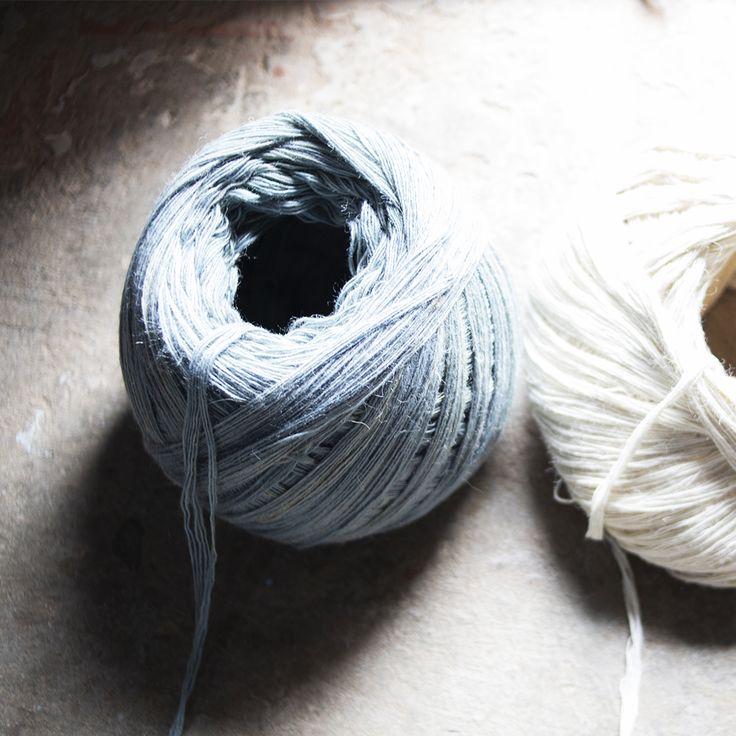
A fine rug begins with fine raw material. For a hand-knotted wool rug, this means wool that has been sourced from appropriate breeds, shorn at the right season, and processed in a way that preserves the fibre's natural properties. The best wool for rug-making comes from highland sheep that have developed a fleece adapted to cold climates: long staple, high crimp, and rich in the natural lanolin that makes wool resilient and somewhat self-cleaning.
The difference between a rug made from first-grade highland wool and one made from short-staple or blended wool is palpable within a few years of use. The finer wool maintains its pile height, recovers from compression, and develops a characteristic patina over time, a quality called sheen or lustre, that makes the rug appear more beautiful as it ages. The lesser wool flattens, dulls, and begins to show wear at traffic points within a much shorter period.
Silk, where it appears in the pile or as highlight work, should be natural silk rather than artificial alternatives. Natural silk has a luminosity and a directional sheen that shifts with viewing angle. Bamboo silk and art silk are honest alternatives with their own merits, but they do not replicate the visual character of natural silk and should not be represented as equivalent to it.
Construction: The Invisible Architecture
The quality of a rug's construction is largely invisible to the untrained eye, which is precisely why it is so often used to cut costs without apparent consequence. Knot count, pile density, warp tension, foundation quality, and the finishing of the selvedge and fringe are all technical decisions that affect the rug's performance and longevity without being directly legible from a photograph.
A high knot count, measured in knots per square metre, allows the designer to render fine detail with precision. In a traditional floral design, the difference between a rug knotted at a moderate density and one at a fine density is visible in the clarity and resolution of the pattern at close range. The finer piece rewards attention. The coarser one does not.
Pile density is related to but distinct from knot count. A dense pile, where the fibres are packed tightly together, springs back after compression because the fibres support each other. A sparse pile, even at the same height, will flatten and stay flat because each fibre lacks lateral support. You can read more about how these technical parameters affect a rug's feel in our texture and pile guide.
Dye: Natural Colour and Its Particular Beauty
The dyes used in a fine rug make a significant contribution to its character over time. Synthetic dyes, introduced into rug-making in the late nineteenth century, are consistent, repeatable, and inexpensive. They produce bright, even colour fields that photograph well and that the market has largely accepted. But they do not age the way natural dyes do.
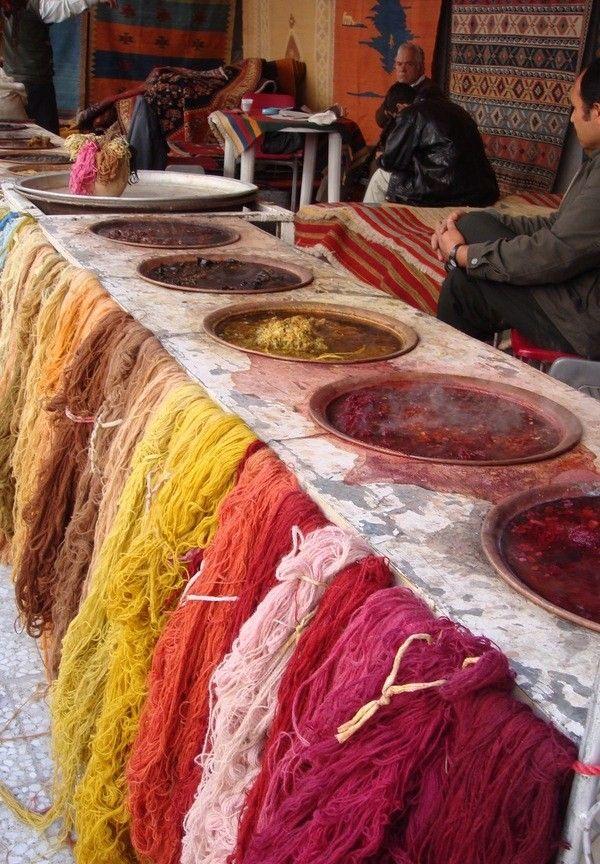
Natural dyes, derived from plants, insects, and minerals, produce colour with an inherent complexity. A single dye bath applied to the same wool twice will produce slightly different results because the mordanting, the temperature, the specific lot of plant material, and the water chemistry all influence the outcome. This variation is not a flaw. It is what creates the tonal depth and subtle movement of colour that makes naturally dyed rugs appear to have interior light.
Over decades, naturally dyed rugs develop a quality called abrash, an organic tonal variation that becomes more pronounced as the rug ages and the dyes respond differently to light and air. This quality is sought by collectors because it is the signature of a genuine process and cannot be replicated by artificial means. Our article on natural dye and living colour explores this in depth.
The Human Element: Skill, Time and Knowledge
A handmade rug at the quality level we are describing is the product of years of accumulated craft knowledge, weeks or months of focused skilled labour, and a network of material relationships and process disciplines that take decades to build and maintain. This is not sentiment. It is the factual description of what a genuinely fine handmade rug contains.
The weaver who ties the knots in a high-quality hand-knotted rug has typically been practising their craft since adolescence. The ability to maintain consistent knot tension across a large piece, to follow a complex colour sequence accurately over hundreds of rows, and to produce a level, even pile surface without mechanical assistance is a form of embodied expertise that cannot be acquired quickly.
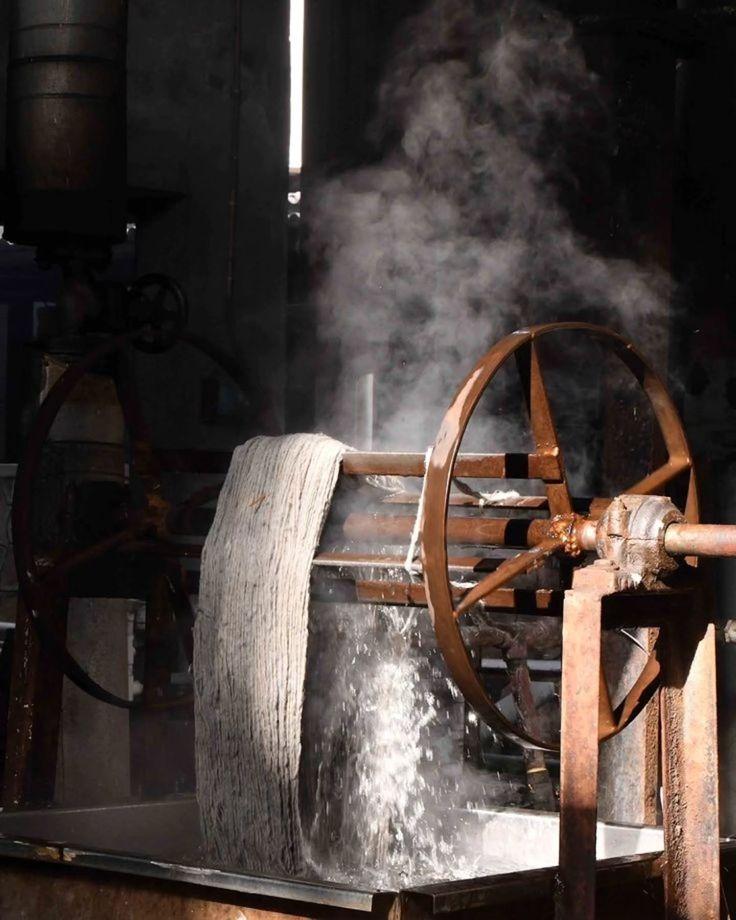
The master dyer, the designer who translates a creative concept into a technically viable point paper, the washer who brings the finished pile to its final character, the inspector who reads the surface for irregularities under strong light: each of these individuals contributes knowledge and judgment that the finished object silently contains. This is the substance beneath the surface of what we call luxury.
How Luxury Rugs Age: The Long View
One of the clearest distinctions between a truly fine handmade rug and one that merely claims the category is in how they age. A fine rug, made from quality materials and constructed with care, becomes more beautiful over time. The pile softens and develops a characteristic hand. The natural dyes deepen and develop complexity. The wool takes on a burnished quality at the high points of the weave where it receives the most light.
A lesser rug deteriorates. The pile flattens and does not recover. The synthetic dyes fade unevenly or shift in hue. The foundation may weaken and cause the rug to become wavy or distorted. This is not a difference in surface appearances that age will eventually equalise. It is a fundamental difference in trajectory: one piece improves, the other declines.
The practical implication for buyers considering cost is that a fine handmade rug bought once and maintained properly represents a different class of object from a mass-produced alternative bought repeatedly. The comparison should be made over the full lifetime of ownership, not at the point of purchase.
Recognising True Quality: What to Look for
The ability to recognise genuine quality in a handmade rug is something that develops with exposure, but there are specific things to look for even without extensive experience. Examine the back of the rug: the knots should be clearly visible, evenly distributed, and consistent in size. The foundation threads should be straight and taut. The fringe should emerge as a natural continuation of the warp threads, not as a sewn-on addition.
Hold the rug in strong directional light and look at the pile surface from a low angle. A fine pile should be level and consistent, with no visible irregularities. Press your palm into the pile and release. The fibres should spring back promptly and evenly. Bend a corner of the rug. A fine cotton foundation should not crease sharply or show stress.
These simple physical examinations will tell you more about a rug's actual quality than any marketing description. For buyers who would like to experience the difference in person, our sample programme offers a direct route to assessing Raheem and Son's work against these criteria.
Frequently asked
What makes a hand-knotted rug more valuable than a machine-made one?
A hand-knotted rug contains skilled human labour, quality raw materials selected with knowledge, and construction precision that determines long-term performance. It ages well and can be repaired. A machine-made rug can replicate surface appearances but not the material quality or the durability that comes from the knotted construction and high-grade wool.
How can I tell if a rug has been made with quality materials?
Examine the back, the fringe, and the pile surface in strong light. Feel the weight and springiness of the pile. Quality wool is resilient and warm. A sound construction has an even, clearly structured back and a fringe that is a direct extension of the warp threads rather than a sewn-on addition.
Are natural dyes worth the additional cost in a luxury rug?
For buyers prioritising long-term beauty and aged character, yes. Natural dyes produce colour with depth and complexity that synthetic dyes do not replicate, and they age in ways that add rather than subtract from the rug's character over decades. They are a meaningful quality distinction.
Does a luxury handmade rug require special care?
A fine handmade rug requires appropriate care but not excessive care. Routine vacuuming, rotation, prompt attention to spills, and professional cleaning every few years are the fundamentals. The reward for this care is a rug that continues to improve rather than one that merely survives.
By RS, 12 February 2026
More in Heritage and Sustainability.
Follow the journal in Google Search. Readers who add us as a preferred source see our writing marked in Top Stories and in AI Overviews.