Why Lead Times Are the Variable That Matters Most
Experienced rug buyers understand that the most important variable in a bulk programme is not the price per square metre or the knot density of a hand-knotted piece. It is the lead time from order confirmation to goods on the dock. Get the lead time right and the rest of the programme can be managed. Get it wrong and no amount of quality or competitive pricing salvages a container that arrives six weeks after the retail season has moved on.
Handmade rug production has inherent time constraints that cannot be compressed by throwing additional resource at the problem in the way that machine production can. A loom can only work as fast as the weaver who sits at it. A dye house can only process a certain volume per day. Finishing and washing operations are weather-sensitive in the outdoor drying phases. These constraints are real, and buyers who understand them can plan around them. Buyers who do not understand them tend to apply pressure at the end of the production cycle that results in compromised quality or missed shipment dates.
This article covers the key variables that drive lead times for different rug constructions, the sampling window that precedes production, the annual buying calendar structure that experienced buyers use, and the practical steps that protect a programme against delay. Our manufacturing page provides a production overview relevant to buyers evaluating our capacity and capabilities.
Construction Type and Its Effect on Production Time
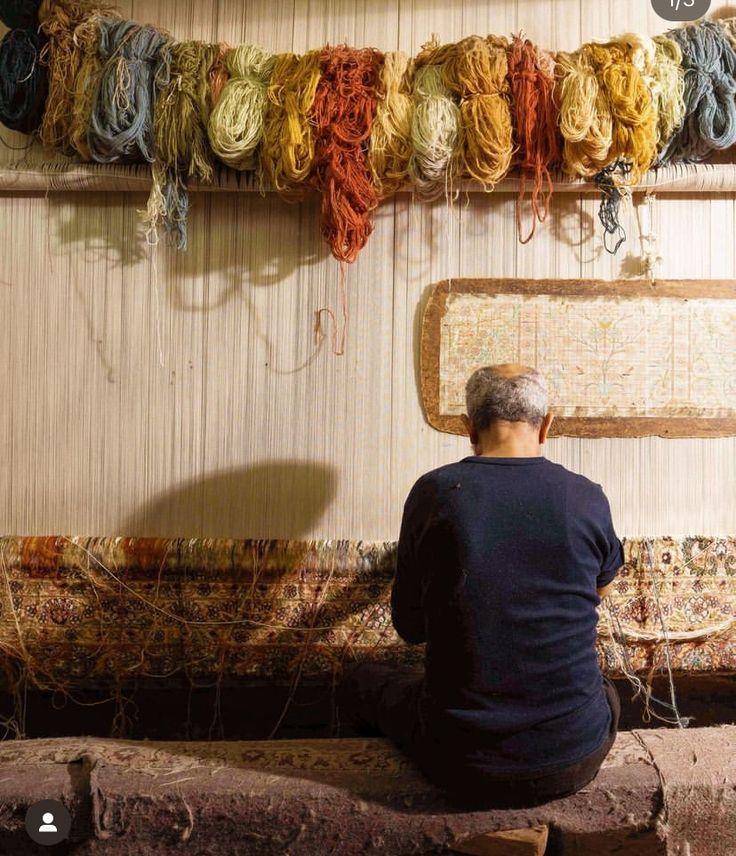
The construction type is the primary driver of production lead time. Hand-knotted rugs take the longest because each knot must be tied individually by a skilled weaver. The production rate per weaver depends on the knot density of the construction, the complexity of the design, and the size of the piece. A rug with a moderate knot count in a relatively simple geometric design can be completed faster per square metre than a fine-count piece with a complex curvilinear motif. Production capacity across multiple looms can be scaled for larger orders, but the per-square-metre time is fixed by the construction.
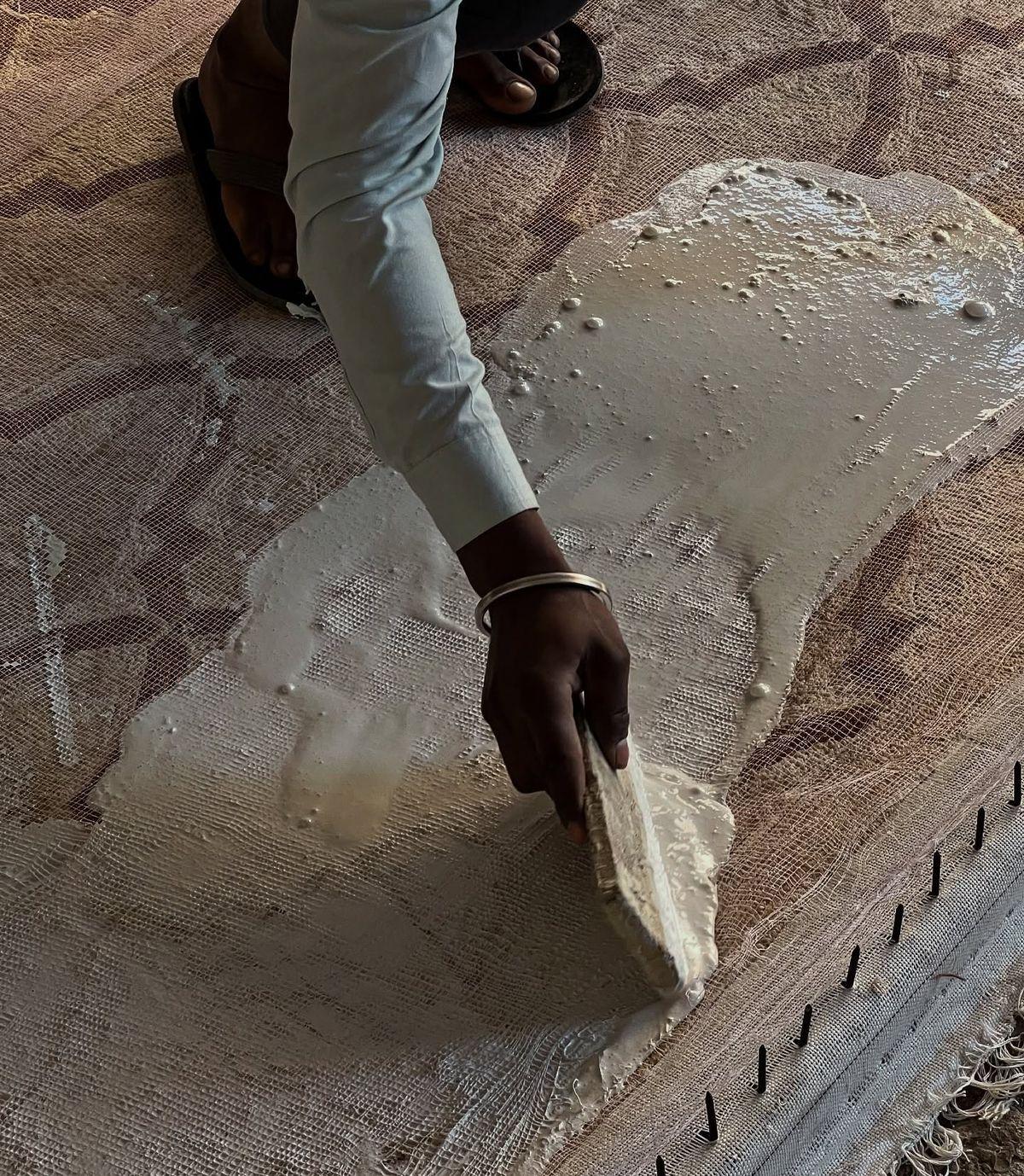
Hand-tufted rugs have faster production timelines than hand-knotted pieces because the tufting gun is faster than knot-tying. A skilled tufting operator can cover significantly more area per day than a hand-knotted weaver. However, hand-tufted production still requires loom set-up, pattern transfer, pile clipping, latex backing application, and secondary backing attachment, all of which add time beyond the tufting stage itself.
Flatweave and dhurrie constructions are the fastest to produce per square metre among handmade rug categories. The absence of pile means that the weaving process is continuous rather than incremental, and the finishing requirements are simpler. For buyers who need the shortest possible production timeline within the handmade category, flatweave is the appropriate specification. Our how-to-order page describes the order process and confirmation steps that begin the production clock.
The Sampling Window: What It Is and Why It Cannot Be Skipped
Before bulk production begins, a sample must be made, reviewed, approved, and any required revisions incorporated. This is not a bureaucratic formality but a necessary step that protects both the buyer and the supplier from the cost and delay of producing a full production run to a specification that either party has misunderstood.
At Raheem and Son, our standard sampling window from brief confirmation to first sample dispatch is 25 to 35 days. This covers the loom or tufting set-up time, the production of the sample, and the finishing and packing. The buyer then needs time to receive, assess, and respond to the sample, which adds further days depending on the buyer's location and internal review process. If revisions are required, a second sample round adds another 25 to 35 days.
Buyers who want to compress the overall programme timeline should invest in the sampling stage rather than trying to bypass it. A thorough first brief that anticipates the likely revision points, physical colour references rather than digital specifications, and a rapid internal review and approval process at the buyer's end all reduce the number of sample rounds required and keep the overall programme on schedule. Skipping or rushing the sample stage to save time at the front end almost always costs more time at the production or delivery stage.
Bulk Production Timelines: Realistic Numbers by Construction
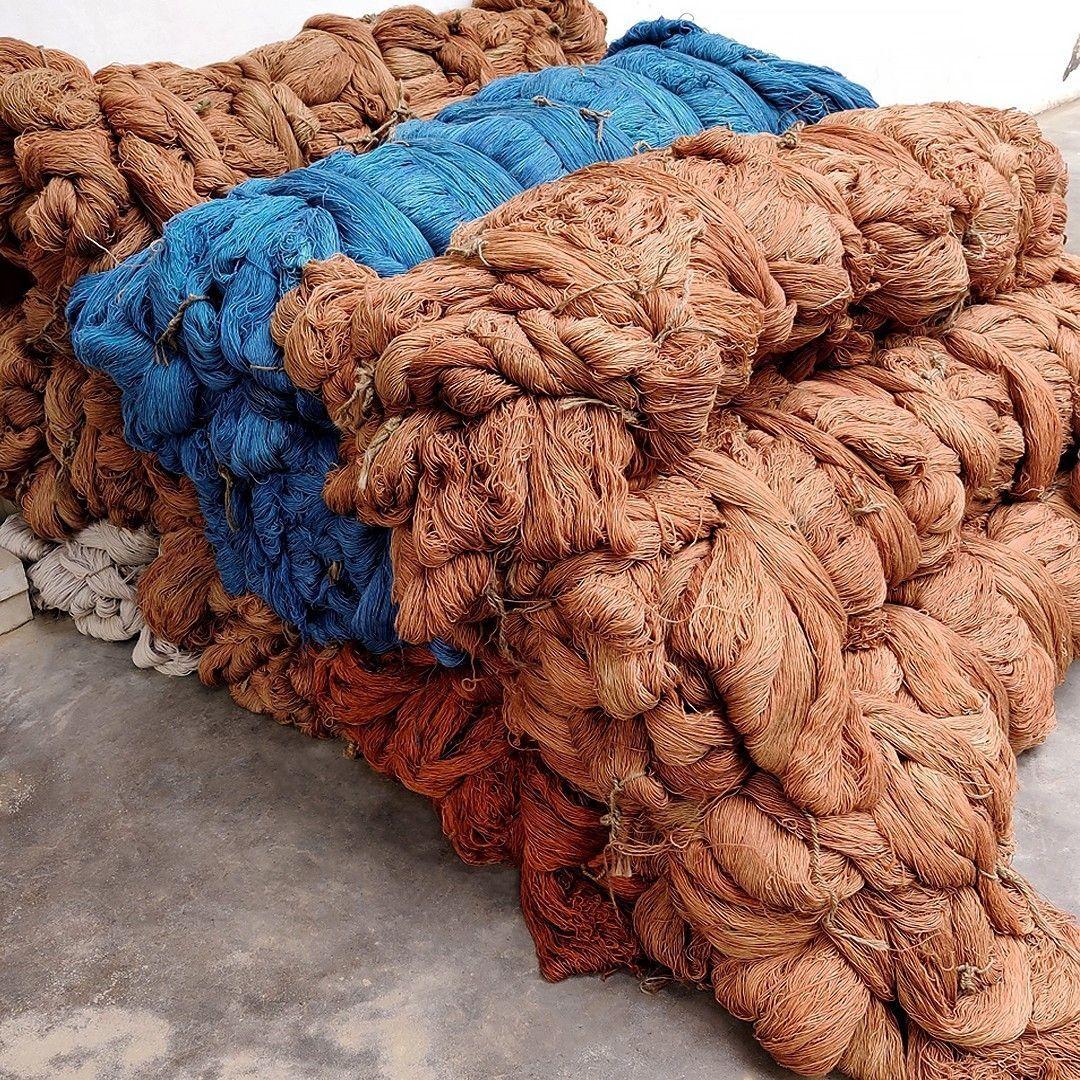
Once a sample is approved and a production order is confirmed, bulk production begins. For hand-knotted rugs, bulk production from order confirmation is typically available from 60 days for straightforward constructions at moderate scale. More complex constructions, larger orders, or designs requiring specialist dye development extend this window. Buyers should budget 90 to 120 days for hand-knotted orders with significant design complexity or volume.
Hand-tufted bulk production is typically faster, often achievable within 45 to 60 days from order confirmation depending on volume. Flatweave and dhurrie bulk production can be completed within 45 days for standard constructions and colourways at moderate scale. These are production windows only: shipping time from Bhadohi to the destination port must be added, which for sea freight to Europe is typically 25 to 35 days and to the US East Coast is 30 to 40 days. Air freight reduces shipping time to days but at a cost premium that is rarely viable for goods of the weight and volume of rugs.
The combined timeline from sample approval to goods in the buyer's warehouse, including production and sea freight, typically falls between 90 and 150 days for most constructions and destinations. Buyers who are planning for a specific retail floor date or trade fair should work backwards from that date and add a buffer of at least two weeks to account for customs clearance and domestic transport.
The Annual Buying Calendar: How Experienced Importers Plan
Experienced rug importers do not plan order by order; they plan season by season and, at larger scales, year by year. An annual buying calendar shared with the supplier at the start of each year allows the supplier to reserve loom capacity, pre-position yarns, and stage production across the year so that no single season creates an impossible production peak.
A typical annual programme for a mid-scale European or North American retailer involves two primary delivery windows: one for spring-summer ranging and one for autumn-winter. Working backwards from those delivery windows and accounting for sampling, production, and shipping, the design brief and sample requests need to be submitted several months before the intended delivery date. The precise timeline depends on the construction mix, the volume, and whether the designs are new or carry-forward from previous seasons.
For buyers developing new designs each season, the design development calendar is a separate stream that must be integrated with the production calendar. Design brief submission, artwork development, sample approval, and production confirmation all have their own timelines that must align. An experienced supplier can help buyers map this integrated calendar at the start of the relationship and flag where the schedule is under pressure before it becomes a crisis.
Managing Delay Risk: What Buyers Can Control
Production delay risk in handmade rug production arises from several sources: brief changes after production has begun, colour revision requests that require re-dyeing, quality failures that require rework, raw material supply disruption, and logistics delays at the port or in transit. Buyers cannot eliminate all of these risks, but they can manage several of them through the choices they make at the briefing and ordering stages.
The most controllable delay risk is the brief change. Once production begins on a hand-knotted order, any design or colour change requires restarting from the last point of completion. Buyers who invest in the sample approval stage and do not request changes after production confirmation save the time and cost of production restarts. Similarly, buyers who confirm orders with a clear written brief and a signed sample as the reference standard eliminate most of the ambiguity that leads to quality rework.
Our how-to-order guide covers the order confirmation process, the documents we provide at each stage, and the checkpoints where buyer input is required. Buyers who follow this process and maintain clear communication with our team through production experience significantly fewer delays than those who treat the period between order confirmation and shipment notice as a black box. We provide regular production updates for active orders and flag any risk to the delivery schedule as early as possible.
Frequently asked
How long does it take to get samples from Raheem and Son?
Our standard sampling window from confirmed brief to sample dispatch is 25 to 35 days. This covers loom set-up, sample production, finishing, and packing. Complex designs or multi-sample requests may fall toward the longer end of this range.
What is the minimum lead time for a bulk hand-knotted rug order?
From order confirmation with an approved sample, bulk hand-knotted production is typically available from 60 days for standard constructions at moderate volume. More complex designs, higher knot counts, or larger orders extend this window. Always confirm the production timeline for your specific order at the briefing stage.
Can I place a rush order for handmade rugs?
Rush production is sometimes possible for existing accounts with established designs in our production programme. It generally requires accepting a premium and may limit the range of sizes or colourways available within the compressed timeline. New designs require a full sampling cycle regardless of urgency.
How much time should I allow for shipping from India to Europe or North America?
Sea freight from our production base in Bhadohi to European ports is typically 25 to 35 days from the date of loading. To US East Coast ports, allow 30 to 40 days. To the US West Coast, allow 35 to 45 days. Add customs clearance time at the destination port, which varies by market, to arrive at the total transit window.
By RS, 2 June 2026
More in Sourcing and Suppliers.
Follow the journal in Google Search. Readers who add us as a preferred source see our writing marked in Top Stories and in AI Overviews.