There is a tradition, older than most contemporary design references acknowledge, of treating the rug as an architectural element rather than a decorative one. In it, the floor is not a background; it is a surface with as much designed intentionality as the wall, the ceiling, the door frame.
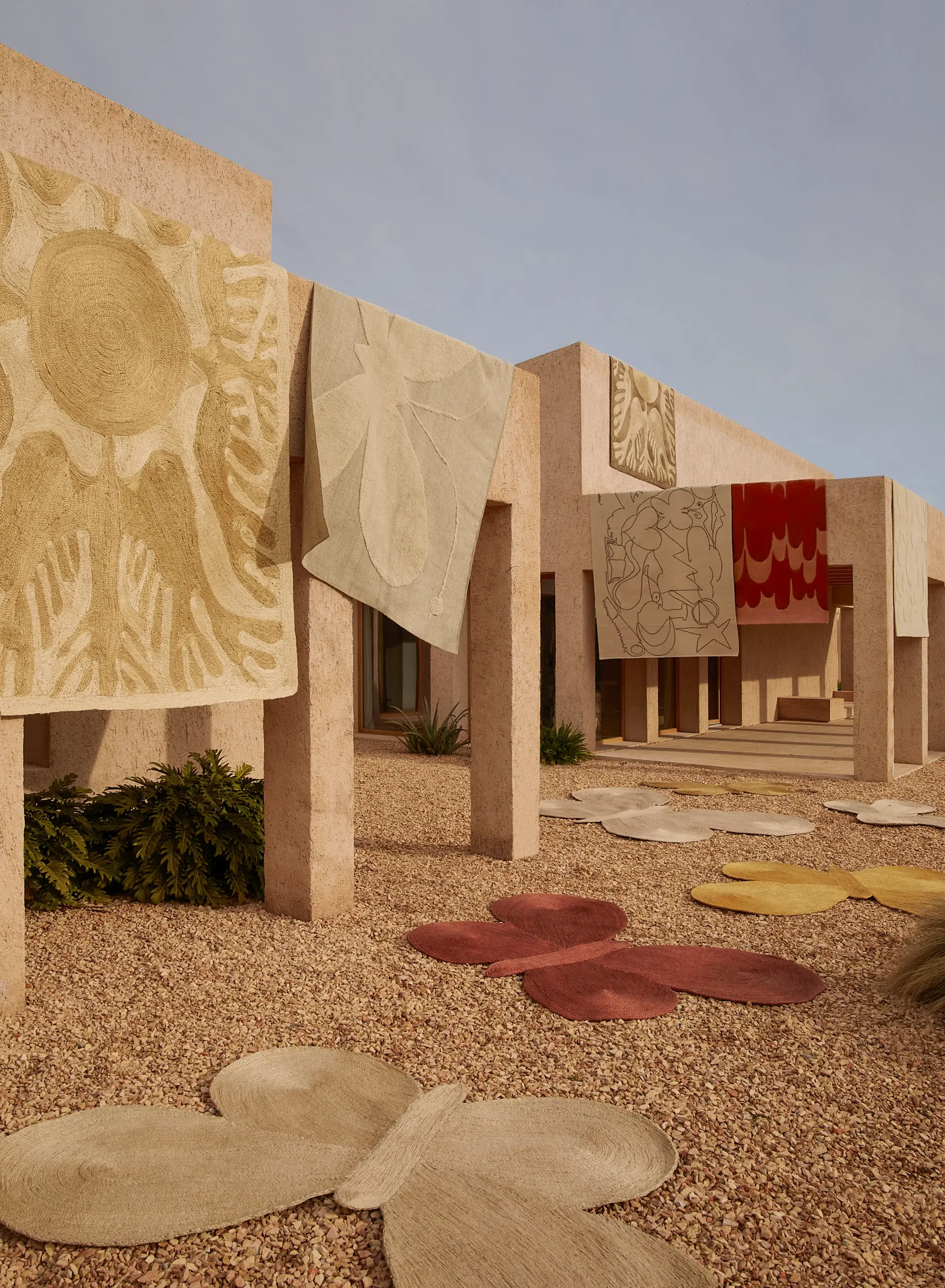
The image above shows rugs hung across the exterior walls of a raw-concrete structure in an editorial context, an unfamiliar vantage point that strips away the usual domestic associations and reveals the rug as what it is: a large, woven surface with weight, colour, and pattern. Hung vertically, the scale becomes apparent in a way it rarely does underfoot.
RS Contract, our architectural division established in 2021, works in precisely this register. Our commissions, a lobby floor for a 180-key Geneva hotel, a boardroom installation in Singapore engineered from a single CAD drawing, treat the rug as a permanent architectural finish, not a moveable piece of soft furnishing. The structural specification, the acoustic backing, the seamless joining of panels across large areas: all of this requires a different kind of thinking than a domestic commission.
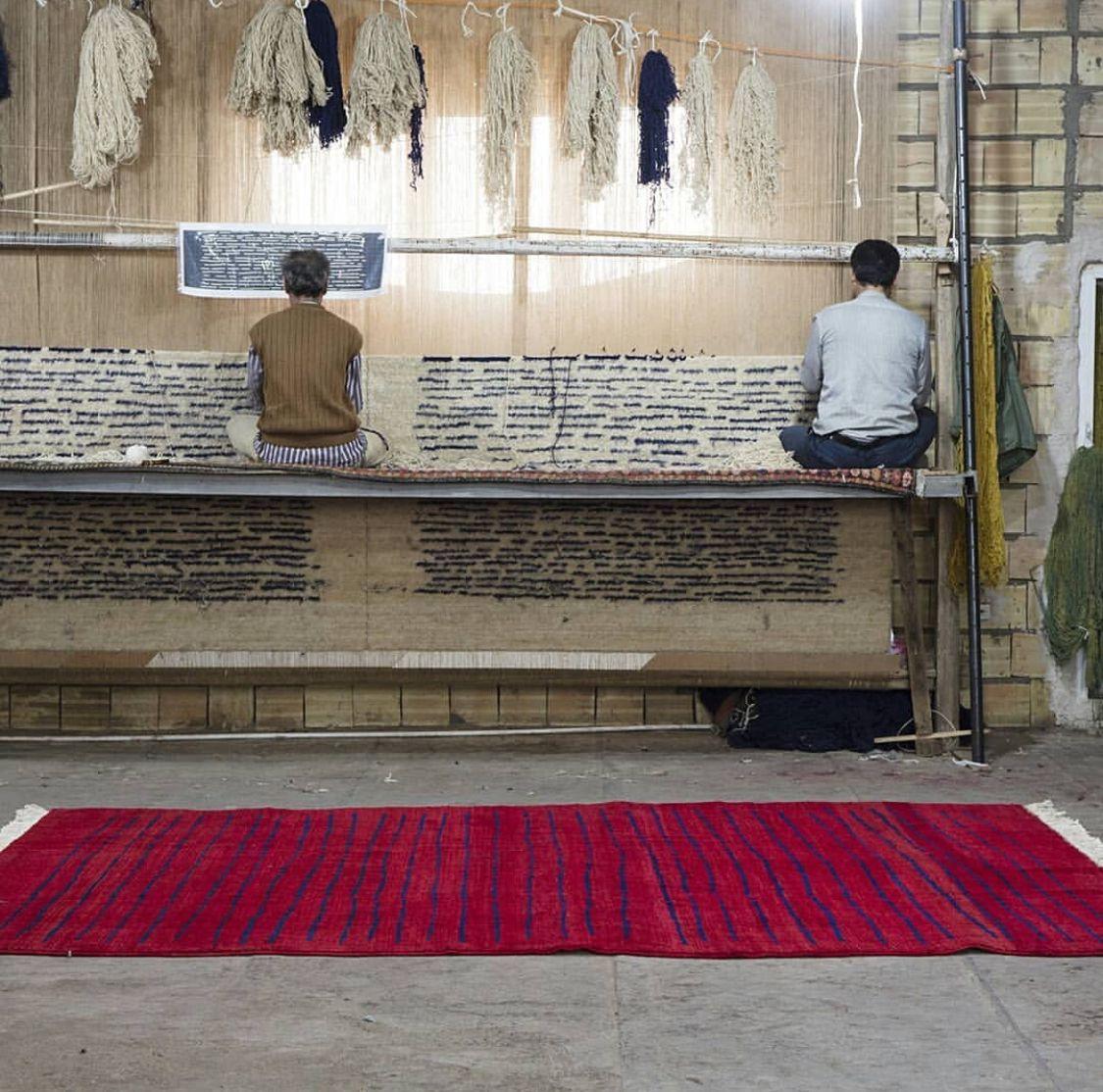
The design conversation is also different. Where a residential client might begin with colour or pattern, an architect begins with the plan: the geometry of the space, the load of foot traffic, the relationship between floor, wall, and ceiling. The rug becomes a drawing, and the loom becomes the means of making it real.
By RS, 30 January 2026
More in Contract and Hospitality.
Follow the journal in Google Search. Readers who add us as a preferred source see our writing marked in Top Stories and in AI Overviews.