What Slow-Made Means in the Context of Rugs
Slow-made is sometimes used loosely as an aesthetic label, applied to any product with a rustic surface quality or an origin story involving craft. In the context of handmade rugs, it has a more literal meaning. The pace of production is constrained by human biology and manual process. A weaver can tie only as many knots as their hands and eyes allow in a working day. A natural dye can only fix at the speed the fibre absorbs the colour. There is no industrial shortcut available that preserves the integrity of the object.
This constraint is the source of the value. It is also the reason that a slow-made rug occupies a genuinely different category from a fast-produced one, not simply a different price tier but a different relationship between maker, material, and owner.
Natural Fibres and Why They Matter
Wool is the primary fibre in the Raheem & Son production tradition, and its properties make it almost uniquely suited to handmade rug construction. Wool fibres are naturally resilient, meaning the pile recovers from compression. They are naturally fire-resistant without chemical treatment. They absorb moisture and release it slowly, which regulates the microclimate of a room. They age in a way that synthetic fibres cannot: the pile of a well-maintained wool rug develops a patina over time, a slight softening and deepening of colour, that increases rather than diminishes its character.
Cotton is used primarily in warps and wefts rather than pile in the Bhadohi tradition, though it appears in pile in some flatweave formats. It provides structural stability and accepts dye cleanly. Silk, used in some of our finer pieces, introduces luminosity and allows very high knot densities because the fibre is thinner than wool.
Natural fibres are also biodegradable in a way that nylon and polypropylene are not. At the end of a very long life, a wool rug returns to the soil. A synthetic rug does not. For buyers thinking about the full lifecycle of what they bring into a home, this is a meaningful distinction. Our sustainability page details our broader approach to responsible production.
The Role of Natural Dyes
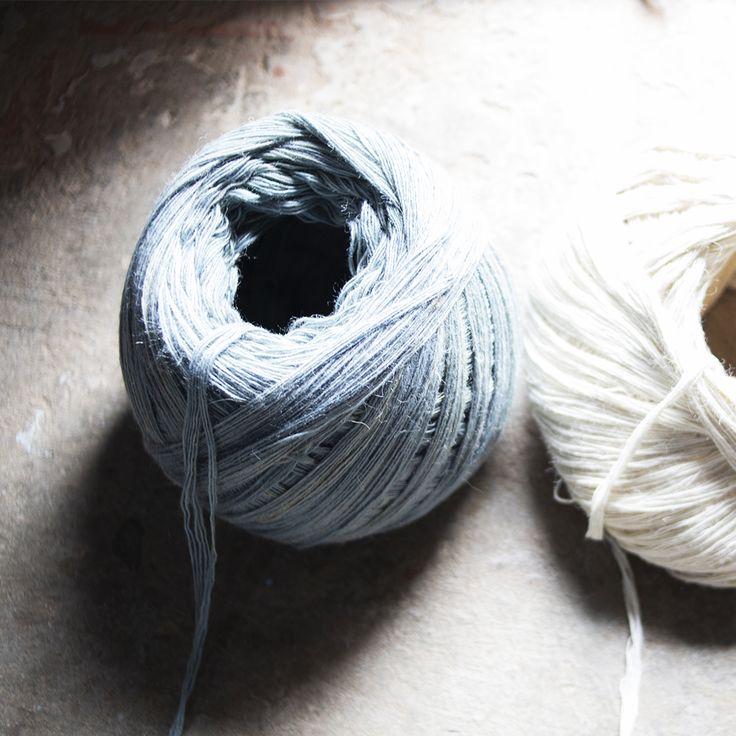
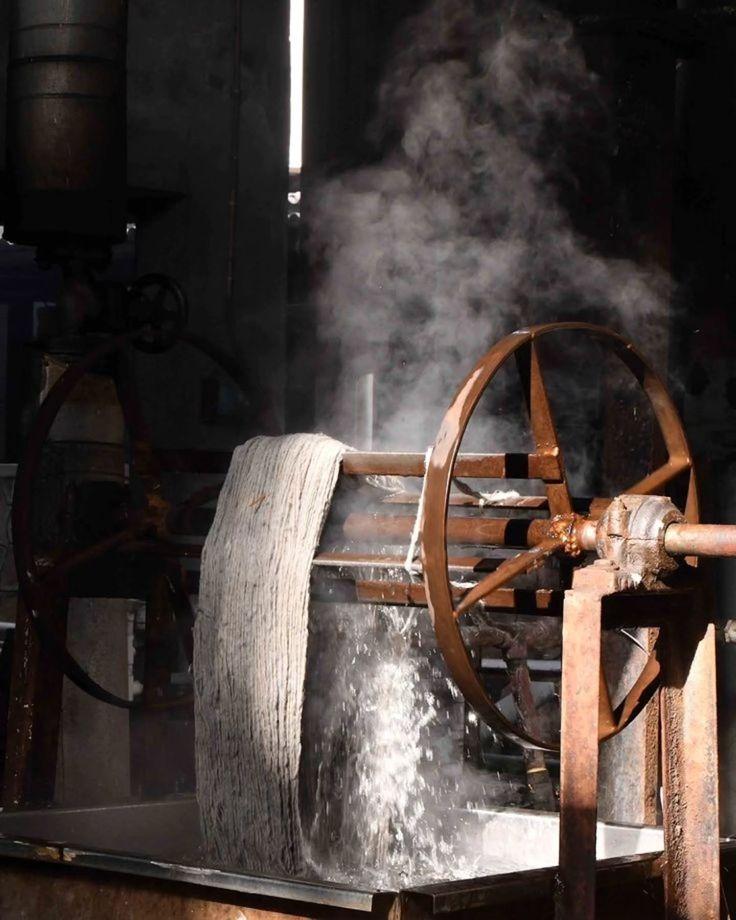
Natural dyes are labour-intensive and less predictable than their synthetic counterparts. They require the preparation of the fibre with a mordant, a mineral salt that fixes the colour to the fibre, followed by dyeing in temperature-controlled baths. The colour yields are lower and the process produces natural variation rather than uniform saturation.
This variation is precisely the quality that makes naturally dyed rugs desirable. A field dyed with madder or indigo carries a depth and a slight tonal movement that a flat synthetic colour does not. The reds shift from orange to cool crimson within the same skein depending on the mineral content of the water and the precise temperature of the bath. The blues move from grey-blue to pure indigo with similar subtlety.
Over time, naturally dyed rugs age in a way that enhances their character. The colours soften and shift, and what begins as a strong terracotta may evolve into a warm brick tone after years of light exposure. This is not fading in the pejorative sense but a transformation that the best natural dyes are designed to produce. We explore this in depth in our piece on natural dye and living colour.
The Human Skill Embedded in Every Piece
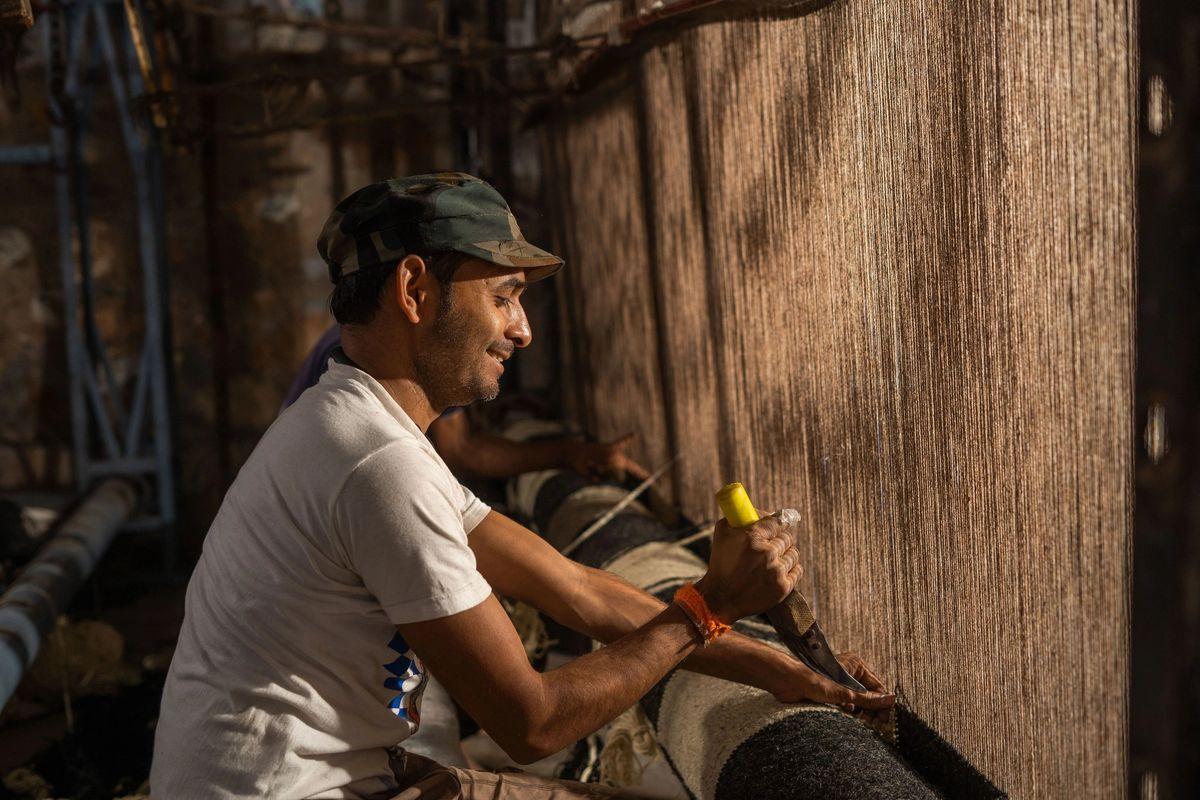
A hand-knotted rug from a skilled workshop carries within it thousands of individual decisions made by a person with decades of training. The weaver reads the cartoon, interprets colour transitions, manages pile tension, and maintains even density across a surface that may span several square metres. Variations that occur are the traces of a human hand, not the outputs of a calibrated machine.
This is not merely romantic. It has practical consequences. When a hand-knotted rug is damaged, individual knots can be replaced by a skilled restorer. The structure is transparent and repairable. When a machine-made tufted rug is damaged, the backing is compromised and repair is rarely viable. The handmade object is, in this sense, more resilient in the long run despite requiring more care.
The Economics of Slow-Made
A slow-made rug costs more than a fast-made one because it takes longer to produce and the materials are more expensive. This is the honest version of the price conversation. The question a buyer should ask is not why the handmade rug costs more but how long each option will last and what the cost per year of use actually is.
A hand-knotted wool rug properly cared for can last several generations. It can be repaired, washed, and restored. It can be sold as a used piece with substantial residual value. A machine-made synthetic rug typically has a functional life of a few years to a decade at most, after which it cannot be repaired or sold with any meaningful return. The economics of slow-made are, over a realistic horizon, far more favourable than they appear at the point of purchase. We discuss this in more detail in our piece on the true cost of a handmade rug.
Choosing Well Once
The slow-made philosophy ultimately asks a simple question: would you rather buy carefully once and keep it for decades, or buy quickly several times and discard? For rugs, the answer shapes not just a purchasing decision but a relationship with the floor underfoot.
We make rugs that are intended to outlast the interiors they first inhabit. They are designed to move with their owners, to adapt to different rooms, to accumulate the marks of use as texture rather than damage. If this is the kind of object you are looking for, we welcome you to explore our collections or to speak with our team about a piece made to your specific requirements through our personal curation service.
Frequently asked
Are natural fibre rugs more difficult to care for than synthetic ones?
Natural fibres do require specific care, particularly avoiding prolonged moisture exposure and using appropriate cleaning methods. However, they are also more forgiving of professional cleaning and repair than synthetic alternatives. Our care and cleaning guide covers the practical steps.
How do I know if a rug is genuinely hand-knotted?
Turn the rug over. In a hand-knotted rug, the pattern is clearly visible on the back with individual knots apparent. In a tufted rug, the back is covered with a latex or fabric backing that conceals the construction. In a flatweave, the front and back look nearly identical.
Do natural dyes fade faster than synthetic dyes?
High-quality natural dyes, properly mordanted and set, are very stable. Some natural dyes are sensitive to prolonged direct sunlight, as are some synthetic dyes. The key variable is dye quality and process, not the natural or synthetic category alone.
Can I specify natural dyes for a custom commission?
Yes. Natural dye commissions are available and can be discussed as part of the bespoke process. The colour palette available in natural dyes differs from synthetic ranges, and our team will guide you through what is achievable.
By RS, 15 November 2025
More in Materials and Construction.
Follow the journal in Google Search. Readers who add us as a preferred source see our writing marked in Top Stories and in AI Overviews.