Flatweave vs pile: the one difference that decides everything
A flatweave is made by interlacing warp and weft threads so that the pattern and the structure are the same thing. There is no raised tuft, no cut loop and no pile to lie down or stand up. A pile rug carries an extra layer of yarn, knotted or tufted into a foundation, that stands proud of the surface and gives the rug its depth.
That single difference explains why the two feel, clean, wear and cost differently, and why the right choice depends on the room more than on taste. This guide compares them on the points buyers and designers actually argue about, then gives a verdict by use case. For the wider picture of how rugs are made, see our guide to rug weaving techniques.
How flatweave and pile rugs compare side by side
The table below is a general guide. Individual rugs vary with fibre, density and finish, so treat it as a starting point for a conversation about a specific piece.
| Factor | Flatweave | Pile rug |
|---|---|---|
| Surface | Flat, woven, same on both faces in many constructions | Raised yarn, soft and cushioned underfoot |
| Comfort underfoot | Firm and thin | Softer; deeper pile feels plusher |
| Cleaning | Easy to shake out and vacuum; no pile to trap grit | Needs regular vacuuming; deeper pile holds more dust |
| Door and furniture clearance | Rarely an issue | Check pile height against doors and furniture legs |
| Sound absorption | Modest | Better, more so with a thicker pile |
| Weight and handling | Light, easy to roll and ship | Heavier, bulkier to ship |
| Reversibility | Many flatweaves are reversible | Not reversible |
| Typical uses | Corridors, kitchens, dining rooms, layering | Living rooms, bedrooms, lounge areas |
Which is more durable?
Durability depends on construction and fibre more than on pile versus no pile. A dense, low-pile wool rug and a tightly woven wool flatweave can both cope with heavy footfall. A loosely woven flatweave with a thin weft will wear faster than a well-made pile rug. Our weaving guide notes that a low-pile hand-knotted wool rug or a flatweave both suit high-traffic spaces.
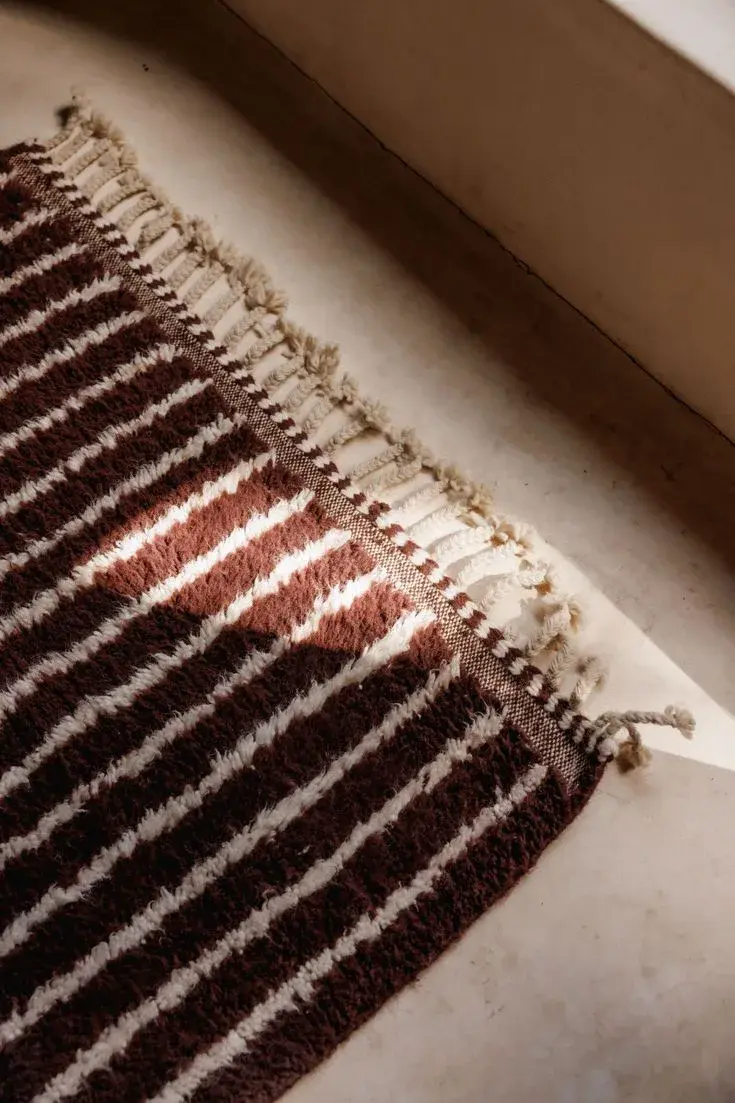
Where pile rugs show wear differently is in crushing and shading. Pile lies in the direction of traffic, and in a corridor or in front of a sofa the traffic line becomes visible over time. A flatweave has no pile direction to crush, so it tends to look the same from every angle for longer. The trade-off is that a flatweave has no pile to hide small stains and marks, so a pattern that is busy or a colour that is mid-toned is more forgiving than a plain pale one.
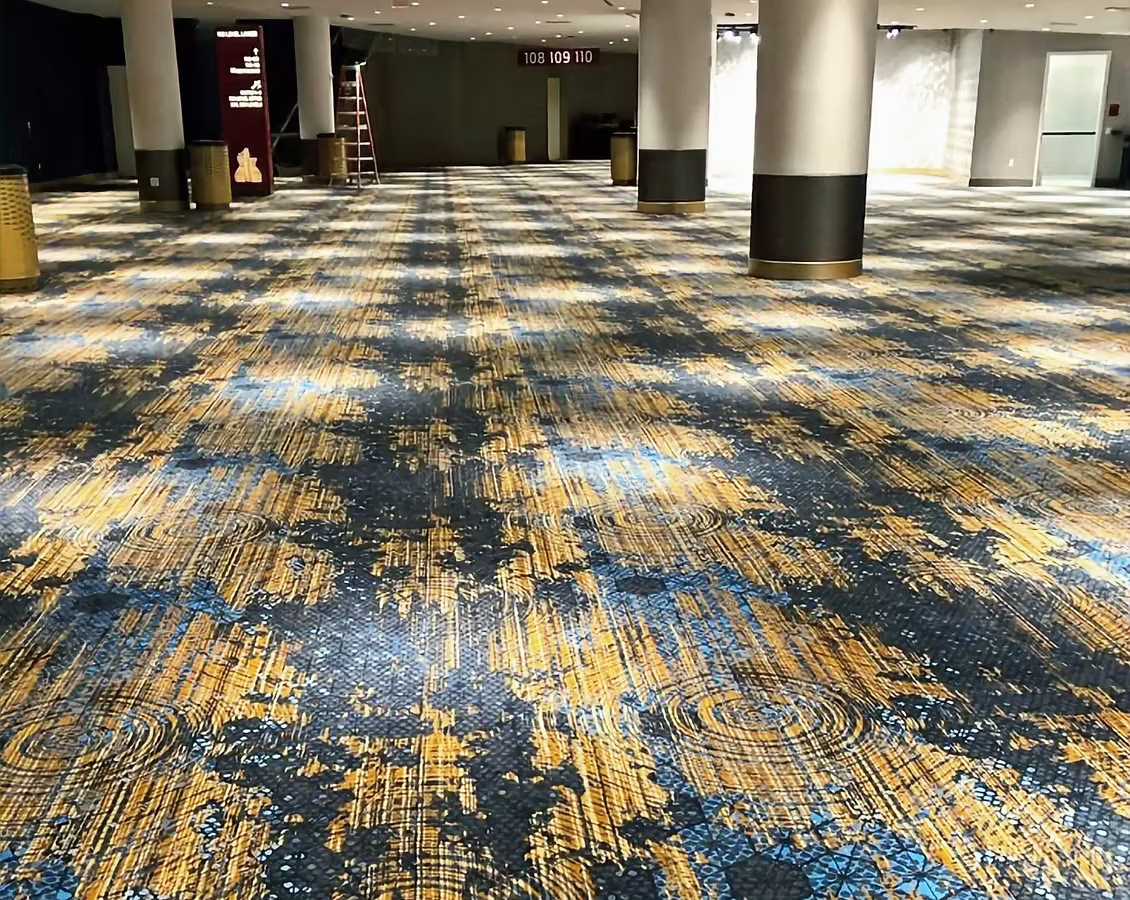
For commercial work, the real question is how often the rug will be cleaned and how it will be cleaned. Our piece on rugs for high-traffic commercial spaces goes further.
Comfort, sound and how the room feels
Pile is what makes a rug feel like a rug underfoot. In a bedroom or a lounge, where people sit on the floor or walk barefoot, pile is usually the better call. It also absorbs more sound, which matters in rooms with hard floors and high ceilings. If acoustics are a driver of the brief, read how rugs improve a room's sound before choosing.
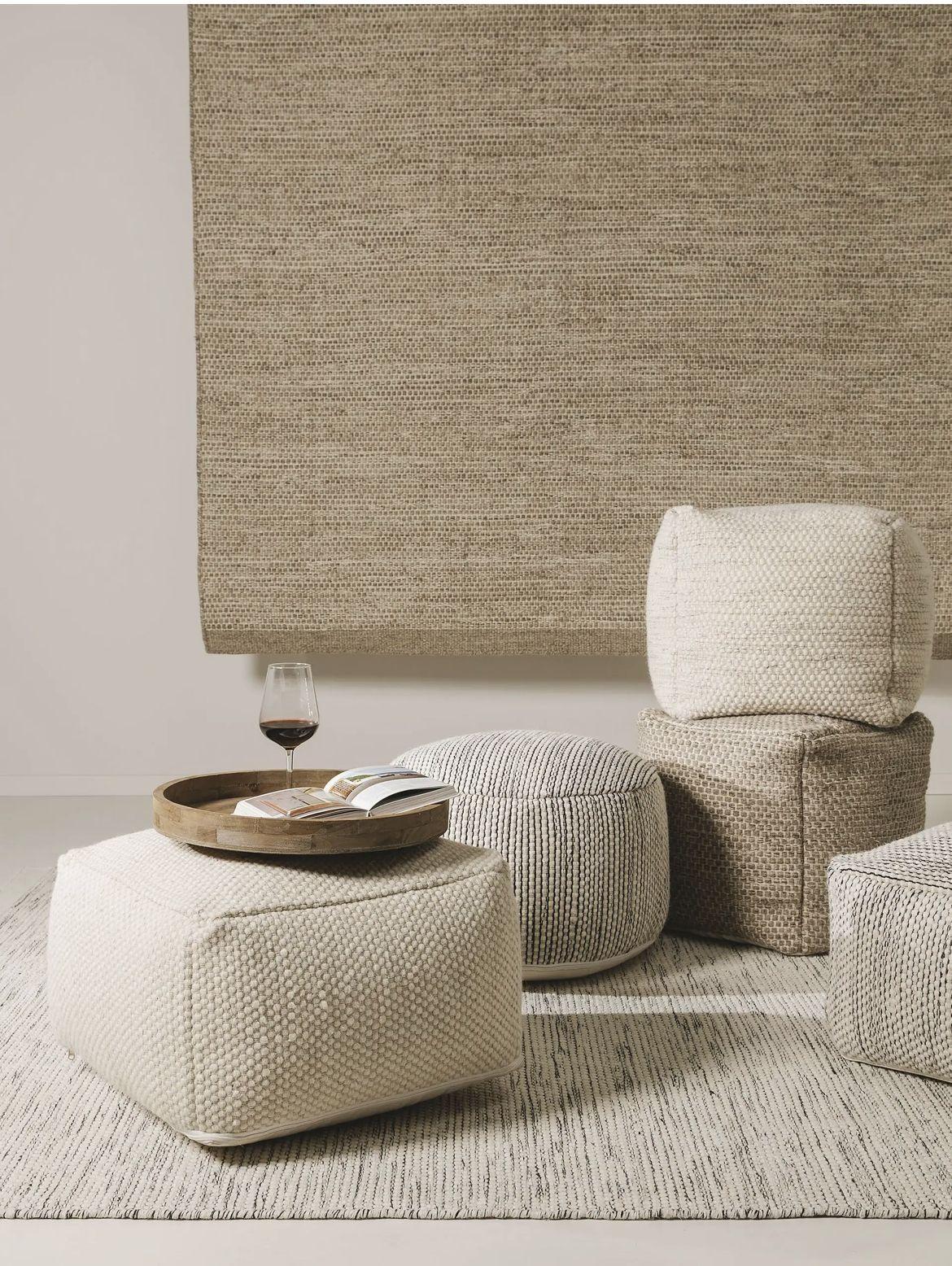
A flatweave is firmer and lighter. It sits well under a dining table, because chairs slide across it without catching, and it is easy to move when the room is cleaned. It also layers well. A flatweave over a larger neutral pile rug is a classic way to add pattern without adding bulk, which we cover in the layering guide.
Texture is a design decision too. A deep pile reads as soft and quiet, a flatweave reads as graphic and architectural. Our texture and pile buyer's guide explains how pile height changes the look.
Cost and lead time
We do not publish a price multiplier between constructions, because cost depends on knot or stitch density, fibre, size and finishing, and any such figure would be misleading. What can be said honestly is that the labour content differs. A knotted pile rug takes far more weaver hours than a flatweave of the same size, and that is the main driver behind the typical price gap.
If you are unsure which suits a project, the sensible route is to sample the same design in two constructions and compare them in the room. Our weaving page states that we regularly sample one design across two or three constructions so a buyer can compare cost, texture and lead time before committing, and that sampling takes 25 to 35 days. See the sample programme for how that works.
Common mistakes when choosing between them
The first mistake is choosing by photograph. A pile rug and a flatweave can look similar in a flat image, but the surface, weight and handle are very different in a room. A small physical sample, placed on your floor in your light, answers more than any listing.
The second is ignoring clearance. A deep pile can foul a door that swings across it, or make a console table or chair legs sit unevenly. Measure the gap under every door and note the pile height, measured after washing, on the specification. A flatweave removes the problem, which is one reason it is common at entrances and in corridors.
The third is forgetting what is underneath. A flatweave on a hard floor can slide, and a pile rug can creep. A suitable pad solves both and protects the floor beneath, so allow for it in the budget and the layout. Fit the pad slightly smaller than the rug so the edges sit flat.
Questions to ask a supplier before you order
Ask what the construction is, in words, not just the name on the listing. Ask the fibre content, the density or the weave structure, and the finished thickness. Ask for the colour to be confirmed on a sample in the actual yarn, because wool takes dye differently from cotton or jute.
For a flatweave, ask how tightly the weft is beaten down and what the yarn is, since those two things decide how it wears. For a pile rug, ask the pile height after clipping and washing, and how the pile is formed. A supplier who can answer these plainly is usually a supplier who controls the work.
If you are buying for resale, ask whether the design is available in both constructions, so your customers can choose by comfort and budget instead of being forced into one.
Verdict by use case
Choose a flatweave for corridors, kitchens, dining rooms, children's rooms, layering, and any project where weight, ease of cleaning and shipping volume matter. It is also the natural choice for reversible pieces and for graphic, geometric design.
Choose a pile rug for living rooms, bedrooms, reading corners and anywhere comfort and acoustic softness lead the brief. Pick a lower pile for busy zones and a deeper pile for quiet ones.
For hospitality and contract work, the answer is rarely one or the other for the whole building. Many projects specify a dense low pile in corridors and guest rooms and a flatweave in dining or back-of-house areas. If you are specifying a scheme, send the plan with the room types and we will advise per area through the bulk quote form. Also see our complete guide to flatweave and dhurrie rugs.
Frequently asked
Is a flatweave rug better than a pile rug?
Neither is better in general. A flatweave is firmer, lighter and easier to clean, which suits corridors, dining rooms and layering. A pile rug is softer and absorbs more sound, which suits living rooms and bedrooms. Choose by the room and how it is used.
Are flatweave rugs good for high-traffic areas?
A tightly woven flatweave in a hard-wearing fibre such as wool copes well with heavy footfall, and it has no pile to crush. A low-pile hand-knotted wool rug is the other strong option. Loosely woven flatweaves in weaker yarns will wear faster.
Can I get the same design as a flatweave and as a pile rug?
Yes, in many cases. We sample a single design in more than one construction so you can compare feel, cost and lead time before committing. Sampling takes 25 to 35 days.
Do flatweave rugs need a rug pad?
A pad helps most flatweaves because it adds grip and a little cushioning, and protects the floor. Use a pad suited to the floor type and check that it is the right size for the rug.
By Raheem & Son Editorial Desk, 16 October 2026
Written with the production and export teams in Bhadohi, where Raheem & Son has made rugs since 1927. See about the house and how we manufacture. Read our editorial policy.
More in Materials and Construction.
Follow the journal in Google Search. Readers who add us as a preferred source see our writing marked in Top Stories and in AI Overviews.