Jute vs sisal vs seagrass: why the choice matters
Natural fibre rugs are popular because they bring warmth and texture without colour. But the three most common fibres, jute, sisal and seagrass, behave very differently. Choosing the wrong one for a room is the most common reason a natural fibre rug disappoints. Jute that is placed in a wet entrance, or sisal in a bedroom where bare feet expect softness, will not perform as hoped.
This comparison sets out the general properties of each fibre and a verdict by use case. Individual rugs vary with how they are woven and finished, so treat it as guidance for a conversation about a specific piece. Our overview of jute and natural fibre rugs in modern interiors gives more background on the category.
The three fibres in plain terms
Jute is a soft, golden-brown plant fibre. It is the gentlest of the three on bare feet and takes colour well, which is why it appears in both natural and dyed rugs. It is also the least resilient to moisture and heavy wear, so it suits calm, dry rooms best. Our weaving page notes that jute is used in the weft of many hand-woven dhurries and flatweaves, and that we offer jute and natural fibre collections.
Sisal is made from the leaves of the agave plant. It is stiff, strong and hard-wearing, with a slightly coarse feel. It is often chosen for stair runners and corridors because it resists wear, but it can be scratchy underfoot and it does not take dye as evenly as other fibres.
Seagrass is a grass that grows in water and has a naturally waxy, smooth surface. It is the most moisture-resistant of the three and it is hard to stain, because the fibre does not absorb liquid easily. For the same reason it is hard to dye, so seagrass rugs are usually seen in natural green-brown tones.
| Factor | Jute | Sisal | Seagrass |
|---|---|---|---|
| Feel underfoot | Softest of the three | Firm, slightly coarse | Smooth, slightly slick |
| Wear resistance | Moderate | High | High |
| Moisture tolerance | Low; dislikes water | Moderate; can stain | Highest; resists absorbing liquid |
| Stain behaviour | Marks easily | Can show water marks | Hard to stain |
| Takes dye | Readily | Unevenly | Poorly; usually natural tones |
| Typical uses | Living rooms, bedrooms, dry spaces | Stairs, corridors, offices | Conservatories, kitchens, entrance areas |
Durability and cleaning
All three are plant fibres, so none behaves like wool. They do not bounce back from crushing in the same way, they can shed small amounts of fibre, and they do not respond well to wet cleaning. Regular vacuuming without a beater bar, prompt blotting of spills and avoiding steam cleaning are good rules for all of them.
Jute needs the most care. Wet jute can discolour and weaken, so an entrance mat or a rug in a damp climate is better in sisal or seagrass. Sisal handles traffic well but can water-stain, so spills should be blotted not rubbed. Seagrass copes with spills best because liquid sits on the surface, but a dried spill can still leave a mark if it is rubbed in.
In commercial settings, natural fibre rugs suit moderate-traffic areas in dry conditions with a rigorous cleaning routine. Our commercial guide, rugs for high-traffic commercial spaces, compares them with wool. For the wider material picture see rug materials compared.
Look, colour and design flexibility
Jute is the most versatile for design. It can be left natural, bleached, dyed or woven with wool into texture and patterns, and it blends with other fibres in a hand-loomed or flatwoven structure. If you want colour, jute is the usual starting point. A comparison of bleached and natural finishes is a topic in itself, and bleaching changes both colour and how the fibre feels.
Sisal and seagrass offer less colour flexibility, but their natural patterns, such as herringbone, bouclé and basket-weave, are a design feature of their own. They work as quiet, textured backdrops under furniture or at the foot of a staircase.
If you are layering, a natural fibre rug is a popular base layer under a smaller wool or flatwoven rug. Our layering guide explains how to size and combine them.
Sustainability, with honesty
Plant fibres are renewable and biodegradable, which is part of their appeal. But a rug is only as responsible as its supply chain, dyes, backing and finishing. We do not make blanket claims that natural fibre means sustainable. If a project needs documented credentials, ask what exists for the specific order. Our standards page is clear about what we hold and what is arranged per order.
Weave and finish matter as much as the fibre
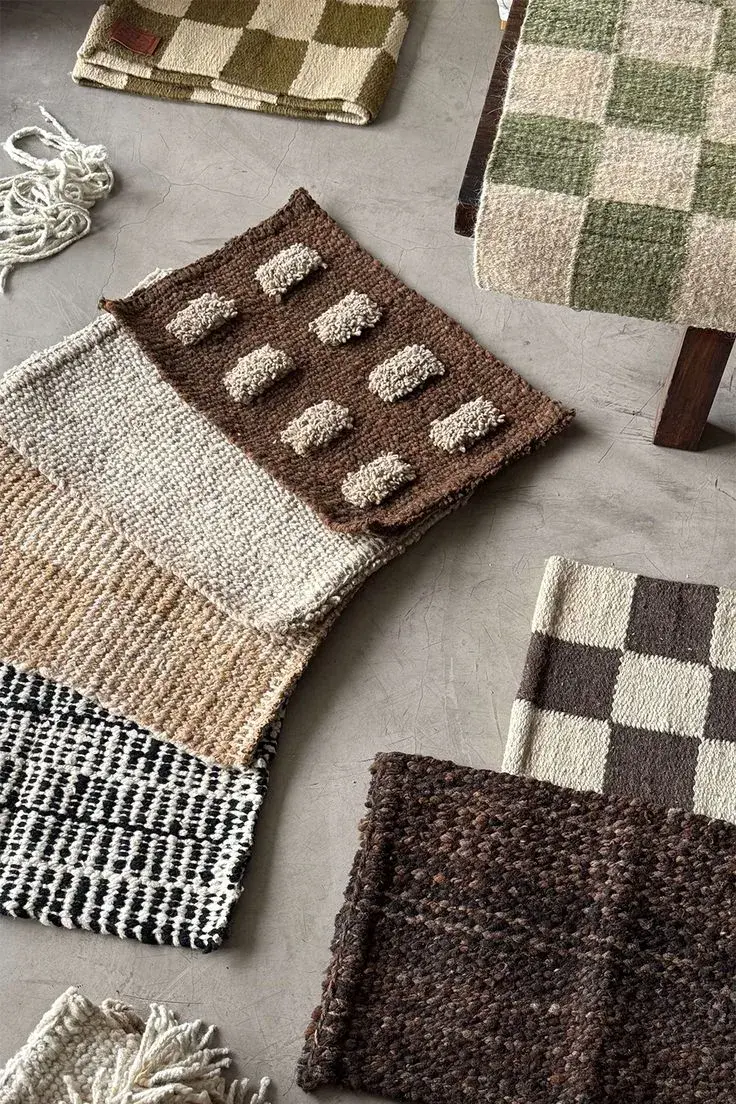
The same fibre can make a very different rug depending on how it is woven. A tightly woven jute flatweave will wear better than a loose, chunky one, and a bouclé or basket weave traps dirt differently from a flat herringbone. Ask for the weave structure and, where possible, the thickness, and compare samples side by side.
Backing is another variable. Some natural fibre rugs carry a latex or fabric backing for stability and grip. That can help a rug lie flat but it changes how it ages and how it should be cleaned, and it affects what pad is suitable. Ask what the backing is, and whether it is part of the specification.
Edges deserve a look too. Bound edges, cotton borders and hand-finished edges all change how a natural fibre rug wears at its most exposed point. A bound border in a contrasting fibre can also add a design line to an otherwise plain rug.
Practical care and what to avoid
Place natural fibre rugs away from sources of damp, such as bathrooms, damp basements and doors that open onto wet ground. Rotate them from time to time so that light and wear are shared, since sun can fade and bleach the fibre unevenly.
Vacuum regularly, and when you do, remove loose dust from the weave rather than only the surface. For spills, blot at once with a dry cloth, do not rub, and let the area dry fully. Avoid steam and large amounts of water.
If you are specifying for a commercial space, be realistic. Natural fibre rugs suit dry, moderate-traffic rooms with a cleaning routine, and are not a substitute for a wool rug or a flatweave in a lobby. If in doubt, ask for advice per area when you send the plan.
Verdict by use case
Choose jute for living rooms, bedrooms and dry, low-traffic spaces where softness and colour options matter.
Choose sisal for stairs, corridors, offices and anywhere durability matters more than softness underfoot.
Choose seagrass for conservatories, kitchens, mudrooms and entrance areas where spills and moisture are likely and a natural look is wanted.
If you are buying in volume, send us the fibre, construction and size you are considering, and we will advise whether it can be made and what we can sample. Use the bulk quote form or browse our rugs first.
Frequently asked
Which is more durable, jute or sisal?
Sisal is generally the harder-wearing fibre. Jute is softer and more comfortable but more susceptible to moisture and wear, so it is better in dry, low-traffic rooms.
Is seagrass better than jute?
It depends on the use. Seagrass resists moisture and staining better, so it suits kitchens and entrances. Jute is softer and takes colour better, so it suits living rooms and bedrooms.
Can natural fibre rugs be used in a bathroom or outdoors?
Generally not. Plant fibres are sensitive to prolonged moisture. Seagrass tolerates damp better than the others but is still not a substitute for a rug made for wet or outdoor use.
How do I clean a jute or sisal rug?
Vacuum regularly without a beater bar, blot spills straight away and avoid wet or steam cleaning. For a deep stain, take advice from a specialist before treating it.
By Raheem & Son Editorial Desk, 14 October 2026
Written with the production and export teams in Bhadohi, where Raheem & Son has made rugs since 1927. See about the house and how we manufacture. Read our editorial policy.
More in Materials and Construction.
Follow the journal in Google Search. Readers who add us as a preferred source see our writing marked in Top Stories and in AI Overviews.