Wool vs synthetic rugs in commercial interiors
Specifying a rug for a hotel, restaurant or office means answering questions a residential buyer rarely faces: how many people will walk on it, how will it be cleaned, what fire requirements apply, and how will it look in five years. Fibre is the first decision. Wool is a natural fibre with a long record in contract work. Synthetics, such as nylon and polyester, are manufactured fibres chosen for cost, colour range or stain behaviour.
This guide compares them fairly, because each has a place, and gives a verdict by area. For the wider context, see specifying rugs for hospitality projects and rugs for luxury hospitality. We make rugs in wool and other natural fibres, so we have a perspective, and we say where synthetics are the more suitable choice.
How the fibres compare
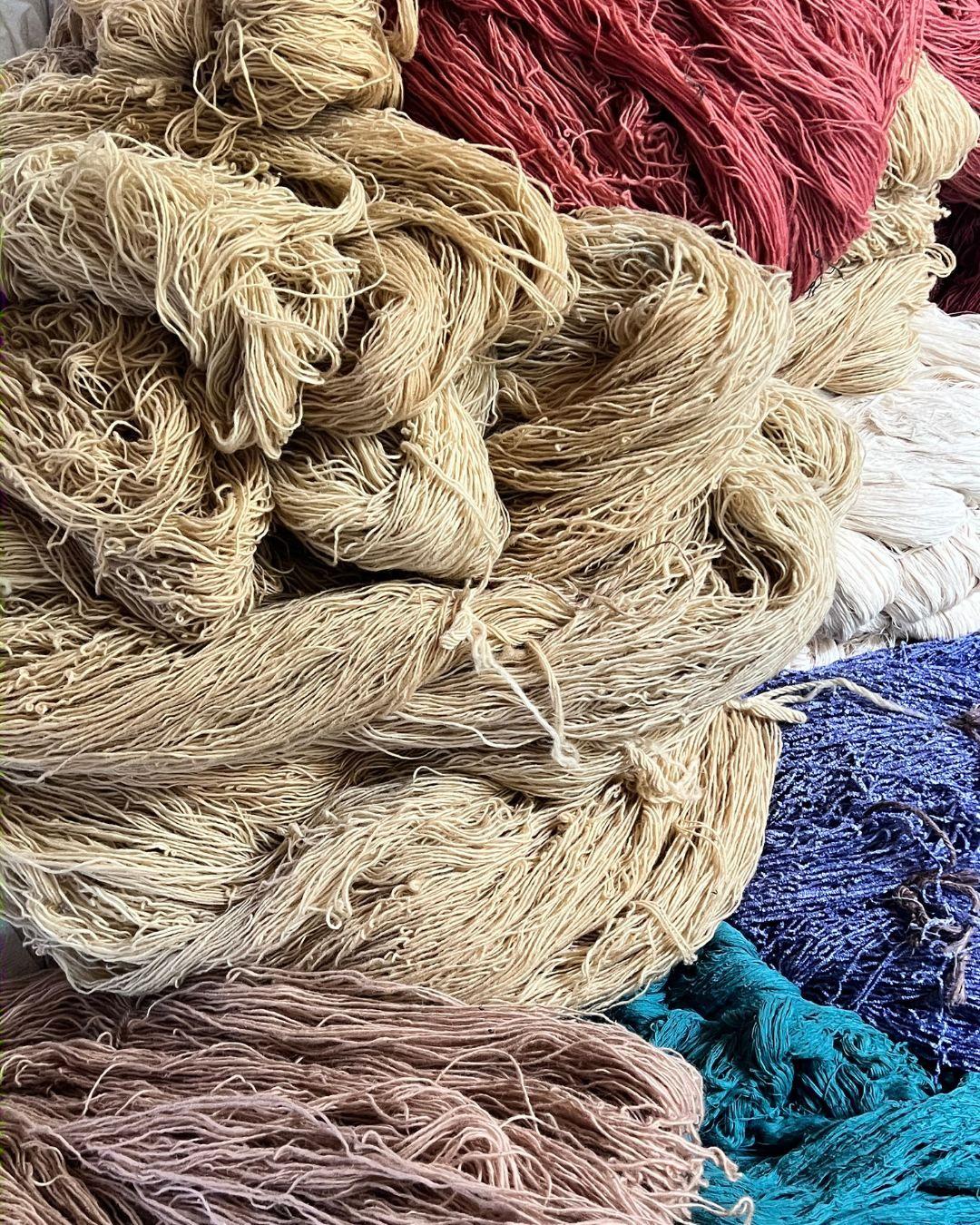
Wool is elastic, so the pile springs back after being walked on. Its scale structure holds dust and hides small marks, and it is naturally less flammable than many fibres, though fire compliance for a project must be confirmed against the relevant standard and test report, not assumed. Wool can be dyed deeply, giving rich, stable colour.
Synthetics can be engineered for stain resistance and can be cheaper. Nylon is the more resilient of the common synthetics. Polyester can feel soft but is more prone to crushing and to holding oily soil. Synthetic fibres do not have wool's natural recovery, and in traffic lines the pile can look flattened and dull. They are also derived from petrochemicals, a consideration in some sustainability briefs.
| Factor | Wool | Synthetic (nylon, polyester) |
|---|---|---|
| Pile recovery | Springs back well | Varies; polyester crushes more |
| Appearance over time | Holds character; hides dust | Can flatten and show traffic lines |
| Stain behaviour | Moderate; clean spills promptly | Often good, depends on fibre and treatment |
| Cleaning | Professional washing possible | Often easy to clean |
| Fire performance | Naturally good; confirm with test report | Varies; depends on fibre and treatment |
| Cost | Higher | Generally lower |
| Sustainability | Natural, renewable fibre | Petrochemical-based |
| Feel and look | Natural depth of colour and handle | Uniform, sometimes synthetic sheen |
Fire, cleaning and compliance
Fire requirements depend on the country and the building type, and compliance rests on a test report for the specific construction, not on the fibre name. Our guide to rug fire ratings explained sets out how this works. Tell your supplier the standard and class you need before pricing, and ask what documentation exists. We are plain about certification on our standards page: we hold CEPC registration, and other certification is arranged per order, not claimed in advance.
Cleaning matters as much as fibre. A rug that is cleaned on a regular programme will outlast one that is not, whatever it is made of. Wool can be washed professionally, and our guide to maintaining rugs in commercial interiors describes the routine. Synthetics can often tolerate more aggressive cleaning, which is why they are used where heavy soil is expected.
Lifecycle thinking, not just price
The lower price of a synthetic rug is real, but price is only one line. A fair comparison asks how long each will look right, how often it must be replaced, and what replacement costs in downtime and disposal. A wool rug that stays presentable for longer may cost less over its life, and a synthetic rug in an area that is replaced on a refurbishment cycle may cost less overall. We do not quote a lifespan, since it depends on traffic, cleaning and construction.
Construction counts as much as fibre. A dense, low-pile hand-knotted wool rug or a flatweave suits heavy traffic, as our weaving page notes, while hand-tufted suits medium traffic. See rugs for high-traffic commercial spaces for more.
Design and brand
Wool gives depth, texture and colour that read as high-end, which is why it is common in lobbies, suites and flagship spaces. Synthetics give consistent colour and print flexibility and can reproduce complex patterns economically. For a brand that wants a handmade, tactile identity, wool or another natural fibre usually serves it better, and our custom manufacturing page explains how we work on such briefs.
Questions to put to every supplier
Ask what the fibre is, in plain terms and as a percentage. Ask how the pile is formed and how dense it is. Ask what the cleaning guidance is and whether the rug can be cleaned by a standard commercial process. Ask what fire standard it has been tested to, whether a test report exists for this exact construction, and who issued it.
Ask about replacement. If a section of a rug is damaged, can it be repaired or replaced, and can the same dye lot be matched later? For a hospitality group rolling out across several properties, ask whether repeat orders can be matched to the first.
Ask for a sample large enough to judge in the room, and have it checked against the project's fire, slip and cleaning requirements before approval.
A note on sustainability claims
Claims in this area are often made loosely. Wool is renewable and biodegradable, but that does not make every wool rug sustainable, because dyeing, transport and finishing all matter. Synthetic fibres are not renewable, but a long-lasting synthetic rug has its own case in a lifecycle view. Ask for specifics, and be wary of any claim that cannot be explained.
We are careful about what we claim. Our sustainability page and standards page describe what we do and what we hold. For a project with a formal requirement, tell us which, and we will say plainly what we can document and what would need to be arranged.
Verdict by area
Lobbies, suites and flagship spaces: wool, in a dense low pile or a flatweave, for appearance and recovery.
Guest rooms and meeting rooms: wool, usually in a medium-traffic construction, where comfort and acoustics matter.
Entrances, back-of-house and very heavy-soil areas: consider synthetic, chosen for cleaning and cost, with expected replacement cycles.
Whatever you choose, ask for samples and a test report for the construction. Request samples, and send the area-by-area plan through the bulk quote form. Our contract hospitality page has more.
Frequently asked
Is wool better than synthetic for hotel rugs?
In feature areas such as lobbies, suites and guest rooms, wool is often the better choice for appearance and pile recovery. In very heavy-soil, back-of-house or cost-driven areas, a synthetic may be the more suitable one.
Is wool naturally fire resistant?
Wool is naturally less flammable than many fibres, but compliance on a project depends on a test report for the specific construction against the standard that applies. Do not rely on the fibre name alone.
Are synthetic rugs easier to clean?
Often, because they tolerate more aggressive cleaning and can resist some stains. But any rug lasts longer on a regular cleaning programme, whatever the fibre.
What documentation can you provide for fire or other standards?
We hold CEPC registration, and we confirm in writing what documentation exists for a given project. Other certification is arranged per order.
By Raheem & Son Editorial Desk, 7 October 2026
Written with the production and export teams in Bhadohi, where Raheem & Son has made rugs since 1927. See about the house and how we manufacture. Read our editorial policy.
More in Contract and Hospitality.
Follow the journal in Google Search. Readers who add us as a preferred source see our writing marked in Top Stories and in AI Overviews.