Custom size vs standard size rugs: the real question
A standard rug is made in a set range of sizes, so it is available sooner and is simpler to buy. A custom rug is made to dimensions you specify, so it fits the room exactly. Neither is better by default. The decision turns on how closely a standard size fits the furniture and layout, how much time and budget you have, and whether the room has features a rectangle will not answer.
This guide compares the two, explains where custom work earns its cost, and gives a verdict by room. For the dimensions themselves, our size and fitting guide and the guide to rug sizing for buyers and designers give the numbers.
How the two compare
Standard sizes follow common dimensions that suit common rooms. Custom sizes follow your plan, and can also carry a custom colour, shape or cut-out. The trade-off is time and cost against fit.
| Factor | Standard size | Custom size |
|---|---|---|
| Fit to the room | Close, not exact | Exact to your plan |
| Availability | Quicker to source | Made to order; sampling and production take time |
| Cost | Generally lower | Generally higher, depends on size and construction |
| Shapes and cut-outs | Rare | Possible, such as round, oval or cut-out |
| Colour and design | Chosen from a range | Can be dyed and designed to match |
| Risk | Low; you can see it | Needs a signed sample and written tolerance |
| Best for | Typical rooms, retail and fast projects | Awkward rooms, hospitality and design-led projects |
When a standard size is enough
If the furniture sits on a common arrangement and the room is a plain rectangle, a standard size usually does the job. A dining table with room for chairs, a sofa with front legs on the rug, a bed with the rug extending past each side: all these can be answered by a standard size if it is chosen against the furniture and not the room.
Retail buyers have another reason to prefer standard sizes. They sell better when customers can compare like with like, and ranges of standard sizes are easier to stock, store and ship. Our wholesale rug buying guide discusses range building.
When custom size earns its cost
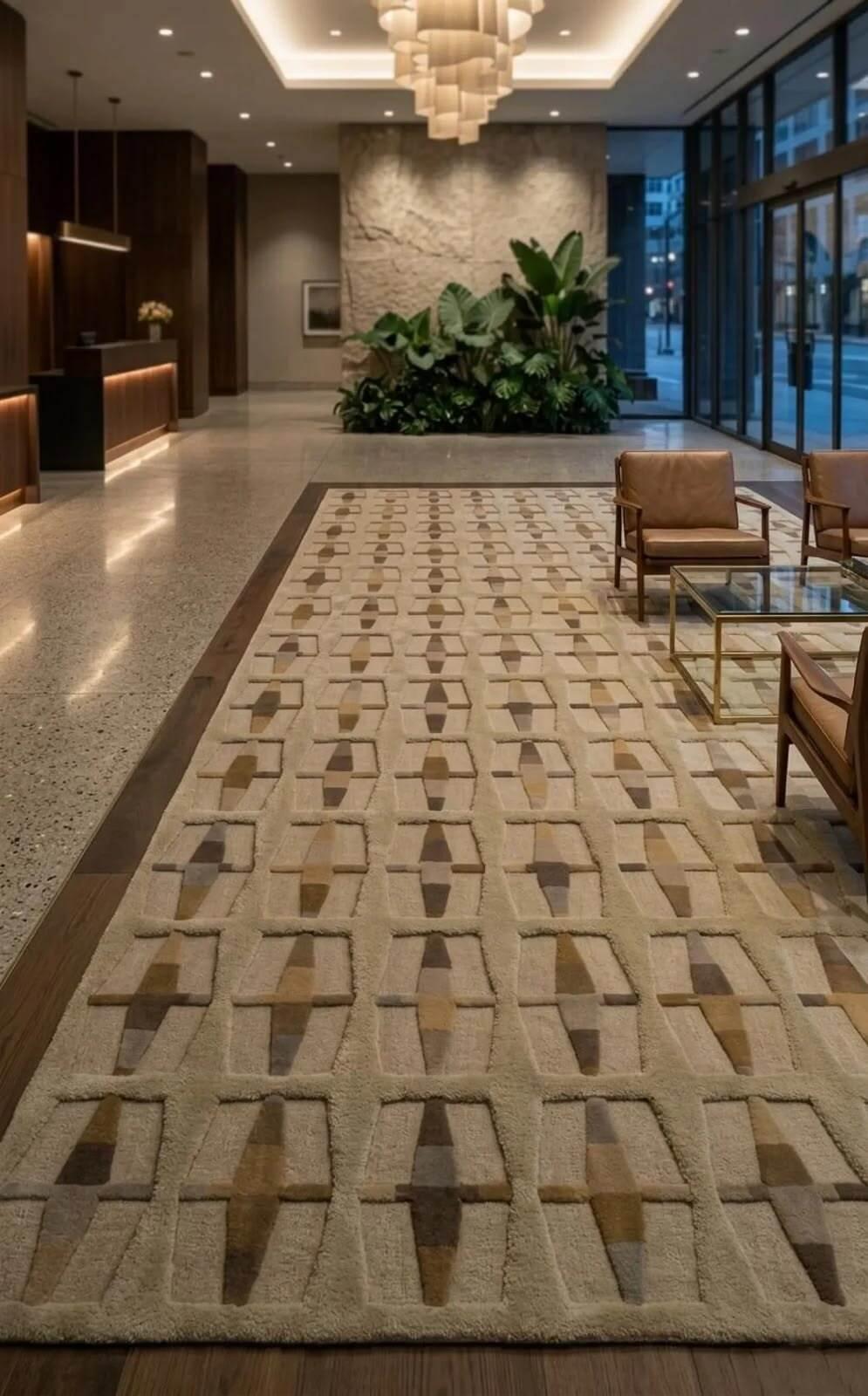
Custom pays off where a standard size would leave a gap or run into a wall. Open-plan rooms with zoned seating, large dining tables, stair landings, alcoves, bay windows and long corridors are typical. In hospitality, rugs are often drawn to fit a specific layout with cut-outs for columns, and standard sizes simply do not exist for those.
Custom also allows control over the other lines of the spec: colour, density, pile height and edge treatment. If a design depends on the rug sitting centred on a particular feature, it should be drawn to the room, and the supplier should be told that. Our commissioning guide and custom rugs for interior designers explain how that works.
Lead time, tolerance and sampling
Custom work takes longer because it begins with a specification and a sample. Our sample programme states that sampling takes 25 to 35 days from an approved design and specification, and our request page states that bulk production starts from 60 days. Those are the published figures, and exact dates are confirmed at order.
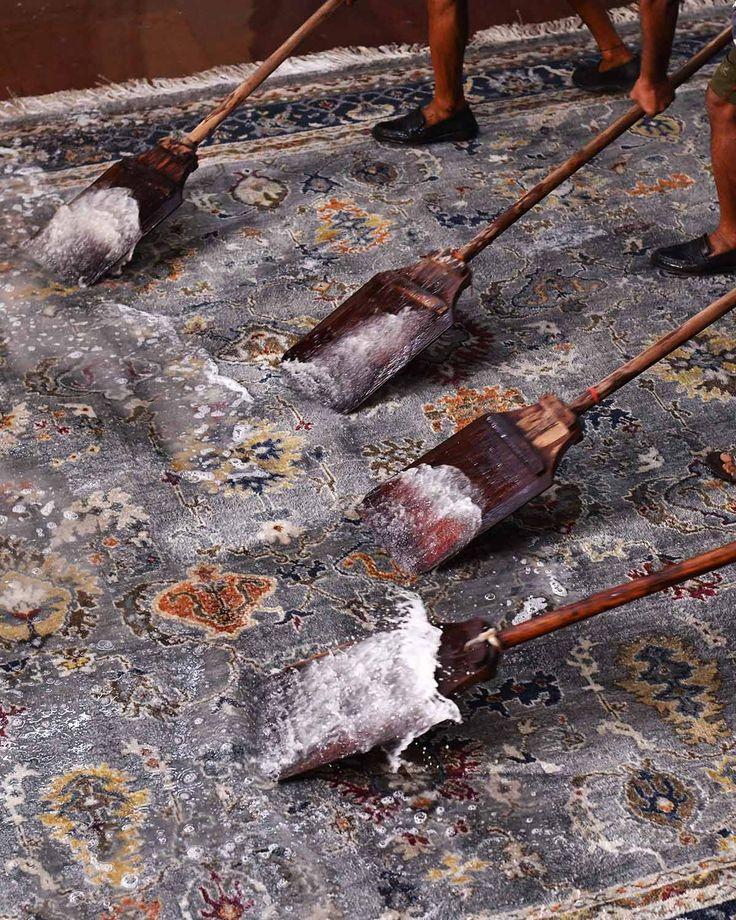
Agree a size tolerance in writing, since handmade rugs are woven under tension and washed, which moves them slightly. Our specification checklist covers it. Read our custom rug MOQ and lead times guide for how to plan the schedule.
How to measure for a custom rug
Start with a plan of the room and mark the furniture. Decide how the rug should relate to it: all legs on, front legs on, or none. Mark the intended rug rectangle on the plan, and then check clearances to doors, radiators, hearths and skirting boards. Tape the rectangle on the floor and live with it for a day or two before you commit.
Measure twice, and note whether you are measuring to the wall or to the visible floor. Write the finished size, the tolerance and the pile height in the specification. If the room has a feature such as a column or a built-in cabinet, supply a drawing so that the supplier can quote any cut-out.
For stairs and corridors, give the width of the runner, the margin on each side, and whether the runner needs to be cut to turn corners. These details matter more than the length.
Common mistakes with sizing
The most frequent mistake is buying too small. A rug that floats in the middle of a room, with every piece of furniture off it, makes the room look smaller. A larger rug that anchors the furniture usually looks more deliberate.
The second is ignoring the door. A rug that is the right size but is too thick for the door to clear is a rug that will be trimmed or moved. Measure the clearance, and give the pile height in the specification.
The third is forgetting the pad. A pad changes the thickness and the footprint, and a pad that is too large can show at the edges. Choose the pad with the rug, not afterwards. Our size and fitting guide is a good starting point.
Verdict by room
Living room: standard usually works if a size is chosen against the seating, custom if the room is open plan or the seating is unusual.
Dining room: custom is worth considering for a large or unusual table, so that chairs stay on the rug when pulled out.
Bedroom: standard for a standard bed, custom for a very large bed or a cut-out around furniture.
Corridors, stairs and alcoves: custom, because standard widths rarely match.
Hospitality and projects: custom, drawn from the plan. To start, send your plan and brief through the bulk quote form or the curation flow, and request samples to check colour and hand.
Frequently asked
Are custom size rugs much more expensive?
Cost depends on size, fibre, density and construction. A custom size is generally priced per project instead of from a list, so we quote it on request once we have your specification.
How long does a custom rug take?
Sampling takes 25 to 35 days from an approved specification, and bulk production starts from 60 days. Exact lead times are confirmed at order.
Can I order a custom rug in a round or irregular shape?
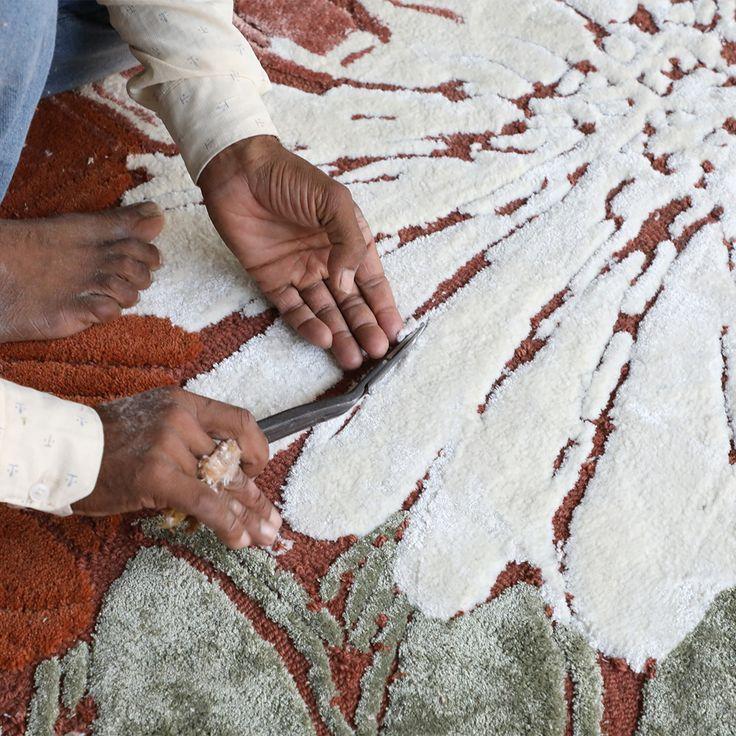
Custom shapes and cut-outs are possible with handmade construction. Share the shape and dimensions so we can confirm it is workable for the construction you choose.
What size tolerance should I expect?
Handmade rugs vary slightly. Agree a tolerance in the specification so both sides know what a correct delivery looks like.
By Raheem & Son Editorial Desk, 8 October 2026
Written with the production and export teams in Bhadohi, where Raheem & Son has made rugs since 1927. See about the house and how we manufacture. Read our editorial policy.
More in For Interior Designers.
Follow the journal in Google Search. Readers who add us as a preferred source see our writing marked in Top Stories and in AI Overviews.