The specification is the contract, whatever the contract says
When a custom rug arrives and the client says it is not what they approved, the argument is almost never about quality. It is about a line that nobody wrote down. Pile height measured before washing rather than after. A tolerance that was assumed rather than agreed. A border width that existed in the rendering and in nobody's specification. The rug is exactly what the factory was told to make, and it is not what the designer meant.
A rug specification is the one document that converts intention into something a weaver can execute and a buyer can check. It does not need to be long. It needs to be complete, and it needs to be attached to the purchase order rather than living in an email thread.
The list below is what we ask for when a designer briefs us, and what we send back as a signed specification before anything is woven. Our commissioning guide covers the conversation around it, and the curation flow collects most of it if you would rather answer questions than write a document.
The checklist, line by line
Copy this into your own project template. Every line is here because its absence has cost somebody time, money or a client relationship.
| Line | Example | What it controls | Weight |
|---|---|---|---|
| Finished size | 3050 x 2440 mm, finished after washing | Everything downstream, including loom width | Essential |
| Dimensional tolerance | Plus or minus 3 per cent | Whether a 20 mm variance is a defect or normal | Essential |
| Construction | Hand-knotted, Persian knot | Labour, price, lifespan, repairability | Essential |
| Density | 100 knots per square inch, or 1/8 gauge tufted | Pattern definition and cost | Essential |
| Fibre and blend | 80% New Zealand wool, 20% bamboo silk | Handle, sheen, wear, cleaning method | Essential |
| Pile height | 10 mm after washing and clipping | Look, furniture clearance, door swing | Essential |
| Colourway | Pantone references plus approved tuft card | The single most common source of dispute | Essential |
| Backing and finish | Cotton foundation, latex, action back | Fire class, installation, underlay choice | Project |
| Edge treatment | Hand-serged wool, 10 mm, colour to match ground | Perceived quality at the one place people look | Project |
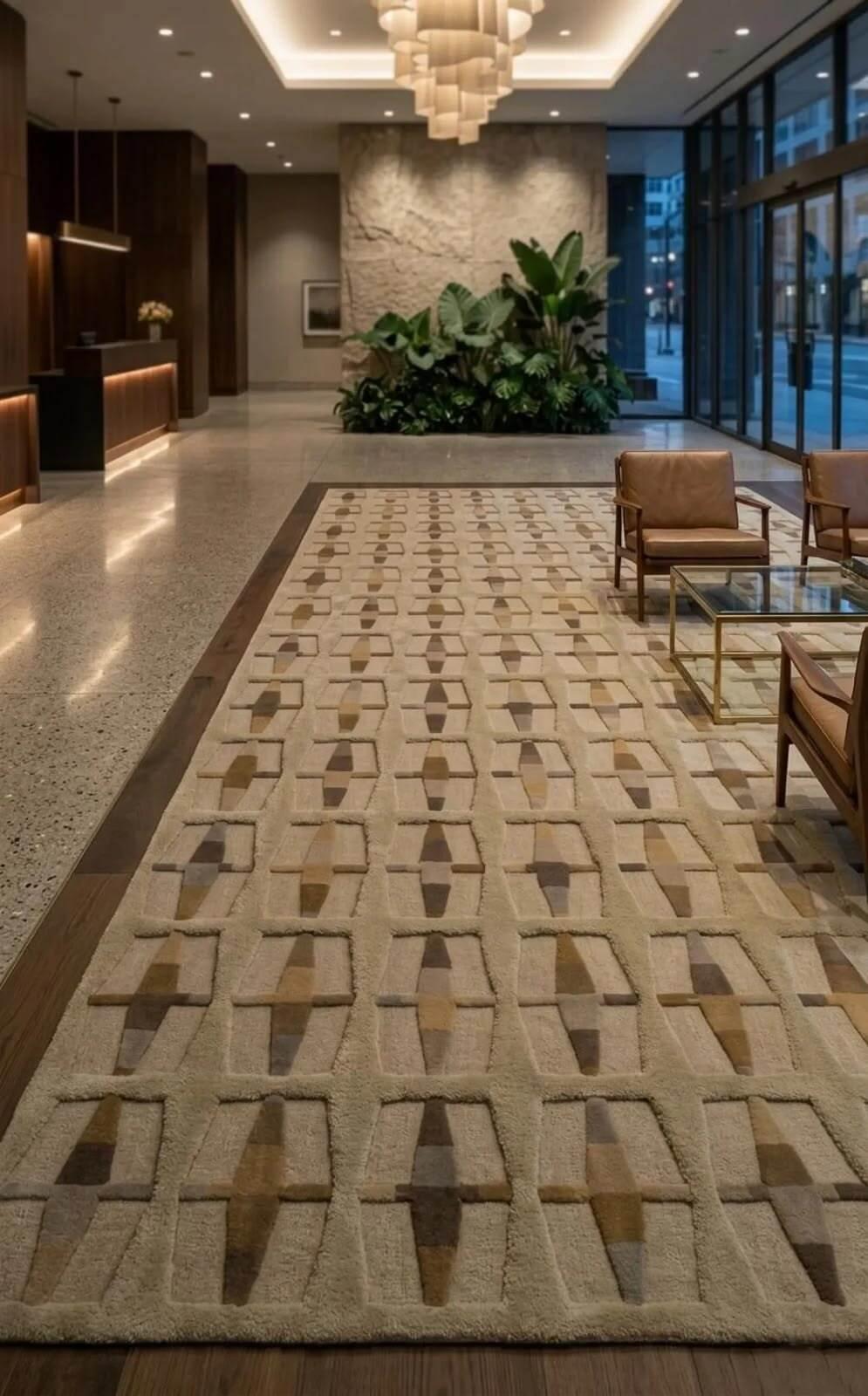
| Border and motif placement | 150 mm border, medallion centred to room, not to rug | Whether it reads correctly once furniture lands | Project |
| Pile direction | Pile laid away from the primary viewing position | How the colour reads from the doorway | Project |
| Fire standard and class | EN 13501-1 Cfl-s1, report supplied | Approvals and sign-off | Contract |
| Underfloor heating | Suitable for UFH, max surface 27 C | Whether the rug cooks the floor or itself | Contract |
| Cut-outs and shapes | Circular, 2400 mm, with 300 mm column cut-out | Template and finishing labour | As needed |
| Labelling | Client label, fibre content and care per market | Legal compliance in the destination market | Project |
| Packing and delivery | Rolled on core, moisture barrier, room number marked | Whether site can install what arrives | Project |
| Sample stages | Tuft card, then 1m strike-off, both signed | The last free moment to change your mind | Essential |
| Lead time from approval | 10 weeks ex works after strike-off sign-off | Programme dates that survive contact with reality | Essential |
| Incoterm and destination | CIF Rotterdam | Who pays and who carries risk where | Essential |
The four lines designers most often leave out
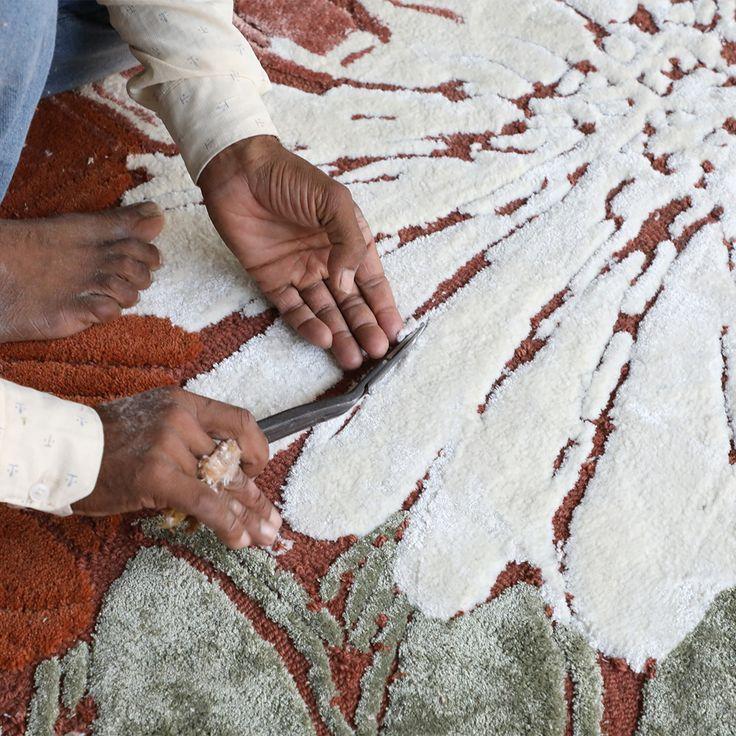
Pile height after washing, not before. Wool relaxes and lifts in the wash, and clipping happens afterwards. A pile height quoted before finishing is not the pile height that arrives, and the difference is easily two or three millimetres, which is enough to foul a door.
Tolerance. Handmade rugs are woven under tension by people, not cut by a machine, and every house works to a tolerance. Around plus or minus 3 per cent is standard. If it is not written down, then the first rug that measures 3045 mm instead of 3050 mm becomes a negotiation instead of a delivery.
Motif placement relative to the room rather than the rug. A centred medallion is centred on the rug. If the rug sits under a bed or against a fireplace, the visual centre of the room is somewhere else, and the design should be drawn to the room, not to the rectangle. Say which you want.
Edge treatment. Binding, serging and fringe are the details a client touches when deciding whether something is expensive. They are also the cheapest thing on this list to get right and the most conspicuous to get wrong.
How to write a colour instruction that survives translation
Colour is where most custom rug projects lose their tempers. A render on a calibrated screen, a fabric swatch under a showroom light and dyed wool under a north-facing window are three different colours by the time they meet. The way through is physical references and a signed tuft card, not more adjectives.
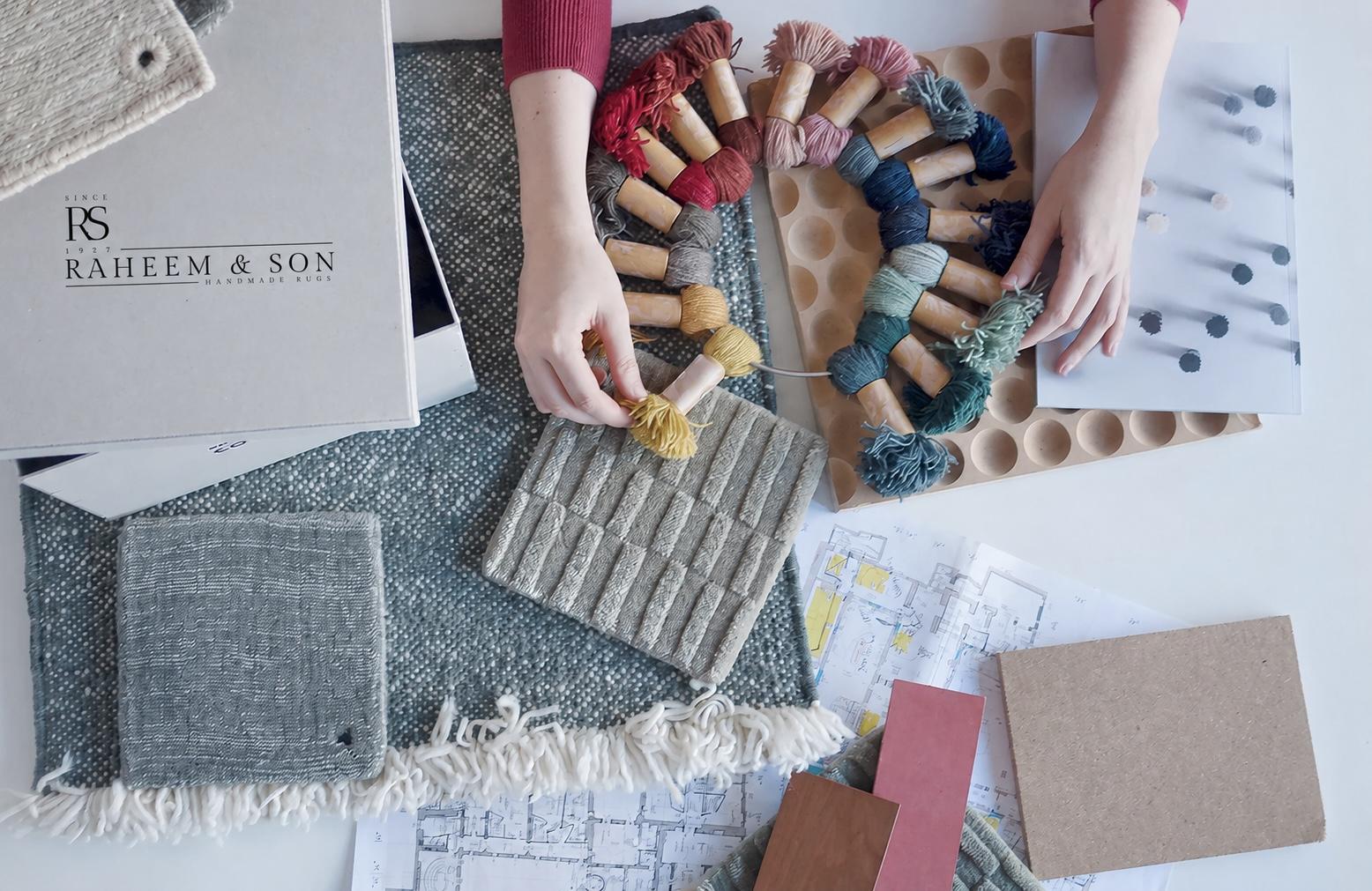
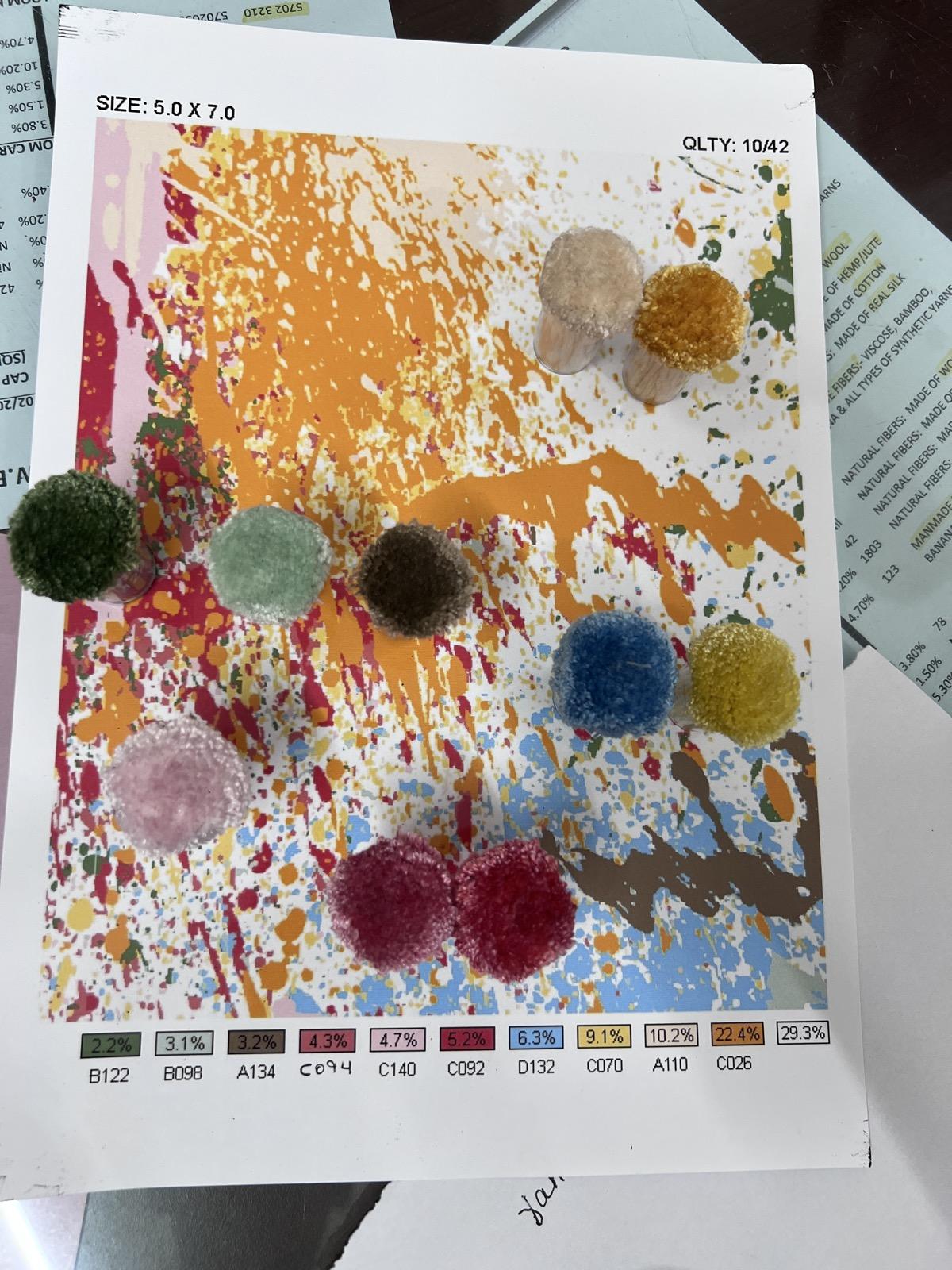
Supply the physical thing wherever possible: the paint chip, the stone sample, the fabric. Where you must work from a code, name the system and the code, and say what it is describing, since a Pantone reference chosen for print rarely reproduces exactly in dyed wool. Then ask for a tuft card in the actual fibre, assess it in the actual room if the room exists, and sign it. The signed card, not the email, is the reference the weaver dyes against.
For multi-colour work, ask for a colour sequence chart before the strike-off. It costs a few days and prevents the single most expensive error in this business, which is discovering at final inspection that two tones you specified as distinct read as one.
Sizing and layout, the part that happens before the spec
Specify from the furniture plan, not from the room dimensions. In a seating group, the usual decision is whether all legs, front legs only, or no legs sit on the rug, and each produces a different size from the same room. In a dining room, the rug must extend far enough beyond the table that a pulled-out chair stays on it, which is typically 600 to 750 mm on every side. In a bedroom, the rug should reach far enough past the bed to land under a bare foot.
Corridors and runners have their own rule: leave a consistent margin of floor on both long sides, and resist making the runner as wide as the corridor, which reads as fitted carpet rather than as a rug. Our size and fitting guide has the numbers, and the sizing guide for buyers and designers works through the common layouts.
Where the plan is complex, send it. A floor plan with the furniture on it, marked with the intended rug rectangle, removes more ambiguity than any amount of written description, and a manufacturer who works from drawings will do exactly that.
What you should receive back before production starts
A signed specification restating every line above in the manufacturer's own words, so that any misreading surfaces before the loom is warped rather than after. A tuft card or a strike-off, physically, in the fibre and colours specified. A stated lead time measured from your approval, not from the enquiry. And a written tolerance, because the tolerance is the definition of a correct delivery.
If a supplier will not restate your specification back to you, that is worth noticing. It usually means the document has gone to a weaving unit unchecked, which is exactly the point at which a 10 mm pile becomes a 12 mm pile.
We send that restatement as standard, and where a project needs it we will also confirm in writing what certification exists today and what would have to be arranged for your order. Our position is on the standards page: CEPC registration is what we hold, and the rest is arranged per order.
Frequently asked
What should a custom rug specification include?
At minimum: finished size and tolerance, construction, knot or stitch density, fibre and blend, pile height measured after washing, colourway with a signed tuft card reference, edge treatment, sample stages, lead time from approval, and the Incoterm. Project work adds backing, fire standard and class, underfloor heating suitability, labelling for the destination market, and packing and delivery marking.
What is a normal size tolerance for a handmade rug?
Around plus or minus 3 per cent is standard across the industry, because handmade rugs are woven under tension by people and then washed, which moves them. The important thing is that the tolerance appears in the specification. Without it, any variation becomes a negotiation, and with it, both sides know in advance what a correct delivery looks like.
Should pile height be specified before or after washing?
After washing and clipping, always, and the specification should say so explicitly. Wool lifts and relaxes in the wash, and the finished height can differ from the loom height by two or three millimetres, which is enough to foul a door or change how the pattern reads. A supplier quoting pile height without saying at which stage is quoting a number that cannot be checked.
How do I specify colour so the rug matches the scheme?
Send physical references rather than screen colours: paint chips, fabric, stone. Where you must use a code, name the system and say what it describes, since a print reference does not reproduce exactly in dyed wool. Then require a tuft card in the real fibre, assess it under the project's own lighting, and sign it. For complex palettes, ask for a colour sequence chart before the strike-off.
Can I send a CAD drawing instead of writing a specification?
Send both. A drawing resolves geometry, border widths, motif placement, column cut-outs and the relationship between the rug and the furniture plan far better than prose. What a drawing cannot carry is construction, density, fibre, pile height, tolerance, finishing and lead time, which is what the written specification is for.
Who is responsible if the rug does not match the approved sample?
The manufacturer, provided the approval was physical and signed and the specification recorded the tolerance. This is exactly why the tuft card or strike-off matters: it converts an aesthetic judgement into a physical reference that either matches or does not. Approvals given on a screenshot are very difficult to enforce against, because nobody can say what the screen was showing.
By RS, 16 September 2026
More in For Interior Designers.
Follow the journal in Google Search. Readers who add us as a preferred source see our writing marked in Top Stories and in AI Overviews.