How this list is ordered, and who published it
Published by Raheem & Son, which is included. We say so up front because it matters: you should weigh what follows knowing the author is one of the companies named.
The one ordering criterion used here is the year established, as each company states it on its own website, oldest first. Nothing else affects position.
This is an ordering, not a ranking, and it is not an endorsement of quality, price or service. Position in the list tells you nothing about which supplier is better for your order. We chose the criterion before building the list and we did not change it afterwards: if it had placed Raheem & Son last, we would be last. We do not use scores, stars, "best" or "top" labels anywhere in this series.
A company is included only if its own public website shows that it makes or sells flatweave or dhurrie rugs. Each entry cites the page we relied on, and anything a company does not state is shown as "not publicly stated" rather than guessed. Last verified: 18 October 2026. Pages change, so if you spot a fact that is out of date, tell us and we will correct it. Qaaleen offers an Other Weaves collection, but its page does not name flatweave or dhurrie as a weave type, so it is not listed.
Flatweave, dhurrie and kilim: three words, one family
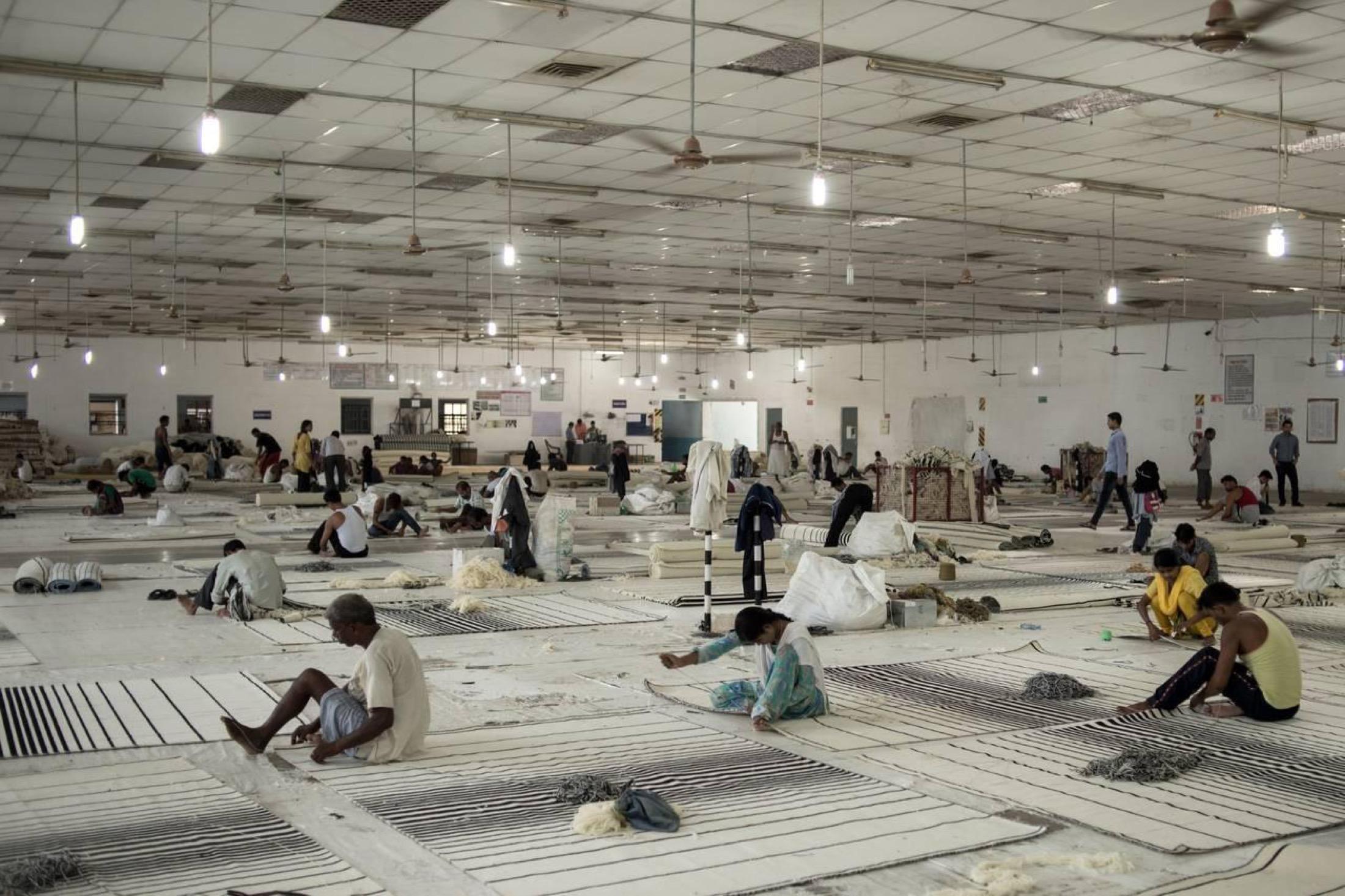
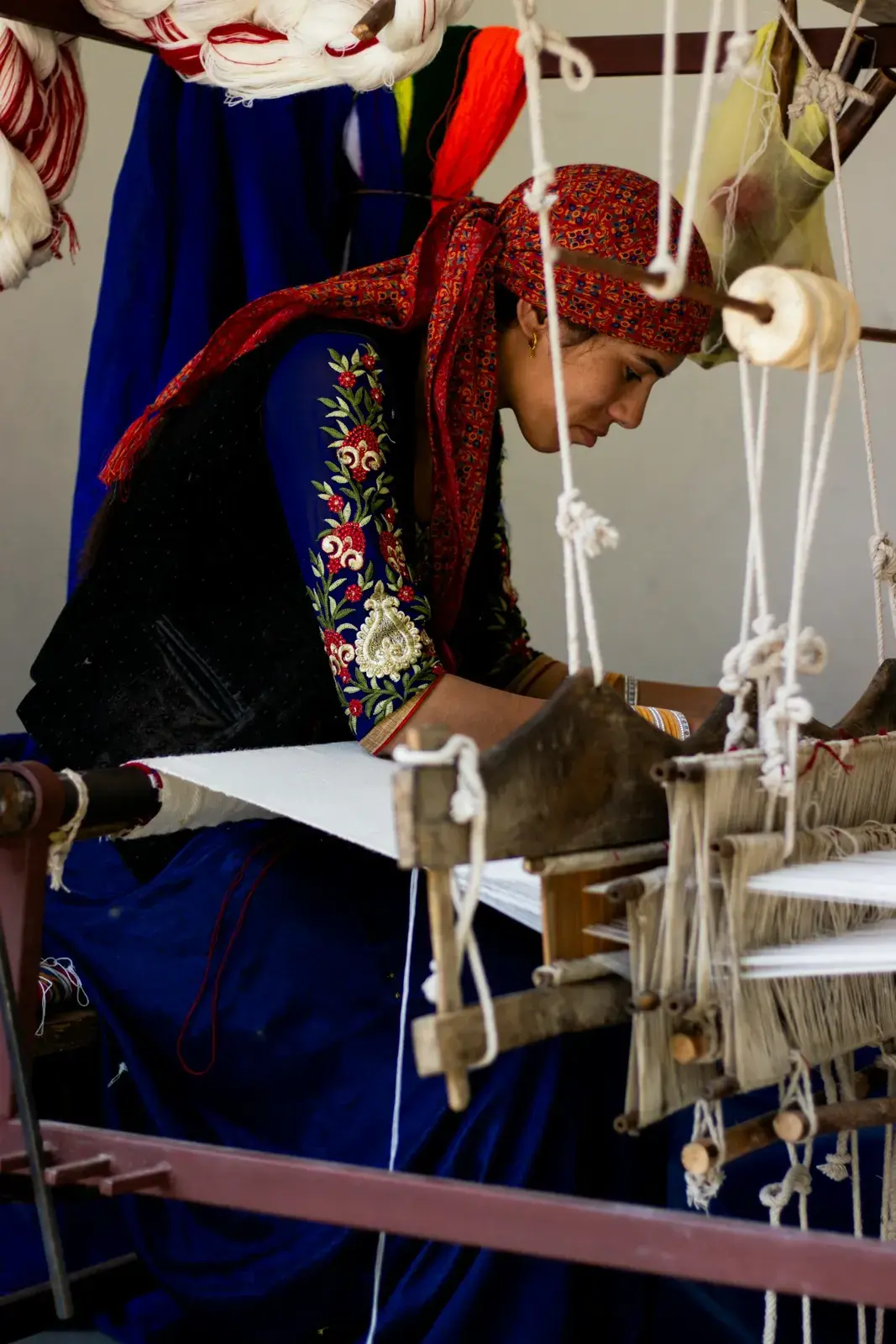
A flatweave rug has no pile. The pattern is formed by interlacing the weft and warp, so the surface is flat and the rug looks nearly identical on both sides. Dhurrie is the Indian name for a flatwoven rug, traditionally cotton or wool and woven on a pit loom or frame loom. Kilim refers to a flatweave made by weaving coloured weft threads back and forth around the warp, and the term is used loosely for any flatwoven rug with a geometric pattern.
Buyers choose flatweaves for reversibility, low weight and low profile. A low profile lets a rug sit under doors and furniture, and a light rug folds small and ships efficiently, so flatweaves are widely used in retail floor programmes, in kitchens and children's rooms, and as layered rugs. Because there is no pile, a flatweave shows pattern clarity rather than depth of texture.
The trade-offs are cushioning and hold. A flatweave offers little underfoot comfort, so it is normally used with a rug pad, and a pad is also needed on hard floors to stop slipping. Ask a supplier for its recommendation, and if the product is for the US or EU, ask what testing the supplier will document.

Six companies, listed by year established
Each company below names flatweave, flat weave or dhurrie on its own site. Obeetee uses Dhurrie as the label, Sharda Exports describes flat weave and dhurrie together, and PiHue Creations labels its category Flatweave Dhurrie Kilim.
| Company | Established, as it states | Base | What its own page shows for flatweave or dhurrie rugs | Source |
|---|---|---|---|---|
| Obeetee | 1920 | Mirzapur, Uttar Pradesh | Dhurrie as a construction menu item. | page |
| Raheem & Son | 1927 | Bhadohi, Uttar Pradesh | Flatweave rugs described on its weaving page and collection page. | page |
| Jaipur Rugs | 1978 | Rajasthan | A Flat Weaves construction category. | page |
| Sharda Exports | 1983 | Meerut, Uttar Pradesh | States that its Pit Loom produces flat weave rugs also called dhurrie rugs, and shows patterned flat weave rugs from recycled PET. | page |
| Saraswati Global | 1986 (its page also dates the journey to 1978 in Churu) | Rajasthan origin, plant in Dharampur, Gujarat | A flat weave rugs construction page. | page |
| PiHue Creations | 2021 | Bhadohi, Uttar Pradesh | A Flatweave Rugs category, labelled Flatweave Dhurrie Kilim in its footer. | page |
Each company in a sentence, with the page behind it
Obeetee: A Mirzapur house whose legacy page dates its start to 1920. Year source: company page; category source: category page.
Raheem & Son: A manufacturer exporter in Bhadohi that lists flatweave and dhurrie as reversible, low-pile floor covering within a five-construction range. Year source: company page; category source: category page.
Jaipur Rugs: A Rajasthan rug maker; its founder's site gives 1978. Year source: company page; category source: category page.
Sharda Exports: A Meerut group, 1983 by its own account, that describes recycled PET flat weave rugs and a pit loom for dhurries. Year source: company page; category source: category page.
Saraswati Global: A group that states 1986 as its founding year and shows flat weave as a construction category. Year source: company page; category source: category page.
PiHue Creations: A Bhadohi exporter that began in 2021, the newest company in this list. Year source: company page; category source: category page.
Where Raheem & Son appears, and what we state about flatweave
Under this criterion Raheem & Son falls second of 6, because 1927 is where the sequence of stated founding years puts it. That is a consequence of the ordering rule, not a claim about quality.
We recommend flatweave and dhurrie where a reversible, low-pile floor covering is wanted, and offer it alongside hand-knotted, handloom, hand-woven and hand-tufted constructions, plus jute and natural-fibre rugs. See the flatweave collection, the jute collection and the weaving techniques page. Custom size and private label are available for qualifying orders.
Raheem & Son has no fixed minimum order, quotes a sample or strike-off in 25 to 35 days, and starts bulk production from about 60 days depending on order size, construction and production load (see how to order).
On certification, CEPC registration is the only credential we currently hold. A Four-Star Category Certificate from the Directorate of Industries, Government of Uttar Pradesh was awarded in 2009; it is a historic award that lapsed in 2011, not a current certificate. We do not hold other standing third-party certificates; others are arranged against qualifying orders and we say so in writing first. See our standards.
Questions to ask a flatweave supplier
Ask the fibre and the yarn count, the loom type, the weave structure, and whether the pattern is woven in or printed. Ask how colour is fixed and what fastness testing is available, since cotton flatweaves can show dye transfer if poorly set. Ask whether a pad is recommended and whether the supplier can supply one. Request a wash or abrasion test report only if you plan to rely on it, and check the name on it.
Other constructions are covered in the guides to handloom and hand-tufted makers. For a view of the same companies by reach, see the countries served guide.
Frequently asked
Which Indian companies make flatweave and dhurrie rugs?
This guide lists six whose own sites show them: Obeetee, Raheem & Son, Jaipur Rugs, Sharda Exports, Saraswati Global and PiHue Creations, ordered by the year each states it was established. It is an ordering, not a ranking.
What is the difference between a dhurrie and a kilim?
Dhurrie is the Indian name for a flatwoven rug. Kilim is a flatweave made by weaving coloured weft threads around the warp, and the word is often used for any geometric flatweave. Both are pileless.
Does Raheem & Son make flatweave rugs?
Yes. Flatweave and dhurrie are one of the five rug constructions on our weaving page, and we have a flatweave collection. Terms: no fixed minimum, samples in 25 to 35 days, bulk from about 60 days.
Is this list a ranking?
No. It is ordered only by the year each company states it was established, and Raheem & Son, which published it, is included. It is not an endorsement.
Explore
By Raheem & Son Editorial Desk, 18 October 2026
Written with the production and export teams in Bhadohi, where Raheem & Son has made rugs since 1927. See about the house and how we manufacture. Read our editorial policy.
More in Sourcing and Suppliers.
Follow the journal in Google Search. Readers who add us as a preferred source see our writing marked in Top Stories and in AI Overviews.