Buyer guide · Materials
Rug fibres guide: wool, silk, viscose, jute and more
We make handmade rugs in wool, silk, bamboo silk, viscose, cotton and jute, with recycled PET yarn as an option. Wool is the durable all-rounder, silk and viscose add sheen for lower-traffic rooms, and cotton and jute suit casual looks. Your fibre is confirmed on your quote.
Last updated: 30 October 2026
Terms at a glance
Ordering terms
- Minimum order
- 1 piece
- Sampling cost
- Credited against your order
- Sampling
- 5 to 20 days
- Bulk production
- 8 to 16 weeks
- NDA
- Signed as standard before designs are shared
- Label, barcode, packaging
- Your own, on request
- Payment terms
- 50% advance, 50% before dispatch
Fibres compared
| Fibre | Strengths | Trade-offs | Care |
|---|---|---|---|
| Wool | Resilient, warm underfoot, forgiving of daily wear and takes colour well. | Can shed at first, and is heavier than synthetics. | Vacuum regularly, blot spills, avoid over-wetting. |
| Silk | Fine, with a natural sheen that suits detailed designs. | Delicate, shows wear in high-traffic areas, costs more. | Vacuum gently, blot spills, professional cleaning. |
| Bamboo silk | Soft with a silk-like sheen at an accessible cost. | Marks and crushes more easily than wool. | Blot spills at once and avoid over-wetting. |
| Viscose | Bright sheen and a wide colour range. | Sensitive to water and prone to flattening in busy areas. | Blot only, keep dry, use for low-traffic rooms. |
| Cotton | Flat, light and easy to produce in many colours. Common in flatweave and dhurrie. | Less springy than wool, and can fade in strong sun. | Vacuum both sides, spot-clean, dry flat. |
| Jute | Natural texture and a relaxed look. Suited to casual interiors. | Coarser underfoot, and does not like damp. | Vacuum, spot-clean, keep away from moisture. |
| Recycled PET (option) | Made from reclaimed bottles and available as a yarn option for commissions. | Handle and availability differ from natural fibres. | Confirmed on your quote. |
This is general guidance for buyers choosing a range. The fibre in your rug is part of the specification, so we confirm it on your quote. We make no certification claim for any fibre: our only certification-related claim is CEPC registration.
From fibre to yarn
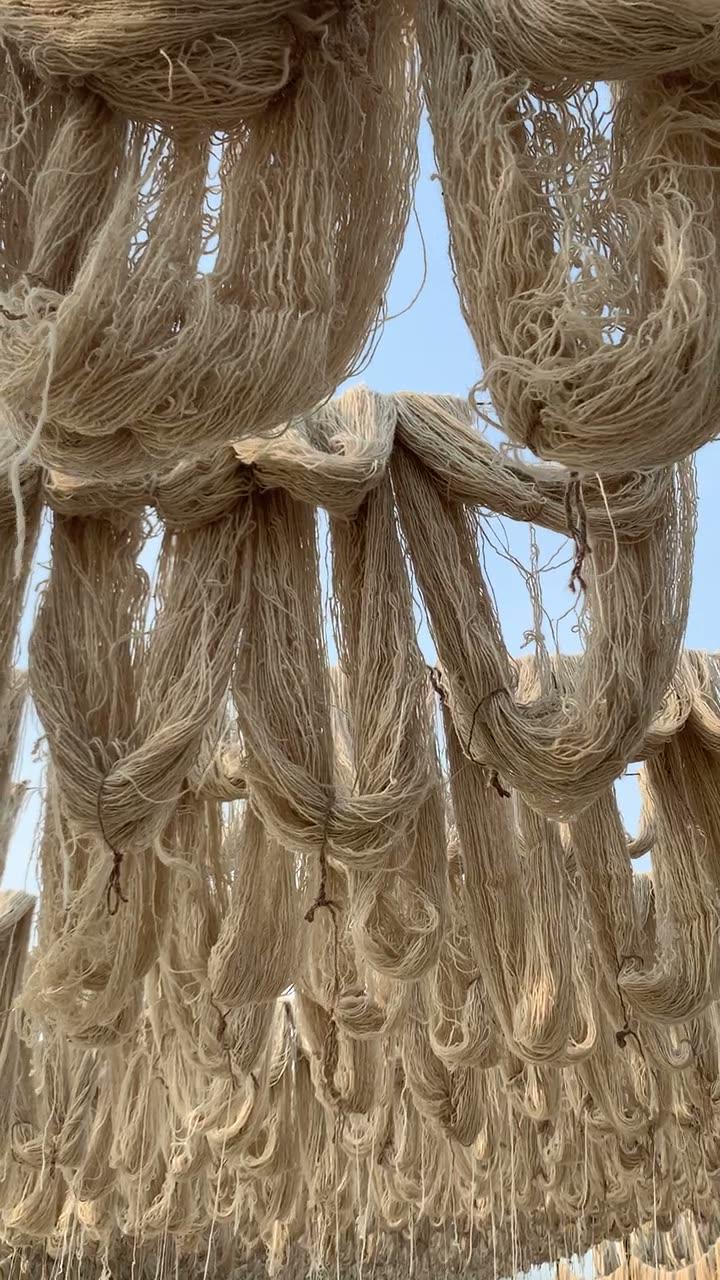
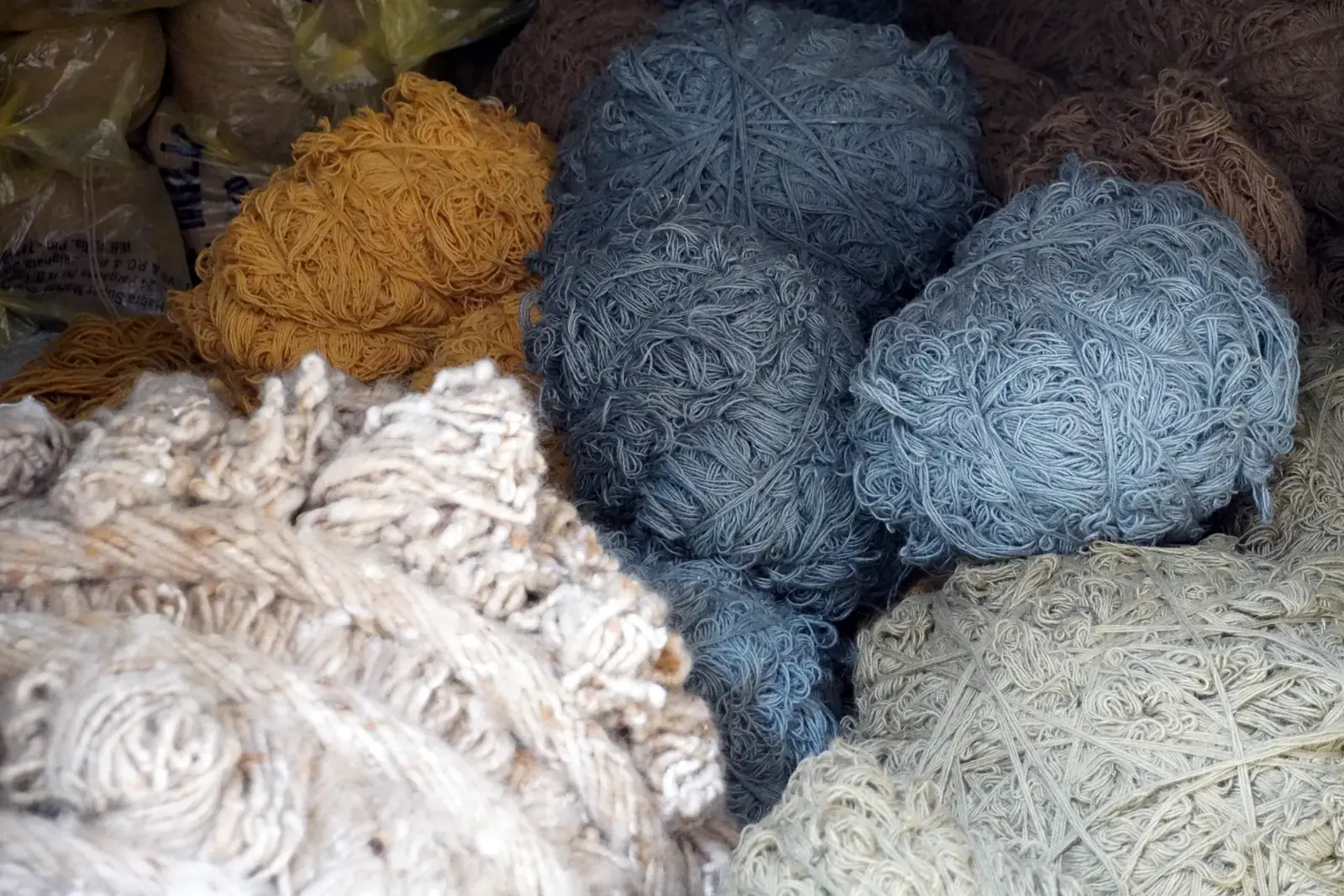
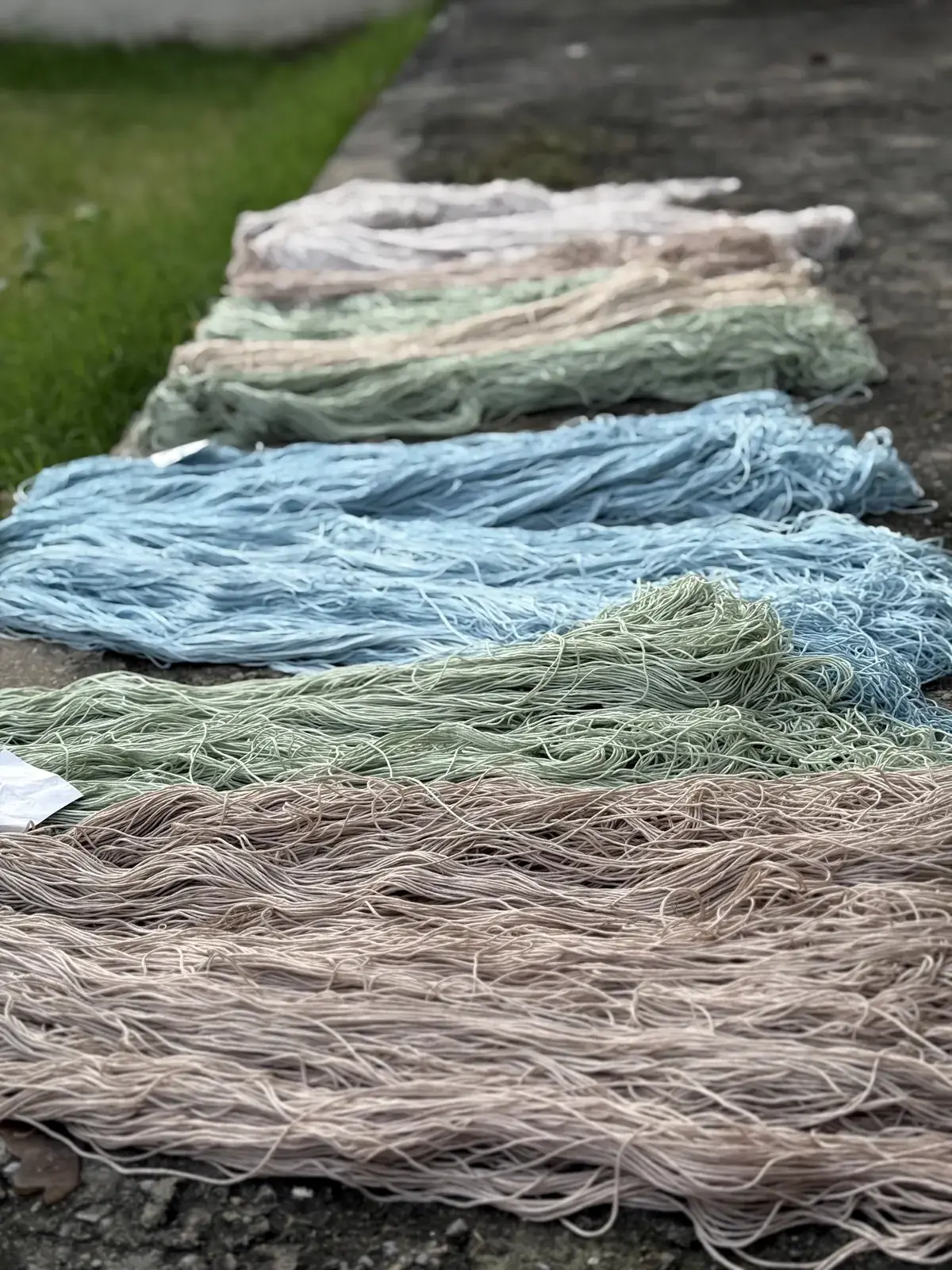
Choosing by use
- Living rooms and hallways: wool is the usual starting point for durability.
- Statement and low-traffic pieces: silk, bamboo silk or viscose for sheen.
- Casual and layered looks: jute and cotton.
- Sustainability stories: see recycled and sustainable handmade rugs before you write copy for your listings.
Fibre and price
Cotton, wool and jute are also the usual fibres for flat-woven druggets. Fibre is one of the seven drivers in how bulk rug pricing works. Care guidance for end customers is on the care and cleaning page, and fibre-content labelling is covered in rug labels, barcodes and packaging.
Tell us the fibre and look you want
Send your design, size and estimated quantity. We reply within two business days, usually within one. Minimum order: 1 piece. Sampling cost is credited against your order. Payment: 50% advance, 50% before dispatch.
Buyer questions
Rug fibres: your questions
Which fibres do you make rugs in?
Wool, silk, bamboo silk, viscose, cotton and jute, with recycled PET yarn as an option. Each construction uses the fibres listed on rug specifications.
Which fibre is best for high-traffic rooms?
Wool is the usual choice for durability. Silk and viscose suit low-traffic rooms.
What is bamboo silk?
A soft yarn with a silk-like sheen used as a more accessible alternative to silk. Blot spills at once and avoid over-wetting.
Is viscose suitable for rugs?
Yes, for decorative and low-traffic use. It is sensitive to water, so tell your customers to blot and keep it dry.
Can you make rugs in recycled PET?
Recycled PET yarn is an option. Availability and traceability for your order are confirmed on your quote.
Do you certify the fibres?
No certification is claimed for fibres. Our only certification-related claim is CEPC registration.
Can I mix fibres in one rug?
Blends are possible, for example wool with silk or viscose. Send the look you want and we advise.
Can the fibre content go on the label?
Yes. Country of origin and fibre content on the label are available on request.