Flatweave · Made to order
Wholesale kilims and dhurries, made to order
We make flatweave kilim and dhurrie rugs to your design, size and colour in Bhadohi. The minimum order is 1 piece, sampling takes 5 to 20 days with its cost credited against your order, and bulk production takes 8 to 16 weeks. Your label, barcode and packaging are available on request.
Last updated: 30 October 2026
At a glance
| Item | Detail |
|---|---|
| Minimum order | 1 piece |
| Sampling | 5 to 20 days; the sampling cost is credited against your order |
| Bulk production | 8 to 16 weeks from sample approval |
| Private label | Your label, barcode or QR sticker and packaging on request |
| Shipping | Worldwide export, FOB Nhava Sheva as the default |
| Payment terms | 50% advance, 50% before dispatch |
Kilim, dhurrie and flatweave: what you are buying
A flatweave is a rug with no pile: the pattern is in the weave, so both faces are flat. Dhurrie (also written durrie or dari) is the Indian name. Kilim is the name used for the same family of rugs in Turkey and Iran. For a buyer in India, the two words are close to interchangeable, and a shopper in your market may use either. In the trade, customs place hand-woven kelem-type rugs under HS 5702. The glossary and our blog explain the difference in more detail: glossary, dhurrie vs kilim rugs and the flatweave and dhurrie complete guide.
Plain and striped flat-woven floor coverings sold as druggets are part of the same family; see our page on druggets from India.
Raheem and Son has made rugs in Bhadohi since 1927 and is in its fourth generation. Flatweave is one of the constructions we make, alongside hand-knotted, hand-tufted, handloom, hand-woven, jute and natural fibre rugs. Kilims and dhurries are made in-house, in our own production, and every piece is made to order, to your design, size and colour.
Constructions and fibres
| Construction | How it is made | Fibres |
|---|---|---|
| Flatweave | Woven flat with no pile. Dhurrie and kilim constructions, fast production cycles and a broad custom colour range. | Cotton and wool |
| Hand-woven | Handloom-woven flatweave and pile constructions, including dhurrie, kilim and woven pile designs. | Cotton, wool and jute |
| Handloom | Woven on a hand-operated loom, with the pattern built in the weave rather than tied knot by knot. | Cotton, wool and jute |
Cotton gives a flat, light, easily folded rug that suits a retail range at an accessible level. Wool gives a denser, warmer handle. Jute gives a natural, textured look. Ask for the construction and fibre of the specific quality you are considering, because the exact build depends on the design. The full list is on rug specifications.
Sizes, colours and patterns
- Custom sizes, shapes and colours in every construction, to your specification.
- Common rectangles run from 2x3 ft to 10x14 ft, runners are commonly 2.5x8 ft and 2.5x10 ft, and rounds are commonly 3, 4, 5, 6 and 8 ft in diameter. Any size outside these is custom.
- Yarn is dyed in-house across an extensive range of shades, with colour matching and strike-offs before the full sample.
- You can send a pattern, a reference piece or a mood board. A non-disclosure agreement is signed as standard before designs are shared.
Size tolerance is typically about 3% (up to 5% on small pieces) and is agreed in writing on your quote. The standard sizes are explained in the size and fitting guide.
Retail range or project use
For a retail range. Flatweaves are a practical way to fill a price tier and a size ladder. Because the minimum order is 1 piece, you can order the same design in three sizes to see which one sells before you commit to a bulk run. Read the rug sampling process to see how a sample moves to production.
For a project. Designers and hospitality buyers often ask for a washable-feeling, low-profile rug for bedrooms, cafes or shops. Tell us the room, the traffic and the look, and we will suggest a construction. For commercial work see the contract programme.
Kilims and flatweave
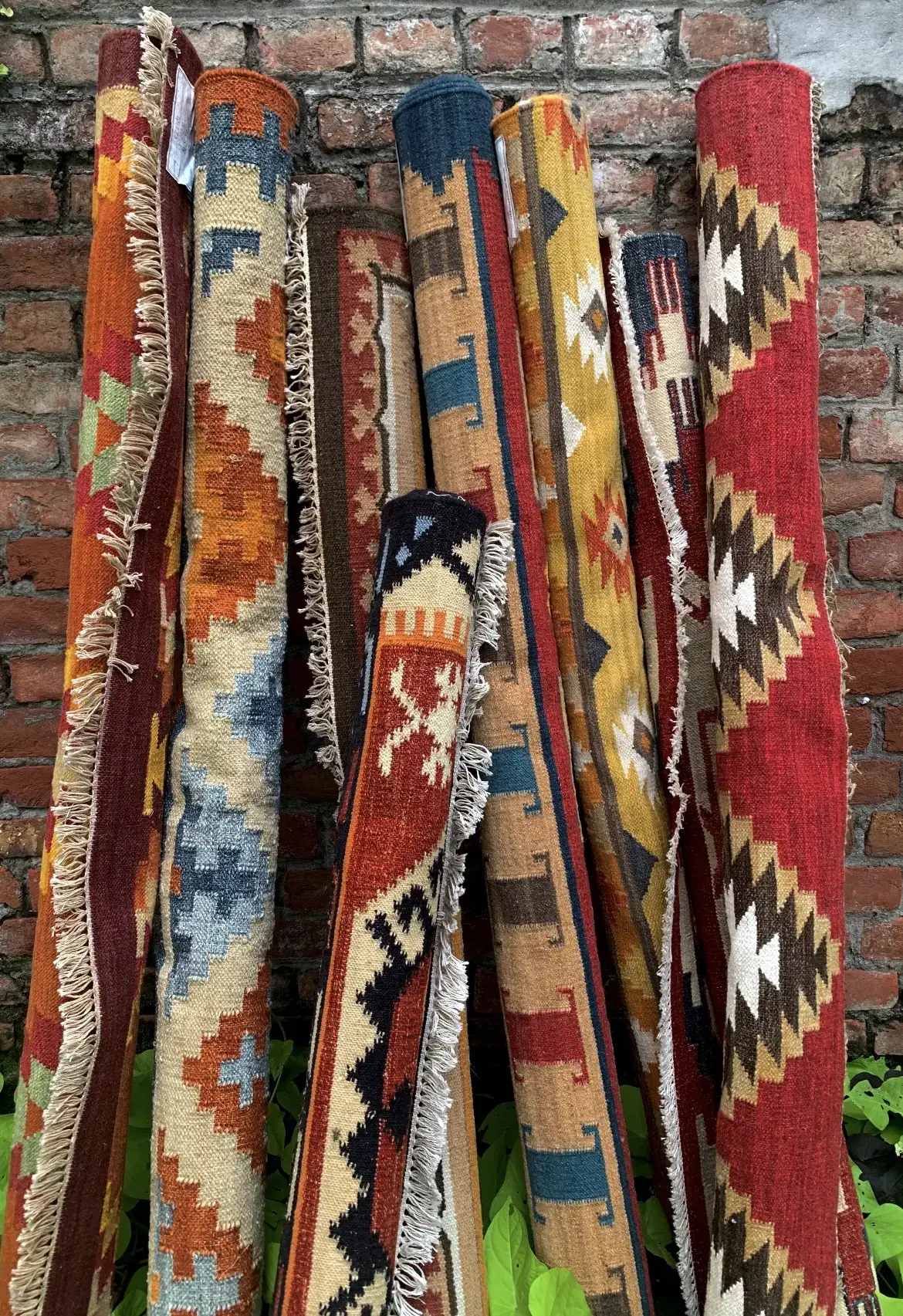
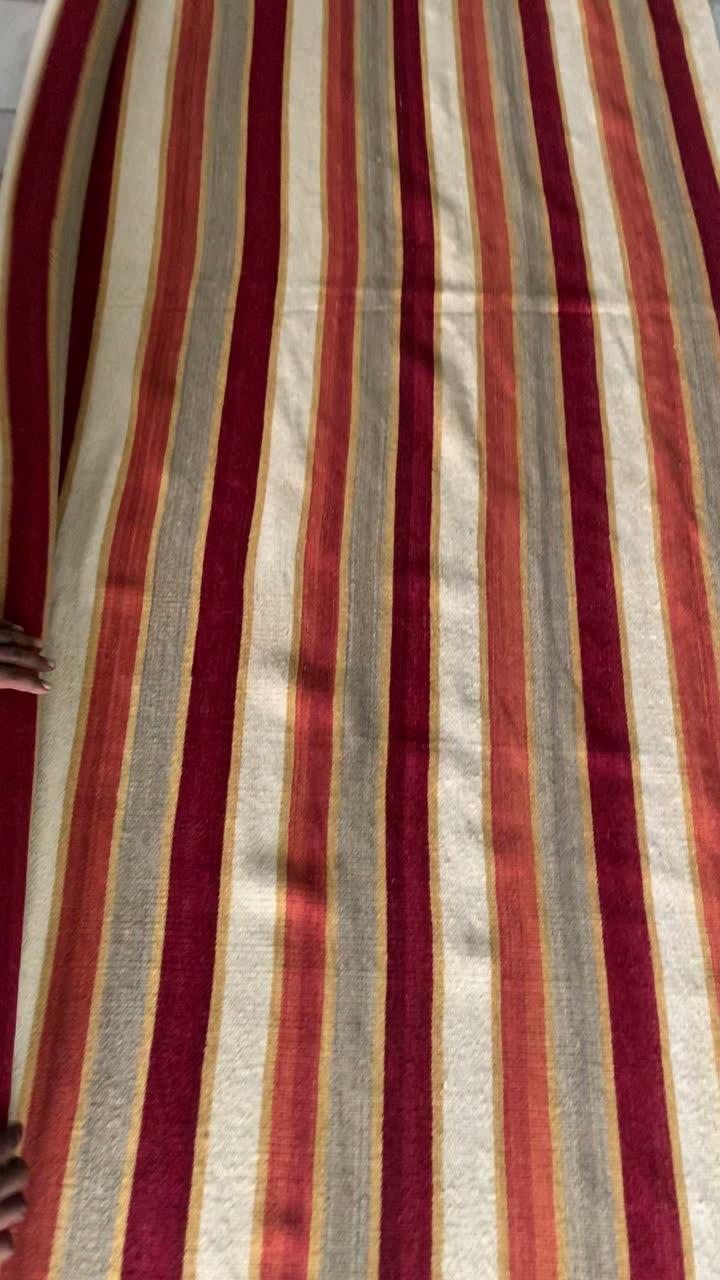
Sampling and lead time
Sampling takes 5 to 20 days, and the sampling cost is credited against your order. Bulk production takes 8 to 16 weeks from sample approval; finer builds and larger orders are confirmed on your quote. Inspection happens at four points: raw material intake, in-process at the loom, post-wash and at finishing, and a final check of dimensions and colour against the approved sample before packing.
Private label, packing and shipping
- On request we attach your own brand label, woven or sewn in, and a barcode or QR sticker once you supply the numbers.
- We pack in your own packaging or polybag if you ask, with country of origin and fibre content on the label.
- Standard export packing is rolled, poly-wrapped and palletised. Packing specifications are confirmed before production.
- Documents include commercial invoice, packing list, Certificate of Origin. We do not issue a phytosanitary certificate; a buyer who needs one for jute or seagrass should check the destination's rules with their broker.
- We export worldwide, with FOB Nhava Sheva as the default. See export and logistics.
For brand-building details read OEM and private label and how to start a rug brand.
Where to go next
If you are choosing a supplier, compare us with the rug manufacturer checklist. For the full wholesale route see wholesale rugs, for stores see wholesale rugs for boutique retailers, and for jute accessories see baskets.
Request a kilim or dhurrie quote
Send your design, size and estimated quantity. We reply within two business days, usually within one. Minimum order: 1 piece. Sampling cost is credited against your order. Payment: 50% advance, 50% before dispatch.
Buyer questions
Wholesale kilim and dhurrie: your questions
What is the minimum order for wholesale kilim and dhurrie rugs?
Minimum order: 1 piece. Sampling cost is credited against your order, so you can test a design and size before a bulk run.
What is the difference between a kilim and a dhurrie?
Both are flatweaves with no pile. Dhurrie is the Indian name and kilim is the name used in Turkey and Iran. We make kilims and dhurries in-house, in cotton and wool for flatweave, and hand-woven constructions in cotton, wool and jute.
Can I order custom sizes and colours?
Yes. Sizes, shapes and colours are custom in every construction. Yarn is dyed in-house with colour matching and strike-offs before the full sample.
How long do samples and bulk orders take?
Sampling takes 5 to 20 days. Bulk production takes 8 to 16 weeks from sample approval, with finer builds and larger orders confirmed on your quote.
Can you put my label and barcode on each rug?
Yes, on request. We attach your own brand label, woven or sewn in, and a barcode or QR sticker when you supply the numbers. Country of origin and fibre content go on the label.
How are the rugs packed for export?
Rolled, poly-wrapped and palletised as standard. We can pack in your own packaging or polybag and confirm packing specifications before production.
Where do you ship, and on what terms?
We export worldwide. FOB Nhava Sheva is the default. Other terms are confirmed on your quote.