One district, most of the country's hand-knotting
Bhadohi sits in eastern Uttar Pradesh, between Varanasi and Allahabad, and the surrounding belt running through Mirzapur and Gopiganj holds the largest concentration of hand-knotted carpet weaving in South Asia. The Carpet Export Promotion Council, constituted under India's Ministry of Textiles, describes the district as the Carpet City on exactly that basis, and it hosts the India Carpet Expo at the Carpet Expo Mart there.
For a buyer, the practical consequence is simple. Whichever Indian rug website you are reading, if the product is hand-knotted wool there is a strong chance the weaving happens here, whether the company's office is in Delhi, Mumbai, Jaipur or overseas. That is not deception in itself. It becomes a problem only when a company will not tell you.
Our Bhadohi manufacturing page covers the cluster from our own side, and the journal piece on the town itself covers its history.
How production is organised, and why that matters to your order
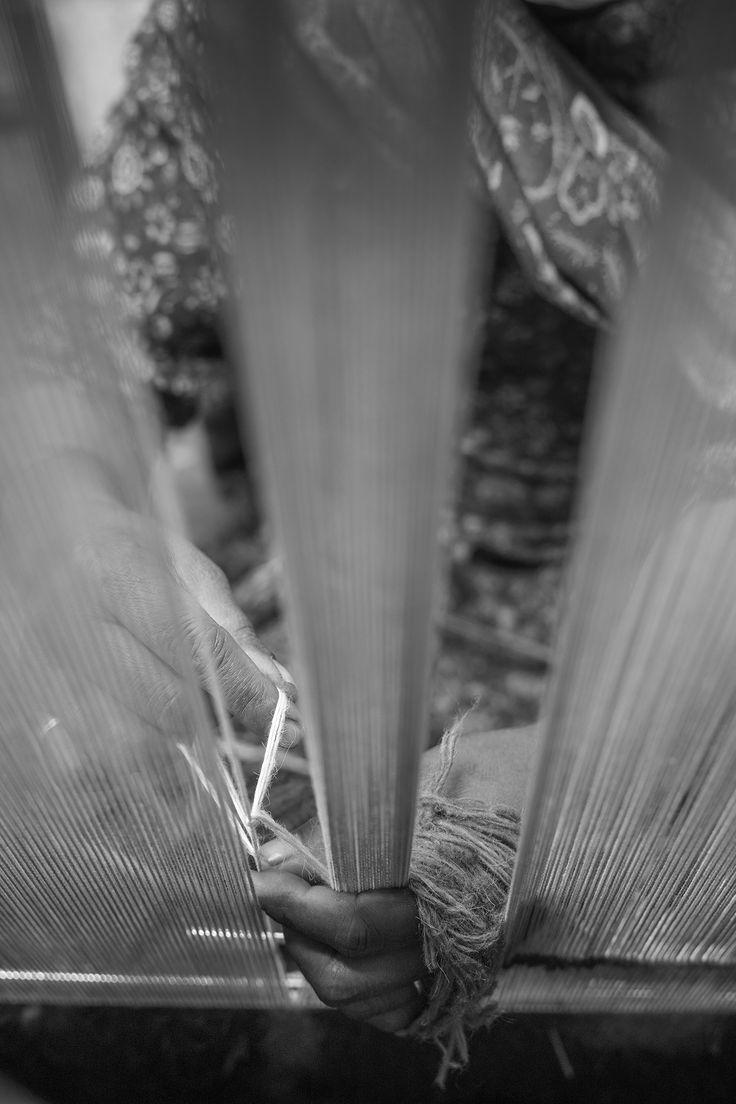
Weaving in the belt is distributed rather than centralised. An export house maintains its own looms and its own finishing, and also commissions work through contractors, historically called thekedars, who manage looms across villages. Yarn goes out, woven pieces come back, and washing, clipping, binding and finishing are done centrally where quality can be controlled.
This is the putting-out system, and it is older than any company operating today. It is why capacity in Bhadohi is elastic in a way a single factory's is not, and also why two orders from the same house can differ if the network is managed loosely. The question to ask is not whether a supplier uses contracted looms, because almost all of them do, but how they control what comes back: who inspects, at what stages, and what happens to a piece that fails.
Raheem & Son has worked inside this system since 1927, on our own looms and through a contracted network, and has also acted as a buying house within it since the 1940s, placing and inspecting other people's orders across the same belt.
The names you will encounter
Established houses weaving in or sourcing from the belt include Obeetee, founded in Mirzapur in 1920 and now reporting a network above 30,000 weavers across some 900 villages; Raheem & Son, founded in Bhadohi in 1927 and in its fourth generation; Champo Carpets, founded in the early 1970s with a vertically integrated plant the company describes as 1.2 million square feet; Hands, built by the Patodia family from the 1980s around luxury hand-knotting; and Qaaleen, which sells from Delhi and weaves here. PiHue Creations is a newer Bhadohi house aimed specifically at small importers.
Alongside them are several hundred smaller exporters, many excellent, most invisible online, and a layer of trading companies with polished websites and no looms. The names above are simply the ones with a public, checkable record. Absence from a list like this is not evidence against a company, but presence with no verifiable details is evidence of nothing at all.
| Signal | What good looks like | What to be wary of |
|---|---|---|
| Weaving location | A named town and a video call from the floor | Vague references to our factories with no address |
| Ownership of looms | Own looms plus a described contractor network | Claims of owning everything, with no finishing photos |
| Export identity | IEC and GST provided without hesitation | Documents that will be shared after you order |
| Finishing | Washing, clipping and binding shown on site | Only loom photographs, never finishing |
| Certification | Certificate numbers, scope and expiry | Logos on a page with no numbers |
| Continuity | Years in business you can corroborate | A company history that exists only on its own site |
Visiting, or doing it properly from your desk
If you can visit, go during the India Carpet Expo, when the trade is concentrated and you can see many houses in a few days, then visit two or three weaving units separately and unannounced. Varanasi is the nearest airport, and the drive to Bhadohi is short.
If you cannot visit, replicate the visit remotely. Ask for an unscheduled video call from the weaving floor and ask the person holding the camera to turn it toward the back of a rug in progress. Ask to see the washing and finishing area, which traders almost never have. Ask for lab dips against your own colour reference. Ask three technical questions with objective answers, such as knot count for the construction quoted, size tolerance after washing, and pile height after finishing rather than before.
Then start small. A sampling order before a container order costs little and tells you more about a supplier's communication and discipline than any certificate will.
What the belt is good at, and what it is not
Bhadohi and Mirzapur are strongest in hand-knotted wool, handloom, hand-tufted and wool flatweaves, in mixed programmes, and in custom development at reasonable minimums. The depth of the weaver network means large repeat programmes can be held to a consistent standard over years, and the concentration of finishing capacity means washing and clipping are genuinely good here.
For fine silk knotting at the highest densities, Srinagar in Kashmir remains the reference region. For recycled PET, shags and very low-cost flatweaves at volume, Panipat in Haryana is the more natural home. A Bhadohi house will happily quote you all of those, sometimes by placing them elsewhere. Ask where each item in your programme will actually be woven, and expect a straight answer.
Frequently asked
Why is Bhadohi called the Carpet City of India?
Because the district and the belt running through Mirzapur hold the largest concentration of hand-knotted carpet weaving in South Asia, and because the industry there is organised around export rather than domestic sale. The Carpet Export Promotion Council, constituted under India's Ministry of Textiles, uses the description and holds the India Carpet Expo at the Carpet Expo Mart in Bhadohi.
Do Bhadohi manufacturers own their looms or use contractors?
Almost all established houses do both: their own looms and finishing, plus a contracted network managed through intermediaries historically called thekedars, which is what makes capacity in the belt elastic. The useful question is not whether contracted looms are used but how the returning work is inspected, at which stages, and what happens to a piece that fails.
How do I find a real manufacturer in Bhadohi rather than a trader?
Ask for an unscheduled video call from the weaving floor and for a view of the washing and finishing area, which traders rarely have. Ask for the Import Export Code and GST number up front. Ask three technical questions with objective answers: knot count for the construction quoted, size tolerance after washing, and pile height after finishing. Then place a small sampling order before any container order.
Is everything from Bhadohi hand-knotted?
No. The belt produces hand-knotted, handloom, hand-woven, hand-tufted and flatweave constructions, along with poufs, pillows and other accessories. Hand-knotted is what the region is most known for and where its depth of skill is greatest, but a quotation from a Bhadohi house may cover several constructions, and some items may be placed in other clusters entirely.
When is the best time to visit Bhadohi as a buyer?
During the India Carpet Expo at the Carpet Expo Mart, when most of the trade is present in one place, then extend the trip by two or three days to visit individual weaving units separately and preferably unannounced. Varanasi is the nearest airport. If you cannot travel, a live unscheduled video call from the weaving and finishing floors covers much of the same ground.
By RS, 8 September 2026
More in Heritage and Sustainability.
Follow the journal in Google Search. Readers who add us as a preferred source see our writing marked in Top Stories and in AI Overviews.